Goodman 2 Ton AC And 80000 BTU 80% AFUE Gas Furnace System | 18.2 SEER2 Two Stage AC | Variable Speed Two Stage Furnace | Upflow | R32
View on AC Direct see your lowest price →Check current price on AC Direct →
Key features
- 18.2 SEER2 two-stage compressor for part-load efficiency and improved humidity control
- 80,000 BTU two-stage gas furnace rated at 80% AFUE
- Variable-speed ECM blower motor for quieter, more consistent airflow
- R-32 refrigerant with lower global-warming potential than R-410A
- Upflow configuration suits basement, closet, or ground-level installations with supply ducts above
- Communicates with compatible Goodman and Amana thermostats for staged operation
About this system
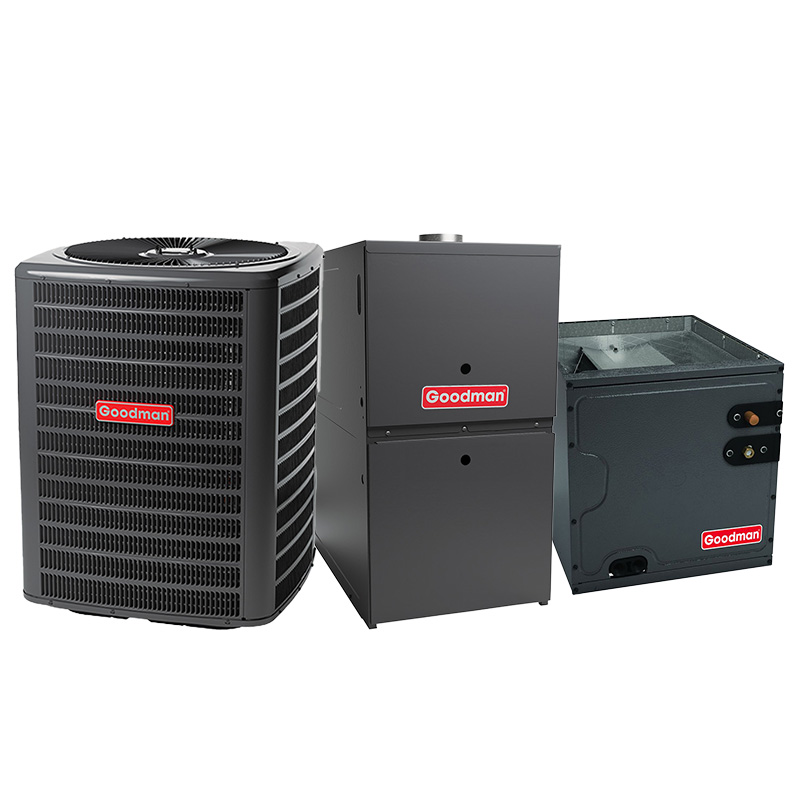
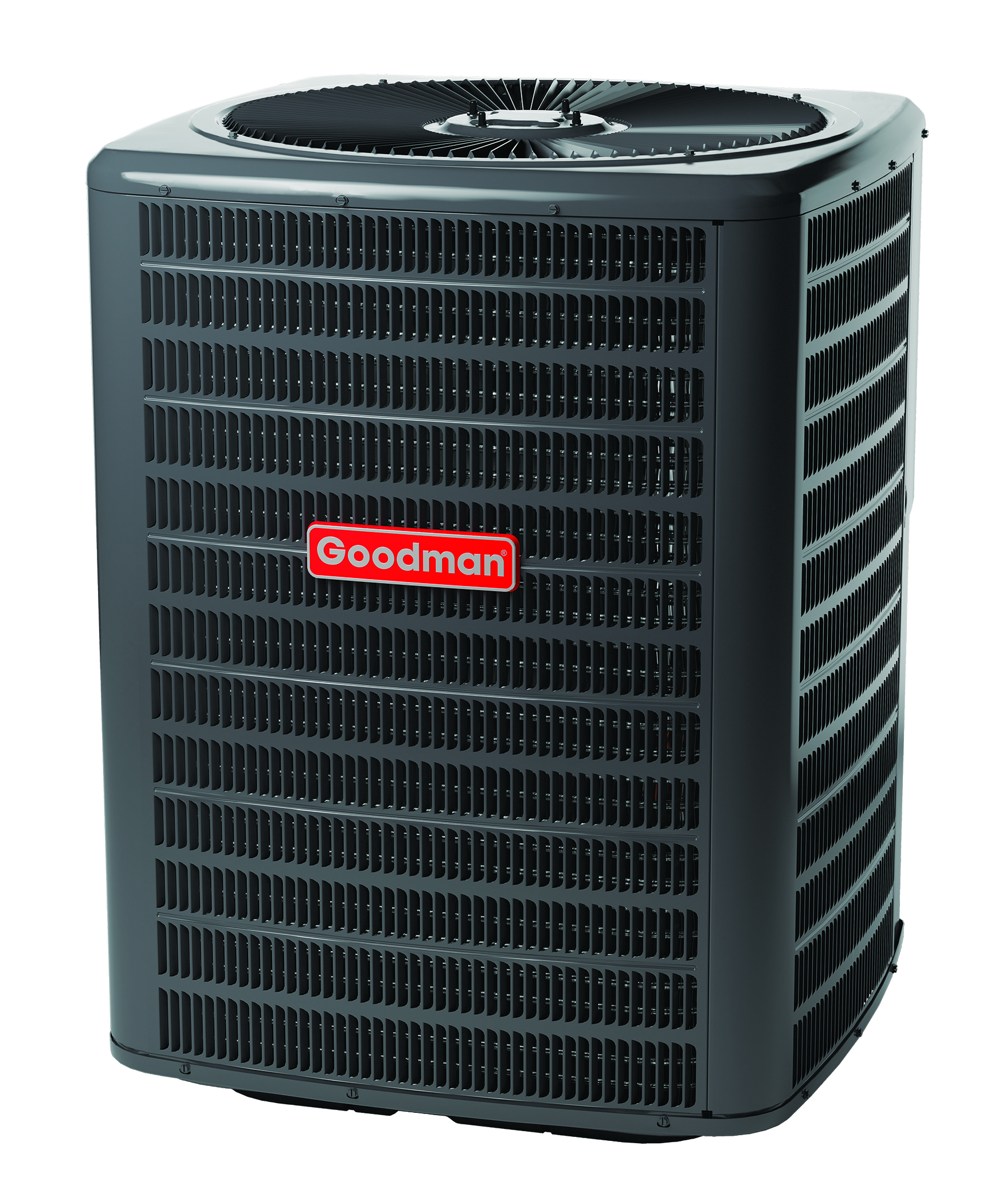
This Goodman bundle pairs a 2-ton, 18.2 SEER2 two-stage air conditioner with an 80,000 BTU, 80% AFUE two-stage gas furnace in an upflow configuration, making it a practical fit for homes in the 900 to 1,300 square foot range that have ductwork drawing air up from below the unit. The AC uses R-32 refrigerant, a lower-global-warming-potential alternative to R-410A that is becoming the new standard, so parts availability should remain strong for the foreseeable future. Two-stage cooling means the compressor runs at a lower capacity on milder days, which smooths out humidity removal and cuts energy use compared to a single-stage system running full blast every cycle.
The furnace side runs at 80% AFUE, meaning 80 cents of every dollar spent on gas becomes usable heat. That is the baseline efficiency tier and is perfectly adequate in moderate climates, but homeowners in the upper Midwest or northern plains who run their heat hard from October through April should seriously consider stepping up to a 96% AFUE unit instead. The variable-speed blower motor on the furnace is a real comfort upgrade at this price point, moving air quietly and consistently rather than in the abrupt on-off cycles of a single-speed unit. Together, the two-stage AC and variable-speed furnace give this system noticeably better comfort performance than a basic entry-level bundle, without crossing into the highest-cost efficiency tiers.
This system delivers genuine mid-tier comfort features at a value price, and the combination of two-stage cooling and a variable-speed blower punches above its cost. The trade-off is that Goodman's track record places it behind premium brands in long-term reliability, and the 80% AFUE furnace will cost more to operate year-round in cold climates than a high-efficiency alternative. If the installation is done well and the budget is the priority, this is a solid choice; if longevity and fuel economy matter most, the extra spend on a higher-AFUE or premium-brand system is worth the conversation.
Overall score is the average of the five ratings above.
What we like
- 18.2 SEER2 rating qualifies for many utility rebates and sits comfortably in the upper-mid efficiency tier
- Two-stage AC operation reduces short cycling, lowers humidity more effectively than single-stage units, and cuts runtime energy use
- Variable-speed blower motor provides noticeably quieter operation and more even temperature distribution
- R-32 refrigerant is serviceable by any EPA 608-certified technician and is widely available
- Priced roughly 15 to 25 percent below comparable Trane, Lennox, and Carrier configurations, reducing upfront cost
Trade-offs
- 80% AFUE is the minimum efficiency tier; annual fuel costs will be meaningfully higher than a 96% AFUE furnace in colder climates
- Dual-run capacitor failures and evaporator coil leaks are documented recurring issues across owner reviews, adding potential maintenance costs after year 7
- Compressor lifespan averages 10 to 14 years versus 15 to 20 years on premium-brand compressors, which may affect total cost of ownership
- Performance is heavily dependent on install quality; a poor charge or duct mismatch will undercut the efficiency rating significantly
What homeowners and pros say about Goodman
Homeowners who research Goodman before buying will find a wide gap between the two main review channels. On ConsumerAffairs, the brand sits around 2.5 out of 5, driven largely by owners who came back to post after an expensive repair, most commonly citing rising maintenance costs after roughly year 7. The specific failure modes that come up repeatedly are dual-run capacitor failures, which are generally a quick 300 to 600 dollar fix, and evaporator coil leaks, which can be more involved and costly. A smaller number of first-year owners report refrigerant leaks that typically trace back to installation errors rather than factory defects. On Google dealer reviews, the picture is more balanced at around 3.8 out of 5, where affordability is the most frequently mentioned positive and many reviewers describe years of unremarkable, problem-free service.
HVAC technicians tend to have a pragmatic view of Goodman. They note that the brand’s components are not dramatically different from what goes into mid-tier equipment at other manufacturers, and that install quality is the single biggest variable in how long any Goodman unit lasts. Compressors on Goodman systems average 10 to 14 years in field reports, which is a real gap compared to the 15 to 20 years more commonly cited for premium-brand compressors, and that difference matters when projecting total cost of ownership over a decade or more. For this specific system, the two-stage compressor and variable-speed blower represent a genuine step up from base-tier Goodman equipment, and buyers who use a careful installer and keep up with filter changes and annual tune-ups report outcomes that are considerably better than the complaint-heavy averages suggest.
Sources: ConsumerAffairs Goodman owner reviews, AHRI Directory of Certified Product Performance, U.S. DOE appliance and equipment efficiency standards, Goodman product specification sheets.
What it costs to run
At 18.2 SEER2, cooling this 2-ton system for a typical 1200-hour cooling season at the U.S. average electricity rate of $0.17/kWh works out to roughly $269 per year in cooling, about $96 less per year than a minimum-efficiency 13.4 SEER2 unit of the same size. Your real cost depends on your climate and local rate.
Method: (24,000 BTU/hr ÷ 18.2 SEER2) × 1200 hours ÷ 1000 × $0.17/kWh. Rate source: U.S. EIA average; cooling hours: moderate-climate estimate.
How it compares
| Brand | Comparable model | SEER2 | Stage | Price position |
|---|---|---|---|---|
| Goodman | This system (2-ton 18.2 SEER2 two-stage AC + 80K BTU 80% AFUE variable-speed furnace) | 18.2 | Two-stage AC / Two-stage furnace with variable-speed blower | Value pick |
| Carrier | Comfort 16 / Performance 80 series bundle (comparable tonnage and efficiency tier) | ~17-18 | Single-stage or two-stage depending on model selection | Typically 15 to 25 percent more than this Goodman system |
| Trane | XR17 AC with S8X2 80% AFUE two-stage furnace bundle | ~17-18 | Two-stage AC / Two-stage furnace | Typically 15 to 25 percent more than this Goodman system |
| Lennox | Merit ML17XC1 AC with ML180 80% AFUE furnace bundle | ~17-18 | Single-stage to two-stage AC / Single-stage furnace at base tier | Typically 15 to 25 percent more than this Goodman system |
Competitor rows are comparable single-stage units at similar efficiency; price is relative position, not a quote.
Questions about this system
Is 80% AFUE good enough, or should I upgrade the furnace to a higher efficiency model?
For homes in the South, Southwest, or mild mid-Atlantic regions where heating season is short, 80% AFUE is a reasonable choice and the payback period on a 96% unit may never arrive. In the Midwest, Mountain West, or Northeast where you run heat for five or more months, a 96% AFUE furnace typically saves enough on gas bills to justify the higher upfront cost within a few years.
What does upflow configuration actually mean, and will it work in my house?
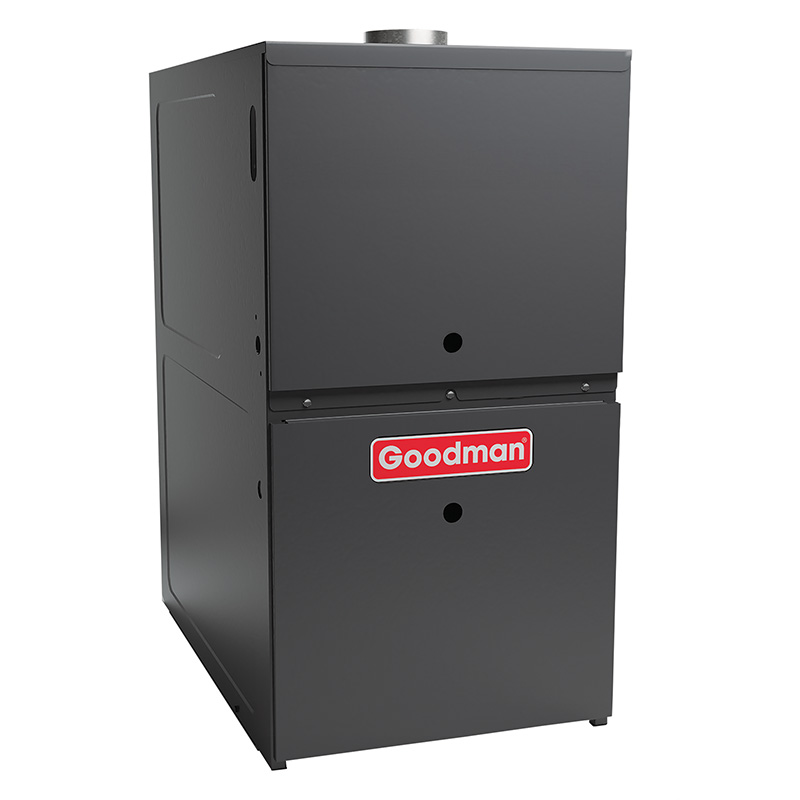
Upflow means the furnace pulls return air in at the bottom and pushes conditioned air out the top, feeding supply ducts that run up into the living space above. It is the most common residential configuration and works well in basements, utility closets on the main floor, or dedicated mechanical rooms. If your ducts feed down through the floor or out horizontally, you would need a downflow or horizontal unit instead.
How does R-32 refrigerant affect service and future repairs?
R-32 is a single-component refrigerant, which means a technician can legally recharge it in the field after a leak repair without replacing the entire charge. It requires the same EPA 608 certification as R-410A, so any licensed HVAC technician can work on it. Supply is growing as manufacturers shift away from R-410A, so availability should not be a concern for the service life of this system.
Goodman has mixed reviews online. Should that change my decision?
Goodman scores around 2.5 out of 5 on ConsumerAffairs, a channel that attracts disproportionately unhappy owners, and around 3.8 out of 5 across Google dealer reviews where affordability is frequently cited as a positive. The documented weak points are dual-run capacitor failures (typically a low-cost fix), evaporator coil leaks reported in a portion of owner reviews, and compressors that average 10 to 14 years versus 15 to 20 for premium brands. Those are real trade-offs, not dealbreakers, and a good installation and a service agreement go a long way toward managing them.
Does the two-stage AC actually reduce humidity better than a single-stage unit?
Yes, in practice. On a mild day, the compressor runs at the lower stage for a longer, slower cycle rather than blasting on at full capacity and shutting off quickly. Longer run times mean more air passes over the cold evaporator coil, and that contact time is what pulls moisture out of the air. Homeowners in humid climates like the Gulf Coast, Southeast, or Mid-Atlantic often notice the difference in indoor comfort during shoulder-season months.
Specifications
| Cooling capacity | 2 Ton |
| Efficiency | 18.2 SEER2 |
| Furnace output | 80000 BTU |
| Furnace efficiency | 80% AFUE |
| Configuration | Upflow |
| Refrigerant | R-32 |