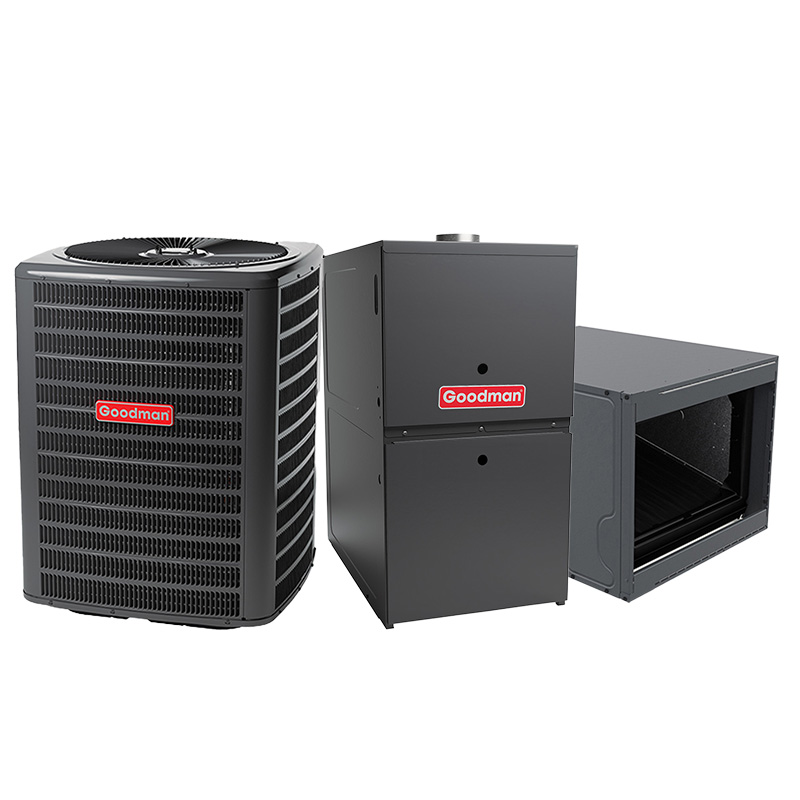
Goodman 2 Ton AC And 80000 BTU 80% AFUE Gas Furnace System | 18 SEER2 Two Stage AC | Variable Speed Two Stage Furnace | Horizontal | R32
View on AC Direct see your lowest price →Check current price on AC Direct →
Key features
- 18 SEER2 two-stage AC rated for approximately 1,440 sq ft of typical residential cooling
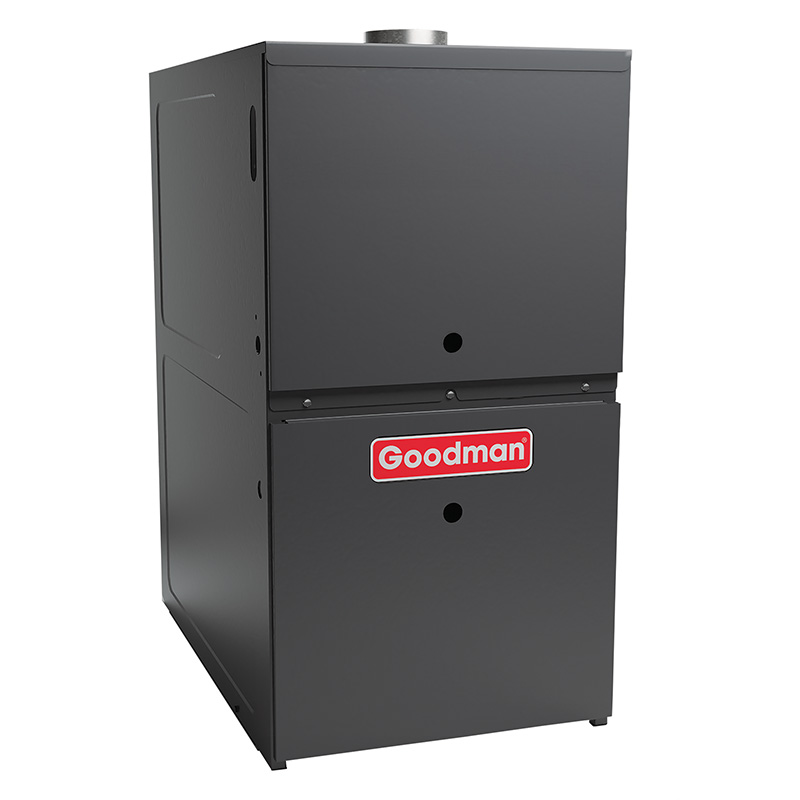
- 80,000 BTU two-stage gas furnace at 80% AFUE with variable-speed indoor blower motor
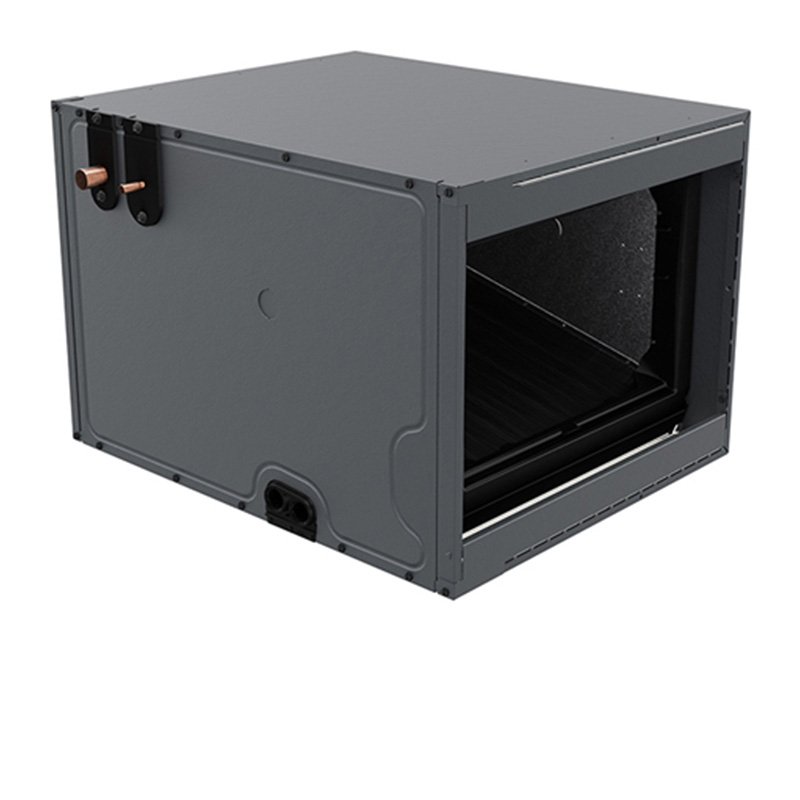
- Horizontal cabinet orientation for attic, crawlspace, or side-discharge installations
- R-32 refrigerant with a global-warming potential roughly 68% lower than R-410A
- Two-stage operation on both cooling and heating sides for improved humidity control and quieter part-load runs
- Compatible with most 24V communicating and conventional thermostats
About this system
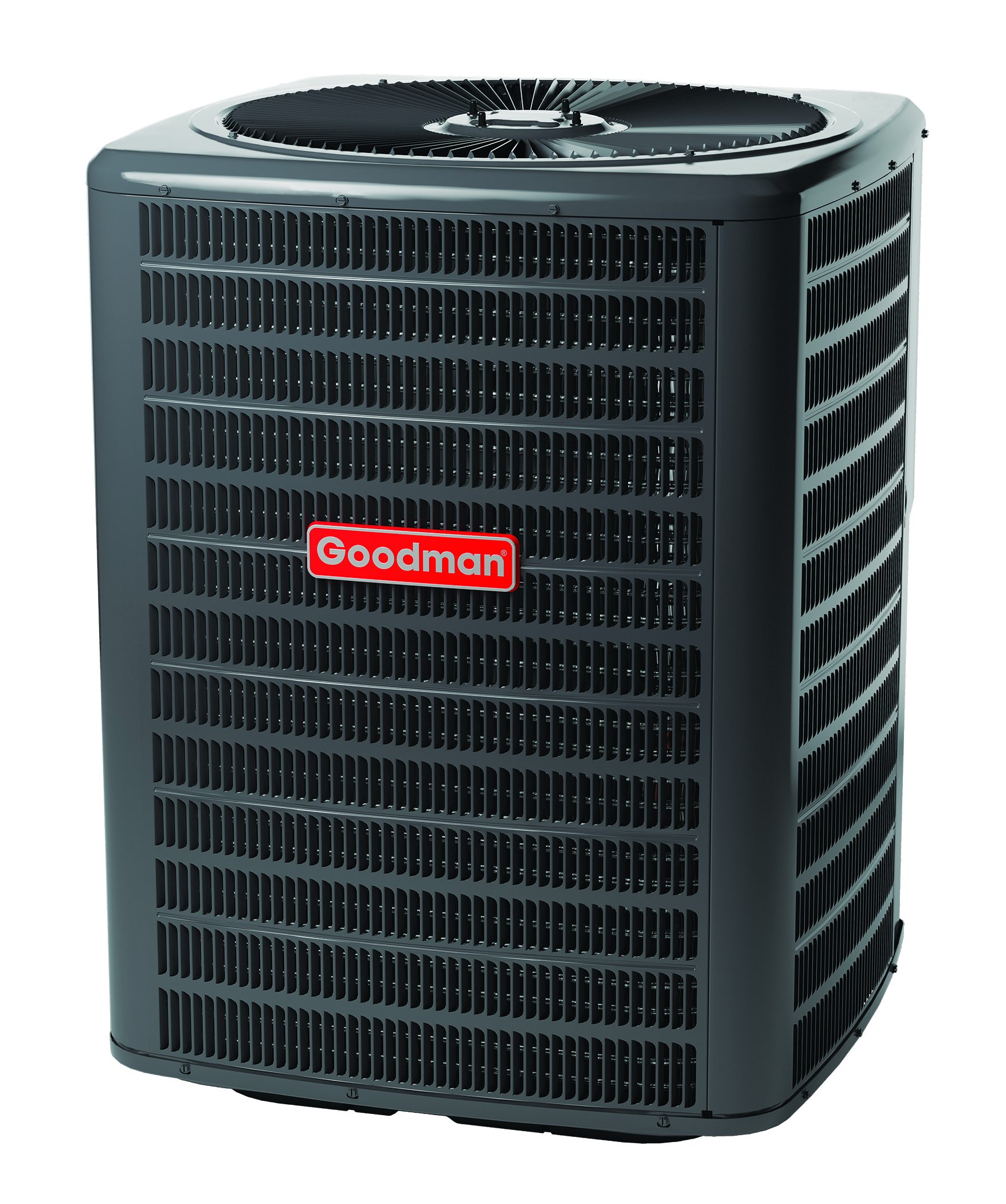
This Goodman bundle pairs a 2-ton, 18 SEER2 two-stage central air conditioner with an 80,000 BTU, 80% AFUE two-stage gas furnace in a horizontal configuration, making it a practical fit for attic or crawlspace installations where upflow or downflow units simply will not work. The R-32 refrigerant charge is a meaningful step forward environmentally, carrying a global-warming potential roughly 68 percent lower than the R-410A it replaces, and it operates at slightly lower pressures, which can reduce stress on the refrigerant circuit over time.
The two-stage compressor in the AC side runs at a reduced capacity during mild weather, which lowers runtime energy consumption and does a noticeably better job of wringing humidity out of the air compared with a single-stage unit that only knows full blast or off. The variable-speed furnace blower complements that by moving air more quietly and consistently than a single-speed motor, helping even out temperature swings from room to room. At 80% AFUE, the furnace sits at the entry tier of efficiency, meaning roughly one dollar in five spent on gas exits as exhaust heat rather than warming your home. Homeowners in moderate heating climates or those prioritizing lower upfront cost over long-term gas savings will find that trade-off acceptable; those with long, cold winters may want to price a 96% AFUE unit before committing.
The horizontal configuration does add installation complexity. Attic or side-discharge installations require careful attention to drainage slope, refrigerant line routing, and static pressure setup. Because Goodman’s longevity is more sensitive to install quality than most premium brands, the contractor you choose matters at least as much as the equipment itself.
This Goodman bundle delivers a genuine efficiency and comfort upgrade over entry-level single-stage systems at a price point that is hard to argue with, typically landing 15 to 25 percent below a comparable Carrier, Trane, or Lennox configuration. The two-stage cooling and variable-speed blower are real, tangible benefits, not marketing language, but the brand's documented reliability record and sensitivity to install quality mean this system rewards homeowners who invest in a skilled, reputable installer and budget for the possibility of a capacitor or coil service call after year seven.
Overall score is the average of the five ratings above.
What we like
- Two-stage compressor reduces energy use and improves dehumidification on mild days
- Variable-speed blower delivers quieter, more consistent airflow than single-speed alternatives
- R-32 refrigerant is lower-GWP and operates at more manageable pressures than R-410A
- 18 SEER2 rating qualifies for federal tax credits and many utility rebates in 2024 and beyond
- Significantly lower purchase price than Carrier, Trane, or Lennox equivalents, typically by 15 to 25 percent
Trade-offs
- 80% AFUE furnace is the least efficient tier available; gas savings vs. a 96% unit can be substantial in cold climates
- Dual-run capacitors are the most commonly reported failure point, with repair costs typically in the $300 to $600 range
- Evaporator coil leaks appear in a meaningful share of owner reports, and compressor lifespan averages 10 to 14 years versus 15 to 20 for premium brands
- Horizontal configuration adds installation complexity, and because Goodman performance depends heavily on install quality, a cut-rate labor job can accelerate every one of the failure modes above
What homeowners and pros say about Goodman
Homeowners who share their experience with Goodman equipment tend to split into two camps that roughly track how many years the system has been running. Early-ownership reviews, reflected in Google dealer scores that average around 3.8 out of 5, frequently point to the lower purchase price as the deciding factor and note that the system cools and heats without drama in the first few years. The two-stage operation on a unit like this one earns specific praise for reducing the short-cycling and humidity complaints that plague single-stage equipment. HVAC technicians generally echo that positive early picture while adding a consistent caveat: Goodman’s longevity depends more heavily on installation quality than premium brands do, and a rushed or improperly charged install accelerates every weakness in the platform.
The less flattering side of the Goodman story surfaces in the ConsumerAffairs channel, where the brand sits at roughly 2.5 out of 5 and the complaint thread is strikingly consistent: dual-run capacitors failing, typically a $300 to $600 repair and the most commonly cited service call on Goodman equipment; evaporator coil leaks appearing in a meaningful portion of longer-term owner accounts; and compressor lifespans averaging 10 to 14 years, noticeably shorter than the 15 to 20 years owners of premium brands tend to report. A smaller but real minority of owners describe refrigerant leaks within the first year, which technicians almost universally attribute to install or charging problems rather than a factory defect. For a horizontal installation like this system, where refrigerant line routing and drainage slope demand particular care, that install-quality dependency is not a footnote but a genuine risk factor worth weighing when choosing a contractor.
Sources: ConsumerAffairs Goodman owner reviews, AHRI Directory of Certified Product Performance, U.S. DOE appliance and equipment efficiency standards, Goodman product specification sheets.
What it costs to run
At 18 SEER2, cooling this 2-ton system for a typical 1200-hour cooling season at the U.S. average electricity rate of $0.17/kWh works out to roughly $272 per year in cooling, about $93 less per year than a minimum-efficiency 13.4 SEER2 unit of the same size. Your real cost depends on your climate and local rate.
Method: (24,000 BTU/hr ÷ 18 SEER2) × 1200 hours ÷ 1000 × $0.17/kWh. Rate source: U.S. EIA average; cooling hours: moderate-climate estimate.
How it compares
| Brand | Comparable model | SEER2 | Stage | Price position |
|---|---|---|---|---|
| Goodman | 2-Ton 18 SEER2 Two-Stage AC / 80K BTU 80% AFUE Two-Stage Furnace (Horizontal, R-32) | 18 | Two-stage AC / Two-stage furnace | Value pick |
| Carrier | Performance 17 Series (25VNA / 59TP6) | 17-18 | Two-stage | Typically 15 to 25 percent more than this Goodman bundle |
| Trane | XR17 / S9V2 Series | 17-18 | Two-stage | Typically 15 to 25 percent more than this Goodman bundle |
| Lennox | Merit 17 Series (ML17XC2 / ML180UH) | 17-18 | Two-stage | Typically 15 to 25 percent more than this Goodman bundle |
Competitor rows are comparable single-stage units at similar efficiency; price is relative position, not a quote.
Questions about this system
Will this system work in my attic if summer temperatures up there exceed 120°F?
Horizontal furnaces and air handlers are designed for attic installation, but extreme ambient heat in an unconditioned attic can stress electrical components and reduce overall efficiency. Ensure adequate attic ventilation, verify that the unit's operating temperature range covers your conditions, and confirm with your installer that the refrigerant line lengths and insulation meet Goodman's specifications for the installation.
Is R-32 refrigerant harder to service than R-410A if I need a recharge or coil replacement down the road?
R-32 requires technicians to be certified and equipped for mildly flammable (A2L-class) refrigerants, and not every HVAC shop has made that transition yet. It is worth confirming that your service contractor is R-32 certified before you buy, particularly since Goodman's documented history includes a minority of owners reporting refrigerant leaks in the first year.
Goodman scores only about 2.5 out of 5 on ConsumerAffairs. Should I be worried?
ConsumerAffairs skews toward complaint-driven reviews, and the recurring theme for Goodman is repair costs climbing after roughly year seven, particularly capacitors and evaporator coil issues. Google dealer reviews average around 3.8 out of 5, where affordability is the most common praise. The realistic picture is a system that competes well on price and early-year performance, with a higher-than-premium probability of service calls in the back half of its life.
What size home is a 2-ton, 18 SEER2 system appropriate for?
A rough rule of thumb places 2-ton cooling capacity around 1,200 to 1,500 square feet, but actual sizing depends on insulation levels, window area, local climate, and ceiling height. A proper Manual J load calculation by your installer is the only accurate way to confirm that 2 tons is the right fit for your home.
Should I upgrade to a 96% AFUE furnace instead of the 80% unit included here?
In climates with short or mild winters, the payback period on a 96% AFUE furnace can stretch to ten or more years, making the 80% unit a reasonable economic choice. In northern climates where heating runs for five or six months, the roughly 16-cent-per-dollar efficiency gap adds up faster, and the upgrade often pays back in seven to nine years. Run the numbers for your local gas rates and heating degree days before deciding.
Specifications
| Cooling capacity | 2 Ton |
| Efficiency | 18 SEER2 |
| Furnace output | 80000 BTU |
| Furnace efficiency | 80% AFUE |
| Configuration | Horizontal |
| Refrigerant | R-32 |