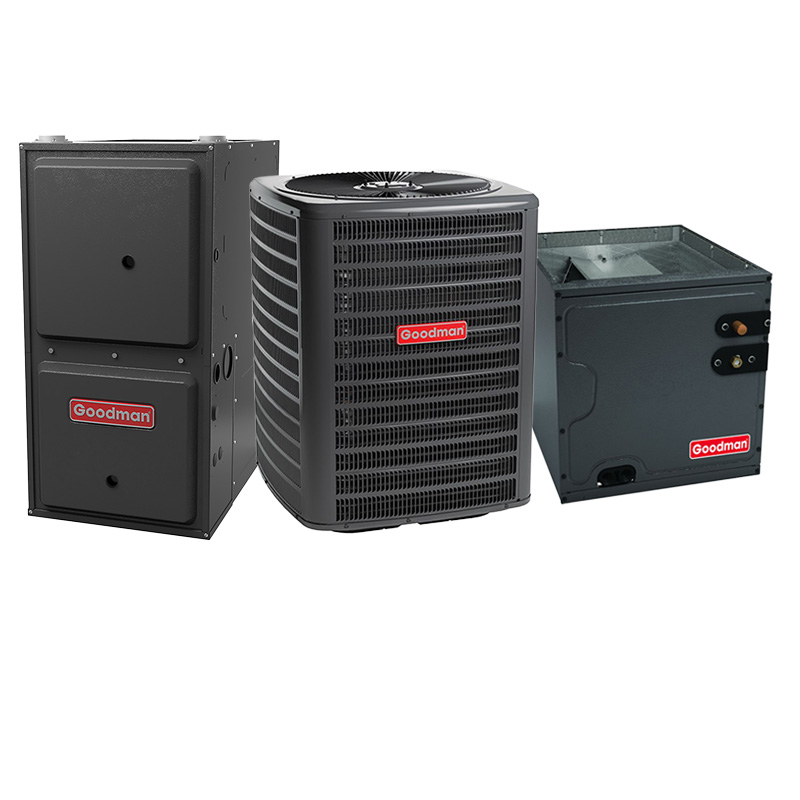
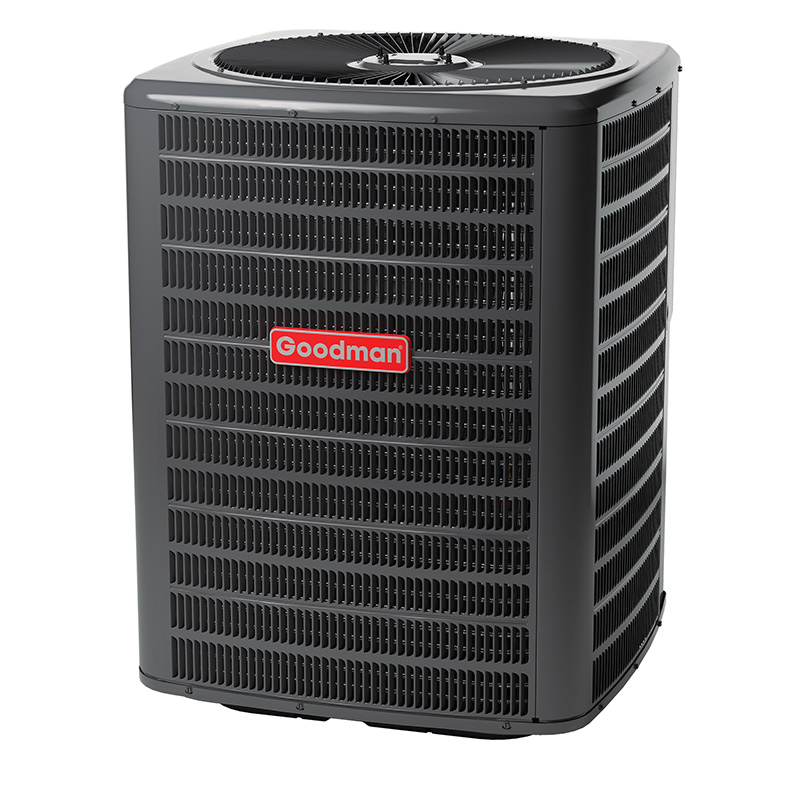
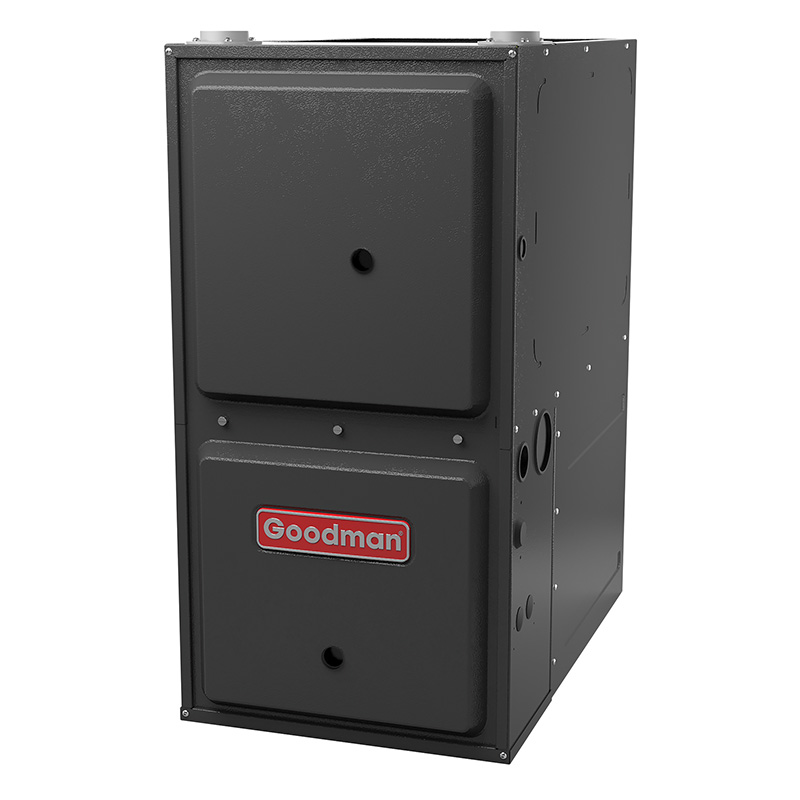
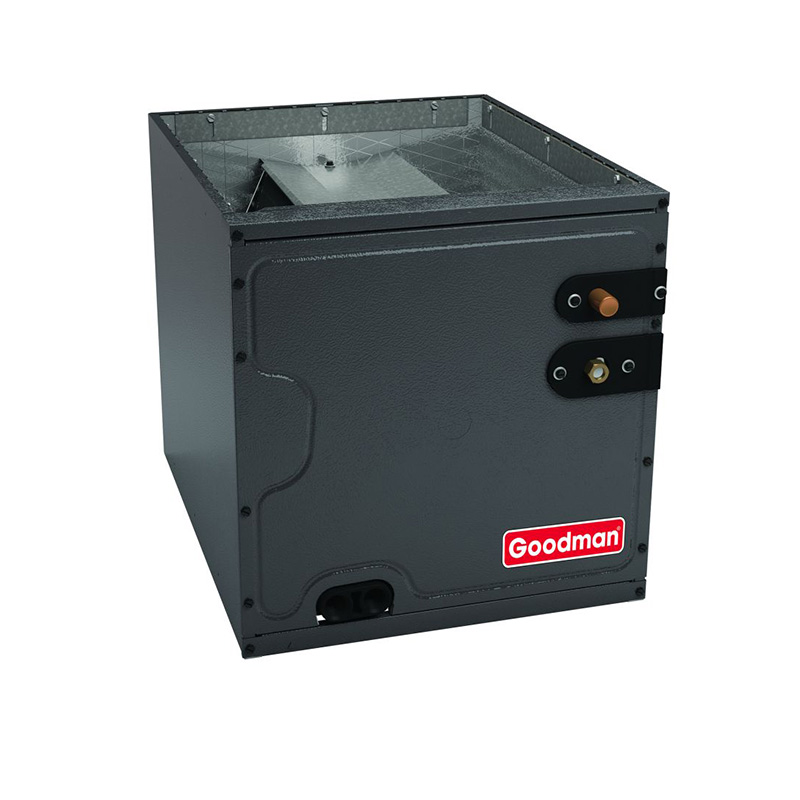
Goodman 2 Ton 14.5 SEER2 R32 AC System with 60,000 BTU 80% AFUE Gas Furnace – California & Colorado Ultra Low NOx, Upflow, Multi-Speed ECM
View on AC Direct see your lowest price →Check current price on AC Direct →
Key features
- 14.5 SEER2 efficiency rating meets 2023 federal minimums across most U.S. climate zones
- R-32 refrigerant with lower global warming potential, replacing R-410A
- California and Colorado Ultra Low NOx certified, ready for the strictest state air-quality markets
- Multi-speed ECM blower motor improves airflow efficiency and reduces operating noise vs. PSC motors
- 80% AFUE upflow gas furnace at 60,000 BTU output, suited for smaller homes and moderate climates
- Factory-matched coil and furnace combination simplifies permitting and warranty documentation
About this system
The Goodman 2 Ton 14.5 SEER2 R-32 AC and 80% AFUE Gas Furnace bundle is a straightforward entry-level split system sized for smaller homes and conditioned spaces roughly 800 to 1,100 square feet, depending on local climate and insulation. The upflow furnace configuration suits most standard installations where the unit sits in a basement, closet, or utility room and pushes heated air upward into the duct system. At 60,000 BTU and 80% AFUE, the furnace converts eight out of every ten units of fuel into usable heat, which is the minimum efficiency threshold most building codes allow for new installs in many regions today.
The R-32 refrigerant is a meaningful detail here. R-32 has a lower global warming potential than the R-410A it replaces, and it is the direction the industry is moving under current EPA regulations. The 14.5 SEER2 rating meets the 2023 federal minimums for the Southern U.S. and is just above minimums for most Northern regions, so this is a code-compliant baseline system, not a high-efficiency one. The multi-speed ECM blower motor on the furnace does improve air circulation efficiency and humidity control compared to a standard PSC motor, and it runs more quietly at lower speeds. This specific system also carries California and Colorado Ultra Low NOx certification, making it one of the few options that ships ready for those stricter air-quality markets without a field modification.
This bundle suits budget-conscious homeowners replacing an aging system who want a known brand with accessible parts, a compliant refrigerant, and a multi-speed blower without paying for variable-capacity or two-stage technology. It is a workhorse system, not a premium one, and its long-term performance will depend heavily on who installs it and how well it is maintained afterward.
This Goodman bundle delivers a code-compliant, R-32-ready system at a price point that is genuinely 15 to 25 percent below comparable Carrier, Trane, or Lennox equipment, making it a reasonable choice when budget is the primary constraint. The multi-speed ECM blower and Ultra Low NOx certification add real utility, but the 80% AFUE furnace and single-stage cooling leave efficiency gains on the table compared to mid-tier alternatives. Owners should go in with clear eyes: Goodman's documented failure modes, particularly dual-run capacitors and evaporator coil leaks, mean budgeting for at least one service call in the first decade is prudent.
Overall score is the average of the five ratings above.
What we like
- Priced 15 to 25 percent below Trane, Carrier, and Lennox systems at similar efficiency
- R-32 refrigerant is forward-looking and avoids the supply and cost issues that will follow R-410A's phase-down
- Ultra Low NOx certification means no field modification needed for California or Colorado installs
- Multi-speed ECM blower motor provides quieter operation and better humidity management than single-speed alternatives
- Parts are widely stocked by HVAC distributors nationwide, which keeps repair wait times and costs relatively low
Trade-offs
- 80% AFUE is the minimum legal efficiency in most markets; homeowners in cold climates will pay noticeably more in gas bills than with a 96% AFUE alternative
- Single-stage cooling means the compressor is either fully on or fully off, which can cause temperature swings and less effective humidity removal compared to two-stage or variable systems
- Compressor lifespan averages 10 to 14 years per documented owner experience, several years shorter than premium-brand compressors that routinely reach 15 to 20 years
- Evaporator coil leaks are a recurring complaint in owner reviews, and dual-run capacitor failures are the most commonly reported repair, typically surfacing after year 7
What homeowners and pros say about Goodman
Homeowners who have lived with Goodman equipment for a few years tend to have polarized views. Those who had a skilled installer and kept up with annual maintenance often report years of uneventful operation and point to the lower upfront cost as a genuine win. Those who ran into problems, however, frequently cite repair bills that started climbing after the seven-year mark, a pattern that shows up repeatedly in Goodman’s roughly 2.5 out of 5 rating on ConsumerAffairs. The most common complaints there involve dual-run capacitor failures, which are a relatively inexpensive fix at 300 to 600 dollars but frustrating when they recur, and evaporator coil leaks, which can be more involved and costly to address. The Google dealer review picture is more balanced, sitting around 3.8 out of 5 across hundreds of reviews, where the word that comes up most is affordable.
HVAC technicians who work on Goodman equipment regularly tend to echo that same split. Many will say it is a serviceable unit with parts that are easy to source, which matters when a system fails on a hot July afternoon. They also flag the compressor lifespan as a real consideration: Goodman compressors average 10 to 14 years in documented owner experience versus the 15 to 20 years more typical of Trane or Carrier compressors, which can shift the total cost of ownership calculation over a long ownership period. For this specific R-32 system, technicians emphasize that proper refrigerant charging at startup is critical, since a small number of owners have reported refrigerant leaks in the first year that turned out to be an installation or initial charge problem rather than a factory defect. The consistent takeaway across both groups is that Goodman rewards a careful install and regular maintenance more than most premium brands do.
Sources: ConsumerAffairs Goodman owner reviews, AHRI Directory of Certified Product Performance, U.S. DOE appliance and equipment efficiency standards, Goodman product specification sheets.
What it costs to run
At 14.5 SEER2, cooling this 2-ton system for a typical 1200-hour cooling season at the U.S. average electricity rate of $0.17/kWh works out to roughly $338 per year in cooling, about $27 less per year than a minimum-efficiency 13.4 SEER2 unit of the same size. Your real cost depends on your climate and local rate.
Method: (24,000 BTU/hr ÷ 14.5 SEER2) × 1200 hours ÷ 1000 × $0.17/kWh. Rate source: U.S. EIA average; cooling hours: moderate-climate estimate.
How it compares
| Brand | Comparable model | SEER2 | Stage | Price position |
|---|---|---|---|---|
| Goodman | 2 Ton 14.5 SEER2 R-32 AC + 60,000 BTU 80% AFUE Upflow Furnace (this system) | 14.5 | Single-stage | Value pick |
| Carrier | Comfort Series (24ACC6 / 58CVA pairing) | 14.3 to 15.2 | Single-stage | Typically 15 to 25 percent more than this Goodman bundle |
| Trane | XR14 / XB80 pairing | 14.3 to 15.0 | Single-stage | Typically 15 to 25 percent more than this Goodman bundle |
| Lennox | Merit Series (ML14XC1 / ML180 pairing) | 14.3 to 15.0 | Single-stage | Typically 15 to 25 percent more than this Goodman bundle |
Competitor rows are comparable single-stage units at similar efficiency; price is relative position, not a quote.
Questions about this system
Is 14.5 SEER2 going to meet California's Title 24 or Colorado's energy code requirements for a new installation?
14.5 SEER2 meets the current federal minimums and is generally sufficient for a straight replacement install in most jurisdictions, but California Title 24 compliance for new construction or major renovations can require additional documentation and may push efficiency thresholds higher depending on the project type. Always verify with your local building department before purchasing, especially for new construction in California.
What does the Ultra Low NOx certification actually mean, and do I need it outside California or Colorado?
Ultra Low NOx means the furnace burners produce significantly fewer nitrogen oxide emissions than standard models, meeting the stricter air-quality rules enforced by California's air districts and Colorado's regulations. Outside those two states, you generally do not need this certification, but having it does not hurt and does not affect performance or pricing in a meaningful way.
How serious is the evaporator coil leak issue owners report, and is there anything I can do to reduce the risk?
Coil leaks are a documented pattern in Goodman owner reviews, often attributed to formicary corrosion from airborne compounds or to a manufacturing defect. Using a UV dye leak check at installation, scheduling annual refrigerant pressure checks, and installing a whole-home air purifier or UV coil treatment can help catch or slow corrosion early. The 10-year parts warranty covers a replacement coil if the leak is due to a manufacturing defect, but labor is your cost.
The system uses R-32 refrigerant. Will my local HVAC technician be able to service it?
R-32 requires technicians to use compatible recovery equipment and to follow updated handling procedures because it is mildly flammable under specific conditions, which older R-410A tools are not rated for. Most established HVAC companies are already equipping their technicians for R-32 as the industry transition accelerates, but it is worth confirming your service contractor is R-32 certified before scheduling any refrigerant work.
Goodman's ConsumerAffairs score is low. Should I be worried about buying this brand?
Goodman's roughly 2.5 out of 5 on ConsumerAffairs reflects a platform where dissatisfied owners are far more likely to post than satisfied ones, so the score skews negative. The more representative Google dealer reviews average around 3.8 out of 5, where affordability is the most common positive theme. The real risk with Goodman is not catastrophic failure out of the box but rather a shorter compressor lifespan than premium brands and a higher probability of capacitor and coil service calls after year 7, which a good extended warranty or service contract can partly offset.
Specifications
| Cooling capacity | 2 Ton |
| Efficiency | 14.5 SEER2 |
| Furnace output | 60,000 BTU |
| Furnace efficiency | 80% AFUE |
| Configuration | Upflow |
| Refrigerant | R-32 |