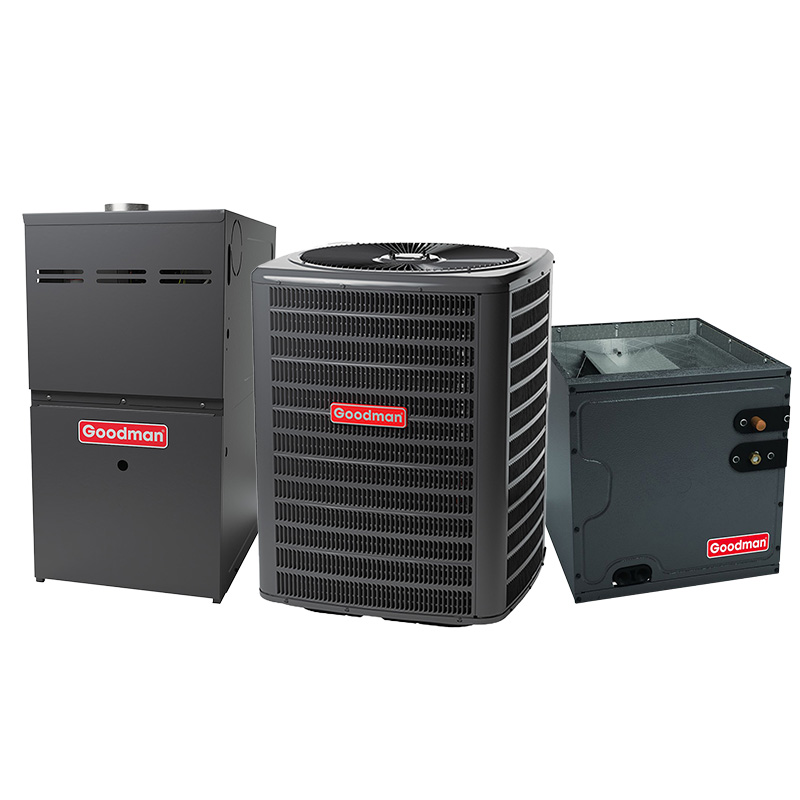
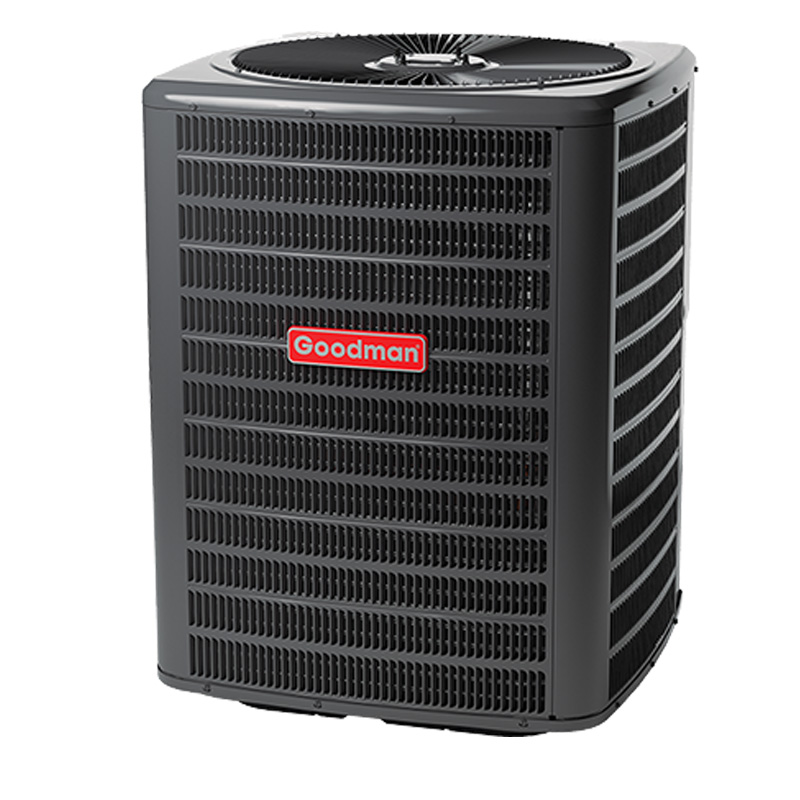
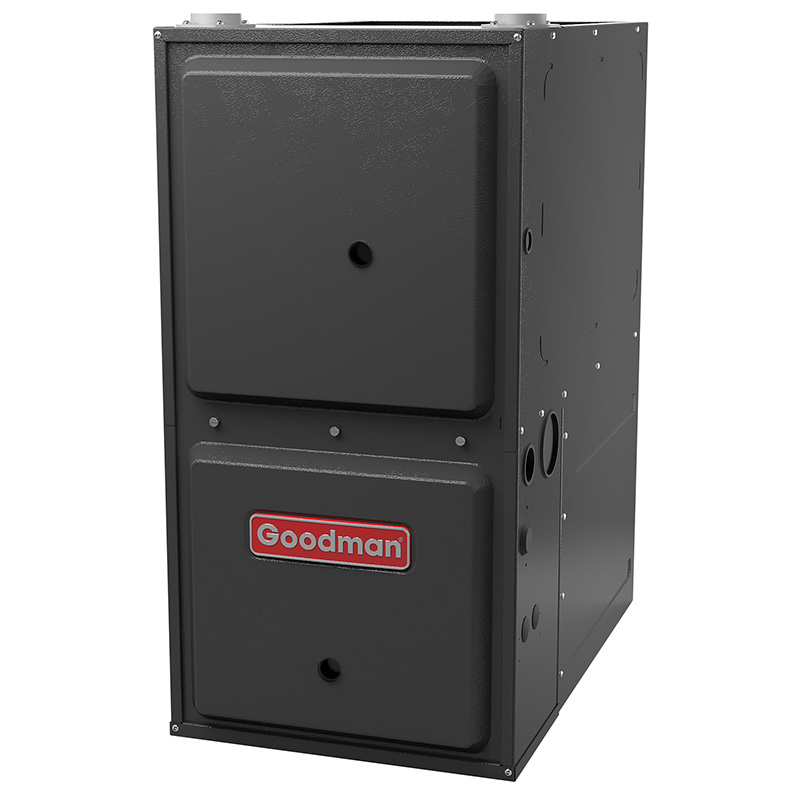
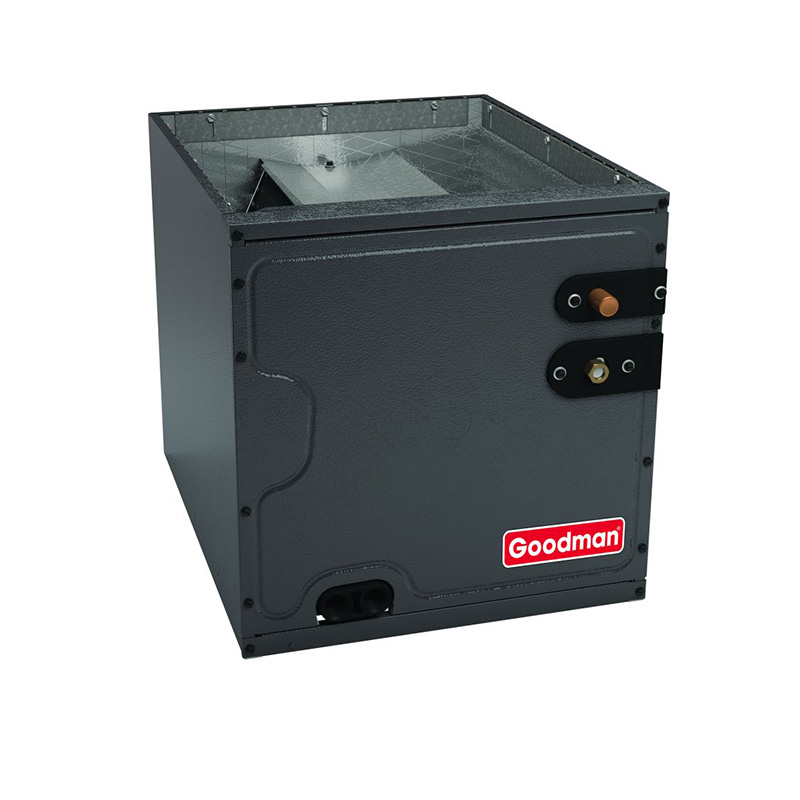
Goodman 2 Ton Dual Fuel Hybrid Heat Pump System – 40000 BTU California Low NOx Gas Furnace, 80% AFUE, 14.5 SEER2, Upflow, R32
View on AC Direct see your lowest price →Check current price on AC Direct →
Key features
- Dual fuel hybrid operation: heat pump handles mild weather, gas furnace takes over when outdoor temps fall and efficiency drops
- 14.5 SEER2 cooling efficiency, meeting current federal minimums with modest operating-cost savings over baseline equipment
- 80% AFUE gas furnace: straightforward single-stage heating, no variable or two-stage modulation
- California Low NOx certified, meeting strict air quality district requirements in SCAQMD and similar jurisdictions
- R-32 refrigerant, which carries a lower global warming potential than legacy R-410A
- Upflow configuration designed for basement, crawlspace, or ground-level mechanical room installations with overhead ductwork
About this system
The Goodman 2-Ton Dual Fuel Hybrid Heat Pump System pairs a 14.5 SEER2 heat pump with a 40,000 BTU, 80% AFUE upflow gas furnace into one integrated package designed for climates where winter temperatures occasionally drop below the efficient range of a heat pump alone. The system automatically switches between electric heat pump mode and gas furnace mode depending on outdoor conditions, which can meaningfully reduce utility bills compared to running a gas furnace exclusively through a mild heating season. The use of R-32 refrigerant is a forward-looking choice, as R-32 has a lower global warming potential than the older R-410A it replaces and is becoming the industry standard.
At 14.5 SEER2, this system sits at the lower end of the efficiency ladder, just above the federal minimum for most regions, and the 80% AFUE furnace means one in five BTUs of gas is exhausted rather than delivered to your home. That combination is functional and code-compliant, but homeowners in high-utility-cost areas or those planning a long ownership horizon may find the step up to a higher-AFUE or two-stage system pays back over time. The California Low NOx certification makes this unit legal to install in SCAQMD and other California air quality districts with strict nitrogen oxide limits, which is a specific and non-negotiable requirement for California buyers that eliminates many otherwise similar systems from consideration.
The upflow configuration directs conditioned air upward into the duct system, making this unit a natural fit for installations in a basement, crawlspace, or ground-level utility closet where ductwork runs above the air handler. Sizing at 2 tons targets homes roughly in the 800 to 1,200 square foot range depending on local climate, insulation, and building envelope, though a proper Manual J load calculation by your installing contractor is the only reliable way to confirm correct sizing for your specific home.
This system is a practical, budget-accessible entry point for California homeowners who need a Low NOx-compliant dual fuel setup and want the operating cost flexibility of hybrid heating without paying premium-brand prices. The efficiency ratings are baseline rather than impressive, and Goodman's track record suggests you should budget for possible component repairs after year seven and ensure your installer is experienced with dual fuel commissioning. It delivers solid value for what it is, as long as expectations are set accordingly.
Overall score is the average of the five ratings above.
What we like
- Priced 15 to 25 percent below comparable Carrier, Trane, and Lennox dual fuel systems, lowering upfront cost significantly
- California Low NOx certification opens the door to installations in air quality districts where most standard furnaces are prohibited
- R-32 refrigerant adoption aligns with where the industry is heading and avoids the supply constraints that will eventually affect R-410A systems
- Dual fuel switching logic reduces gas consumption during mild winters when a heat pump operates efficiently, lowering monthly heating costs
- Upflow design suits common basement and utility-room layouts without requiring a non-standard installation configuration
Trade-offs
- 80% AFUE is a single-stage, non-condensing furnace: less efficient and less precise than 96%+ two-stage or modulating alternatives at only a modest price difference
- Dual-run capacitors are the most frequently reported failure on Goodman equipment and will likely need replacement at some point, typically costing $300 to $600
- Compressor lifespan averages 10 to 14 years based on owner experience, shorter than the 15 to 20 years reported for premium-brand compressors
- A minority of owners have reported refrigerant leaks within the first year, a pattern that points to install and charge quality as a real variable to manage
What homeowners and pros say about Goodman
Homeowners who choose Goodman equipment most often point to the upfront price as the deciding factor, and that pattern holds for this dual fuel system. On Google dealer review pages, Goodman installations tend to cluster around 3.8 out of 5 stars, with affordability and reliable basic operation as the most consistent praise. The picture on ConsumerAffairs is rougher, sitting around 2.5 out of 5, though that platform disproportionately captures frustrated owners rather than satisfied ones. The recurring theme in the critical reviews is repair costs that start to accumulate somewhere after year seven, which lines up with what HVAC technicians say about the brand: it works acceptably when installed correctly, but it does not always age as gracefully as premium equipment.
Among the specific failure modes that show up repeatedly in owner feedback and technician field experience, dual-run capacitor failure is the most common and least alarming, typically a $300 to $600 repair that most HVAC companies can complete in a single visit. More consequential are evaporator coil leaks, which appear in a meaningful share of owner accounts and can be a multi-hundred-dollar repair depending on refrigerant type and coil access. A minority of owners have also reported refrigerant leaks within the first year on Goodman systems, and technicians generally attribute those to installation and charging quality rather than a factory defect, which underscores why choosing an experienced dual fuel installer matters as much as the equipment itself. Compressor longevity averaging 10 to 14 years, versus 15 to 20 for top-tier brands, is the long-horizon trade-off buyers accept in exchange for the lower purchase price.
Sources: ConsumerAffairs Goodman owner reviews, AHRI Directory of Certified Product Performance, U.S. DOE appliance and equipment efficiency standards, Goodman product specification sheets.
What it costs to run
At 14.5 SEER2, cooling this 2-ton system for a typical 1200-hour cooling season at the U.S. average electricity rate of $0.17/kWh works out to roughly $338 per year in cooling, about $27 less per year than a minimum-efficiency 13.4 SEER2 unit of the same size. Your real cost depends on your climate and local rate.
Method: (24,000 BTU/hr ÷ 14.5 SEER2) × 1200 hours ÷ 1000 × $0.17/kWh. Rate source: U.S. EIA average; cooling hours: moderate-climate estimate.
How it compares
| Brand | Comparable model | SEER2 | Stage | Price position |
|---|---|---|---|---|
| Goodman | 2-Ton Dual Fuel Hybrid System (this unit) | 14.5 | Single-stage | Value pick |
| Carrier | Performance Series Dual Fuel (25HCE / 58TP pairing) | 15.0 | Single-stage | Typically 15 to 25 percent more than this Goodman system |
| Trane | XR15 Heat Pump with S8X1 Gas Furnace dual fuel pairing | 15.0 | Single-stage | Typically 15 to 25 percent more than this Goodman system |
| Lennox | Merit Series ML14XP1 Heat Pump with 80MGF Furnace dual fuel pairing | 14.3 | Single-stage | Typically 15 to 25 percent more than this Goodman system |
Competitor rows are comparable single-stage units at similar efficiency; price is relative position, not a quote.
Questions about this system
How does the system decide when to run the heat pump versus the gas furnace?
The control board uses a balance point temperature, typically set between 35 and 40 degrees Fahrenheit, below which the gas furnace takes over because it can heat more cost-effectively than the heat pump in very cold air. Your installer should configure this balance point based on your local utility rates and climate to maximize savings. If it is set incorrectly, you can end up running gas when the heat pump would have been cheaper, or vice versa.
Does this system qualify for the federal Inflation Reduction Act heat pump tax credit?
Dual fuel heat pumps can qualify for the 25C tax credit, but the heat pump component must meet current efficiency thresholds set by the IRS and ENERGY STAR. At 14.5 SEER2, this unit may fall short of the efficiency floor required for the full credit, so confirm the specific model number's eligibility with your tax advisor or the ENERGY STAR qualified product list before purchase.
Why is the California Low NOx certification important, and do I need it outside California?
California's South Coast Air Quality Management District and other regional districts prohibit installation of furnaces that exceed specific nitrogen oxide emission limits. The Low NOx designation means this furnace meets those caps and can legally be installed in those jurisdictions. Outside California, NOx regulations are generally less restrictive, so the certification is a non-issue but does no harm.
What maintenance should I plan for to keep this system running reliably?
Annual professional tune-ups covering refrigerant charge verification, coil cleaning, and electrical connection checks are the baseline. Given that dual-run capacitors are the most commonly reported failure point on Goodman equipment, having a technician test capacitor health each visit is worthwhile. Changing the air filter every one to three months and keeping the outdoor unit clear of debris will protect both the heat pump coil and compressor.
Is a 2-ton unit the right size for my home?
Two tons of cooling capacity is a general starting point for homes in the 800 to 1,200 square foot range, but the actual answer depends on your climate zone, insulation levels, window area, ceiling height, and duct layout. Installing an oversized or undersized system causes short cycling, humidity problems, and premature wear, so require your contractor to perform a Manual J heat load calculation before finalizing equipment selection.
Specifications
| Cooling capacity | 2 Ton |
| Efficiency | 14.5 SEER2 |
| Furnace output | 40000 BTU |
| Furnace efficiency | 80% AFUE |
| Configuration | Upflow |
| Refrigerant | R-32 |