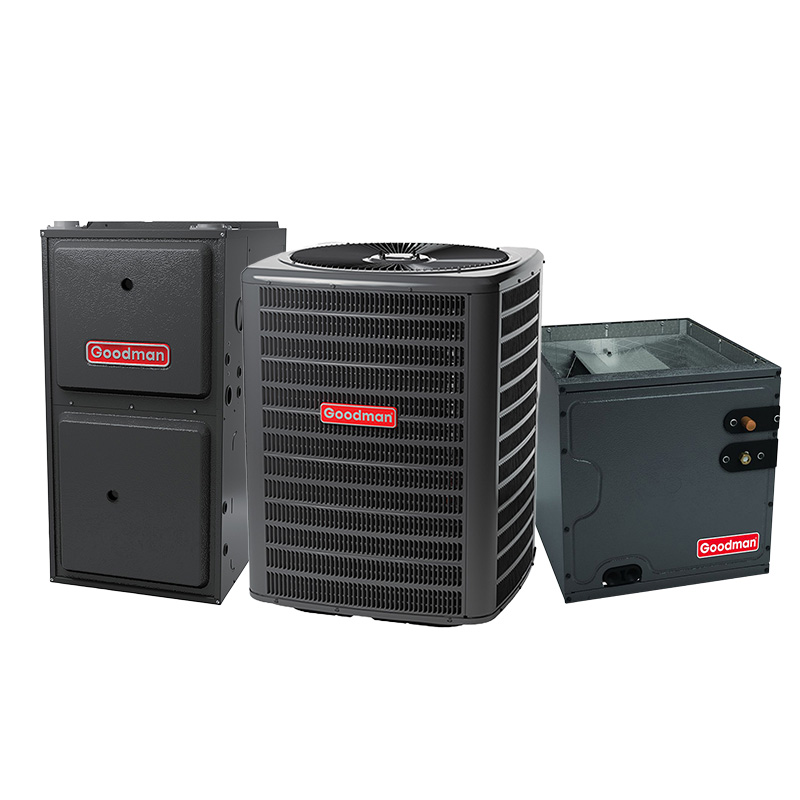
Goodman 2 Ton Dual Fuel Hybrid Heat Pump System – 40000 BTU California Low NOx Two Stage Gas Furnace, 80% AFUE, Upflow, 14.5 SEER2, R32
View on AC Direct see your lowest price →Check current price on AC Direct →
Key features
- 14.5 SEER2 heat pump efficiency, meeting current federal minimums for most U.S. regions
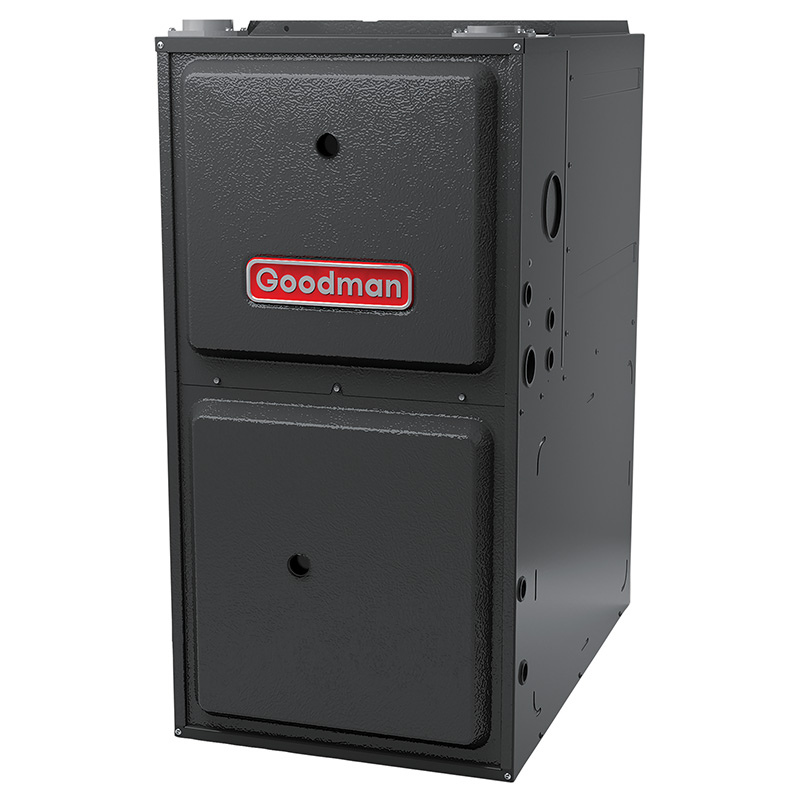
- 40,000 BTU two-stage gas furnace at 80% AFUE for proportional heating output on mild and cold days
- Dual fuel hybrid design automatically switches between heat pump and gas based on a programmed outdoor temperature setpoint
- R-32 refrigerant with lower global warming potential, compliant with California Low NOx standards
- Upflow cabinet orientation for installations where conditioned air exits the top of the furnace
- Sized for approximately 800 to 1,200 square feet subject to a site-specific load calculation
About this system
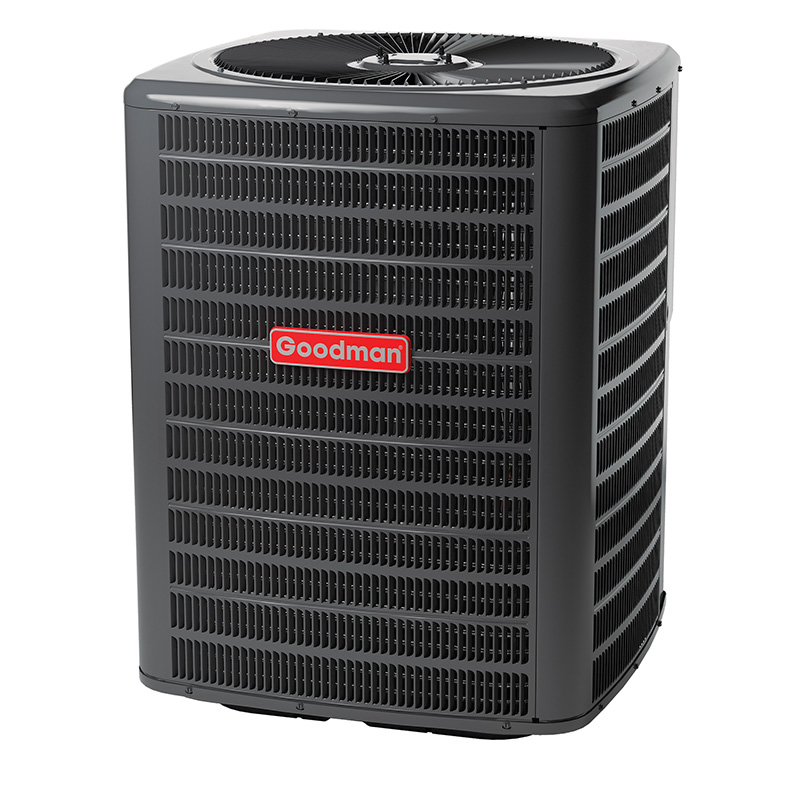
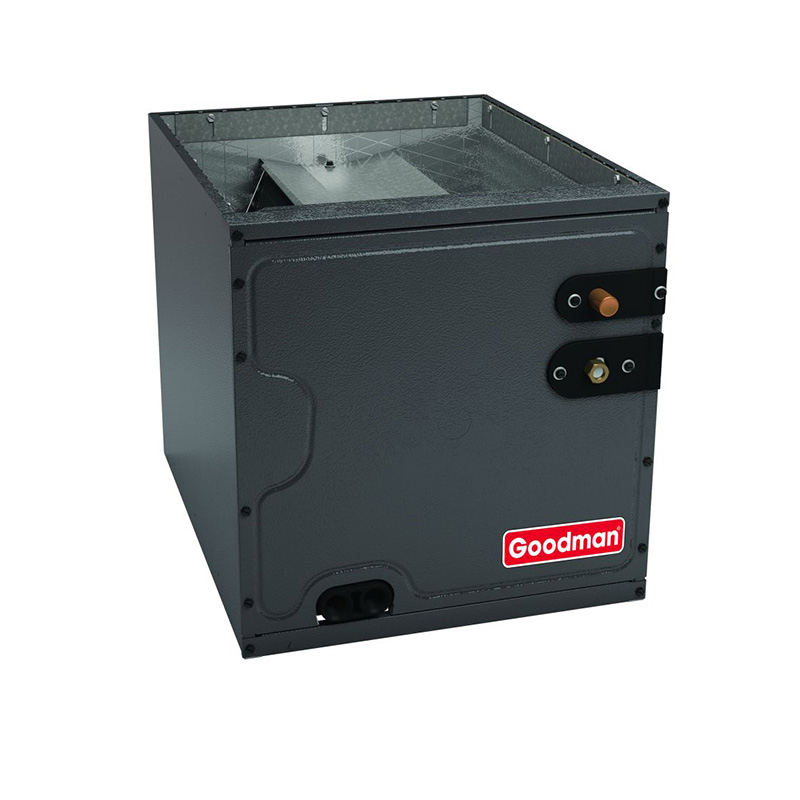
The Goodman 2-ton dual fuel hybrid heat pump system pairs a 14.5 SEER2-rated heat pump with a 40,000 BTU, 80% AFUE two-stage gas furnace in an upflow configuration, giving homeowners in mild-to-cold climates a way to run on inexpensive electricity most of the year and switch to gas automatically when outdoor temperatures drop below the heat pump’s efficient operating range. The R-32 refrigerant used here has a global warming potential roughly 68 percent lower than the R-410A it replaces, so the system meets current California Low NOx requirements and positions owners well ahead of tightening environmental regulations. At 2 tons it is sized for spaces roughly 800 to 1,200 square feet, assuming average insulation, though a proper Manual J load calculation by your installer is the only reliable way to confirm the right fit for your home.
Two-stage gas operation on the furnace means the system can run at a reduced capacity on milder days, cycling less aggressively, reducing temperature swings, and recovering some efficiency compared to single-stage furnaces. The dual fuel setup does add coordination complexity: the two systems must be correctly matched and the changeover thermostat must be programmed with an accurate balance point, typically somewhere between 30 and 40 degrees Fahrenheit depending on your local utility rates. Get that setup right and you have a system that leans heavily on lower-cost electric operation; get it wrong and you may burn more gas than necessary. This is a system whose real-world performance is strongly shaped by install quality, which is worth keeping front of mind throughout this review.
This Goodman dual fuel system offers an accessible entry point into hybrid heating technology at a price meaningfully below Carrier, Trane, and Lennox equivalents, and the two-stage furnace adds genuine comfort value over single-stage competition at this tier. The trade-off is a brand with a documented history of repair costs climbing after year 7 and known vulnerability at the capacitor, evaporator coil, and compressor level, so the long-term math only stays favorable if you budget for those possibilities and prioritize finding a skilled installer.
Overall score is the average of the five ratings above.
What we like
- Priced roughly 15 to 25 percent below comparable Carrier, Trane, and Lennox dual fuel systems
- Two-stage furnace reduces temperature swings and short-cycling compared to single-stage units at this price point
- Dual fuel design allows automatic switching to lower-cost electric operation during moderate weather
- R-32 refrigerant compliance with California Low NOx rules future-proofs the system against tightening regulations
- Widespread Goodman dealer network means parts are generally available without long lead times
Trade-offs
- 80% AFUE is the lowest efficiency tier available; 96% AFUE alternatives exist if gas heating hours are high in your climate
- ConsumerAffairs reviewers rate Goodman around 2.5 out of 5, with repair cost complaints clustering after roughly year 7
- Compressor lifespan averages 10 to 14 years versus 15 to 20 years reported for premium brands, which matters on a system this complex
- Dual fuel changeover setup requires precise thermostat programming and correct system matching; errors erode efficiency and add callbacks
What homeowners and pros say about Goodman
Homeowners who shop Goodman generally lead with the price, and Google dealer reviews bear that out with an aggregate score around 3.8 out of 5, where affordability is the most consistent point of praise across hundreds of location-level ratings. The picture on ConsumerAffairs is rougher: scores sit around 2.5 out of 5, and while that platform skews toward people logging complaints, the recurring theme is repair bills that start to accumulate after roughly year 7. For a dual fuel system where the heat pump and furnace both have their own mechanical complexity, that pattern is worth taking seriously rather than dismissing as outlier noise.
HVAC technicians who work on Goodman equipment regularly point to dual-run capacitors as the most predictable repair, usually a low-stakes fix in the 300 to 600 dollar range, but they also flag evaporator coil leaks and shorter-than-premium compressor life of roughly 10 to 14 years as documented weak points. On a hybrid system, a compressor failure means losing the electric heating mode entirely and falling back on gas only, which raises both operating cost and urgency. The technicians who speak most positively about Goodman tend to be the ones who installed the system correctly from the start, set the dual fuel balance point accurately, and verified the refrigerant charge before leaving the job. The brand’s ceiling is largely set by whoever puts it in.
Sources: ConsumerAffairs Goodman owner reviews, AHRI Directory of Certified Product Performance, U.S. DOE appliance and equipment efficiency standards, Goodman product specification sheets.
What it costs to run
At 14.5 SEER2, cooling this 2-ton system for a typical 1200-hour cooling season at the U.S. average electricity rate of $0.17/kWh works out to roughly $338 per year in cooling, about $27 less per year than a minimum-efficiency 13.4 SEER2 unit of the same size. Your real cost depends on your climate and local rate.
Method: (24,000 BTU/hr ÷ 14.5 SEER2) × 1200 hours ÷ 1000 × $0.17/kWh. Rate source: U.S. EIA average; cooling hours: moderate-climate estimate.
How it compares
| Brand | Comparable model | SEER2 | Stage | Price position |
|---|---|---|---|---|
| Goodman | 2-Ton Dual Fuel Hybrid System (this unit) | 14.5 | Two-stage furnace | Value pick |
| Carrier | Performance Series Dual Fuel (25HCB / 59TP6) | 15.0 | Two-stage furnace | Typically 15 to 25 percent more than this Goodman |
| Trane | XR15 Dual Fuel System (XR15 / S9X2) | 15.0 | Two-stage furnace | Typically 15 to 25 percent more than this Goodman |
| Lennox | Merit Series Dual Fuel (14HPX / ML196E) | 15.0 | Two-stage furnace | Typically 15 to 25 percent more than this Goodman |
Competitor rows are comparable single-stage units at similar efficiency; price is relative position, not a quote.
Questions about this system
How does the dual fuel changeover actually work, and what temperature should I set it at?
A compatible dual fuel thermostat monitors outdoor temperature and switches from heat pump operation to gas furnace operation when the outdoor temperature falls below a programmed balance point. That balance point depends on your local electricity and gas rates as well as your heat pump's rated heating capacity in cold conditions, and it typically falls somewhere between 30 and 40 degrees Fahrenheit. Your installer should calculate it based on your utility costs rather than using a generic default.
What is the most common repair on this type of Goodman system, and what does it cost?
Dual-run capacitors are the most frequently reported failure point on Goodman equipment and are typically a straightforward repair in the 300 to 600 dollar range. Evaporator coil leaks and refrigerant leaks show up in a meaningful share of owner reports as well, and those are more expensive to address. A minority of owners report refrigerant loss in the first year, which is generally a sign of an installation or charging issue rather than a product defect.
Is 80% AFUE acceptable, or should I pay more for a higher-efficiency furnace?
In a dual fuel hybrid setup used in a mild-to-moderate climate, the gas furnace runs far fewer hours than it would in a conventional system, which limits the payback window on a higher-efficiency furnace. If you are in a genuinely cold climate where the gas stage runs frequently, a 96% AFUE furnace would reduce annual fuel costs enough to narrow the price gap over time. For moderate climates with limited gas heating hours, 80% is a defensible choice at this price point.
Does this system qualify for any federal tax credits given its R-32 refrigerant and efficiency rating?
As of current IRS guidance, heat pump systems generally need to meet or exceed 15 SEER2 to qualify for the 25C federal tax credit, and this unit is rated 14.5 SEER2, which puts it below that threshold. You should confirm current eligibility requirements with a tax professional or check the ENERGY STAR database before assuming any credit applies, as rules and product lists are updated periodically.
How long should I expect this system to last, and does Goodman's warranty cover the compressor?
Goodman compressors on registered units typically carry a 10-year limited parts warranty, which is competitive at this price tier. Actual compressor lifespan in field reports averages around 10 to 14 years, shorter than the 15 to 20 years reported for premium brands. Registering the equipment with Goodman within the required window after installation is necessary to activate the full warranty term, so confirm that step is completed with your installer.
Specifications
| Cooling capacity | 2 Ton |
| Efficiency | 14.5 SEER2 |
| Furnace output | 40000 BTU |
| Furnace efficiency | 80% AFUE |
| Configuration | Upflow |
| Refrigerant | R-32 |