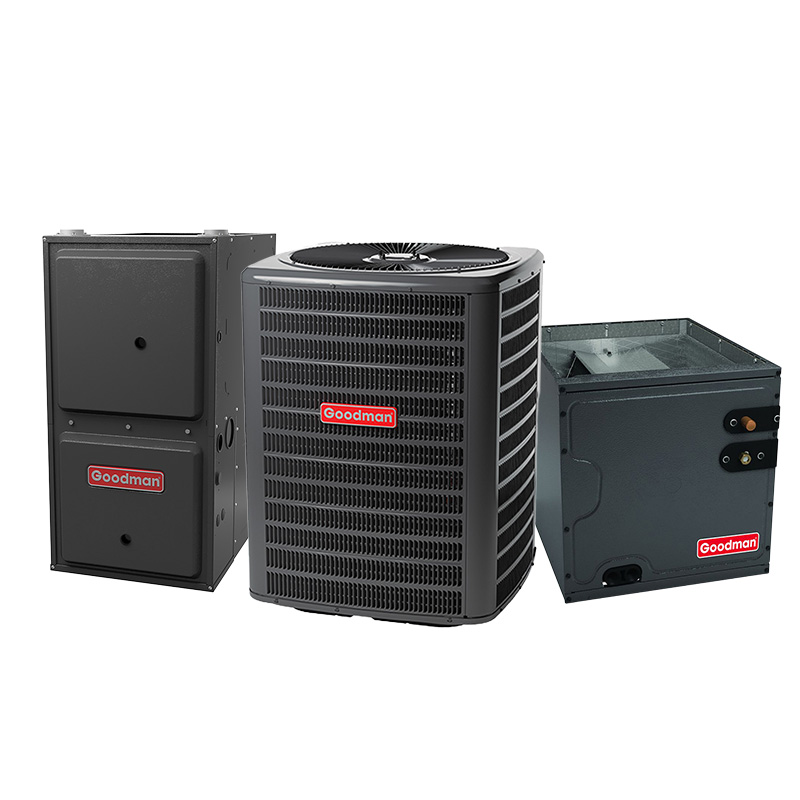
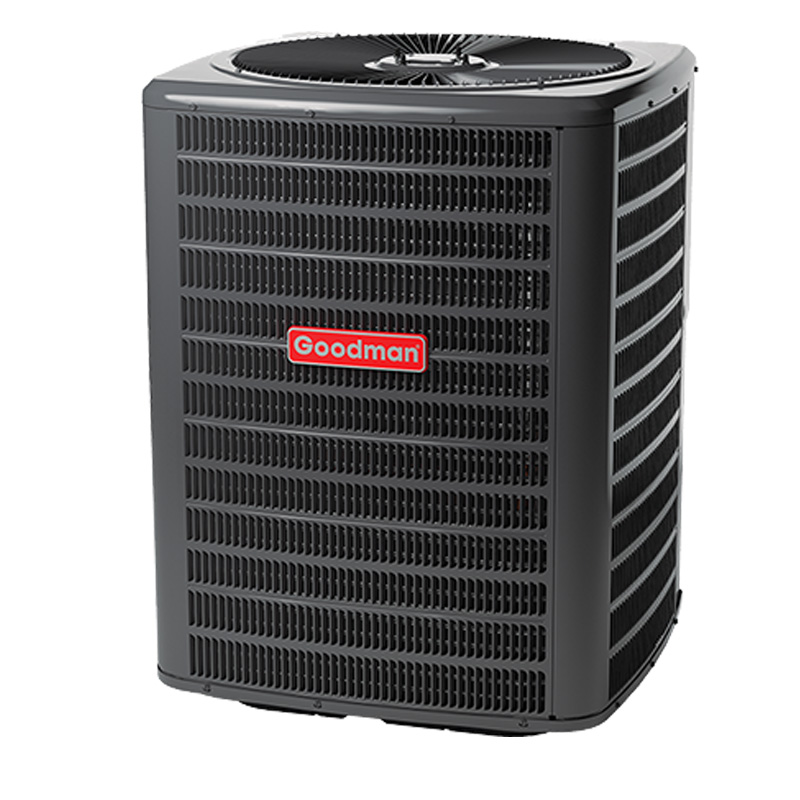
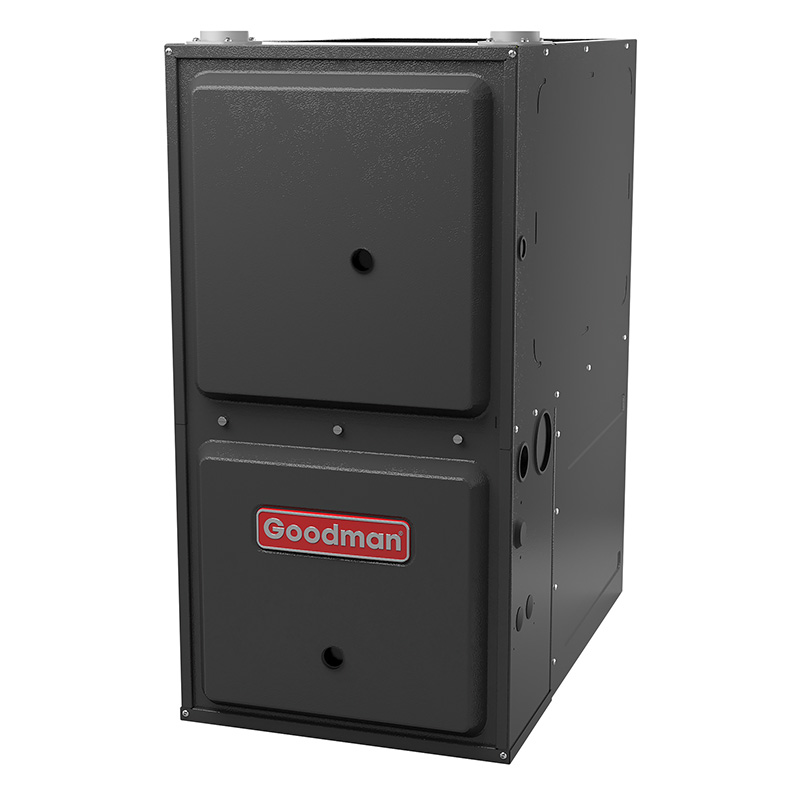
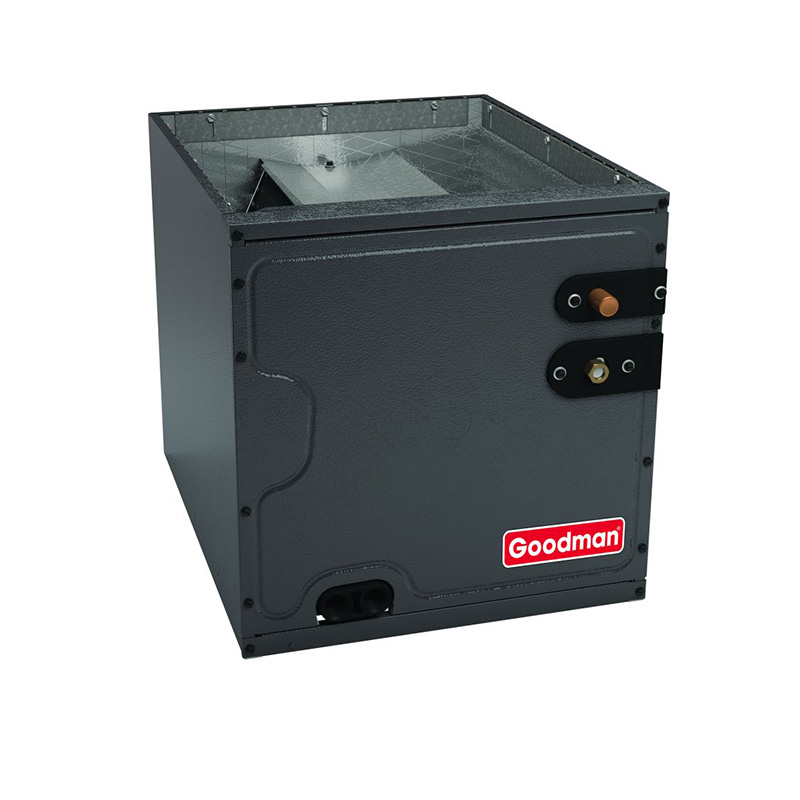
Goodman 2 Ton Dual Fuel Hybrid Heat Pump System – 40000 BTU California Ultra-Low NOx Gas Furnace, 80% AFUE, 14.5 SEER2, Upflow, R32
View on AC Direct see your lowest price →Check current price on AC Direct →
Key features
- 14.5 SEER2 single-stage heat pump paired with 40,000 BTU 80% AFUE upflow gas furnace
- Dual-fuel hybrid logic automatically switches between electric heat pump and gas heat based on outdoor temperature
- R-32 refrigerant with lower global warming potential than R-410A
- California Ultra-Low NOx certified furnace for compliance in strict air-quality districts
- Upflow configuration suits the most common residential forced-air duct layouts
- Value pricing typically 15 to 25 percent below comparable Carrier, Trane, and Lennox systems
About this system
The Goodman 2-Ton Dual Fuel Hybrid Heat Pump System pairs a 14.5 SEER2 heat pump with a 40,000 BTU, 80% AFUE upflow gas furnace to give you two heating sources in a single setup. In mild weather the heat pump handles heating and cooling efficiently on its own; when outdoor temperatures drop to the point where a heat pump struggles, the gas furnace takes over automatically. That switchover logic is what earns the “hybrid” label, and for homeowners in climates that see a real winter but not a brutal one, it can meaningfully reduce both gas and electricity bills compared to relying on a single fuel source year-round.
At 14.5 SEER2 this system sits at the low end of today’s efficiency range, which cleared the federal minimums that took effect in 2023. It is not a high-efficiency or variable-speed system, so if your priority is squeezing maximum energy savings out of every dollar of operating cost, you will find more capable options at a higher upfront price. What this system offers instead is a straightforward single-stage design, an upflow configuration that fits the most common residential duct layouts, and R-32 refrigerant, which carries a lower global warming potential than the R-410A it replaces. California-specific Ultra-Low NOx certification on the furnace meets the strictest air-quality rules in force across most California air districts.
This is a two-ton system, appropriate for roughly 900 to 1,200 square feet depending on your climate zone, insulation, and ceiling height. Because dual-fuel setups require both electrical and gas connections, plus correct refrigerant charging and a thermostat capable of managing two fuel sources, the installation is more complex than a straight heat pump or straight gas system. Getting that installation right by a licensed contractor who has done dual-fuel work before is not optional; it is the single largest factor in how well and how long this system performs.
This Goodman dual-fuel system is a practical, budget-conscious choice for homeowners in mixed climates who want hybrid heating without paying premium-brand prices. The 14.5 SEER2 and 80% AFUE ratings are entry-level by current standards, so operating costs will be higher than a more efficient system over time. Goodman's track record means the savings at purchase are real, but you should budget for possible component repairs after year seven and prioritize a highly qualified installer.
Overall score is the average of the five ratings above.
What we like
- Upfront cost is typically 15 to 25 percent lower than equivalent Carrier, Trane, or Lennox dual-fuel systems
- Hybrid operation reduces reliance on a single fuel, which can lower bills in climates with cold but not extreme winters
- R-32 refrigerant meets current environmental standards and is increasingly well-supported by technicians
- California Ultra-Low NOx certification makes it legally compliant in the most restrictive U.S. air districts
- Upflow design is compatible with the vast majority of existing residential duct systems
Trade-offs
- 80% AFUE is the lowest furnace efficiency tier available; high-efficiency furnaces at 95 to 96% AFUE recover the cost difference in fuel savings over several years
- 14.5 SEER2 is a minimum-compliance efficiency rating, not a strong-performing one, so cooling costs will be higher than with a 17 or 18 SEER2 system
- Dual-fuel installs are more complex than single-fuel systems, and Goodman's performance is heavily dependent on install quality, making contractor selection critical
- Owner feedback on ConsumerAffairs averages about 2.5 out of 5, with repair costs after roughly year seven as the most repeated complaint, and documented failure modes include capacitor failures, evaporator coil leaks, and compressor lifespans that average 10 to 14 years versus 15 to 20 for premium brands
What homeowners and pros say about Goodman
Homeowners who review Goodman equipment on ConsumerAffairs give the brand roughly 2.5 out of 5 stars, a score that reflects the platform’s tendency to attract frustrated owners more than satisfied ones, but the substance of the complaints is worth noting: repair costs climbing after about year seven come up repeatedly. On Google dealer reviews, where the sample skews toward recent installation experiences, Goodman averages closer to 3.8 out of 5, and affordability is by far the most common reason people say they chose it. For this dual-fuel system specifically, the gap between those two data points tells a useful story: the initial value is real, but ownership costs can rise as the system ages.
HVAC technicians who work on Goodman equipment regularly point to dual-run capacitor failures as the most routine service call, a repair that is quick and inexpensive but one you should expect at some point. Evaporator coil leaks show up in a meaningful share of owner reports and are a more involved fix. Compressor longevity on Goodman units tends to average 10 to 14 years, which is shorter than the 15 to 20 years technicians typically see from Trane, Carrier, or Lennox compressors. On a dual-fuel system like this one, where both refrigerant-side and gas-side components need to be correctly installed and charged, pros are consistent on one point: a careful, experienced installer matters more than the brand name on the equipment.
Sources: ConsumerAffairs Goodman owner reviews, AHRI Directory of Certified Product Performance, U.S. DOE appliance and equipment efficiency standards, Goodman product specification sheets.
What it costs to run
At 14.5 SEER2, cooling this 2-ton system for a typical 1200-hour cooling season at the U.S. average electricity rate of $0.17/kWh works out to roughly $338 per year in cooling, about $27 less per year than a minimum-efficiency 13.4 SEER2 unit of the same size. Your real cost depends on your climate and local rate.
Method: (24,000 BTU/hr ÷ 14.5 SEER2) × 1200 hours ÷ 1000 × $0.17/kWh. Rate source: U.S. EIA average; cooling hours: moderate-climate estimate.
How it compares
| Brand | Comparable model | SEER2 | Stage | Price position |
|---|---|---|---|---|
| Goodman | 2-Ton Dual Fuel Hybrid Heat Pump with 40,000 BTU 80% AFUE Upflow Furnace | 14.5 | Single-stage | Value pick |
| Carrier | Performance Series Dual Fuel (25HCB / 59SP5 pairing) | 15.0 | Single-stage | Typically 15 to 25 percent more than Goodman |
| Trane | XR15 Heat Pump with S8X1 Gas Furnace dual-fuel pairing | 15.0 | Single-stage | Typically 15 to 25 percent more than Goodman |
| Lennox | Merit Series ML14XP1 Heat Pump with ML195 Gas Furnace dual-fuel pairing | 14.3 | Single-stage | Typically 15 to 25 percent more than Goodman |
Competitor rows are comparable single-stage units at similar efficiency; price is relative position, not a quote.
Questions about this system
What outdoor temperature does the system switch from heat pump to gas furnace?
The switchover temperature is set at the thermostat and is sometimes called the balance point or lockout temperature. A qualified installer will calculate it based on your local climate and the heat pump's capacity curve, typically somewhere in the 35 to 45 degree Fahrenheit range. You will need a dual-fuel compatible thermostat, such as a Honeywell or Ecobee model with this feature, which may be an added cost if not included in your installation quote.
Does the California Ultra-Low NOx rating mean I can install this furnace anywhere in California?
Ultra-Low NOx certification at 14 nanograms per joule meets the current South Coast AQMD and most other California air district rules, so yes, it satisfies compliance requirements in the strictest districts. Always confirm with your local air district before purchase, as rules do change and some jurisdictions have additional permit requirements.
What are the most common repairs I should budget for on a Goodman system like this?
The most frequently reported failure point on Goodman equipment is the dual-run capacitor, a relatively inexpensive repair typically in the 300 to 600 dollar range when handled by a technician. Evaporator coil leaks appear in a meaningful share of owner reports and are more costly to address. A minority of owners also report refrigerant leaks in the first year, which usually traces back to the installation rather than a defective part.
Is a 2-ton system the right size for my home?
Two tons, or 24,000 BTU of cooling capacity, is generally suited to roughly 900 to 1,200 square feet, but the right size depends on your climate, ceiling heights, window area, insulation levels, and duct condition. An oversized or undersized system will short-cycle or run constantly, reducing comfort and shortening equipment life. Ask your contractor for a proper Manual J load calculation before committing to a tonnage.
How does the 10-year parts warranty work, and what does it actually cover?
Goodman offers a 10-year parts limited warranty when the system is registered within a specified window after installation, typically 60 days. It covers the cost of replacement parts but not labor, refrigerant, or diagnostic fees, which can add up quickly on a dual-fuel system with both refrigerant and gas components. Confirm registration requirements with your installer and keep all paperwork, because an unregistered unit may default to a shorter coverage period.
Specifications
| Cooling capacity | 2 Ton |
| Efficiency | 14.5 SEER2 |
| Furnace output | 40000 BTU |
| Furnace efficiency | 80% AFUE |
| Configuration | Upflow |
| Refrigerant | R-32 |