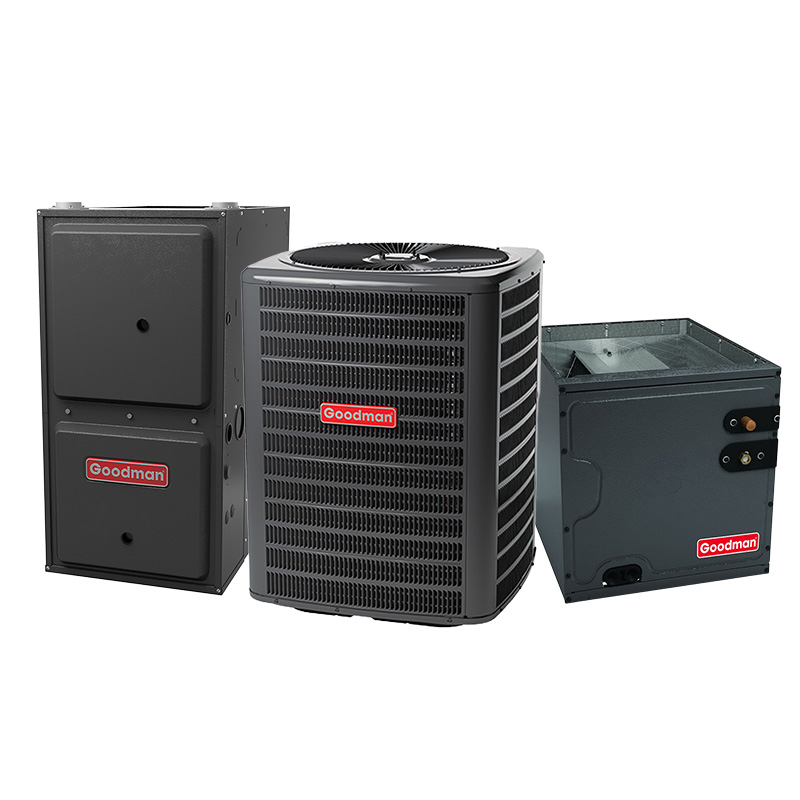
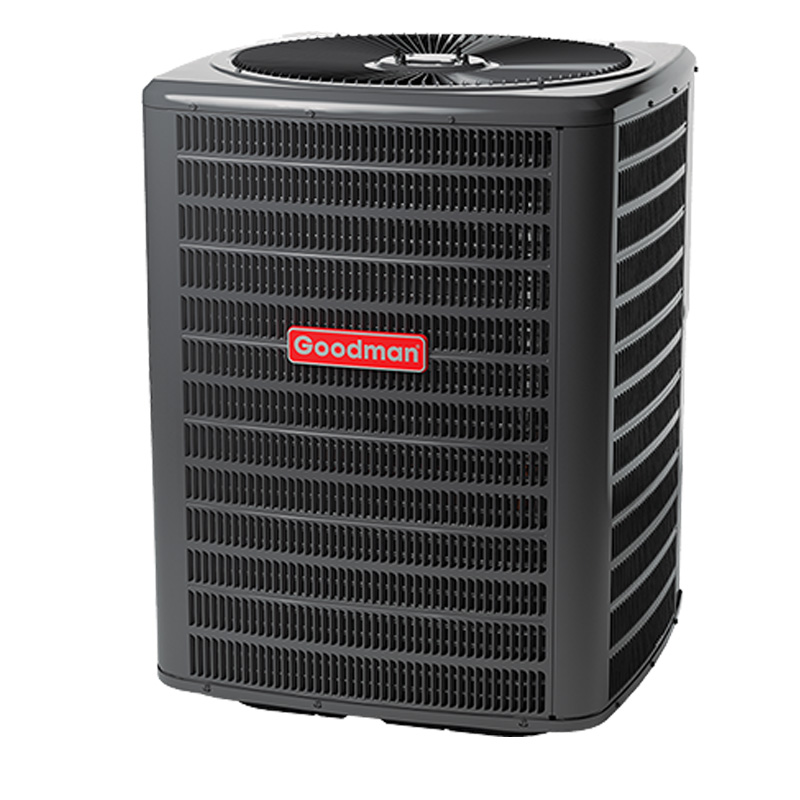
Goodman 2 Ton Dual Fuel Hybrid Heat Pump System – 40000 BTU Gas Furnace, 96% AFUE, 14.5 SEER2, Downflow, R32
View on AC Direct see your lowest price →Check current price on AC Direct →
Key features
- Dual fuel hybrid operation: heat pump handles mild-weather heating, 96% AFUE gas furnace takes over in colder conditions
- 14.5 SEER2 cooling efficiency meets current federal minimum standards for most U.S. regions
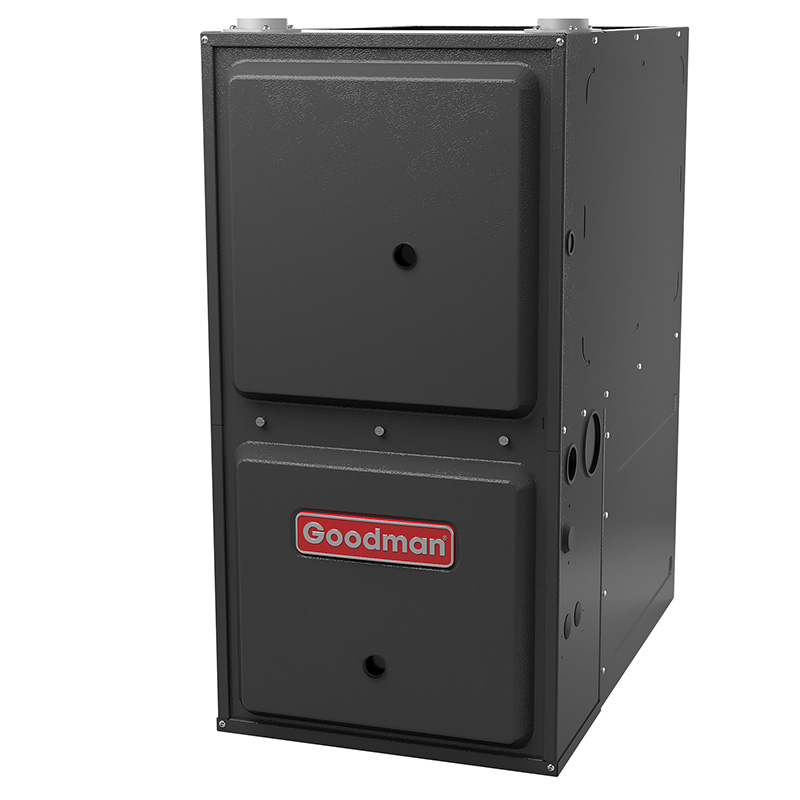
- 40,000 BTU downflow furnace configuration for homes with floor registers or crawl-space duct systems
- R-32 refrigerant with lower global warming potential than outgoing R-410A systems
- 2-ton capacity suited for approximately 800 to 1,100 square feet in average-insulation homes
- Priced 15 to 25 percent below comparable Trane, Lennox, and Carrier dual fuel systems
About this system
The Goodman 2-ton dual fuel hybrid heat pump system pairs a 14.5 SEER2 heat pump with a 40,000 BTU, 96% AFUE downflow gas furnace, giving homeowners two heating sources that the system switches between automatically based on outdoor temperature and operating cost. In mild weather the heat pump handles heating at a fraction of the cost of burning gas; when temperatures drop below the heat pump’s efficient range, the furnace takes over. For a moderately sized space in a climate that sees both cold winters and warm summers, that combination can meaningfully cut annual energy bills compared with a straight gas-only system.
The downflow configuration means conditioned air exits the bottom of the furnace cabinet, which is standard in homes where the air handler sits in an upper closet or on the main floor above a crawl space or basement register system. The R-32 refrigerant charge is a forward-looking choice: R-32 has a lower global warming potential than the R-410A it is replacing across the industry, and parts availability for R-32 systems is expanding quickly. At 2 tons and 40,000 BTU of backup heat, this system is sized for roughly 800 to 1,100 square feet in an average-insulation home, though a proper Manual J load calculation by your installer is the only reliable way to confirm fit.
Goodman sits in the value tier of the HVAC market, priced 15 to 25 percent below comparable equipment from Trane, Lennox, and Carrier. That gap is real money upfront, but it comes with honest trade-offs around long-term reliability that buyers should weigh before committing.
This Goodman dual fuel system delivers a genuinely efficient heating strategy at a below-market price, and for budget-conscious buyers in climates with real winters it is a practical choice. The trade-off is a brand history showing compressors that average 10 to 14 years versus 15 to 20 for premium brands, documented coil leak complaints, and service costs that tend to climb after year seven. Install quality matters more here than with premium brands, so the choice of contractor is at least as important as the equipment itself.
Overall score is the average of the five ratings above.
What we like
- Dual fuel logic reduces gas consumption during mild weather, lowering annual heating costs
- 96% AFUE furnace wastes only 4 cents of every fuel dollar, among the most efficient gas combustion tiers available
- R-32 refrigerant is a forward-compatible choice as the industry moves away from R-410A
- Upfront cost is 15 to 25 percent below Trane, Lennox, and Carrier equivalents, freeing budget for a quality install
- Downflow cabinet suits a wide range of existing duct layouts without modification
Trade-offs
- Compressor lifespan averages 10 to 14 years, roughly 30 to 40 percent shorter than premium-brand benchmarks
- Dual-run capacitor failures are the most commonly reported repair, typically appearing after several years of use
- A minority of owners report refrigerant leaks in the first year, often traceable to install or initial charge quality
- Evaporator coil leaks appear in a meaningful share of owner reviews, which can be a costly mid-life repair
What homeowners and pros say about Goodman
Homeowners who browse Goodman feedback quickly run into a split picture. Google dealer reviews land around 3.8 out of 5 across hundreds of location-level ratings, where the most consistent praise is straightforward: the equipment cost less than the competition and it works. ConsumerAffairs tells a harder story, sitting around 2.5 out of 5 on a channel that skews toward people motivated enough by frustration to leave a review. The pattern that shows up in those lower ratings is not early failure so much as the accumulation of smaller repairs after year seven or eight, costs that feel more manageable when weighed against a lower original purchase price but that still sting. For this dual fuel system specifically, buyers should know that dual-run capacitor failures are the most frequently reported repair across Goodman heat pump equipment, typically a 300 to 600 dollar service call and not a system-ending event. Evaporator coil leaks appear in a meaningful share of owner accounts and represent a more serious mid-life expense.
HVAC technicians tend to hold two simultaneous opinions about Goodman: the equipment is serviceable and parts are easy to source, but the margin for a poor installation is thinner than with premium brands. Compressors on Goodman heat pumps average roughly 10 to 14 years in documented owner experience, compared with 15 to 20 years cited for Trane, Carrier, and Lennox. A minority of owners also report refrigerant leaks in the first year of operation, and experienced technicians generally attribute those to installation or initial charge issues rather than a factory defect, which underlines why contractor selection matters as much as brand selection on a system like this one. The R-32 refrigerant in this unit is a newer variable that most well-equipped shops are prepared for, but confirming your service contractor has R-32 certification before purchase is a reasonable step.
Sources: ConsumerAffairs Goodman owner reviews, AHRI Directory of Certified Product Performance, U.S. DOE appliance and equipment efficiency standards, Goodman product specification sheets.
What it costs to run
At 14.5 SEER2, cooling this 2-ton system for a typical 1200-hour cooling season at the U.S. average electricity rate of $0.17/kWh works out to roughly $338 per year in cooling, about $27 less per year than a minimum-efficiency 13.4 SEER2 unit of the same size. Your real cost depends on your climate and local rate.
Method: (24,000 BTU/hr ÷ 14.5 SEER2) × 1200 hours ÷ 1000 × $0.17/kWh. Rate source: U.S. EIA average; cooling hours: moderate-climate estimate.
How it compares
| Brand | Comparable model | SEER2 | Stage | Price position |
|---|---|---|---|---|
| Goodman | 2-Ton Dual Fuel Hybrid Heat Pump with 40K BTU 96% AFUE Downflow Furnace | 14.5 | Single-stage | Value pick |
| Carrier | Performance Series Dual Fuel (25HPB / 59SP5 pairing) | 15.2 | Single-stage | Typically 15 to 25 percent more than Goodman |
| Trane | XR15 Heat Pump with S9X1 Gas Furnace Dual Fuel pairing | 15.0 | Single-stage | Typically 15 to 25 percent more than Goodman |
| Lennox | Merit Series ML15XP1 Heat Pump with ML196E Furnace Dual Fuel pairing | 15.1 | Single-stage | Typically 15 to 25 percent more than Goodman |
Competitor rows are comparable single-stage units at similar efficiency; price is relative position, not a quote.
Questions about this system
How does the system decide when to use the heat pump versus the gas furnace?
The control board monitors outdoor temperature and switches to the furnace when the heat pump can no longer heat efficiently, a point called the balance or switchover temperature. Most installers set this between 35 and 40 degrees Fahrenheit, but your technician can adjust it based on your local utility rates and climate.
Is R-32 refrigerant safe, and will my technician be able to service it?
R-32 is mildly flammable and requires technicians certified to handle it, which is standard for anyone licensed under the current EPA Section 608 rules. Availability of R-32 equipment and trained technicians is growing quickly across the U.S., though in some rural areas you should confirm your service contractor has R-32 experience before purchasing.
What is the Goodman warranty on this system, and what does it actually cover?
Goodman typically offers a 10-year parts limited warranty when the system is registered within 60 days of installation; without registration it usually drops to 5 years. The warranty covers parts replacement but not labor, refrigerant, or diagnostic costs, so real-world repair bills will still include those line items.
My house has a downflow furnace now. Does that mean this system will drop right in?
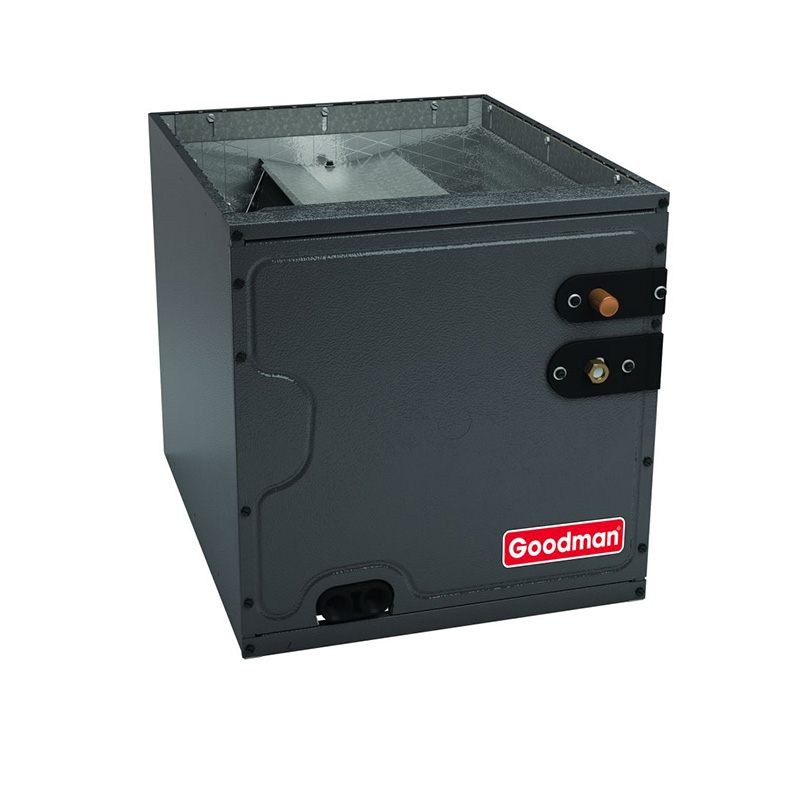
A matching cabinet orientation is a good starting point, but you still need to confirm gas line size, electrical supply, flue venting compatibility, and whether the existing coil cabinet dimensions match this unit. A direct swap is possible in many cases, but your installer should verify every connection before assuming it is plug-and-play.
Goodman has mixed reviews online. Should I be worried about long-term repair costs?
The concern is legitimate. ConsumerAffairs scores for Goodman run around 2.5 out of 5, with recurring complaints about repair costs climbing after roughly year seven, and documented failure modes include dual-run capacitors, evaporator coil leaks, and compressors that average 10 to 14 years. Budgeting for a capacitor replacement at some point is reasonable, and purchasing an extended labor warranty from your installer can reduce the financial surprise of a larger repair.
Specifications
| Cooling capacity | 2 Ton |
| Efficiency | 14.5 SEER2 |
| Furnace output | 40000 BTU |
| Furnace efficiency | 96% AFUE |
| Configuration | Downflow |
| Refrigerant | R-32 |