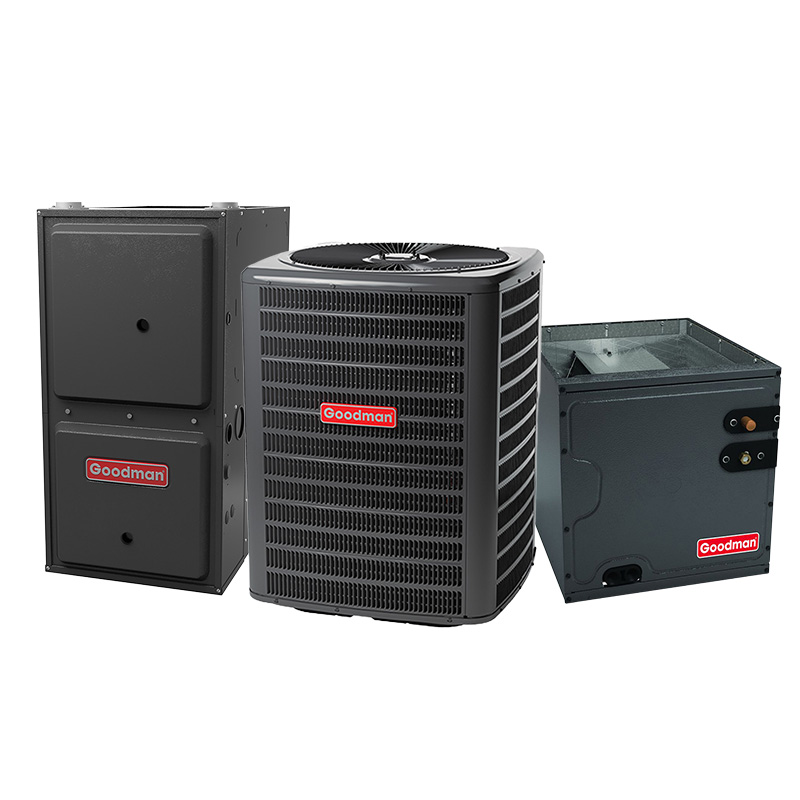
Goodman 2 Ton Dual Fuel Hybrid Heat Pump System – 40000 BTU Gas Furnace, Two Stage, 96% AFUE, Downflow, 14.3 SEER2, R32
View on AC Direct see your lowest price →Check current price on AC Direct →
Key features
- 14.3 SEER2 heat pump paired with a 96% AFUE two-stage gas furnace for hybrid dual-fuel operation
- Two-stage gas valve runs at lower capacity most of the time for quieter, more consistent heating
- Downflow airflow configuration suits above-crawlspace and upper-closet installations with below-unit ductwork
- R-32 refrigerant with a global-warming potential roughly 68% lower than R-410A
- 40,000 BTU heating capacity sized for smaller homes or moderate climates in the 2-ton range
- Automatic fuel-source switching lets the system choose electricity or gas based on programmed balance-point settings
About this system
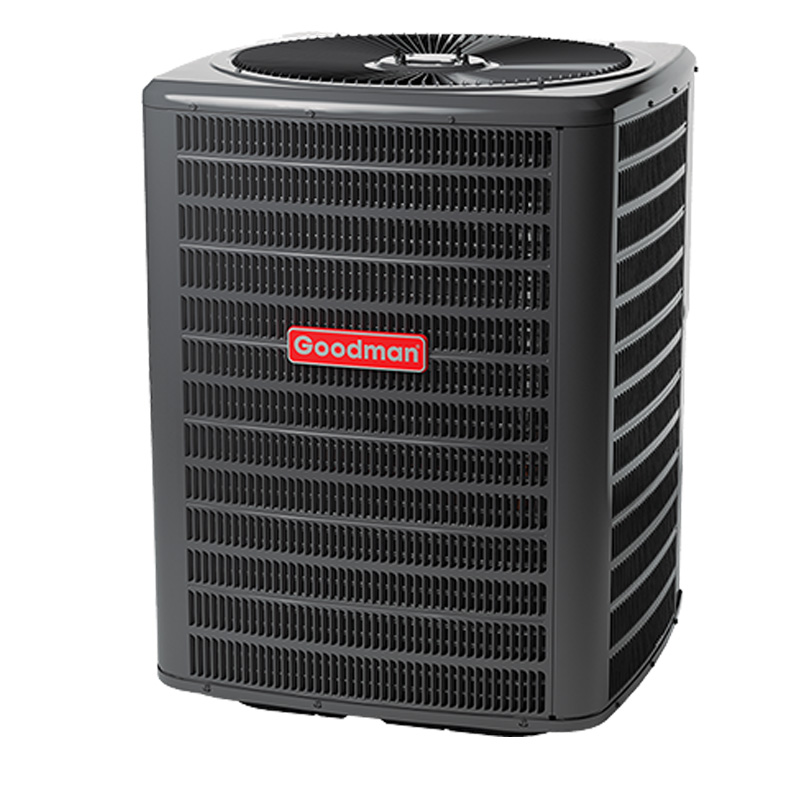
The Goodman 2-ton dual-fuel hybrid heat pump system pairs a 14.3 SEER2 heat pump with a 40,000 BTU, 96% AFUE two-stage gas furnace in a downflow configuration. Dual-fuel hybrid systems are designed to let the heat pump handle most heating loads efficiently, then automatically switch to the gas furnace when outdoor temperatures drop below the heat pump’s economic balance point — typically somewhere in the low 30s to upper 20s Fahrenheit depending on utility rates. The result is a system that can trim heating bills compared to straight gas heat in mild-to-cold climates, without sacrificing comfort on the coldest nights.
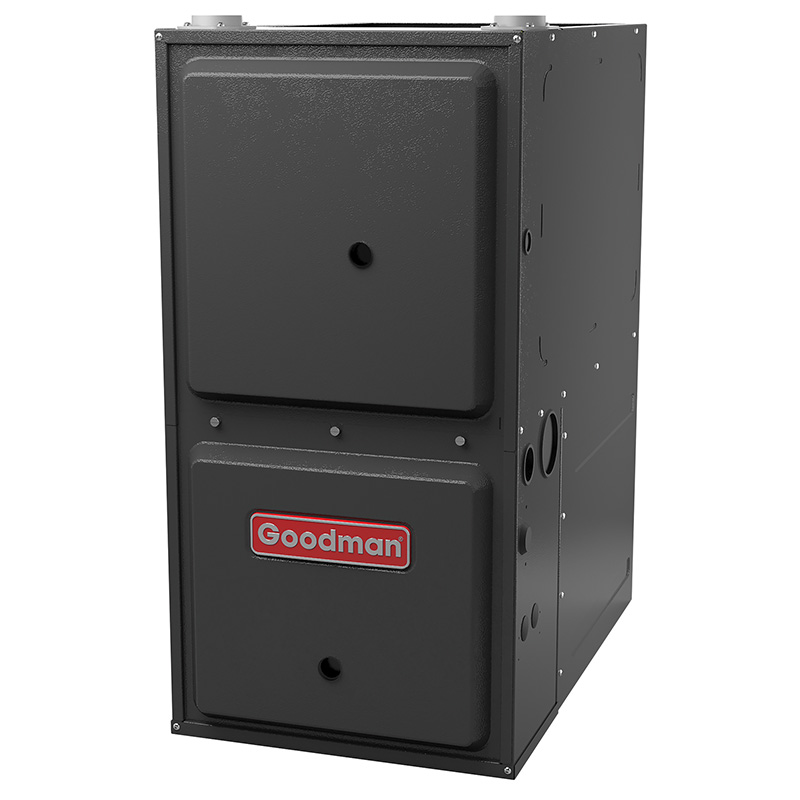
The two-stage furnace is a meaningful upgrade over single-stage equipment. Running on the lower stage the majority of the time means quieter operation, longer cycles that improve humidity control, and gentler temperature swings throughout the house. The 96% AFUE rating places this furnace near the top of non-condensing efficiency tiers, keeping nearly all combustion heat indoors rather than venting it outside. R-32 refrigerant carries a lower global-warming potential than the R-410A it replaces, and it is increasingly standard in new residential equipment. Downflow configuration sends conditioned air downward through the unit, which suits installations above a crawlspace or in a closet on an upper floor where supply ducts run below the unit.
This system is best suited to homeowners in mixed climates — roughly Climate Zones 3 through 5 — who want to lean on electricity when it is cheap and gas when it is not, without paying a Carrier, Trane, or Lennox premium to do it. It is not the right choice for anyone who wants top-tier compressor longevity or is installing in an unusually tight space where a downflow furnace is awkward to service.
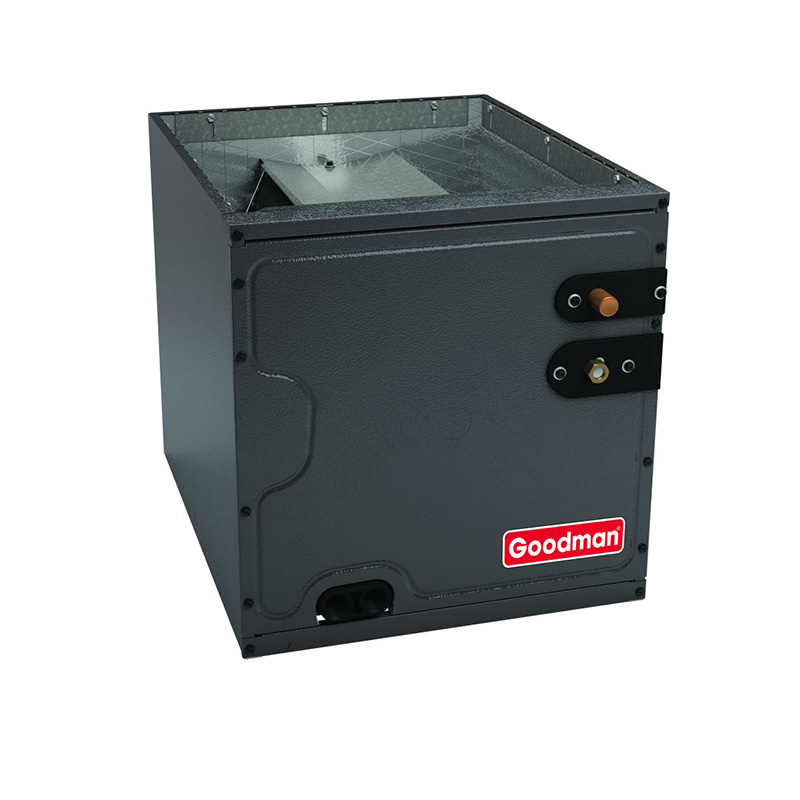
This Goodman hybrid system delivers genuinely useful dual-fuel flexibility and a high-efficiency furnace at a price point that undercuts comparable equipment from premium brands by 15 to 25 percent. The trade-off is that Goodman's track record shows real vulnerabilities — capacitor failures, evaporator coil leaks, and compressors that tend to fall short of premium-brand lifespans — and the system's long-term performance leans heavily on the quality of the installing contractor. Buyers who prioritize upfront savings and have a reliable local tech on call will find solid value here; buyers who want the lowest-drama ownership experience may want to spend more.
Overall score is the average of the five ratings above.
What we like
- Hybrid dual-fuel operation can meaningfully reduce annual heating costs in climates with both cold snaps and mild stretches
- 96% AFUE furnace retains nearly all combustion heat and is among the more efficient two-stage options at this price tier
- Two-stage operation improves humidity control and reduces temperature swings compared to single-stage equipment
- Priced 15 to 25 percent below comparable Carrier, Trane, and Lennox systems, leaving budget for extended labor coverage
- R-32 refrigerant is forward-looking and has a meaningfully lower environmental impact than R-410A
Trade-offs
- Dual-run capacitors are the most frequently reported failure point, typically requiring a 300 to 600 dollar service call around the 5 to 8 year mark
- Evaporator coil leaks appear in a meaningful share of owner reports and can be an expensive repair outside of warranty
- Compressors average 10 to 14 years according to documented owner experience, versus 15 to 20 years for premium-brand equipment
- A minority of owners report refrigerant leaks within the first year, most often traced to install or factory-charge issues rather than a systemic defect
What homeowners and pros say about Goodman
Goodman holds a ConsumerAffairs rating of around 2.5 out of 5, a score that reflects the platform’s complaint-heavy audience — owners who had smooth experiences rarely take the time to write reviews. The recurring theme in those complaints is repair costs that start climbing after roughly year seven, which aligns with the documented failure modes: dual-run capacitors going out (a 300 to 600 dollar fix that most owners can absorb), evaporator coil leaks that show up in a meaningful share of units and carry a steeper price tag, and compressors that tend to average 10 to 14 years rather than the 15 to 20 years that premium brands tend to deliver. On the more balanced Google dealer review channel, Goodman averages around 3.8 out of 5 across hundreds of reviews per location, where the most consistent praise is straightforward: the equipment costs less upfront, and for buyers who are price-sensitive, that matters.
HVAC technicians generally have a pragmatic view of Goodman. The consensus is that the equipment is not inherently poor quality — it is built to a price point — and that installation quality is the single biggest variable in how long any Goodman system lasts. A well-installed Goodman with a capacitor replaced proactively at year five or six can serve a homeowner reliably for a decade or more. The dual-fuel configuration of this specific system adds a layer of complexity: the balance point must be set correctly, both the furnace and the heat pump need to communicate cleanly with the thermostat, and R-32 handling requires a certified technician. Owners who lock in a strong installer relationship at the start tend to report better experiences; those who install with the lowest bidder and call a random tech at the first sign of trouble are the ones most likely to end up in the complaint statistics.
Sources: ConsumerAffairs Goodman owner reviews, AHRI Directory of Certified Product Performance, U.S. DOE appliance and equipment efficiency standards, Goodman product specification sheets.
What it costs to run
At 14.3 SEER2, cooling this 2-ton system for a typical 1200-hour cooling season at the U.S. average electricity rate of $0.17/kWh works out to roughly $342 per year in cooling, about $23 less per year than a minimum-efficiency 13.4 SEER2 unit of the same size. Your real cost depends on your climate and local rate.
Method: (24,000 BTU/hr ÷ 14.3 SEER2) × 1200 hours ÷ 1000 × $0.17/kWh. Rate source: U.S. EIA average; cooling hours: moderate-climate estimate.
How it compares
| Brand | Comparable model | SEER2 | Stage | Price position |
|---|---|---|---|---|
| Goodman | 2-Ton Dual Fuel Hybrid — 40,000 BTU / 96% AFUE / 14.3 SEER2 | 14.3 | two-stage | Value pick |
| Carrier | Performance Series Dual Fuel (25HPB / 59TP6) | 14.3–15.2 | two-stage | Typically 15 to 25 percent more than this Goodman |
| Trane | XR14 / S9X2 Dual Fuel System | 14.3–15.0 | two-stage | Typically 15 to 25 percent more than this Goodman |
| Lennox | Merit ML14XP1 / ML96DF Dual Fuel System | 14.3–15.1 | two-stage | Typically 15 to 25 percent more than this Goodman |
Competitor rows are comparable single-stage units at similar efficiency; price is relative position, not a quote.
Questions about this system
How does the system decide when to run the heat pump versus the gas furnace?
The system uses a balance point setting — usually programmed into the thermostat or control board — that compares outdoor temperature against the economic crossover point where gas becomes cheaper to run than electricity. Your installer should set this based on your local utility rates and climate, and it can typically be adjusted afterward if your rates change.
What does downflow configuration mean, and will it work in my home?
Downflow means the furnace pulls return air in at the top and pushes supply air downward out the bottom, so your supply ducts need to connect below the unit. This works well in installations above a crawlspace or in a first-floor closet with under-floor ductwork, but it is not compatible with attic installations or homes where supply ducts run above the unit.
Is R-32 refrigerant safe, and will technicians be able to service it?
R-32 is mildly flammable and classified A2L, which means technicians need proper training and certified equipment to handle it safely. It is increasingly common in new residential systems and most established HVAC contractors are already equipped for it, but it is worth confirming your service tech is R-32 certified before booking a repair.
What is the realistic maintenance and repair outlook for this system?
The most commonly documented failure is the dual-run capacitor, a relatively inexpensive fix in the 300 to 600 dollar range. Evaporator coil leaks are a real possibility, especially outside of the parts warranty period, and can cost significantly more. Planning for at least one service call in the 7 to 10 year window is reasonable based on Goodman's documented ownership experience.
Does Goodman's warranty cover both the heat pump and the furnace, and what does it actually include?
Goodman typically offers a 10-year parts warranty on registered equipment for both the heat pump and furnace components, including the compressor and heat exchanger. Registration must be completed within a set window after installation. The warranty covers parts only — labor is not included — so a service plan or extended labor warranty from your installer is worth considering given the documented repair history.
Specifications
| Cooling capacity | 2 Ton |
| Efficiency | 14.3 SEER2 |
| Furnace output | 40000 BTU |
| Furnace efficiency | 96% AFUE |
| Configuration | Downflow |
| Refrigerant | R-32 |