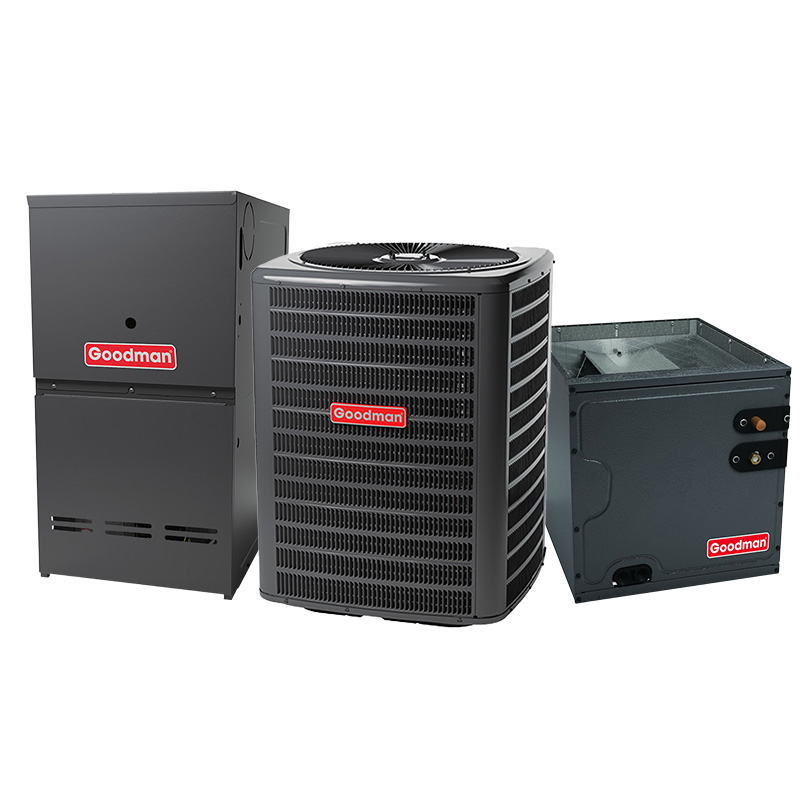
Goodman 2 Ton Dual Fuel Hybrid Heat Pump System – 60000 BTU California Low NOx Two Stage Gas Furnace, 80% AFUE, Downflow, 15.2 SEER2, R32
View on AC Direct see your lowest price →Check current price on AC Direct →
Key features
- 15.2 SEER2 heat pump efficiency meets current federal minimum standards with modest headroom
- 80% AFUE two-stage gas furnace provides dual fuel backup heating for cold-climate reliability
- 60,000 BTU furnace output sized for 2-ton heat pump pairing in moderate to cold climates
- Downflow configuration designed for over-conditioned-space or manufactured home duct layouts
- R-32 refrigerant with lower global warming potential than legacy R-410A systems
- California Low NOx certified for compliance with California Air Resources Board emissions rules
About this system
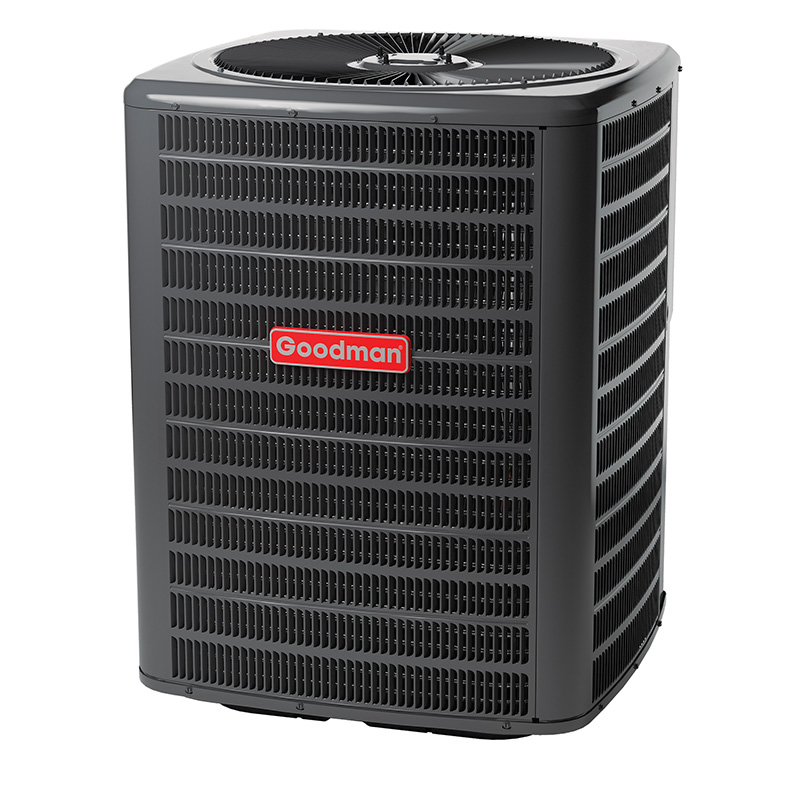
The Goodman 2-Ton Dual Fuel Hybrid Heat Pump System pairs a 15.2 SEER2 heat pump with a 60,000 BTU, 80% AFUE two-stage gas furnace in a downflow configuration, making it a practical choice for homeowners in mixed climates who want electric heat pump efficiency during mild weather and reliable gas backup when temperatures drop hard. The R-32 refrigerant is a lower-global-warming-potential option compared to older R-410A systems, and the California Low NOx certification means it meets California’s stricter air quality rules, though it can be installed in most states. At 2 tons, this system is sized for roughly 900 to 1,300 square feet of well-insulated living space, depending on climate zone and building envelope.
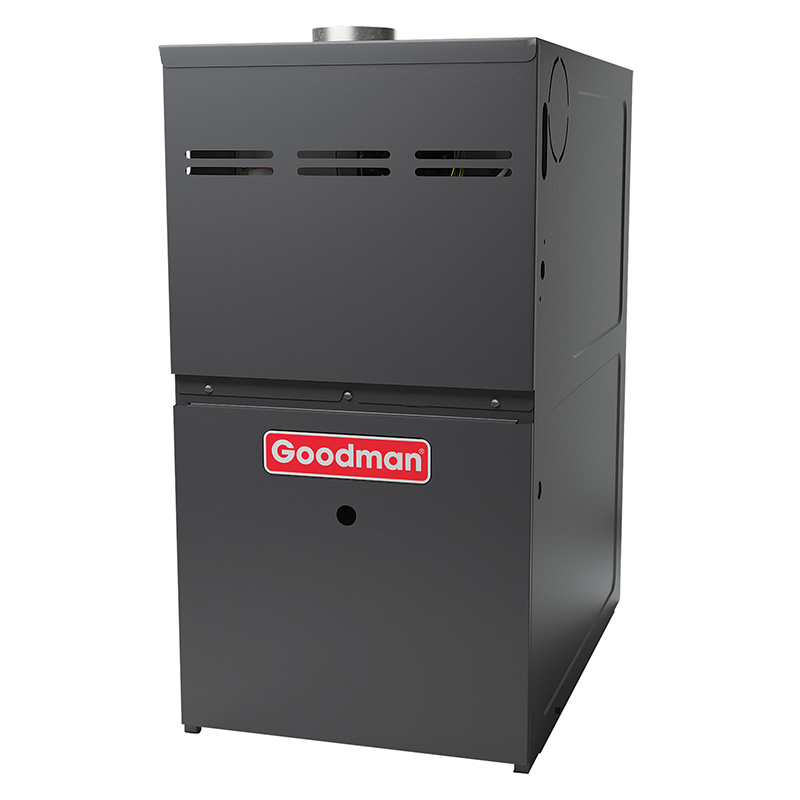
The dual fuel setup is the key selling point here. The heat pump handles heating and cooling duties efficiently above a balance point temperature, typically around 35 to 40 degrees Fahrenheit, then the gas furnace takes over below that threshold, keeping utility bills lower than a gas-only system in moderate weather without sacrificing comfort on the coldest nights. The two-stage furnace adds a layer of comfort refinement over single-stage models, running at lower capacity most of the time to reduce temperature swings and cycling noise. Downflow configuration means warm air exits the bottom of the furnace, which suits installations on main floors with ductwork running beneath, or certain manufactured home setups. This is not a system for attic installations or upflow-only duct arrangements.
This Goodman dual fuel system delivers a functional, budget-accessible hybrid heating solution with a two-stage furnace that most mid-tier brands charge noticeably more for. The trade-off is a brand track record that shows more mid-life repair events than premium competitors, and a 15.2 SEER2 rating that clears the bar without standing out. It earns its place for cost-conscious buyers in mixed climates who have a skilled installer lined up.
Overall score is the average of the five ratings above.
What we like
- Dual fuel design optimizes between electric and gas heat automatically, reducing winter utility costs compared to gas-only systems
- Two-stage furnace operation cuts temperature swings and short-cycling compared to single-stage units in this price range
- R-32 refrigerant is a future-facing choice with a lower environmental impact than R-410A
- California Low NOx certification makes it one of fewer hybrid systems cleared for sale statewide in California
- Priced 15 to 25 percent below comparable Trane, Lennox, and Carrier dual fuel systems, lowering the upfront cost of hybrid heating
Trade-offs
- 80% AFUE is the lowest efficiency tier for gas furnaces; high-use cold-climate households will burn meaningfully more gas than an 96% AFUE alternative
- Dual-run capacitor failures are the most commonly documented Goodman repair, typically appearing after year 5 to 7 and adding 300 to 600 dollars per event
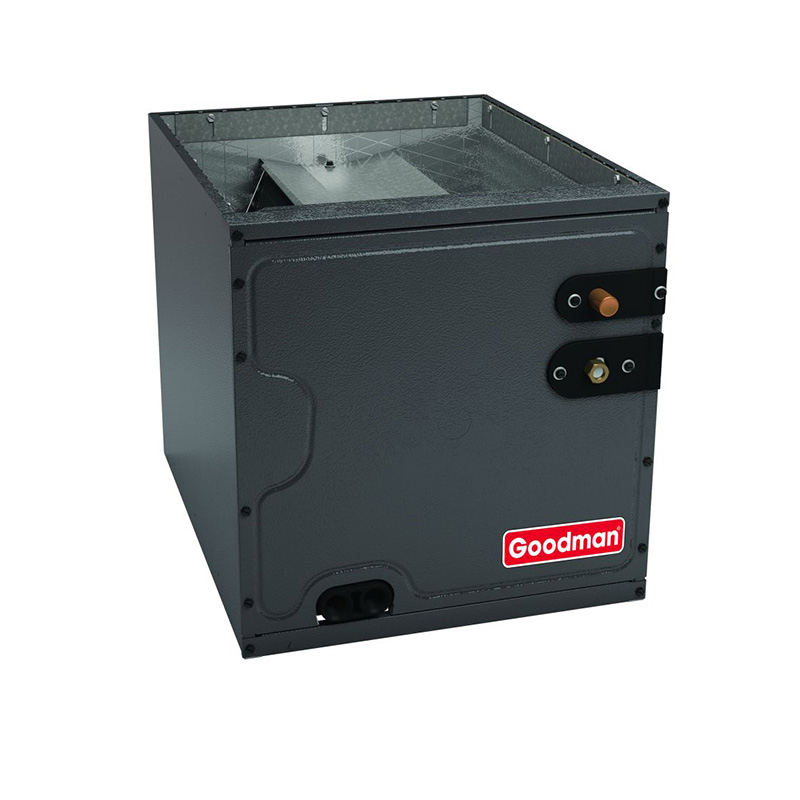
- Evaporator coil leaks appear in a notable share of owner reports, and compressor lifespan averages 10 to 14 years versus 15 to 20 for premium brands
- Downflow-only configuration limits installation flexibility; buyers with upflow or horizontal duct layouts need a different model
What homeowners and pros say about Goodman
Homeowners who have lived with Goodman equipment tend to land in one of two camps, and the dividing line is usually install quality. On Google dealer reviews, Goodman systems average around 3.8 out of 5 stars, where affordability is the praise that comes up most consistently. Buyers who got a careful, experienced installer report years of unremarkable, functional performance. The picture on ConsumerAffairs is harder, sitting around 2.5 out of 5, with the recurring complaint being repair costs that start climbing after roughly year 7. The specific failure modes documented most often are dual-run capacitor replacements, which are relatively inexpensive at 300 to 600 dollars but annoying when they repeat, and evaporator coil leaks that show up in a meaningful share of owner accounts. Compressor longevity is a real consideration: Goodman compressors average 10 to 14 years in reported experience, compared to 15 to 20 years for premium brands, and that gap matters when you are deciding whether the upfront savings justify the long-term ownership math.
HVAC technicians who work on Goodman equipment frequently echo the same point: the brand performs acceptably when installed correctly, and underperforms when it is not. For a dual fuel hybrid system specifically, that installation dependency is amplified because the refrigerant charge, balance point calibration, and thermostat wiring all have to be right for the system to switch between heat pump and gas heat the way it should. Pros who sell Goodman typically position it as a solid option for budget-constrained buyers who understand they may see a repair or two before the 10-year mark, and who prioritize getting into a hybrid system at a lower entry cost. The R-32 refrigerant and California Low NOx furnace are genuine positives that show the product line is being updated, even if the brand’s reliability reputation has not fully caught up with its pricing advantage.
Sources: ConsumerAffairs Goodman owner reviews, AHRI Directory of Certified Product Performance, U.S. DOE appliance and equipment efficiency standards, Goodman product specification sheets.
What it costs to run
At 15.2 SEER2, cooling this 2-ton system for a typical 1200-hour cooling season at the U.S. average electricity rate of $0.17/kWh works out to roughly $322 per year in cooling, about $43 less per year than a minimum-efficiency 13.4 SEER2 unit of the same size. Your real cost depends on your climate and local rate.
Method: (24,000 BTU/hr ÷ 15.2 SEER2) × 1200 hours ÷ 1000 × $0.17/kWh. Rate source: U.S. EIA average; cooling hours: moderate-climate estimate.
How it compares
| Brand | Comparable model | SEER2 | Stage | Price position |
|---|---|---|---|---|
| Goodman | 2-Ton Dual Fuel Hybrid System, 60K BTU 80% AFUE Two-Stage Downflow, Low NOx | 15.2 | Two-stage furnace / heat pump | Value pick |
| Carrier | Performance Series Dual Fuel System (25HCB / 59TP6) | 15.2-16.0 | Two-stage | Typically 15 to 25 percent more than Goodman |
| Trane | XR15 Dual Fuel System (XR15 / S8X2) | 15.0-15.5 | Two-stage | Typically 15 to 25 percent more than Goodman |
| Lennox | Merit Series Dual Fuel System (14HPX / ML196E) | 15.0-15.5 | Two-stage | Typically 15 to 25 percent more than Goodman |
Competitor rows are comparable single-stage units at similar efficiency; price is relative position, not a quote.
Questions about this system
What is the balance point temperature on this dual fuel system, and who controls when the furnace kicks in?
The balance point, the outdoor temperature at which the system switches from heat pump to gas furnace, is typically set during installation by the technician using the thermostat or system controls. Most installers set it between 35 and 40 degrees Fahrenheit, but it can be adjusted based on your local utility rates and climate. Getting this setting right is one of the most important commissioning steps for actual fuel savings.
Is this system compatible with a standard thermostat, or do I need a special dual fuel thermostat?
Dual fuel systems require a thermostat capable of managing both heat pump and gas furnace operation as separate heating sources. A standard single-stage heat pump thermostat will not work correctly. You will need a dual fuel compatible thermostat, such as certain Honeywell, Ecobee, or Goodman-compatible models, and this should be specified and installed by your HVAC contractor during setup.
The California Low NOx label is on this furnace. Does that mean I can install it anywhere in the country, or only in California?
California Low NOx certification means it meets California Air Resources Board standards, which are stricter than federal requirements. You can install this unit outside California, and in most other states it simply exceeds the local emissions standard. If you are in California, verify with your installer that the full system including the outdoor heat pump unit also meets any local district requirements.
How concerned should I be about Goodman's documented capacitor and coil failure issues on this specific system?
Dual-run capacitor failures are the most commonly reported Goodman repair and typically cost 300 to 600 dollars when they occur, usually after year 5 to 7. Evaporator coil leaks appear in a meaningful share of owner reports as well. Budgeting for one or two of these events over a 10-year ownership period is a realistic expectation, and keeping a service contract or a trusted technician on hand makes these repairs less disruptive.
Why does this system only have 80% AFUE when higher-efficiency furnaces are available? Is that a significant drawback?
In a dual fuel hybrid setup, the gas furnace is a backup heat source that activates primarily during the coldest outdoor temperatures, not the primary workhorse for heating season. Because the heat pump handles the majority of heating hours, the furnace AFUE matters less than in a gas-only system, which partially offsets the 80% AFUE rating. That said, in climates with long, hard winters where the furnace runs frequently, a higher-AFUE furnace would reduce annual gas costs noticeably.
Specifications
| Cooling capacity | 2 Ton |
| Efficiency | 15.2 SEER2 |
| Furnace output | 60000 BTU |
| Furnace efficiency | 80% AFUE |
| Configuration | Downflow |
| Refrigerant | R-32 |