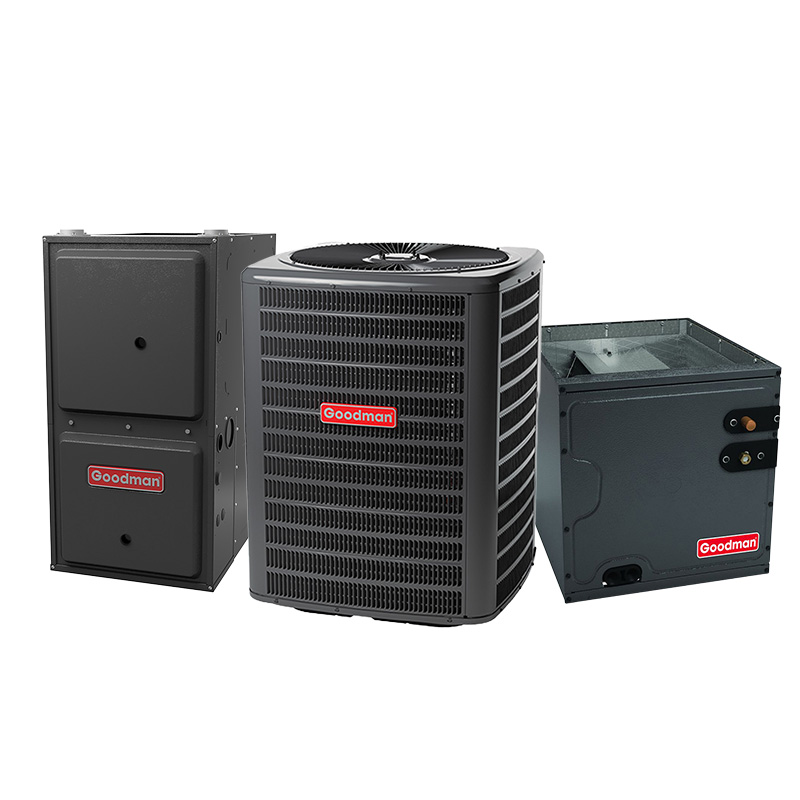
Goodman 2 Ton Dual Fuel Hybrid Heat Pump System – 60000 BTU California Ultra-Low NOx Gas Furnace, 80% AFUE, 14.3 SEER2, Upflow, R32
View on AC Direct see your lowest price →Check current price on AC Direct →
Key features
- 14.3 SEER2 heat pump efficiency meets current federal minimum standards
- 80% AFUE gas furnace provides reliable backup heating in cold climates
- Dual-fuel hybrid operation automatically selects the lower-cost energy source
- R-32 refrigerant with lower global warming potential than legacy R-410A
- Upflow configuration designed for basement or closet installations with overhead ductwork
- 2-ton / 60,000 BTU capacity suited to smaller residential footprints
About this system
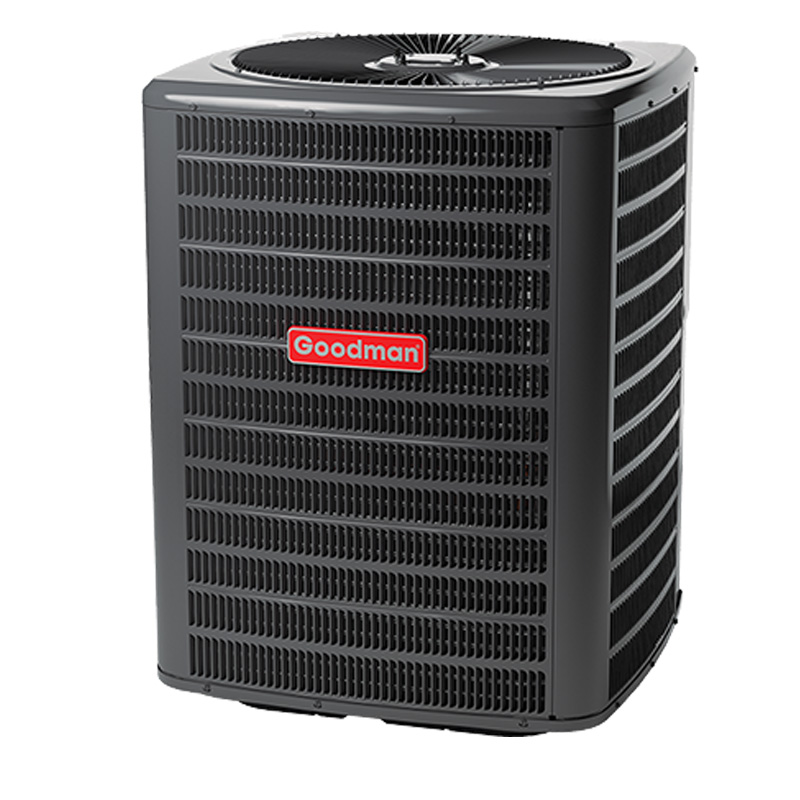
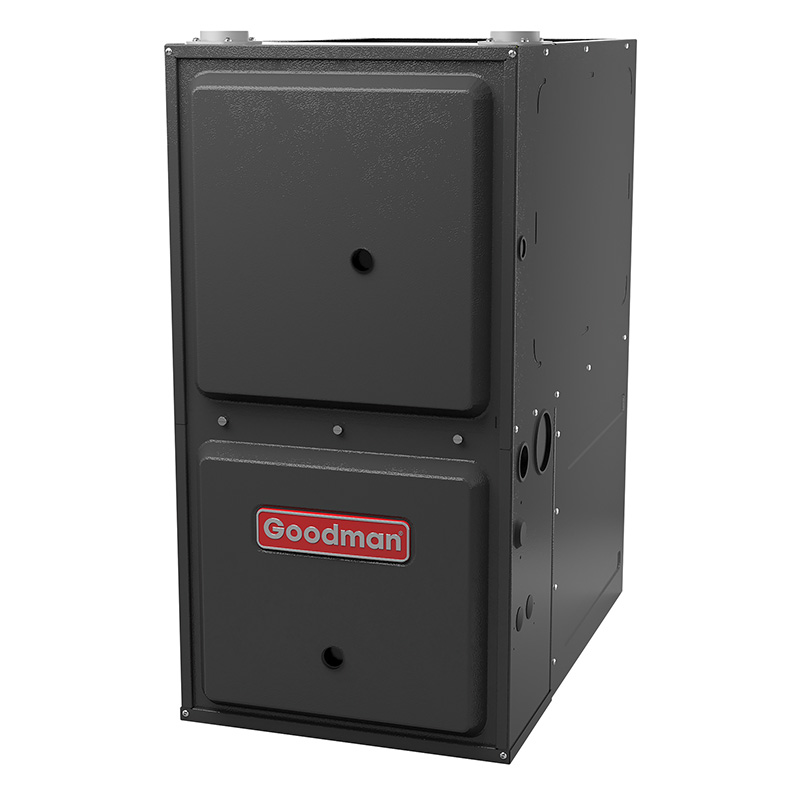
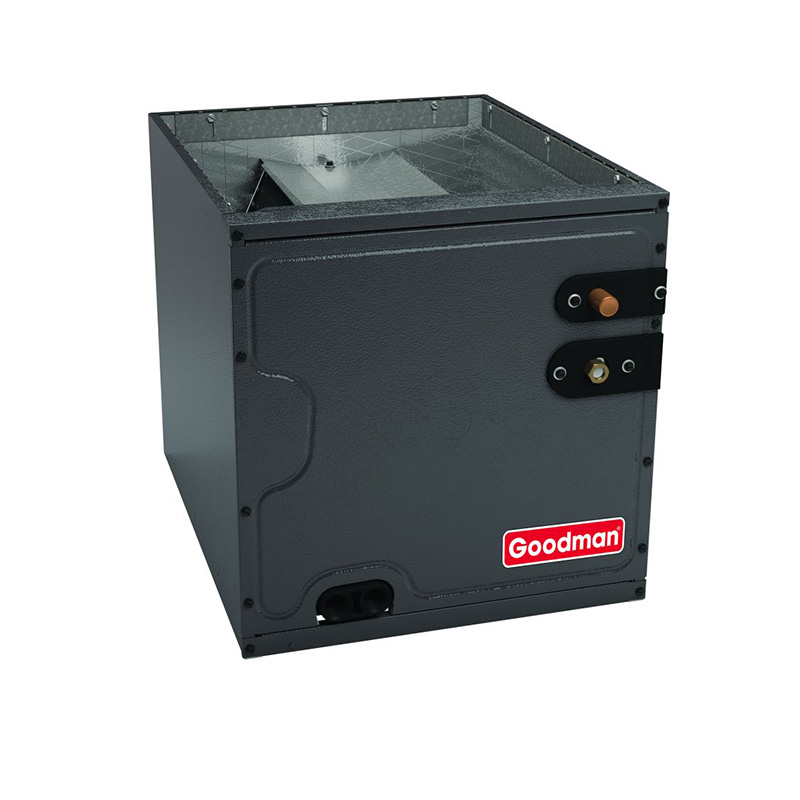
The Goodman 2-Ton Dual Fuel Hybrid Heat Pump System pairs a 14.3 SEER2 heat pump with a 60,000 BTU, 80% AFUE upflow gas furnace into a single integrated setup. The dual-fuel design means the system automatically switches between electric heat pump operation and gas heat depending on outdoor temperatures, which can keep utility bills in check during moderate shoulder-season weather while still delivering reliable gas backup when temperatures drop hard. The R-32 refrigerant charge is a step forward on the environmental side, carrying a lower global warming potential than the R-410A it replaces, and it is becoming the new baseline across the industry.
At 14.3 SEER2 and 80% AFUE, this system sits at the entry point of current minimum-efficiency standards. It is not a high-efficiency build, and buyers in climates with long, cold winters or extreme summer heat will see the limits of those numbers on their energy bills over time. The 2-ton, 60,000 BTU sizing targets smaller homes, typically in the 800 to 1,200 square-foot range depending on insulation and climate zone. The upflow configuration suits homes where the furnace sits in a basement or utility closet with ductwork running upward, which is the most common residential layout. If your home uses downflow or horizontal duct routing, this specific model is not the right fit.
This Goodman dual-fuel package delivers functional hybrid heating and cooling at a price point that is hard to match among name-brand systems, making it a reasonable starting point for budget-focused buyers in moderate climates. The 14.3 SEER2 and 80% AFUE ratings are entry-level numbers, so expect utility savings to be modest compared to higher-tier equipment. Long-term ownership costs depend heavily on install quality and willingness to budget for occasional component repairs, particularly after year seven.
Overall score is the average of the five ratings above.
What we like
- Lower upfront cost, typically 15 to 25 percent below comparable Carrier, Trane, and Lennox systems
- Dual-fuel operation reduces heating costs during mild cold spells by leaning on the heat pump
- R-32 refrigerant is more environmentally responsible than older R-410A systems
- Upflow design fits the most common residential duct configuration without modifications
- Widely available service network means replacement parts and technicians are generally accessible
Trade-offs
- 80% AFUE means one in five dollars of gas is lost as waste heat, a real cost in cold climates
- 14.3 SEER2 is the floor of current efficiency standards, not a selling point for energy savings
- Goodman's documented failure history includes dual-run capacitor failures, evaporator coil leaks, and compressor lifespans that tend to average 10 to 14 years versus 15 to 20 for premium brands
- ConsumerAffairs scores average around 2.5 out of 5, with repair costs after year seven being a recurring complaint
What homeowners and pros say about Goodman
Homeowners who have lived with Goodman equipment tend to split along a familiar line. Those who had a careful installation and kept up with basic maintenance, filter changes, annual tune-ups, coil cleanings, report years of trouble-free operation and point to the lower purchase price as money genuinely saved. On channels like ConsumerAffairs, where the score settles around 2.5 out of 5, the dominant complaint pattern is repair bills that start stacking up somewhere around year seven or eight, with dual-run capacitor failures and evaporator coil leaks showing up repeatedly in owner accounts. Google dealer reviews land higher, around 3.8 out of 5, and the most common praise is straightforward: the system cost less and the dealer made it easy. That gap between the two scores reflects who is motivated to leave a review, but both data points are real and worth weighing.
HVAC technicians tend to have a pragmatic view of Goodman. Many will install it without hesitation for cost-sensitive customers, but the better ones will flag that compressor longevity typically falls in the 10 to 14-year range rather than the 15 to 20 years you see from Trane or Carrier equipment, and that the brand’s performance ceiling is tied closely to how well the system gets commissioned at startup. A sloppy refrigerant charge, an undersized line set, or a poorly sealed duct connection will show up as problems faster on a Goodman than on a premium unit. For this particular dual-fuel build, technicians also note that the balance point setup requires someone who understands both sides of the system, gas and heat pump, so choosing an installer with dual-fuel experience is worth paying a little more for up front.
Sources: ConsumerAffairs Goodman owner reviews, AHRI Directory of Certified Product Performance, U.S. DOE appliance and equipment efficiency standards, Goodman product specification sheets.
What it costs to run
At 14.3 SEER2, cooling this 2-ton system for a typical 1200-hour cooling season at the U.S. average electricity rate of $0.17/kWh works out to roughly $342 per year in cooling, about $23 less per year than a minimum-efficiency 13.4 SEER2 unit of the same size. Your real cost depends on your climate and local rate.
Method: (24,000 BTU/hr ÷ 14.3 SEER2) × 1200 hours ÷ 1000 × $0.17/kWh. Rate source: U.S. EIA average; cooling hours: moderate-climate estimate.
How it compares
| Brand | Comparable model | SEER2 | Stage | Price position |
|---|---|---|---|---|
| Goodman | GSZH502410 / GCVC800603BX Dual Fuel System | 14.3 | Single-stage | Value pick |
| Carrier | Performance 14 Heat Pump (25PHC6) with 80% AFUE Gas Furnace (58TP) | 14.3 | Single-stage | Typically 15 to 25 percent more than Goodman |
| Trane | XR14c Heat Pump with S8X1 80% AFUE Gas Furnace | 14.3 | Single-stage | Typically 15 to 25 percent more than Goodman |
| Lennox | Merit ML14XC1 Heat Pump with ML180 80% AFUE Gas Furnace | 14.3 | Single-stage | Typically 15 to 25 percent more than Goodman |
Competitor rows are comparable single-stage units at similar efficiency; price is relative position, not a quote.
Questions about this system
How does the dual-fuel system decide when to run the heat pump versus the gas furnace?
The system uses an outdoor temperature threshold, sometimes called the balance point, to make that call. Above the balance point the heat pump handles heating; below it, gas takes over. Most installers set this between 30 and 40 degrees Fahrenheit, but it should be adjusted for your specific climate and local utility rates to maximize savings.
Is R-32 refrigerant safe, and will it be easy to service in the future?
R-32 is mildly flammable, which is why it requires technicians with specific handling certification. It is not a fringe refrigerant though. It is now the industry standard direction, and EPA and AHRI regulations are aligned around it, so finding a qualified technician should not be a problem in most markets.
What is the real-world warranty coverage on this system?
Goodman offers a 10-year parts limited warranty when the system is registered within 60 days of installation. Without registration the coverage drops to 5 years. The compressor typically carries a separate 10-year limited warranty when registered. Labor is not covered, which is where most of the out-of-pocket cost lands on a repair.
What repairs should I budget for over the life of this system?
Dual-run capacitor failure is the most commonly reported issue with Goodman equipment and usually runs 300 to 600 dollars to fix. Evaporator coil leaks show up in a notable share of owner reports and cost more to address. Compressor lifespan on Goodman units tends to average 10 to 14 years, so a replacement should be factored into long-range ownership costs.
My house has a crawl space and horizontal ductwork. Will this upflow system work?
No, this specific configuration is built for upflow installations where air enters at the bottom and exits at the top into overhead ductwork. A horizontal or downflow layout requires a different cabinet orientation. Confirm your duct configuration with your installer before purchasing.
Specifications
| Cooling capacity | 2 Ton |
| Efficiency | 14.3 SEER2 |
| Furnace output | 60000 BTU |
| Furnace efficiency | 80% AFUE |
| Configuration | Upflow |
| Refrigerant | R-32 |