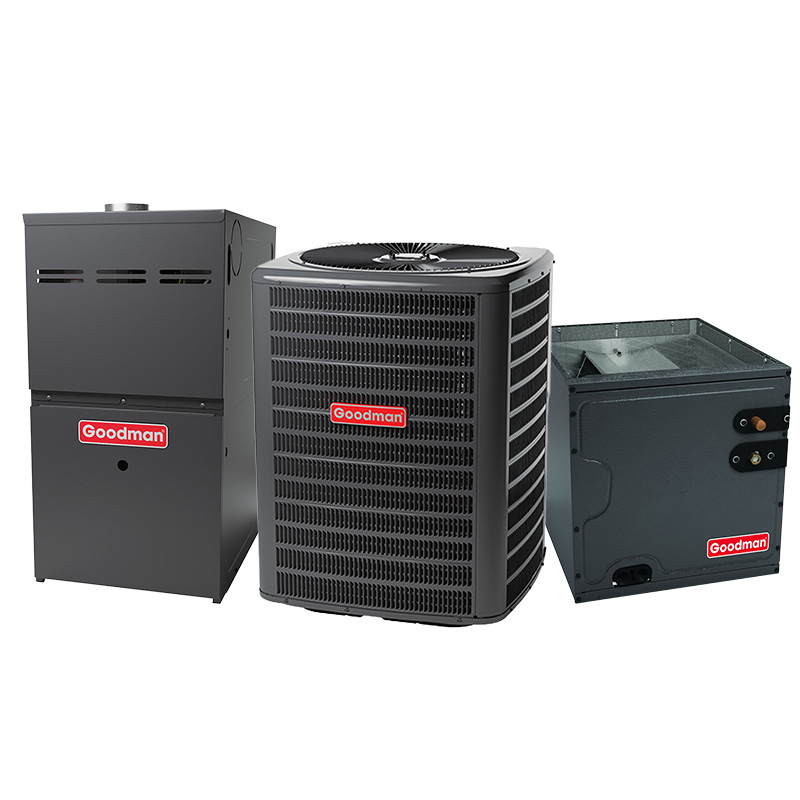
Goodman 2 Ton Dual Fuel Hybrid Heat Pump System – 60000 BTU Gas Furnace, 80% AFUE, 15.2 SEER2, Upflow, R32
View on AC Direct see your lowest price →Check current price on AC Direct →
Key features
- Dual fuel hybrid design automatically switches between heat pump and 80% AFUE gas furnace based on outdoor temperature
- 15.2 SEER2 cooling efficiency meets current federal minimum with modest margin above the baseline
- R-32 refrigerant replaces R-410A with a lower global-warming-potential charge
- 60,000 BTU gas furnace output suits most 2-ton load calculations in moderate to cold climates
- Upflow cabinet configuration for basement or ground-level mechanical room installations
- Goodman factory warranty covers parts; compressor and heat exchanger terms vary by registration
About this system
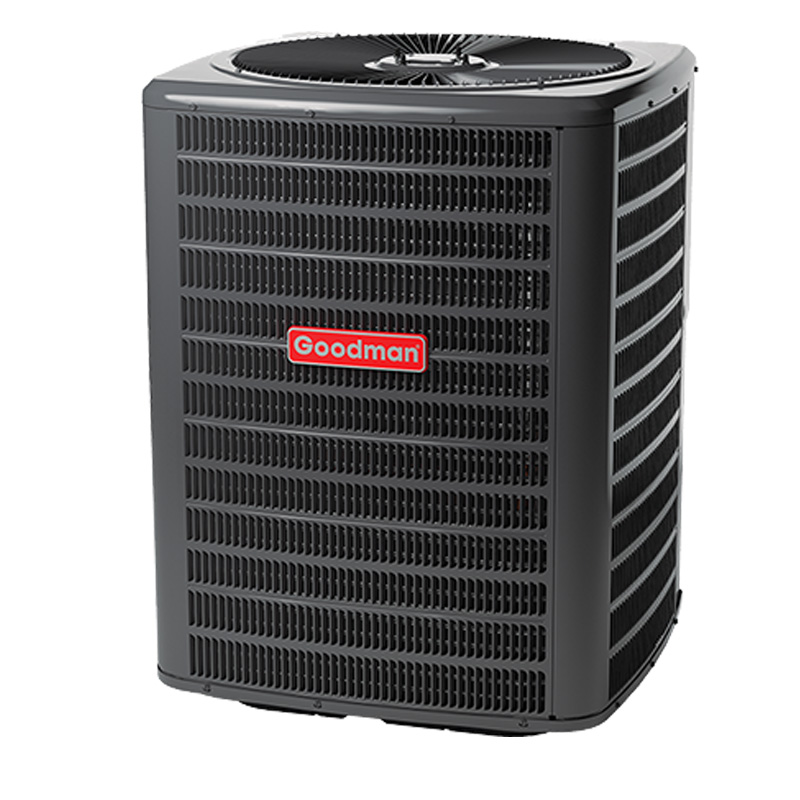
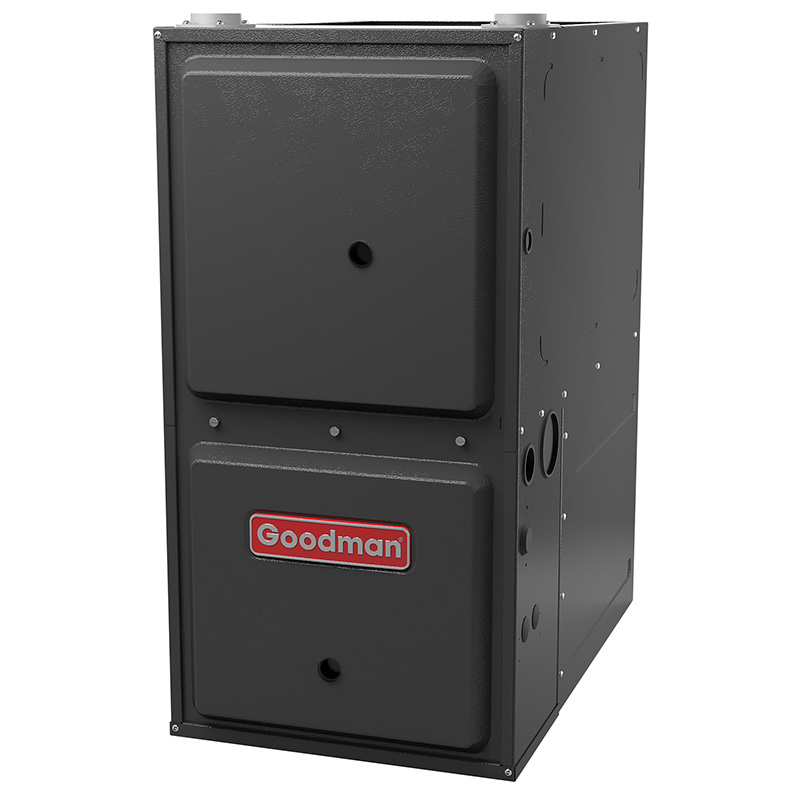
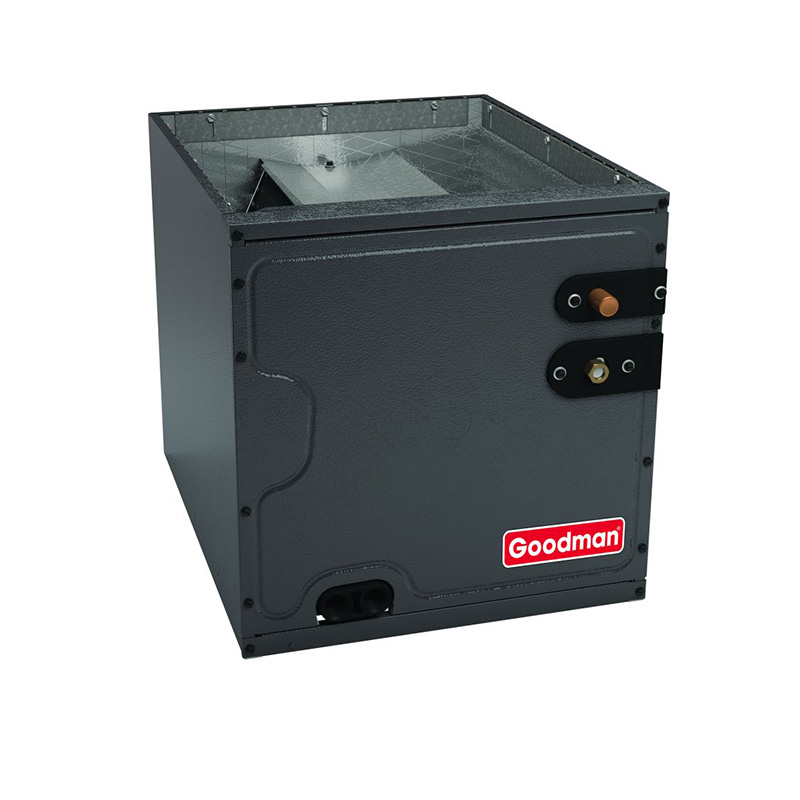
The Goodman 2-Ton Dual Fuel Hybrid Heat Pump System pairs a 15.2 SEER2 heat pump with a 60,000 BTU, 80% AFUE upflow gas furnace to give you two heating sources in one installation. The system automatically switches between electric heat pump operation and gas furnace heat depending on outdoor conditions, which makes it a practical choice for climates that see mild winters interrupted by occasional hard freezes. When temperatures stay above the heat pump’s balance point, you run on electricity at higher efficiency; when they drop below it, the gas furnace takes over so you are never left relying on resistance backup heat.
At 15.2 SEER2, this system clears the current federal minimum efficiency standard with modest headroom. It is not in the same tier as a 17 or 18 SEER2 inverter-driven system, but it is adequate for a homeowner who wants the dual-fuel flexibility without paying for premium efficiency hardware. The 80% AFUE furnace is the base tier of gas efficiency, meaning roughly 20 cents of every dollar in gas is lost as exhaust. Homeowners in regions with high natural gas prices or very cold winters may find that a 96% AFUE furnace pays back the cost difference over time. R-32 refrigerant is a lower global-warming-potential alternative to the older R-410A that is increasingly common in new residential equipment. The upflow configuration requires installation in a basement, utility closet, or mechanical room where supply air exits the top of the air handler.
This system offers genuine dual-fuel flexibility at a price point that is meaningfully lower than comparable Carrier, Trane, or Lennox packages, and the 15.2 SEER2 and 80% AFUE specs are functional without being standout. The trade-offs are real: the 80% AFUE furnace is the least efficient gas option on the market today, compressor longevity runs shorter than premium brands, and capacitor and coil leak issues show up often enough in owner feedback to be worth factoring into your cost-of-ownership estimate.
Overall score is the average of the five ratings above.
What we like
- Dual fuel operation reduces winter heating costs compared to a straight heat pump with electric backup in climates with occasional hard freezes
- Priced 15 to 25 percent below comparable Carrier, Trane, and Lennox dual fuel systems, lowering the upfront investment
- R-32 refrigerant offers a lower environmental impact than the R-410A found in older or competing equipment
- 15.2 SEER2 satisfies current federal efficiency minimums and qualifies for standard utility rebates in most regions
- Upflow cabinet fits a wide range of existing duct layouts in homes with basement or ground-floor mechanical rooms
Trade-offs
- 80% AFUE is the lowest efficiency tier available for gas furnaces; a 96% AFUE unit can recover its cost premium in high-gas-cost regions within several heating seasons
- Compressor lifespan averaging 10 to 14 years is shorter than the 15 to 20 years commonly reported for premium-brand compressors
- Dual-run capacitors are the most frequently reported failure point, and while individual repairs run roughly $300 to $600, they tend to recur after year 7
- A minority of owners report refrigerant leaks in the first year, typically traced to installation or initial charge quality rather than the equipment itself
What homeowners and pros say about Goodman
Homeowners discussing this type of Goodman system online tend to split along a familiar line. Those who had experienced installers and set realistic expectations generally describe it as a functional, no-frills system that keeps costs down. Those who ran into problems point most often to dual-run capacitor failures after the first several years of use, with repair bills in the $300 to $600 range that some describe as recurring rather than one-time. Evaporator coil leaks appear in a meaningful share of longer-term owner accounts, and a smaller group reports refrigerant issues in the first year, which contractors typically attribute to charge or installation quality rather than the unit itself. On ConsumerAffairs, Goodman equipment as a whole scores around 2.5 out of 5, but that platform captures disproportionately unhappy owners, so the score reflects the complaint-loud end of the experience range rather than the average owner’s outcome. Google reviews aggregated across dealer locations land closer to 3.8 out of 5, where the most consistent praise is straightforwardly about price.
HVAC technicians who work on Goodman equipment regularly tend to hold a pragmatic view. The most common professional observation is that installation quality drives long-term outcomes on Goodman systems more than on premium brands, which they describe as more forgiving of imperfect setup. Techs also note that compressor lifespan on Goodman equipment tends to fall in the 10 to 14 year range, compared to 15 to 20 years they associate with Trane, Carrier, and Lennox compressors. For a dual fuel system specifically, they emphasize that proper balance-point programming and refrigerant charge at startup are critical, since errors in either area are responsible for most of the first-year refrigerant leak complaints owners report. The bottom line from the field is that Goodman’s price advantage is real, but it comes with a shorter compressor horizon and a higher likelihood of minor repairs in the second half of the equipment’s life.
Sources: ConsumerAffairs Goodman owner reviews, AHRI Directory of Certified Product Performance, U.S. DOE appliance and equipment efficiency standards, Goodman product specification sheets.
What it costs to run
At 15.2 SEER2, cooling this 2-ton system for a typical 1200-hour cooling season at the U.S. average electricity rate of $0.17/kWh works out to roughly $322 per year in cooling, about $43 less per year than a minimum-efficiency 13.4 SEER2 unit of the same size. Your real cost depends on your climate and local rate.
Method: (24,000 BTU/hr ÷ 15.2 SEER2) × 1200 hours ÷ 1000 × $0.17/kWh. Rate source: U.S. EIA average; cooling hours: moderate-climate estimate.
How it compares
| Brand | Comparable model | SEER2 | Stage | Price position |
|---|---|---|---|---|
| Goodman | Dual Fuel Hybrid Heat Pump System (this unit) | 15.2 | Single-stage | Value pick |
| Carrier | Performance Series Dual Fuel (25HCE6 / 59SC5) | 15.2 | Single-stage | Typically 15 to 25 percent more than this Goodman |
| Trane | XR15 Dual Fuel System (4TWR / S9X1) | 15.0–15.2 | Single-stage | Typically 15 to 25 percent more than this Goodman |
| Lennox | Merit Series Dual Fuel (14HPX / ML180) | 15.2 | Single-stage | Typically 15 to 25 percent more than this Goodman |
Competitor rows are comparable single-stage units at similar efficiency; price is relative position, not a quote.
Questions about this system
What outdoor temperature should I set the switchover point between the heat pump and the gas furnace?
Most installers set the balance point between 35 and 40 degrees Fahrenheit, where the heat pump's efficiency advantage over gas typically disappears. Your technician should calculate the exact point based on your local gas and electricity rates and your home's heat loss characteristics, so ask for that calculation in writing before startup.
Does the 80% AFUE furnace qualify for any federal tax credits or rebates?
Under current federal Inflation Reduction Act guidelines, gas furnaces generally need to be at least 97% AFUE in most climate zones to qualify for the home efficiency tax credit, so this 80% unit is unlikely to qualify on its own. Check your local utility's rebate program separately, as some utilities offer incentives for the heat pump component of a dual fuel system regardless of furnace efficiency.
Is R-32 refrigerant safe, and can my existing technician service it?
R-32 is mildly flammable (A2L classification) and requires technicians who have completed A2L handling training, which is becoming standard in the industry but is not yet universal. Confirm that your installing contractor and any future service tech have the appropriate certification before scheduling work.
What does Goodman's warranty actually cover on this system, and what do I need to do to activate it?
Goodman requires online product registration within a set window after installation to receive the extended limited warranty; without registration, coverage defaults to a shorter base term. The parts warranty covers components but does not include labor, so factor in labor costs when comparing Goodman's warranty to competitors that bundle labor coverage.
Given the documented capacitor failures and coil leak issues, should I buy an extended warranty for this system?
Most HVAC contractors and independent analysts suggest a third-party extended labor and parts warranty makes financial sense on value-tier equipment, particularly after year 5 when capacitor and coil issues become more likely. Compare the total cost of a reputable extended plan against the documented $300 to $600 per capacitor repair and the potentially much higher cost of an evaporator coil replacement before deciding.
Specifications
| Cooling capacity | 2 Ton |
| Efficiency | 15.2 SEER2 |
| Furnace output | 60000 BTU |
| Furnace efficiency | 80% AFUE |
| Configuration | Upflow |
| Refrigerant | R-32 |