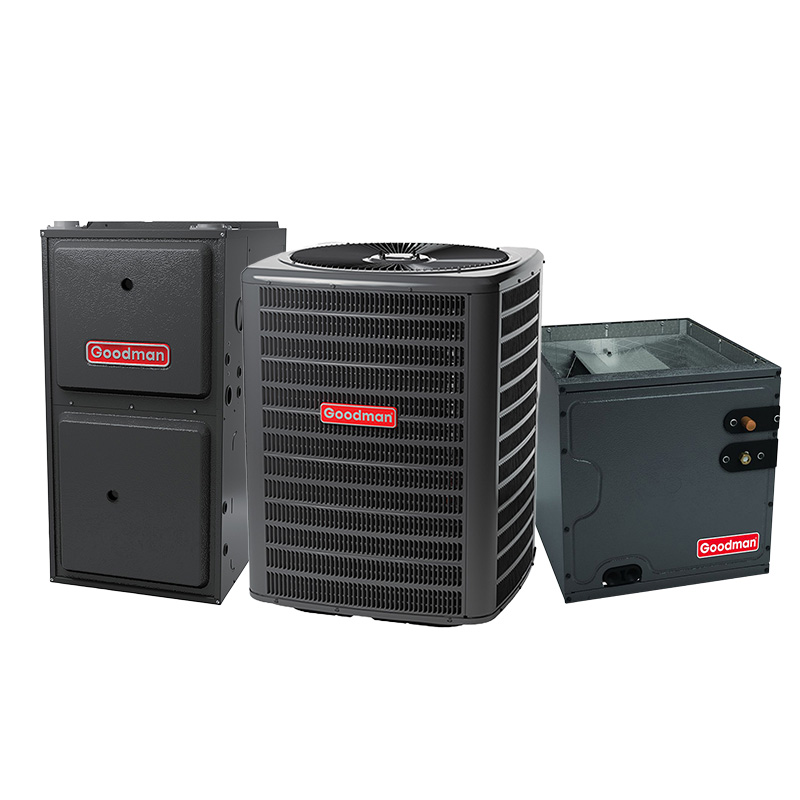
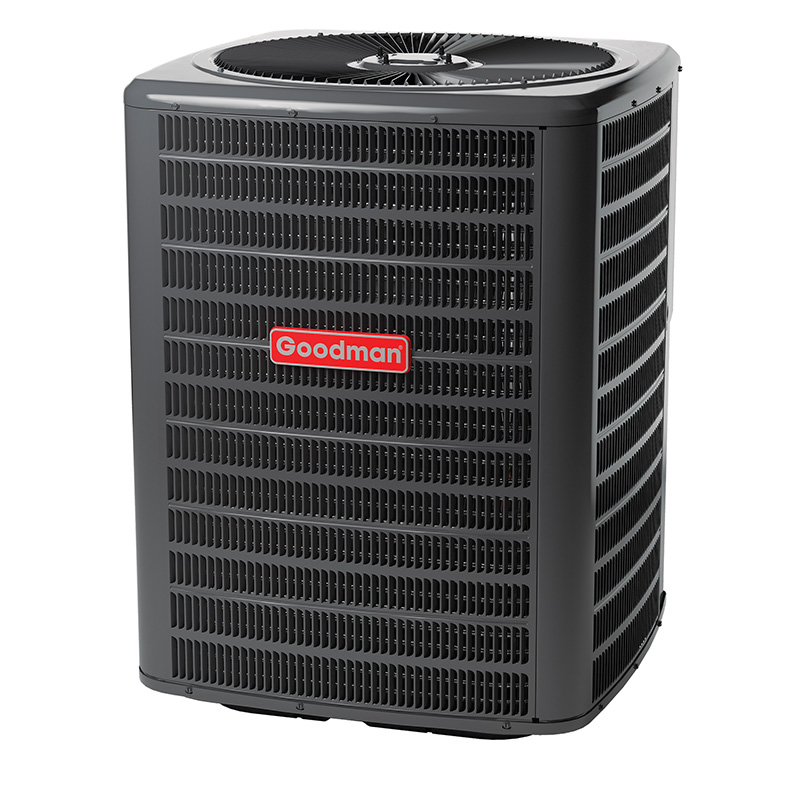
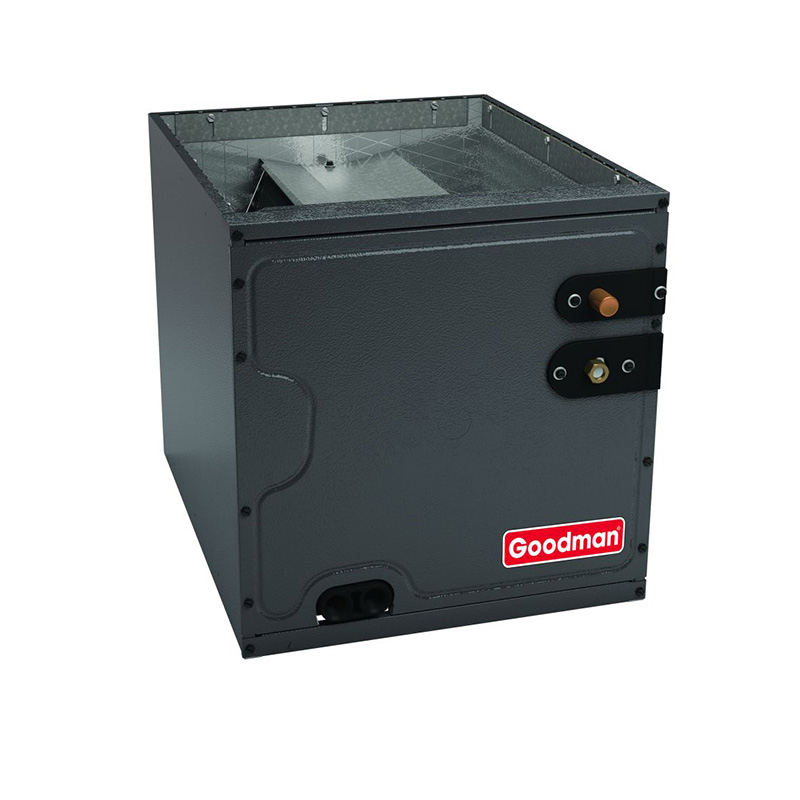
Goodman 2 Ton Dual Fuel Hybrid Heat Pump System – 60000 BTU Gas Furnace, Two Stage, 80% AFUE, Upflow, 15.2 SEER2, R32
View on AC Direct see your lowest price →Check current price on AC Direct →
Key features
- Dual fuel hybrid operation automatically switches between heat pump and 80% AFUE two-stage gas furnace based on outdoor temperature
- 15.2 SEER2 cooling efficiency meets 2023 federal minimum standards for most U.S. regions
- Two-stage furnace firing reduces temperature swings, lowers noise, and improves humidity control versus single-stage
- R-32 refrigerant with a global warming potential roughly 68% lower than R-410A
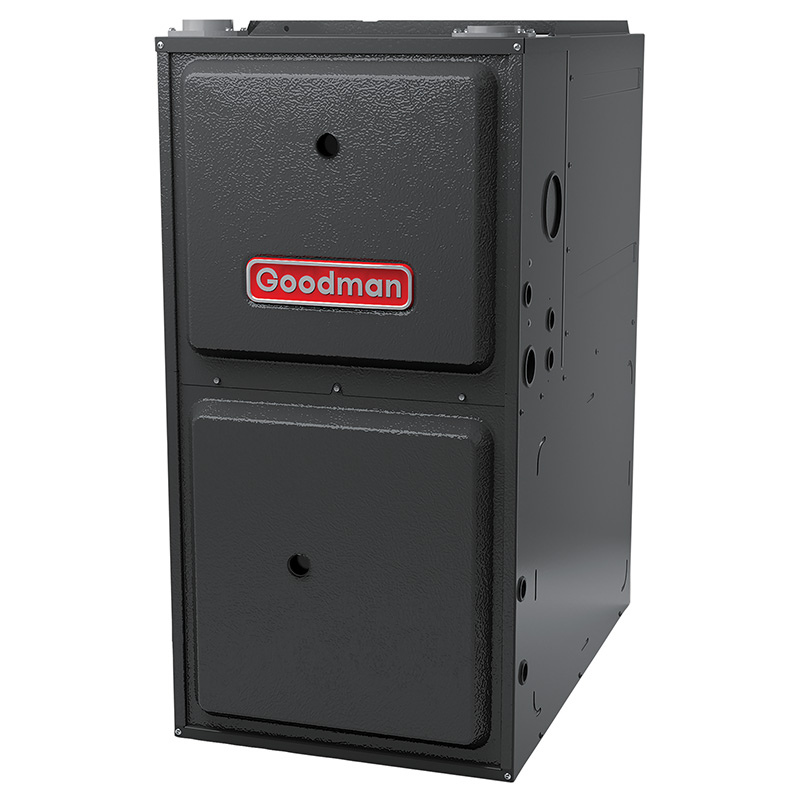
- Upflow cabinet design for basement or utility-closet installations with overhead duct systems
- 60,000 BTU heating capacity sized for smaller homes; 2-ton cooling output
About this system
The Goodman 2-Ton Dual Fuel Hybrid Heat Pump System pairs a 15.2 SEER2 heat pump with a 60,000 BTU two-stage, 80% AFUE upflow gas furnace. A dual fuel setup is a practical choice for climates where winters dip cold enough to make a heat pump struggle on its own but not so severe that gas heat is the only option. The system automatically hands off between electric heat pump mode and gas furnace mode depending on outdoor temperatures, keeping operating costs lower than a straight gas system during mild shoulder-season weather while still delivering reliable heat during deep cold snaps.
The two-stage furnace is a genuine comfort upgrade over single-stage equipment. At the lower firing stage the system runs longer, quieter cycles that do a better job of evening out temperatures and managing humidity. R-32 refrigerant is a lower-global-warming-potential alternative to R-410A, and its adoption is accelerating across the industry ahead of phasedown regulations. The upflow configuration means warm air exits the top of the furnace cabinet and travels up through ductwork, making this unit suited to basement or closet installations where ducts run through the floors and ceilings above. At 2 tons this system is sized for homes roughly in the 800 to 1,200 square foot range, though a proper Manual J load calculation should always confirm sizing before purchase.
Goodman occupies the value tier of the residential HVAC market, typically priced 15 to 25 percent below Trane, Lennox, and Carrier for comparable equipment. That price gap is real and repeatable, and it is the core reason contractors and DIY-inclined homeowners reach for the brand. The trade-off is a compressor life expectancy that tends to average 10 to 14 years versus 15 to 20 years for premium-brand counterparts, and a customer-review profile that shows repair costs climbing after roughly year 7.
This system delivers genuine dual-fuel flexibility and two-stage comfort at a price point that undercuts the major premium brands by a meaningful margin. The 80% AFUE furnace and 15.2 SEER2 rating are entry-level by today's standards, so buyers prioritizing maximum efficiency will want to look at higher-tier options. For cost-conscious homeowners in mixed climates who want the operational advantages of a hybrid system without a premium-brand price tag, this is a reasonable choice as long as installation quality is not compromised.
Overall score is the average of the five ratings above.
What we like
- Hybrid heat pump and gas furnace pairing lowers heating costs during mild weather while providing full gas backup during hard freezes
- Two-stage furnace improves comfort and humidity control compared to single-stage alternatives at the same price tier
- R-32 refrigerant positions the system ahead of regulatory refrigerant phasedowns
- Priced 15 to 25 percent below comparable Trane, Lennox, and Carrier dual-fuel systems
- Upflow configuration is straightforward to integrate into existing basement duct systems
Trade-offs
- 80% AFUE furnace leaves roughly 20 cents of every heating dollar going up the flue; 95%+ AFUE options exist at higher price points
- 15.2 SEER2 is at the lower end of current efficiency tiers and will not earn federal tax credits requiring higher ratings
- Compressor life expectancy averages 10 to 14 years, shorter than the 15 to 20 years typical of premium brands
- Dual-run capacitor failures are the most commonly reported repair issue, and evaporator coil leaks appear in a notable share of owner reviews over time
What homeowners and pros say about Goodman
Among homeowners who post online, Goodman’s overall reputation sits at roughly 2.5 out of 5 on ConsumerAffairs, a channel that skews toward dissatisfied owners, where the most consistent theme is repair bills that climb after roughly the seventh year of ownership. The specific failure modes that show up most often are dual-run capacitor failures, evaporator coil leaks, and compressor wear that tends to peak between years 10 and 14, earlier than what owners of premium-brand systems typically report. A smaller but notable share of owners describe refrigerant leaks in the first year, which installers and the company both attribute to charge or installation problems rather than component failures at the factory level. Google dealer reviews land higher, around 3.8 out of 5 across locations with a few hundred reviews each, and the most repeated praise is that the equipment is affordable and that a dealer was able to get it installed quickly without a long lead time.
HVAC technicians who work on a wide range of brands tend to view Goodman as acceptable equipment when it is installed carefully and commissioned correctly, with particular emphasis on correct refrigerant charge and electrical connections. The dual-run capacitor issue is well-known in the trade and is generally not considered a serious concern because the part and labor cost is modest when caught during a maintenance visit. For a dual fuel hybrid system specifically, technicians note that the balance-point calibration during installation matters more than on a straight gas or straight electric system, and that skipping that step is one of the more common reasons owners end up dissatisfied with fuel costs or comfort. The value proposition is real and acknowledged in the trade, but so is the caveat that the margin for cutting corners on installation is narrower than it is with more forgiving premium equipment.
Sources: ConsumerAffairs Goodman owner reviews, AHRI Directory of Certified Product Performance, U.S. DOE appliance and equipment efficiency standards, Goodman product specification sheets.
What it costs to run
At 15.2 SEER2, cooling this 2-ton system for a typical 1200-hour cooling season at the U.S. average electricity rate of $0.17/kWh works out to roughly $322 per year in cooling, about $43 less per year than a minimum-efficiency 13.4 SEER2 unit of the same size. Your real cost depends on your climate and local rate.
Method: (24,000 BTU/hr ÷ 15.2 SEER2) × 1200 hours ÷ 1000 × $0.17/kWh. Rate source: U.S. EIA average; cooling hours: moderate-climate estimate.
How it compares
| Brand | Comparable model | SEER2 | Stage | Price position |
|---|---|---|---|---|
| Goodman | Dual Fuel Hybrid System (2-Ton, 60K BTU, Two-Stage, 80% AFUE) | 15.2 | Two-stage | Value pick |
| Carrier | Performance Series Dual Fuel (25HCE / 59TP6) | 15.2 – 16.0 | Two-stage | Typically 15 to 25 percent more than Goodman |
| Trane | XR15 Dual Fuel System (XR15 Heat Pump / S8X2 Furnace) | 15.0 – 16.0 | Two-stage | Typically 15 to 25 percent more than Goodman |
| Lennox | Merit Series Dual Fuel (14HPX / ML195 Furnace) | 15.0 – 15.5 | Two-stage | Typically 15 to 25 percent more than Goodman |
Competitor rows are comparable single-stage units at similar efficiency; price is relative position, not a quote.
Questions about this system
At what outdoor temperature does the system switch from heat pump to gas furnace?
The balance point is typically set during installation, often somewhere between 35 and 40 degrees Fahrenheit, but it can be adjusted by the installer based on your local climate and utility rates. Below that threshold the gas furnace carries the heating load; above it the heat pump handles most of the work. Getting this setting right is one of the more important commissioning steps for a dual fuel system.
Does this system qualify for the federal Inflation Reduction Act heat pump tax credit?
As of current IRA guidelines, heat pumps must meet the Consortium for Energy Efficiency's top efficiency tier to qualify for the 30% tax credit, which generally requires higher SEER2 ratings than 15.2 for a 2-ton unit in most climate zones. You should verify current CEE requirements with a tax professional before purchasing with the credit in mind, because this system is likely to fall short of the threshold.
How long can I expect the compressor to last?
Goodman compressors have documented average lifespans of roughly 10 to 14 years, which is shorter than the 15 to 20 years often cited for premium brands such as Trane or Carrier. Proper installation, correct refrigerant charge, and routine maintenance are the strongest predictors of where in that range your unit lands.
What are the most common repairs owners report on Goodman systems like this one?
Dual-run capacitor failure is the most frequently reported issue and is generally a low-cost fix in the 300 to 600 dollar range. Evaporator coil leaks appear in a meaningful share of longer-term owner reviews. A smaller share of owners have reported refrigerant leaks within the first year, which is usually traced back to installation or initial charge problems rather than a component defect.
Is this system compatible with a two-stage or communicating thermostat, and does it need one?
The two-stage furnace in this system benefits from a thermostat that can distinguish between a first-stage and second-stage call for heat, otherwise the furnace may default to running at full capacity more often than necessary. A standard two-stage-compatible thermostat is sufficient; a full communicating thermostat is not required for this Goodman configuration but can provide more precise control if your installer supports it.
Specifications
| Cooling capacity | 2 Ton |
| Efficiency | 15.2 SEER2 |
| Furnace output | 60000 BTU |
| Furnace efficiency | 80% AFUE |
| Configuration | Upflow |
| Refrigerant | R-32 |