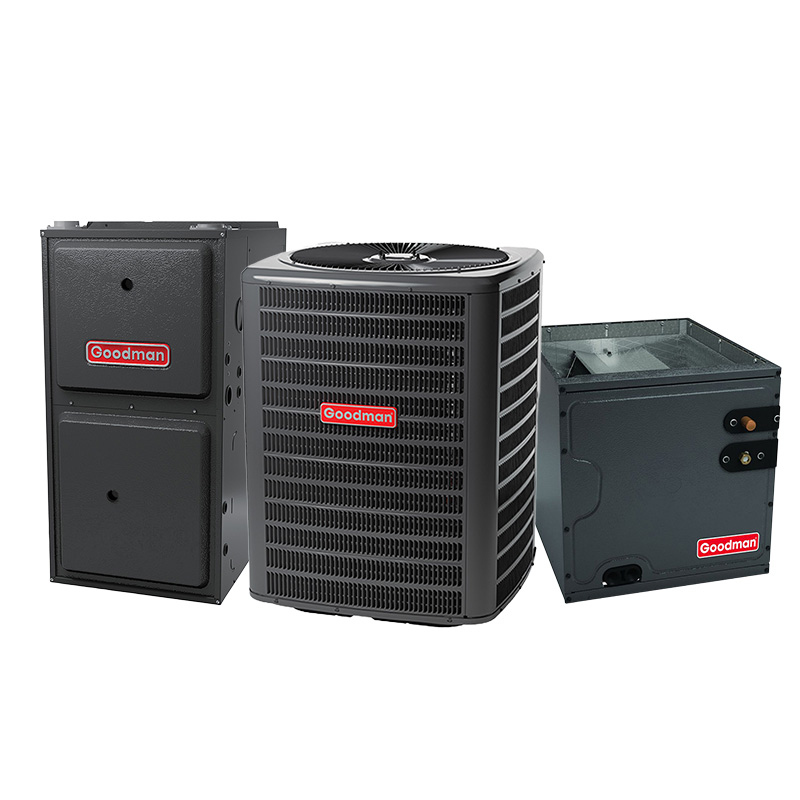
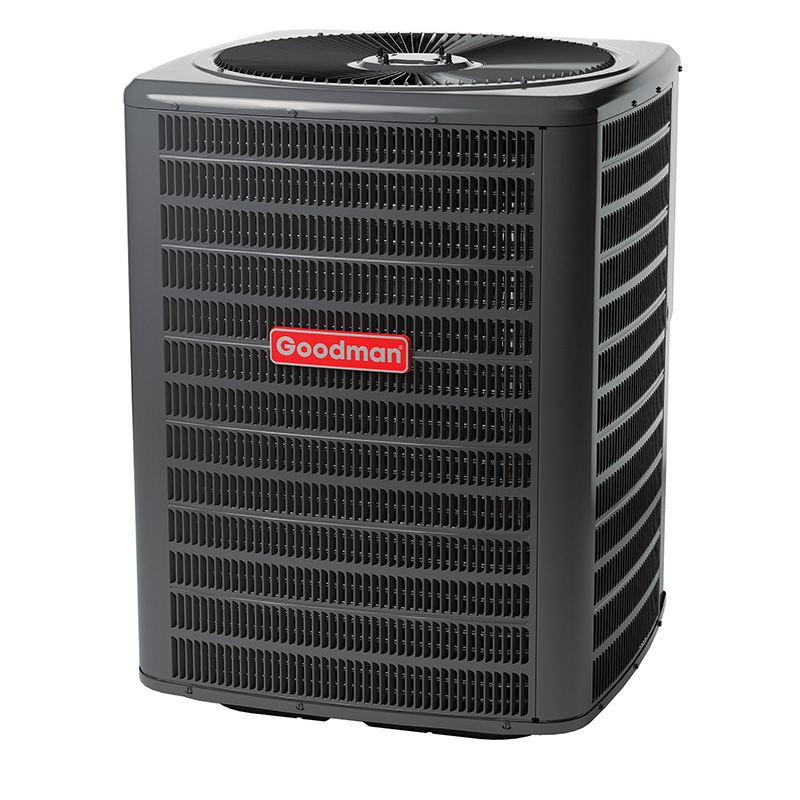
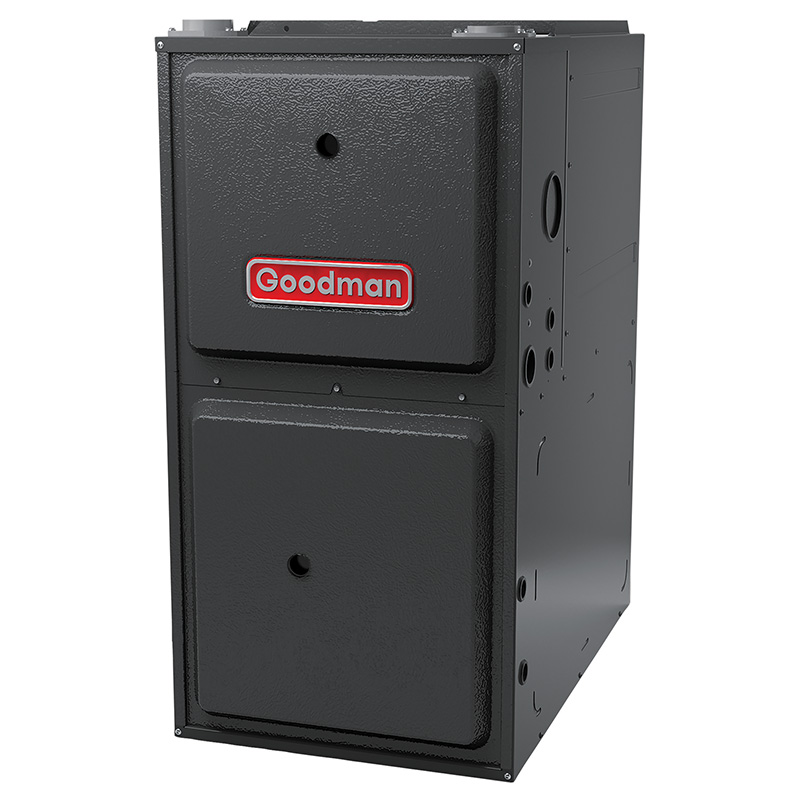
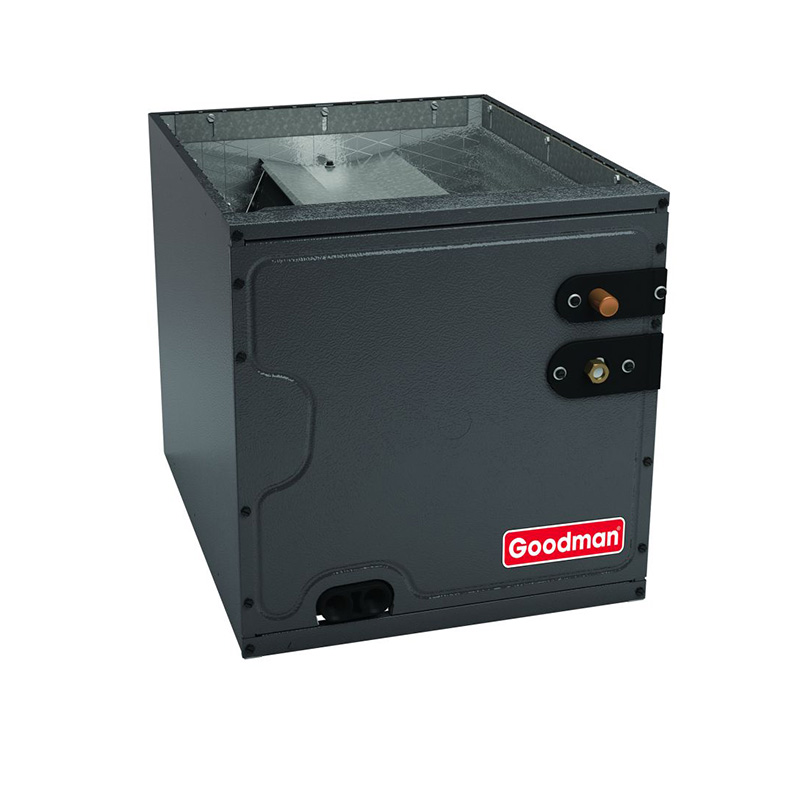
Goodman 2 Ton Dual Fuel Hybrid Heat Pump System – 80000 BTU California Low NOx Two Stage Gas Furnace, 80% AFUE, Upflow, 15.2 SEER2, R32
View on AC Direct see your lowest price →Check current price on AC Direct →
Key features
- 15.2 SEER2 heat pump efficiency rating meets modern federal minimums with moderate headroom
- 80,000 BTU two-stage gas furnace at 80% AFUE for consistent, lower-cycling heat output
- Dual fuel hybrid operation automatically switches between heat pump and gas based on conditions
- California Low NOx certified furnace meets strict California air quality combustion standards
- R-32 refrigerant with lower global warming potential than legacy R-410A systems
- Upflow configuration suits standard basement or ground-level air handler installations
About this system
The Goodman 2-Ton Dual Fuel Hybrid Heat Pump System pairs a 15.2 SEER2 heat pump with an 80,000 BTU, 80% AFUE two-stage gas furnace in an upflow configuration. The dual fuel setup lets the system automatically switch between electric heat pump operation and gas heat depending on outdoor temperatures, which typically means the heat pump handles mild weather efficiently while the furnace takes over during deep cold snaps. That kind of setup suits homeowners in mixed climates where winters get genuinely cold but also include long stretches of moderate temperatures.
The two-stage furnace is a meaningful detail: it runs at a lower capacity most of the time, cycling less aggressively and maintaining more consistent indoor temperatures than a single-stage unit. R-32 refrigerant has a lower global warming potential than the R-410A it replaces and is becoming the industry standard as regulations tighten, particularly in California, where the Low NOx combustion certification on this furnace is required for sale and installation. At 2 tons, this system is sized for homes roughly in the 900 to 1,400 square foot range, depending on insulation, climate zone, and ceiling height.
Goodman positions this as an accessible entry point into hybrid heat pump technology, priced noticeably below comparable Carrier, Trane, and Lennox dual fuel systems. The trade-off is that Goodman’s reputation leans heavily on installation quality, and the long-term ownership experience varies more than it does with premium brands. Buyers who invest in a thorough, properly commissioned install tend to report much better outcomes than those who shop the lowest-bidding contractor.
This system delivers genuine hybrid heat pump functionality and two-stage furnace comfort at a price point that undercuts premium brands by 15 to 25 percent, making it a reasonable option for budget-conscious buyers in mixed climates. The specs are honest and competitive for the tier, but Goodman's documented reliability history means the long-term value equation depends heavily on install quality and access to competent service. It is not the lowest-risk choice, but it is a defensible one for buyers who plan carefully.
Overall score is the average of the five ratings above.
What we like
- Dual fuel hybrid operation maximizes efficiency across a wide range of outdoor temperatures
- Two-stage furnace reduces short cycling and maintains steadier indoor comfort than single-stage units
- California Low NOx certification allows legal installation in California without modifications
- R-32 refrigerant is forward-looking and aligns with tightening refrigerant regulations
- Entry price is meaningfully lower than comparable Carrier, Trane, or Lennox dual fuel systems
Trade-offs
- 80% AFUE is the low end of modern furnace efficiency; high-efficiency 96%+ units will cut gas bills more in cold climates
- Dual run capacitors are Goodman's most frequently reported failure point, adding likely service costs after year 5 to 7
- Compressor lifespan averages 10 to 14 years versus 15 to 20 years typical of premium brands
- A minority of owners report refrigerant leaks within the first year, usually traceable to installation or initial charge issues
What homeowners and pros say about Goodman
Homeowners who share feedback about Goodman equipment online tend to cluster at the extremes. On ConsumerAffairs, where the audience skews toward people motivated by a complaint, Goodman scores around 2.5 out of 5, and the recurring story is repair costs that start climbing after roughly year seven. The specific failure modes that come up most often are not abstract: dual run capacitors fail and need replacement, evaporator coil leaks appear in a meaningful share of reviews, and compressors on Goodman units tend to average 10 to 14 years rather than the 15 to 20 years owners of Trane or Carrier equipment more commonly report. A minority of owners also describe refrigerant leaks within the first year, which technicians generally attribute to installation or initial charge problems rather than defective equipment.
Dealer-level Google reviews tell a somewhat different story, averaging around 3.8 out of 5 across locations with a few hundred reviews each, where affordability is the most common positive note. HVAC professionals who work on Goodman equipment regularly tend to say the same thing: the units are not poorly built for the price, but they reward a careful install and punish a careless one more than premium brands do. For a dual fuel hybrid system like this one, where the interaction between the heat pump, the gas furnace controls, and the refrigerant charge all have to be correctly set up from day one, that installer-dependence is especially relevant. Buyers who source an experienced, thorough contractor and register the warranty promptly tend to report much better long-term experiences than those who prioritize the lowest installation bid.
Sources: ConsumerAffairs Goodman owner reviews, AHRI Directory of Certified Product Performance, U.S. DOE appliance and equipment efficiency standards, Goodman product specification sheets.
What it costs to run
At 15.2 SEER2, cooling this 2-ton system for a typical 1200-hour cooling season at the U.S. average electricity rate of $0.17/kWh works out to roughly $322 per year in cooling, about $43 less per year than a minimum-efficiency 13.4 SEER2 unit of the same size. Your real cost depends on your climate and local rate.
Method: (24,000 BTU/hr ÷ 15.2 SEER2) × 1200 hours ÷ 1000 × $0.17/kWh. Rate source: U.S. EIA average; cooling hours: moderate-climate estimate.
How it compares
| Brand | Comparable model | SEER2 | Stage | Price position |
|---|---|---|---|---|
| Goodman | 2-Ton Dual Fuel Hybrid Heat Pump with 80K BTU Two-Stage 80% AFUE Furnace | 15.2 | Two-stage | Value pick |
| Carrier | Performance Series Dual Fuel (25HPB / 59TP6) | 15.2–16.0 | Two-stage | Typically 15 to 25 percent more than Goodman |
| Trane | XR15 Dual Fuel with S8X2 Two-Stage Furnace | 15.0–15.6 | Two-stage | Typically 15 to 25 percent more than Goodman |
| Lennox | Merit Series ML14XP1 Dual Fuel with ML180 Furnace | 15.0–15.5 | Single-stage heat pump, two-stage furnace | Typically 15 to 25 percent more than Goodman |
Competitor rows are comparable single-stage units at similar efficiency; price is relative position, not a quote.
Questions about this system
At what outdoor temperature does this system switch from heat pump to gas furnace?
The switchover point, often called the balance point, is typically set during commissioning and can vary based on your climate and preferences. Most installers set it somewhere between 30 and 40 degrees Fahrenheit, where the heat pump's efficiency drops enough that gas heat becomes more economical. A qualified technician should dial this in during startup, not leave it at a default.
Is 80% AFUE acceptable for a California install, or should I be looking at a higher-efficiency furnace?
80% AFUE is legally permitted and Low NOx certified for California installation, so there is no compliance barrier. However, in colder parts of California or if you rely heavily on gas heat, a 96% or higher AFUE furnace would reduce gas consumption noticeably over the system's life. In a dual fuel hybrid setup where the heat pump handles most mild-weather heating, the furnace runs less often, which can reduce the practical payback gap between 80% and 96% units.
How likely are capacitor failures, and what does a repair typically cost?
Dual run capacitors are the most commonly reported failure point on Goodman equipment across owner reviews and technician feedback. They are also one of the cheaper HVAC repairs, generally in the $300 to $600 range including a service call. Keeping a service plan or at least a reliable local technician on call makes this kind of predictable maintenance much less disruptive.
Does this system qualify for the federal energy efficiency tax credit?
Heat pump systems need to meet specific efficiency thresholds under the Inflation Reduction Act's 25C credit, and eligibility depends on the split system's combined ratings as installed and certified. You should verify the specific model numbers against the AHRI directory and current IRS guidance, or ask your installer to confirm eligibility before purchase, as credits and qualifying product lists are updated periodically.
Why does the warranty coverage matter so much with Goodman specifically?
Goodman offers a 10-year parts warranty when the product is registered within a set window after installation, which provides real protection against the component failures documented in owner reviews. The catch is that labor is not covered, and Goodman's compressor lifespan averaging 10 to 14 years means you could face a major repair right around the time the parts warranty expires. Knowing what your installer charges for labor and what an extended labor warranty would cost is worth factoring in upfront.
Specifications
| Cooling capacity | 2 Ton |
| Efficiency | 15.2 SEER2 |
| Furnace output | 80000 BTU |
| Furnace efficiency | 80% AFUE |
| Configuration | Upflow |
| Refrigerant | R-32 |