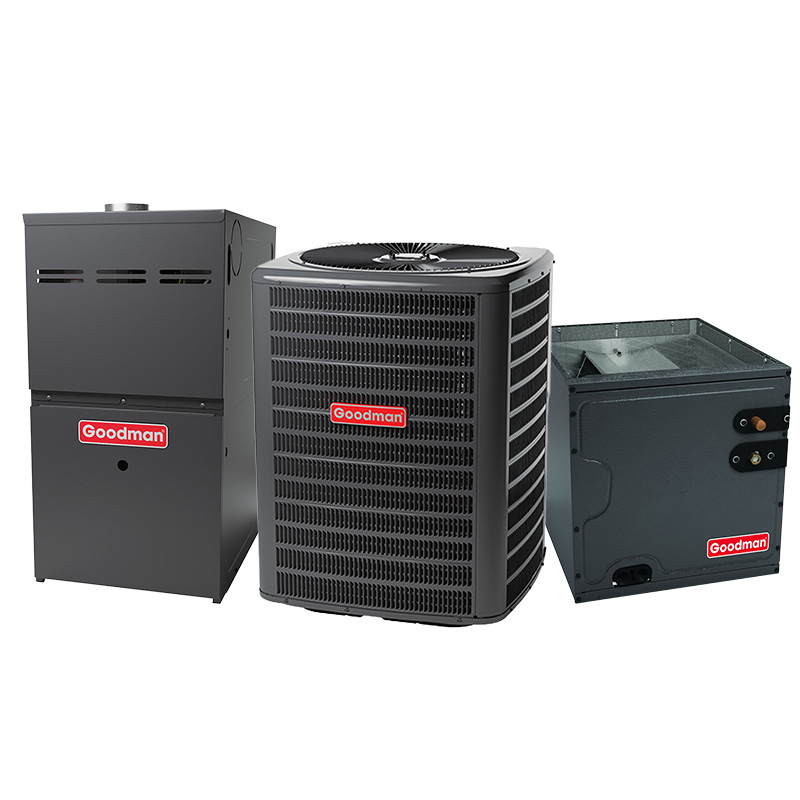
Goodman 2 Ton Dual Fuel Hybrid Heat Pump System – 80000 BTU Gas Furnace, 80% AFUE, 15.2 SEER2, Upflow, R32
View on AC Direct see your lowest price →Check current price on AC Direct →
Key features
- Dual fuel hybrid design automatically selects gas or electric heat pump operation based on outdoor conditions
- 15.2 SEER2 cooling efficiency meets current federal minimums for most U.S. climate zones
- 80,000 BTU gas furnace rated at 80% AFUE for baseline gas heating performance
- R-32 refrigerant with lower global-warming potential than R-410A
- Upflow cabinet configuration for basement, crawl space, or ground-level utility closet installations
- 2-ton capacity suited to smaller homes or individual zones in the 800 to 1,200 square foot range depending on climate and insulation
About this system
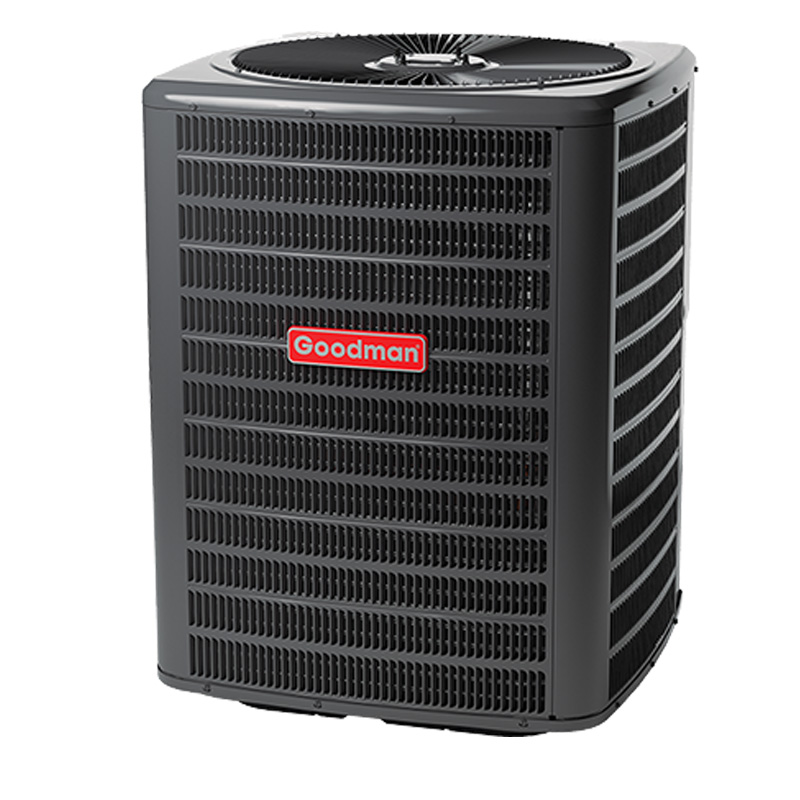
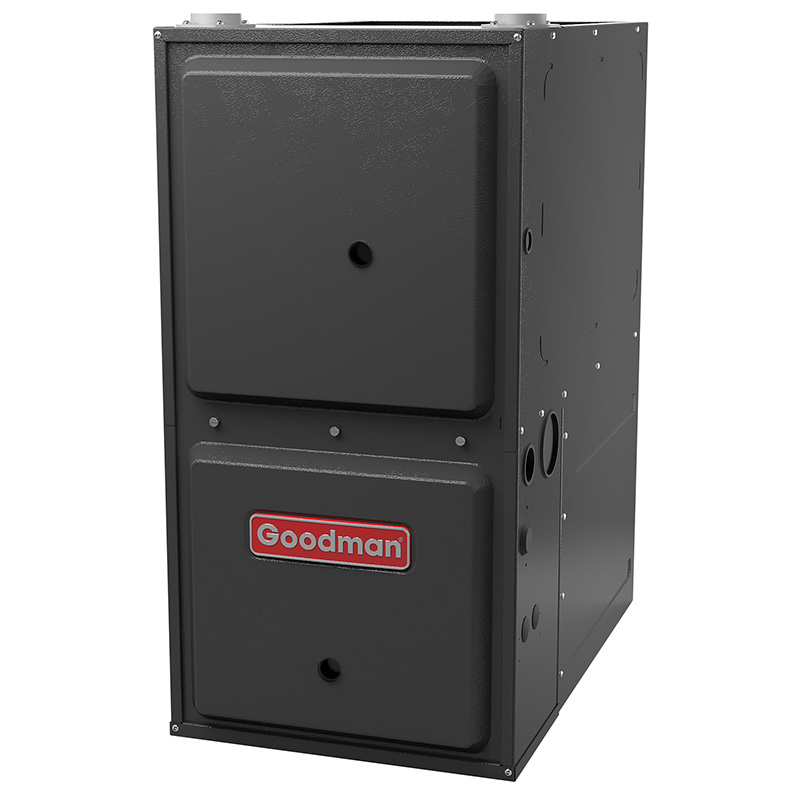
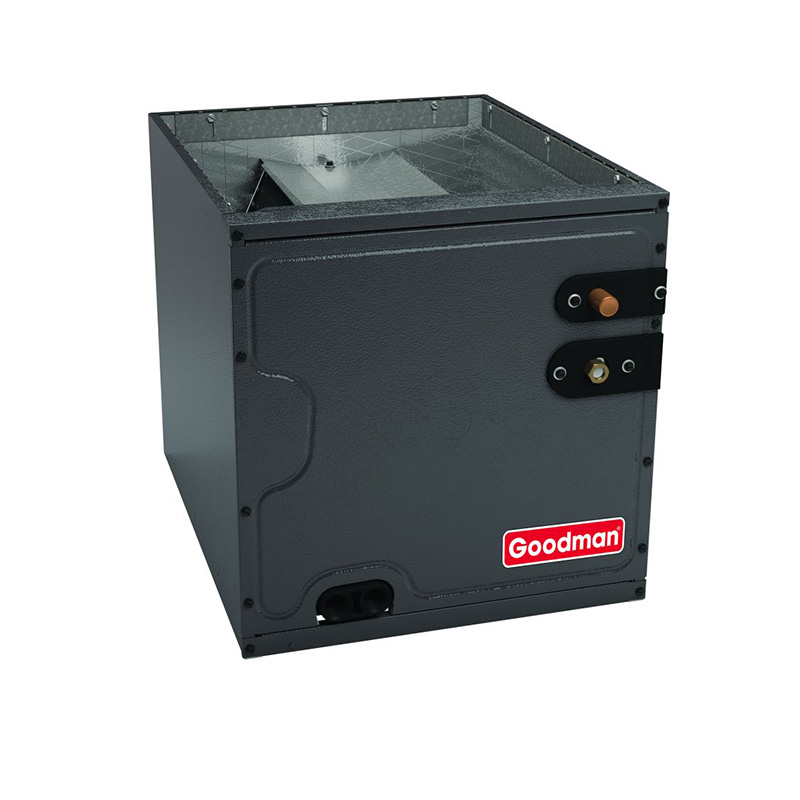
The Goodman 2-ton dual fuel hybrid heat pump system pairs a 15.2 SEER2 R-32 heat pump with an 80,000 BTU, 80% AFUE upflow gas furnace. The hybrid setup is the key selling point: the system automatically switches between electric heat pump operation and gas heat depending on outdoor temperature and which fuel costs less to run at that moment. For homeowners in mixed climates where winters occasionally drop below the heat pump’s efficient operating range, this arrangement can trim heating bills compared to running gas alone all season, while still letting you lean on electricity when temperatures are moderate.
The 15.2 SEER2 rating lands at the entry tier of current minimum-efficiency standards, so cooling costs will be lower than an older 13 SEER unit but noticeably higher than 17 or 18 SEER2 variable-speed alternatives. The 80% AFUE furnace is likewise a baseline performer, meaning one in five BTUs of gas combustion leaves as exhaust rather than heat. R-32 refrigerant is a forward-looking choice, carrying a lower global-warming potential than the R-410A it replaces and positioning the system well ahead of ongoing regulatory shifts. The upflow cabinet suits homes with a furnace in a basement, crawl space, or ground-level utility closet where conditioned air rises into the duct system above.
This combination suits budget-conscious homeowners in climate zones 3 through 5 who already have or are replacing a gas line, want the operational flexibility of dual fuel, and are not willing to pay the premium that Carrier, Trane, or Lennox charge for comparable hybrid configurations. It is not the right fit for anyone prioritizing maximum long-term efficiency or who expects near-zero maintenance costs over a 15-plus-year horizon.
This Goodman hybrid system delivers real operational flexibility at a price point 15 to 25 percent below comparable Carrier, Trane, and Lennox setups, making dual fuel accessible for budget-focused buyers. The efficiency specs are honest entry-level numbers, not standout performers, and long-term ownership costs depend heavily on install quality and a readiness to handle periodic component repairs, particularly after year seven. Buyers who want low upfront cost and fuel-switching capability will find it a reasonable match; those prioritizing lowest lifetime cost or premium reliability should budget up.
Overall score is the average of the five ratings above.
What we like
- Upfront price is typically 15 to 25 percent below equivalent Carrier, Trane, and Lennox hybrid systems
- Dual fuel switching reduces dependence on a single energy source, useful when gas or electricity prices shift seasonally
- R-32 refrigerant is lower-GWP than R-410A and aligns with coming regulatory direction
- Upflow configuration is widely compatible with existing duct layouts in homes with below-floor mechanical rooms
- Goodman's broad dealer network makes parts and service technicians relatively easy to find in most metro areas
Trade-offs
- 80% AFUE and 15.2 SEER2 are baseline ratings; higher-efficiency options exist at modest additional cost from both Goodman and competitors
- Dual-run capacitors are the most frequently reported failure point, and while the repair is usually low-cost, it is a recurring reality for owners past year five or six
- Compressor lifespan averages 10 to 14 years according to owner data, shorter than the 15 to 20 years seen in premium brands
- A minority of owners have reported evaporator coil leaks and first-year refrigerant leaks, with the latter often traceable to install quality rather than the equipment itself
What homeowners and pros say about Goodman
Homeowners who bought Goodman equipment and left feedback on ConsumerAffairs give it roughly 2.5 out of 5, with the most repeated complaint being repair bills that accumulate after about year seven of ownership. It is worth noting that ConsumerAffairs skews toward dissatisfied buyers, so the score reflects a frustration-heavy sample rather than the full ownership population. Google dealer reviews paint a more moderate picture, averaging around 3.8 out of 5 across hundreds of location-level reviews, where affordability is consistently what buyers praise most. The honest read is that satisfied Goodman owners tend not to write reviews, while those hit with unexpected costs do, which means the truth probably sits somewhere between those two scores.
On the technical side, HVAC professionals consistently flag three specific issues with Goodman equipment: dual-run capacitor failures showing up in the five-to-eight-year window, evaporator coil leaks appearing in a meaningful share of units as systems age, and compressor longevity that averages 10 to 14 years rather than the 15 to 20 years more common in Trane, Carrier, or Lennox compressors. First-year refrigerant leaks are also documented in a smaller subset of installs, and technicians typically attribute those to charge or connection errors during installation rather than defective components. The recurring theme from pros is that Goodman hardware performs closer to its potential when an experienced technician installs it carefully and confirms refrigerant charge with proper instrumentation, which makes installer selection at least as important as the equipment choice itself for this dual fuel hybrid configuration.
Sources: ConsumerAffairs Goodman owner reviews, AHRI Directory of Certified Product Performance, U.S. DOE appliance and equipment efficiency standards, Goodman product specification sheets.
What it costs to run
At 15.2 SEER2, cooling this 2-ton system for a typical 1200-hour cooling season at the U.S. average electricity rate of $0.17/kWh works out to roughly $322 per year in cooling, about $43 less per year than a minimum-efficiency 13.4 SEER2 unit of the same size. Your real cost depends on your climate and local rate.
Method: (24,000 BTU/hr ÷ 15.2 SEER2) × 1200 hours ÷ 1000 × $0.17/kWh. Rate source: U.S. EIA average; cooling hours: moderate-climate estimate.
How it compares
| Brand | Comparable model | SEER2 | Stage | Price position |
|---|---|---|---|---|
| Goodman | GSZH502410 / GMS80804BN Dual Fuel Hybrid | 15.2 | Single-stage | Value pick |
| Carrier | Performance 15 Heat Pump (25PHB) with 80% Gas Furnace | 15.2 | Single-stage | Typically 15 to 25 percent more than this Goodman system |
| Trane | XR15 Heat Pump with S8X1 80% Gas Furnace | 15.0 | Single-stage | Typically 15 to 25 percent more than this Goodman system |
| Lennox | Merit ML15XP1 Heat Pump with ML180 80% Gas Furnace | 15.5 | Single-stage | Typically 15 to 25 percent more than this Goodman system |
Competitor rows are comparable single-stage units at similar efficiency; price is relative position, not a quote.
Questions about this system
At what outdoor temperature does the system switch from the heat pump to the gas furnace?
The switchover point, often called the balance point, is typically set during installation based on your local climate and fuel costs, commonly somewhere between 30 and 40 degrees Fahrenheit. Your installing technician should program this on the thermostat; an incorrectly set balance point is one of the most common reasons dual fuel systems underperform after installation.
Is the 80% AFUE furnace legal to install in my area?
Federal rules currently permit 80% AFUE furnaces in most U.S. climate zones, but some northern states and certain local jurisdictions have adopted stricter minimums of 90% AFUE or higher. Check with your local building department or installer before purchasing, because if 90% AFUE is required in your area, this system's furnace will not pass inspection.
What does switching to R-32 refrigerant mean for my service costs?
R-32 requires technicians to be certified for its use and calls for equipment rated for slightly higher operating pressures than R-410A systems. It is not dramatically more expensive to service, but you should confirm your local HVAC contractors work with R-32 before buying, since not every shop has updated its tools and certifications yet.
How worried should I be about the capacitor failure reports?
Dual-run capacitor failures are the single most commonly documented repair on Goodman equipment and tend to surface after five to eight years of operation. The good news is that a capacitor swap typically costs between 300 and 600 dollars including labor and takes a technician under an hour, so it is an annoying but manageable expense rather than a catastrophic one.
Does a 2-ton unit make sense for my home, and what square footage does it cover?
A rough rule of thumb is 400 to 600 square feet per ton in a well-insulated home in a moderate climate, putting this unit in the range of 800 to 1,200 square feet, though homes with high ceilings, poor insulation, large window areas, or extreme climates may need more capacity. An oversized or undersized system is one of the leading causes of premature failures and comfort complaints, so a proper Manual J load calculation by your installer is worth insisting on before the equipment is ordered.
Specifications
| Cooling capacity | 2 Ton |
| Efficiency | 15.2 SEER2 |
| Furnace output | 80000 BTU |
| Furnace efficiency | 80% AFUE |
| Configuration | Upflow |
| Refrigerant | R-32 |