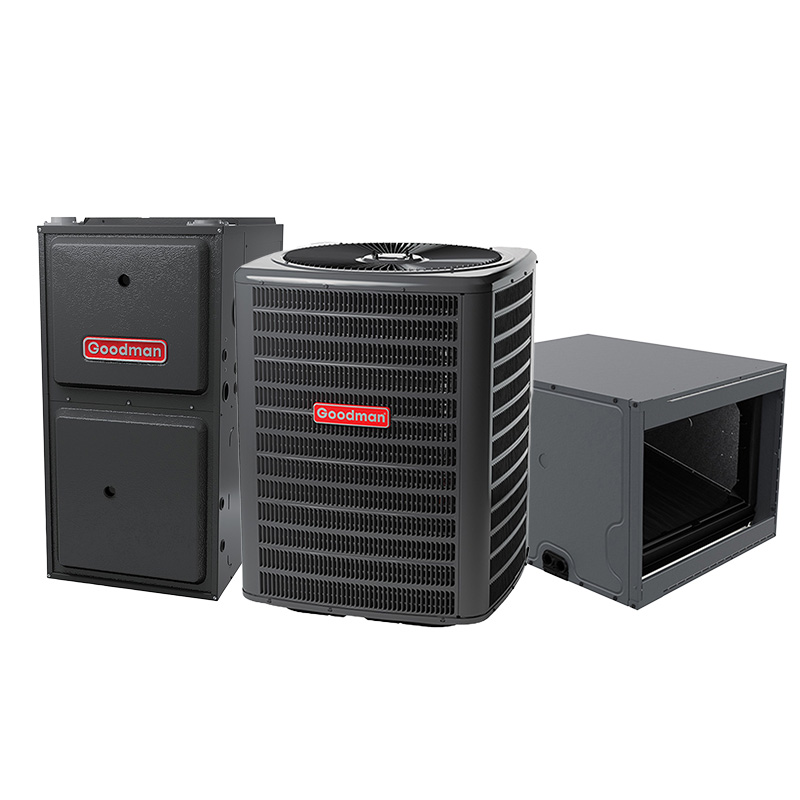
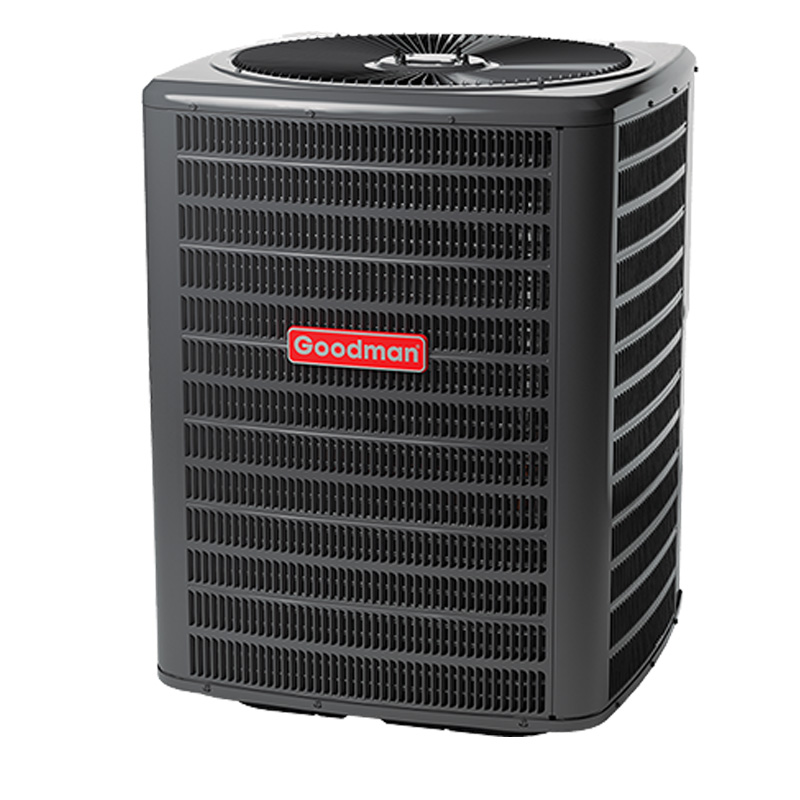
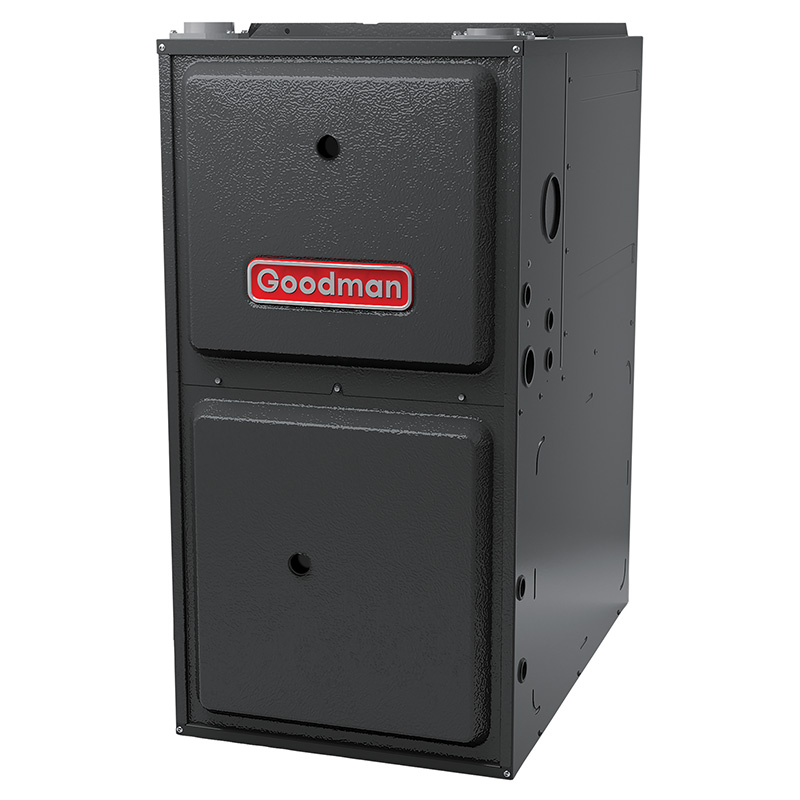
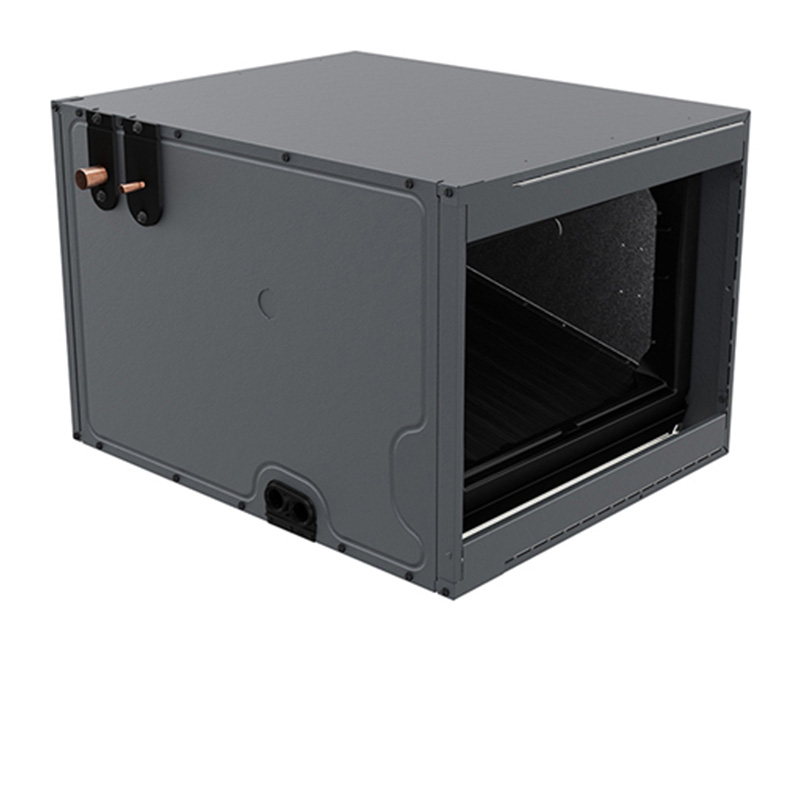
Goodman 2 Ton Dual Fuel Hybrid Heat Pump System – 80000 BTU Gas Furnace, 96% AFUE, 14.5 SEER2, Horizontal, R32
View on AC Direct see your lowest price →Check current price on AC Direct →
Key features
- 14.5 SEER2 heat pump with automatic switchover to 96% AFUE gas furnace for dual fuel operation
- 80,000 BTU furnace output sized for moderate to large heating loads in colder climates
- Horizontal configuration designed for attic, crawlspace, and side-discharge installations
- R-32 refrigerant with lower global-warming potential than outgoing R-410A
- 2-ton cooling capacity suited to homes roughly 900 to 1,300 square feet depending on climate and insulation
- Dual fuel logic prioritizes the heat pump for lower operating costs and falls back to gas when efficiency drops in extreme cold
About this system
The Goodman 2-ton dual fuel hybrid heat pump system pairs a 14.5 SEER2 heat pump with an 80,000 BTU, 96% AFUE gas furnace in a horizontal configuration, making it a practical choice for homeowners who want year-round efficiency without committing to an all-electric setup. The dual fuel design lets the system automatically switch between electric heat pump operation in milder temperatures and gas heat when outdoor temps drop to a point where the heat pump loses efficiency, typically in the low 30s Fahrenheit. That switchover strategy can meaningfully reduce both gas and electricity bills compared to running either system alone.
At 14.5 SEER2, this unit sits at the entry level of the mid-efficiency range, meeting the current federal minimum standards for most U.S. regions but not delivering the savings you would see from a 17 or 18 SEER2 system. The 96% AFUE furnace is a genuine high-efficiency gas unit, recovering 96 cents of heat energy from every dollar of gas burned, which is a real advantage during cold snaps when the system leans on the furnace. R-32 refrigerant is a lower global-warming-potential option compared to the older R-410A it replaces, and it is increasingly standard across the industry. The horizontal configuration is specifically designed for attic or crawlspace installations where vertical airflow is not an option, so confirm your installation site matches before purchasing.
This system suits budget-conscious homeowners in mixed climates who already have gas service, want to hedge against both high electricity and high gas prices, and need a horizontal-mount solution. It is not the right call if you are chasing the highest efficiency scores or if your installation quality will be difficult to control, since Goodman’s long-term performance is closely tied to how well the system is commissioned at startup.
This Goodman dual fuel system delivers a genuinely useful hybrid setup at a price point that undercuts comparable Carrier, Trane, and Lennox equipment by 15 to 25 percent, and the 96% AFUE furnace is a legitimate high-efficiency unit. The 14.5 SEER2 cooling rating is adequate but unremarkable, and the brand's documented track record of capacitor failures, evaporator coil leaks, and compressors averaging 10 to 14 years means the upfront savings can be partially offset by earlier repair costs if the system is not installed and maintained carefully.
Overall score is the average of the five ratings above.
What we like
- 96% AFUE furnace is a true high-efficiency rating that cuts gas consumption meaningfully versus 80% AFUE alternatives
- Dual fuel design provides flexibility against volatile electricity and gas prices, using whichever energy source is cheaper at a given temperature
- R-32 refrigerant is a more environmentally responsible choice and is becoming the industry standard
- Horizontal configuration opens up installation sites that a standard vertical unit cannot serve
- Priced 15 to 25 percent below comparable Trane, Lennox, and Carrier systems, reducing the upfront financial barrier
Trade-offs
- 14.5 SEER2 is entry-level mid-efficiency; homeowners in hot climates will see limited cooling savings compared to a 17 or 18 SEER2 system
- Dual-run capacitors are the most commonly reported failure point, typically surfacing after year 5 to 7 and adding recurring maintenance costs
- Compressor lifespan averages 10 to 14 years versus 15 to 20 years for premium brand compressors, meaning a potential replacement sooner in the system's life
- A minority of owners report refrigerant leaks within the first year, typically traced to install or charge issues rather than the equipment itself, underscoring the importance of choosing an experienced installer
What homeowners and pros say about Goodman
Homeowners who have installed this type of Goodman dual fuel system tend to split into two camps. Those who had an experienced installer handle the startup, refrigerant charge, and thermostat configuration often report years of trouble-free operation and praise the lower purchase price as a genuine win. On ConsumerAffairs, where Goodman scores around 2.5 out of 5, the recurring complaint pattern involves repair costs climbing after roughly year 7, with capacitor replacements and, in some cases, evaporator coil leaks cited as the specific culprits. Google dealer reviews, which skew toward customers who had a complete positive or negative experience with a contractor, show Goodman averaging around 3.8 out of 5, where affordability is consistently the most praised attribute.
HVAC technicians tend to describe Goodman as a workable product that lives or dies by the quality of the installation. They point to dual-run capacitors as a predictable, recurring service call on aging Goodman equipment and note that evaporator coil leaks, while not universal, show up often enough to warrant attention during annual maintenance checks. The compressor longevity picture is also a known quantity in the trade: Goodman compressors averaging 10 to 14 years versus the 15 to 20 years more commonly seen in premium brands means that on a long ownership horizon, the upfront savings can narrow. For the dual fuel configuration specifically, technicians stress that setting the balance point correctly at startup is critical to getting real efficiency gains from the hybrid operation, and that a poorly commissioned system may default to gas more often than necessary, undermining the core value proposition of the design.
Sources: ConsumerAffairs Goodman owner reviews, AHRI Directory of Certified Product Performance, U.S. DOE appliance and equipment efficiency standards, Goodman product specification sheets.
What it costs to run
At 14.5 SEER2, cooling this 2-ton system for a typical 1200-hour cooling season at the U.S. average electricity rate of $0.17/kWh works out to roughly $338 per year in cooling, about $27 less per year than a minimum-efficiency 13.4 SEER2 unit of the same size. Your real cost depends on your climate and local rate.
Method: (24,000 BTU/hr ÷ 14.5 SEER2) × 1200 hours ÷ 1000 × $0.17/kWh. Rate source: U.S. EIA average; cooling hours: moderate-climate estimate.
How it compares
| Brand | Comparable model | SEER2 | Stage | Price position |
|---|---|---|---|---|
| Goodman | 2-Ton Dual Fuel Hybrid Heat Pump, 80K BTU 96% AFUE, Horizontal, R-32 | 14.5 | Single-stage | Value pick |
| Carrier | Performance Series Dual Fuel (25HCE3 / 59TP6) | 15.2 | Single-stage | Typically 15 to 25 percent more than Goodman |
| Trane | XR15 Dual Fuel Heat Pump with S9X2 96% AFUE Gas Furnace | 15.0 | Single-stage | Typically 15 to 25 percent more than Goodman |
| Lennox | Merit Series ML14XC1 Dual Fuel with SL280NV 96% AFUE Furnace | 14.3 | Single-stage | Typically 15 to 25 percent more than Goodman |
Competitor rows are comparable single-stage units at similar efficiency; price is relative position, not a quote.
Questions about this system
At what outdoor temperature does the system switch from heat pump to gas furnace, and can I adjust that?
The balance point temperature, the point at which the system switches to gas, is typically set by the installer or thermostat configuration and commonly falls between 30 and 40 degrees Fahrenheit. Many communicating thermostats allow you to adjust this threshold, so discuss your local climate and utility rates with your installer to find the most cost-effective crossover point for your situation.
My installation site is a tight attic space. Is the horizontal configuration actually different equipment, or just a different orientation?
Horizontal configuration units are specifically designed and factory-rated for side-discharge, lying-flat installation; they are not simply a vertical unit tipped on its side. Confirm the coil and air handler components are rated horizontal before installation, and ensure your installer accounts for proper condensate drainage, which behaves differently in horizontal versus vertical setups.
What is the real warranty on this Goodman system, and what does it require to stay valid?
Goodman typically offers a 10-year parts warranty when the equipment is registered within a set window after installation, often 60 days, and the installation must be performed by a licensed HVAC contractor. Failing to register or using an unlicensed installer can drop coverage to a shorter base warranty, so registration and documentation of a professional install are essential steps.
R-32 refrigerant is new to me. Is it harder or more expensive to service than R-410A?
R-32 requires technicians to have the appropriate handling certification and compatible recovery equipment, and not every service truck will be stocked with it yet, which can occasionally mean a longer wait for repairs or a slightly higher service call cost in areas where it is less common. That said, R-32 is increasingly standard and most established HVAC companies are already equipped for it or will be shortly.
How worried should I be about the documented evaporator coil leaks and capacitor failures in Goodman units?
Dual-run capacitor failure is the most frequently reported issue and is generally an inexpensive repair in the $300 to $600 range, though it is inconvenient and tends to show up after year 5 to 7. Evaporator coil leaks appear in a meaningful share of owner reviews and are a more costly repair; a quality install with proper refrigerant charge at startup reduces but does not eliminate that risk. Budgeting for a service plan or setting aside a repair fund is a reasonable precaution given the brand's track record.
Specifications
| Cooling capacity | 2 Ton |
| Efficiency | 14.5 SEER2 |
| Furnace output | 80000 BTU |
| Furnace efficiency | 96% AFUE |
| Configuration | Horizontal |
| Refrigerant | R-32 |