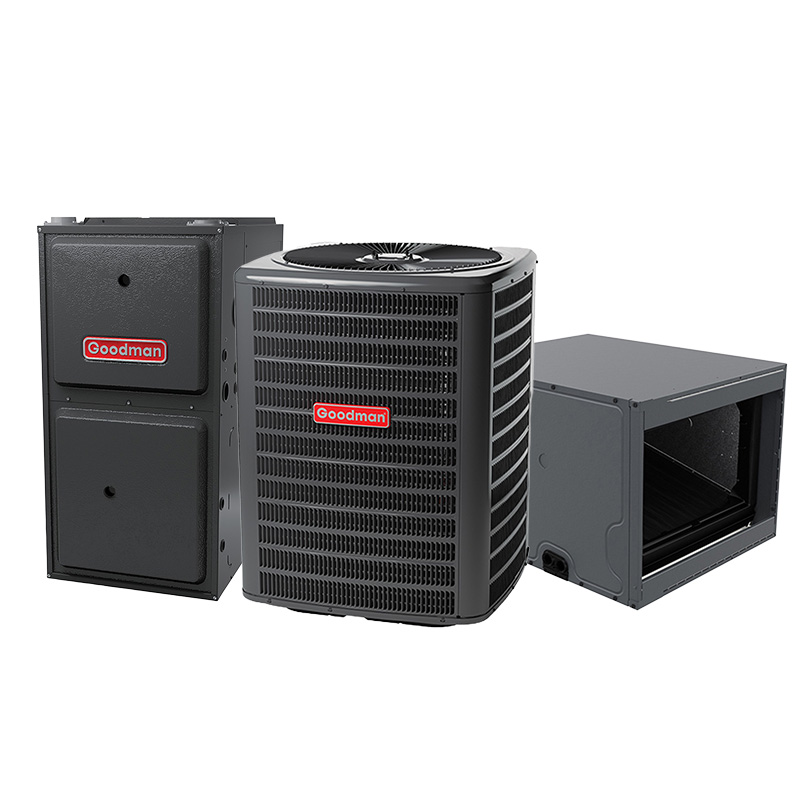
Goodman 2 Ton Dual Fuel Hybrid Heat Pump System – 80000 BTU Gas Furnace, 96% AFUE, 15.2 SEER2, Horizontal, R32
View on AC Direct see your lowest price →Check current price on AC Direct →
Key features
- Dual fuel hybrid operation: heat pump handles mild weather, 96% AFUE gas furnace takes over in deep cold
- 15.2 SEER2 cooling efficiency meets current federal minimum standards with modest improvement over baseline
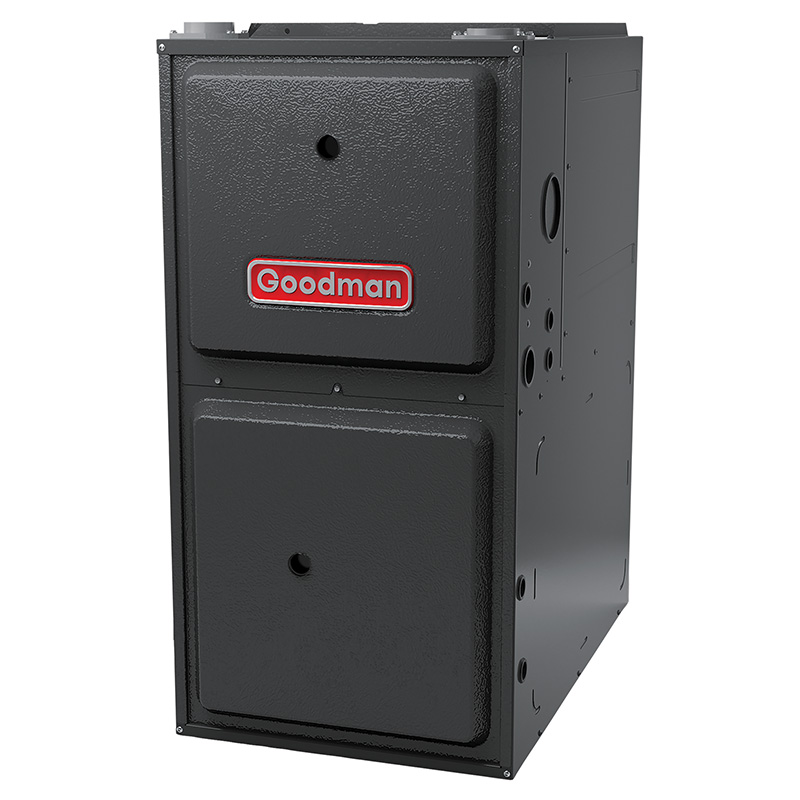
- 80,000 BTU gas furnace with 96% AFUE, reducing heating fuel waste to roughly 4%
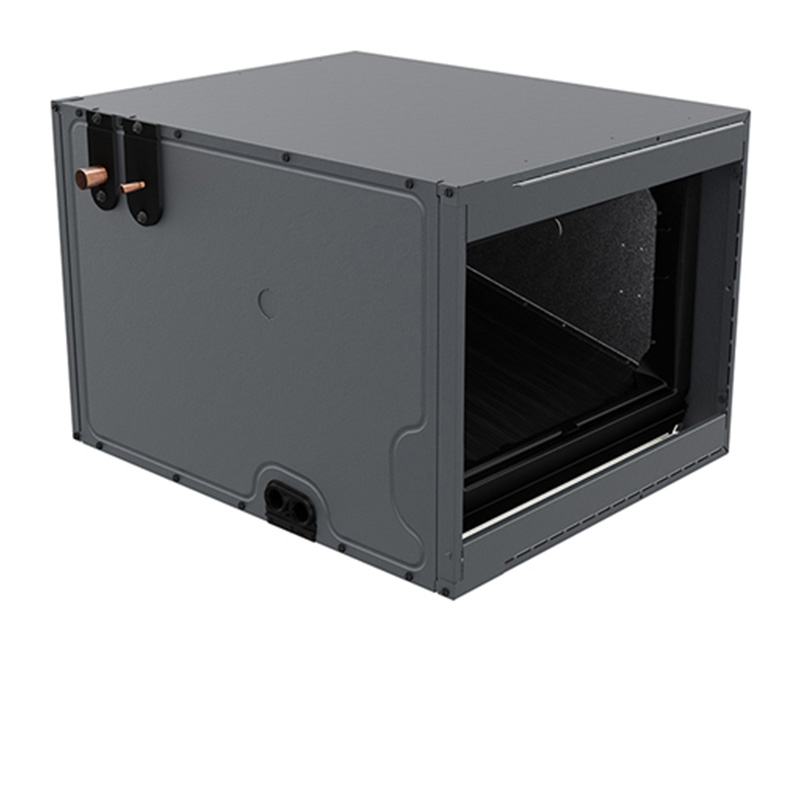
- Horizontal configuration designed for attic, crawlspace, or side-discharge installations
- R-32 refrigerant with lower global warming potential than outgoing R-410A
- 2-ton capacity suited to approximately 1,000 to 1,400 square feet with proper load calculation
About this system
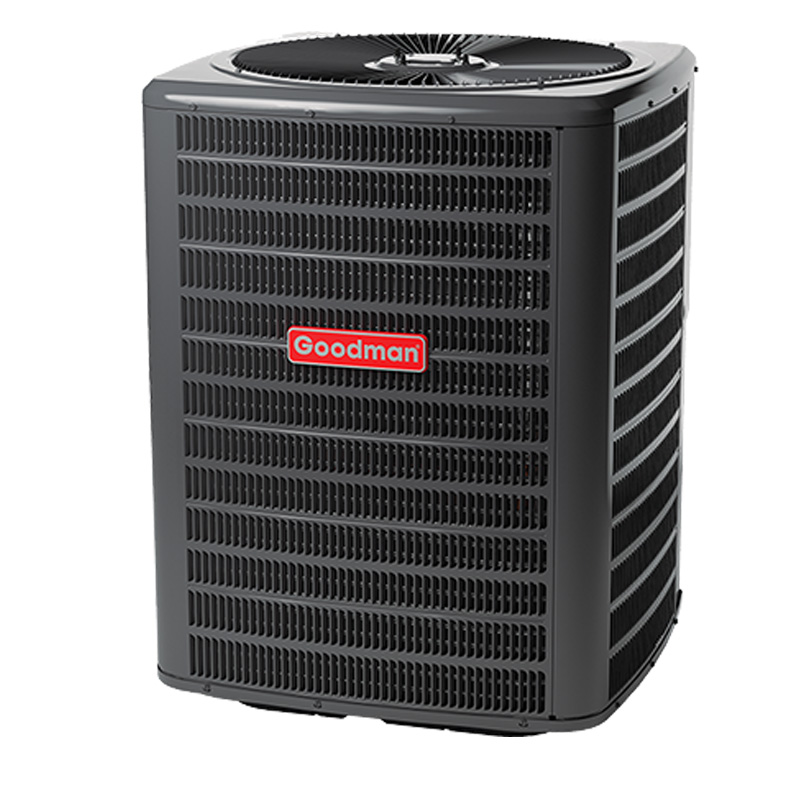
The Goodman 2-Ton Dual Fuel Hybrid Heat Pump System pairs a 15.2 SEER2 heat pump with an 80,000 BTU, 96% AFUE gas furnace in a horizontal configuration, making it a practical choice for homes in mixed climates where winter temperatures regularly drop below the efficient operating range of a heat pump alone. The dual fuel setup lets the system automatically hand off heating duties to the gas furnace when outdoor temperatures fall to a preset lockout point, squeezing efficiency out of mild winter days while keeping the gas burner ready for deep cold snaps. The horizontal orientation targets attic or crawlspace installations where vertical clearance is limited.
The 96% AFUE rating means only about 4% of combustion energy escapes as exhaust, which sits at the top tier of gas furnace efficiency and can meaningfully cut heating bills compared to an 80% AFUE unit over a full heating season. R-32 refrigerant carries a lower global warming potential than the R-410A it replaces and requires a smaller charge volume, which is a modest but real environmental improvement. At 2 tons, this system is sized for roughly 1,000 to 1,400 square feet depending on climate, insulation, and local load calculations. A proper Manual J load calculation before purchase is not optional on a system this specific.
Goodman positions this package 15 to 25 percent below comparable systems from Carrier, Trane, and Lennox. That savings is real, but dual fuel systems are more complex to commission than straight cooling or single-fuel heating setups. The balance point setting, refrigerant charge, and control board communication between the two systems all require a qualified installer. How this unit performs over its lifetime will depend heavily on that initial installation quality, which is the consistent thread in both professional and owner feedback about Goodman equipment generally.
This Goodman dual fuel package delivers a genuine efficiency combination at a price point that undercuts major premium brands by a meaningful margin, and the 96% AFUE furnace paired with a competent heat pump is a smart pairing for climates with variable winters. The trade-off is that Goodman's documented repair history and shorter average compressor lifespan mean the upfront savings can erode if service costs climb after year seven, which owner feedback consistently flags. Buyers who prioritize upfront cost and have access to a skilled installer will find real value here; those who want the longest possible service life with minimal intervention should compare carefully against premium alternatives.
Overall score is the average of the five ratings above.
What we like
- Priced 15 to 25 percent below comparable Carrier, Trane, and Lennox dual fuel systems
- 96% AFUE furnace is among the most efficient gas heating available, reducing operating costs in cold climates
- Dual fuel logic optimizes between electric and gas based on conditions, lowering overall energy spend in mixed climates
- R-32 refrigerant is a forward-looking choice with lower environmental impact and smaller charge requirements
- Horizontal configuration opens installation locations unavailable to vertical units, including many attic and crawlspace setups
Trade-offs
- Dual capacitor failures are the most reported repair issue across Goodman equipment, typically appearing within the first several years
- Compressor lifespan averages 10 to 14 years versus 15 to 20 years documented in premium brands, affecting long-term cost of ownership
- A minority of owners report refrigerant leaks within the first year, generally tied to installation or initial charge problems
- Evaporator coil leaks appear in a meaningful share of owner reviews and can be a costly mid-life repair
What homeowners and pros say about Goodman
Homeowners who have purchased Goodman equipment tend to split along a familiar line. On Google dealer reviews, where the conversation skews toward the sales and installation experience, Goodman systems collectively average around 3.8 out of 5 stars, and the most common praise is straightforward: the price made a quality heating and cooling system accessible when premium brands were out of budget. On ConsumerAffairs, which draws a higher share of frustrated owners motivated to write by a bad experience, the average sits around 2.5 out of 5, and the recurring complaint is repair costs that begin accumulating after roughly year seven. Neither number tells the complete story, but together they reflect a product that delivers on its core promise at installation and then asks more of the owner in ongoing maintenance costs as it ages.
HVAC technicians who work on Goodman equipment regularly point to dual-run capacitor failures as the most common service call, a repair that is typically fast and falls in the 300 to 600 dollar range, so it is annoying rather than catastrophic. More consequential are the evaporator coil leaks that appear in a notable share of owner reviews and the documented compressor lifespan that averages 10 to 14 years, meaningfully shorter than the 15 to 20 years technicians associate with Carrier, Trane, and Lennox compressors. A small but real subset of owners also report refrigerant leaks within the first year, which pros generally attribute to installation or initial charge issues rather than factory defects. On a dual fuel system like this one, where commissioning involves setting a balance point and verifying communication between two separate fuel systems, installer competence is not a minor variable. It is, by most technician accounts, the single biggest factor in how long and reliably any Goodman system runs.
Sources: ConsumerAffairs Goodman owner reviews, AHRI Directory of Certified Product Performance, U.S. DOE appliance and equipment efficiency standards, Goodman product specification sheets.
What it costs to run
At 15.2 SEER2, cooling this 2-ton system for a typical 1200-hour cooling season at the U.S. average electricity rate of $0.17/kWh works out to roughly $322 per year in cooling, about $43 less per year than a minimum-efficiency 13.4 SEER2 unit of the same size. Your real cost depends on your climate and local rate.
Method: (24,000 BTU/hr ÷ 15.2 SEER2) × 1200 hours ÷ 1000 × $0.17/kWh. Rate source: U.S. EIA average; cooling hours: moderate-climate estimate.
How it compares
| Brand | Comparable model | SEER2 | Stage | Price position |
|---|---|---|---|---|
| Goodman | Dual Fuel Hybrid Heat Pump System (2 Ton, 80K BTU, 96% AFUE, Horizontal, R-32) | 15.2 | Single-stage | Value pick |
| Carrier | Performance Series Dual Fuel (25HCE3 / 59SP5) | 15.2 | Single-stage | Typically 15 to 25 percent more than Goodman |
| Trane | XR15 Dual Fuel (XR15 / S9X2) | 15.0 | Single-stage | Typically 15 to 25 percent more than Goodman |
| Lennox | Merit Series Dual Fuel (14HPX / ML96DF) | 15.1 | Single-stage | Typically 15 to 25 percent more than Goodman |
Competitor rows are comparable single-stage units at similar efficiency; price is relative position, not a quote.
Questions about this system
What outdoor temperature should I set as the balance point where the system switches from heat pump to gas furnace?
The balance point is typically set between 35 and 40 degrees Fahrenheit for most climates, but the right setting depends on your local heating design temperature, home insulation level, and utility rate comparison between electricity and gas. Your installer should calculate this during commissioning rather than using a default setting, because an incorrect balance point will either overwork the heat pump in conditions it handles inefficiently or fire the furnace unnecessarily when the heat pump could still do the job economically.
Is this system compatible with my existing ductwork if I am replacing a straight gas furnace?
A horizontal heat pump system introduces a coil and air handler configuration that may differ from a standard upflow or downflow furnace footprint, so duct connections, plenum sizing, and static pressure all need to be verified before assuming a drop-in replacement. An HVAC contractor should inspect the existing duct system and confirm that airflow meets the specifications for this unit, particularly because undersized or leaky ductwork will reduce both efficiency and equipment life.
What is covered under Goodman's warranty and for how long on this dual fuel system?
Goodman typically offers a 10-year parts warranty on registered units, which requires registration within a set window after installation. The compressor usually carries the same 10-year coverage on registered equipment. Labor is not covered by the manufacturer warranty and is the responsibility of the homeowner or a separate service agreement, which is worth factoring into your total cost comparison against premium brands that may offer more comprehensive coverage.
Does R-32 refrigerant require any special handling or certifications that might affect service costs?
R-32 is classified as mildly flammable, which means technicians need specific training and equipment to handle it safely, and not every local HVAC service company may be fully equipped for it yet. This is worth asking your installer and any future service contractor about directly, because if a local tech is unfamiliar with R-32 handling procedures, it could affect how quickly and affordably refrigerant-related repairs get resolved.
How do the documented Goodman failure modes affect the math on choosing this system over a premium brand?
The most common documented failure is the dual-run capacitor, which is generally a low-cost repair in the 300 to 600 dollar range and should not be a deal-breaker on its own. The bigger financial consideration is the shorter average compressor lifespan of 10 to 14 years compared to 15 to 20 years for premium brands, and the evaporator coil leak issue that shows up in a meaningful share of owner reviews, since coil replacement is a more significant expense. If the upfront savings on this Goodman versus a comparable Carrier or Trane system is 800 to 1,200 dollars, one coil replacement or early compressor failure could close that gap entirely.
Specifications
| Cooling capacity | 2 Ton |
| Efficiency | 15.2 SEER2 |
| Furnace output | 80000 BTU |
| Furnace efficiency | 96% AFUE |
| Configuration | Horizontal |
| Refrigerant | R-32 |