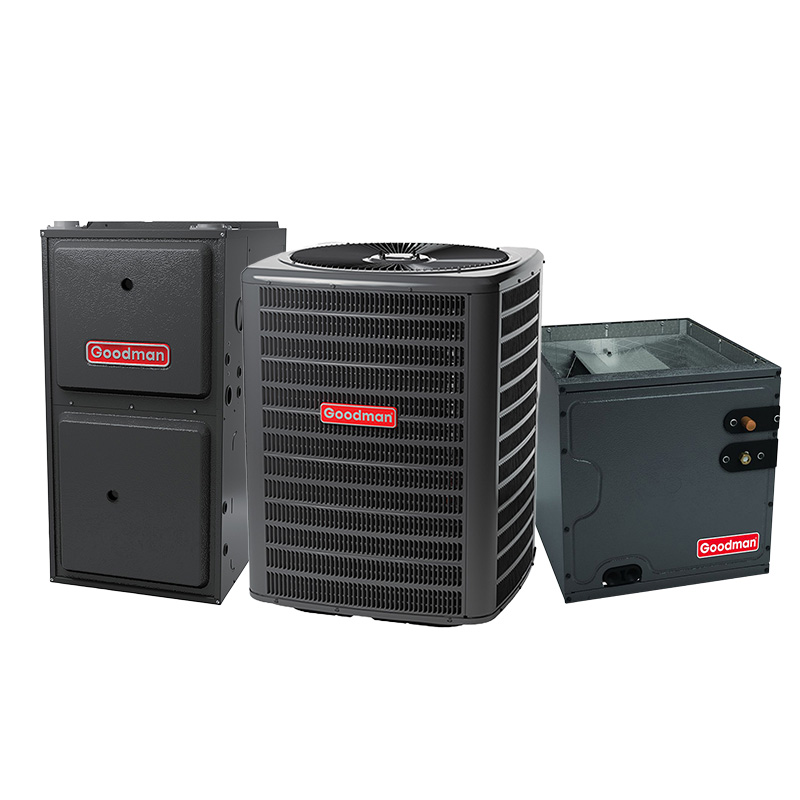
Goodman 2 Ton Dual Fuel Hybrid Heat Pump System – 80000 BTU Gas Furnace, Two Stage, 80% AFUE, Upflow, 15.2 SEER2, R32
View on AC Direct see your lowest price →Check current price on AC Direct →
Key features
- 15.2 SEER2 heat pump efficiency with R-32 refrigerant, lower GWP than R-410A
- 80,000 BTU two-stage gas furnace, 80% AFUE upflow configuration
- Hybrid dual fuel logic switches automatically between heat pump and gas heat
- Two-stage operation reduces temperature swings and lowers blower noise during partial loads
- Value-tier pricing, typically 15 to 25 percent below comparable Trane, Lennox, and Carrier systems
- Designed for smaller homes; upflow install requires ductwork routed above the unit
About this system
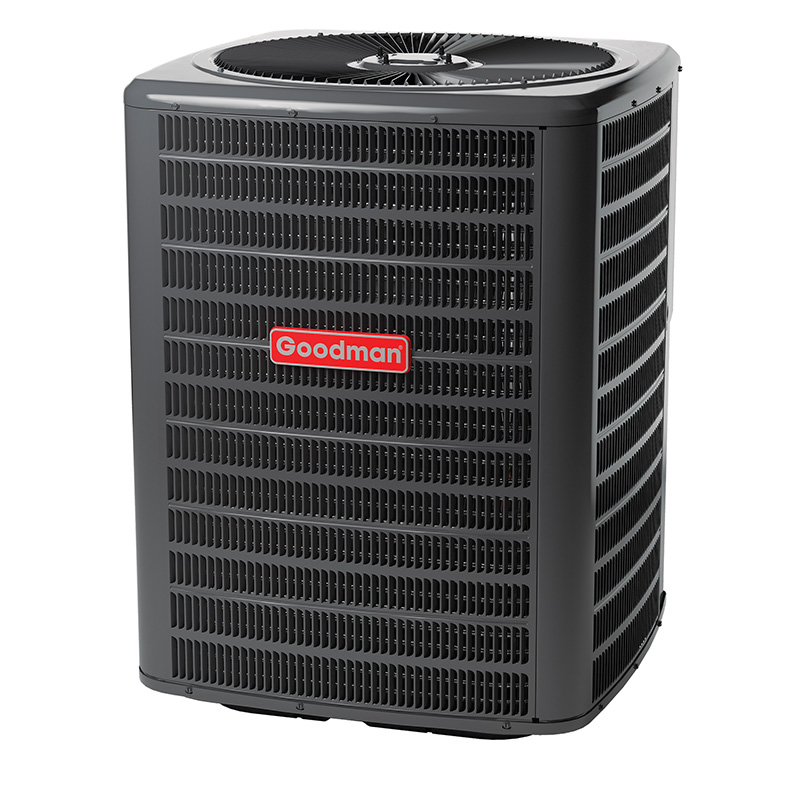
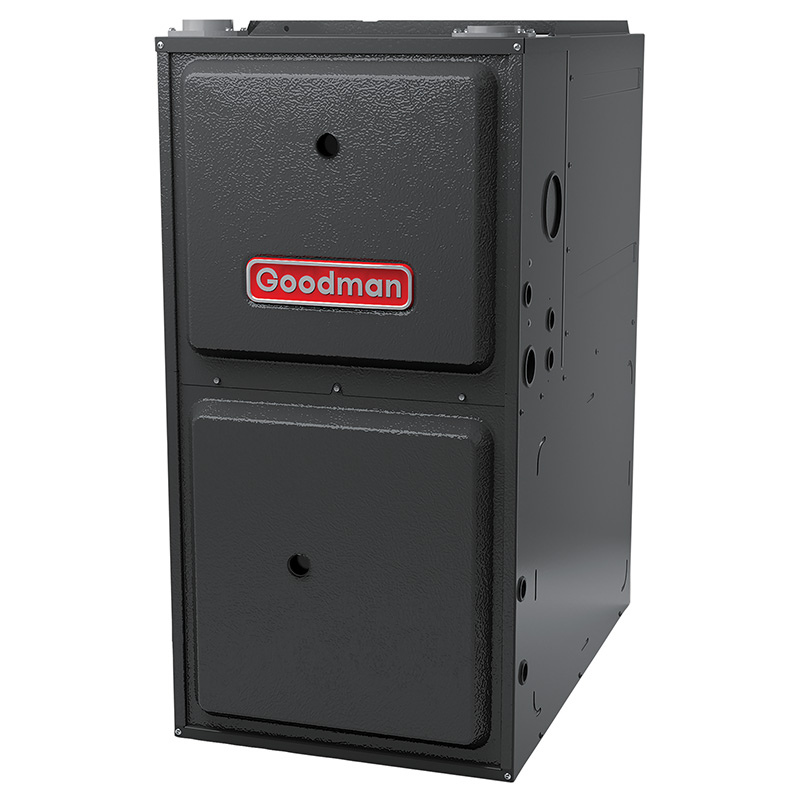
The Goodman 2-ton dual fuel hybrid system pairs a 15.2 SEER2 heat pump with an 80,000 BTU, 80% AFUE two-stage gas furnace in an upflow configuration. The hybrid setup is the defining feature here: the system automatically switches between electric heat pump operation and gas heat depending on outdoor temperature and fuel costs, which can lower annual heating bills in climates that see both mild shoulder seasons and hard cold snaps. At 2 tons, this is sized for smaller homes, typically in the 700 to 1,100 square foot range depending on insulation and local climate.
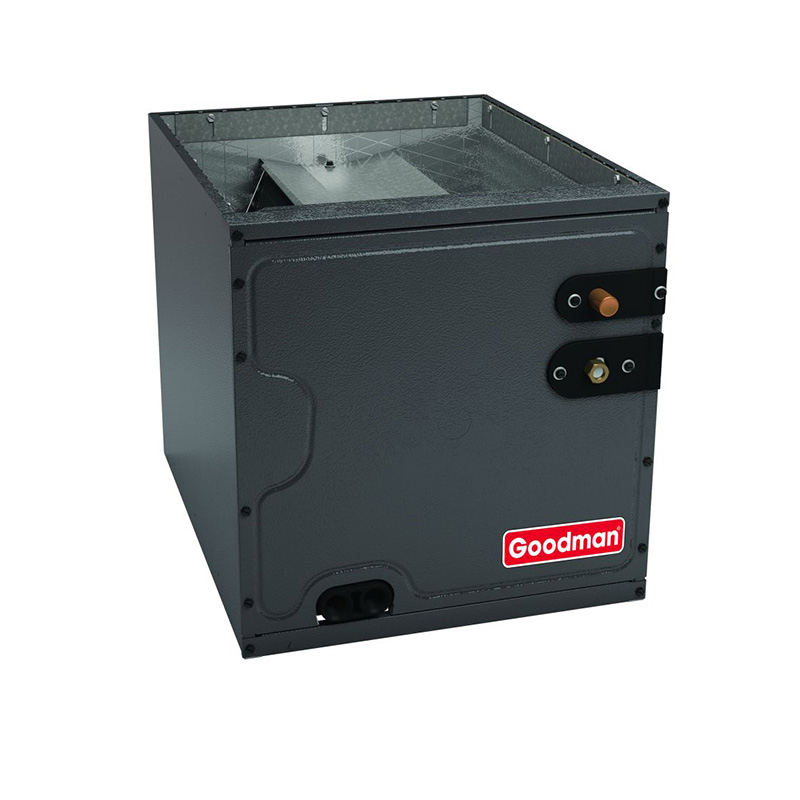
The two-stage furnace runs at a reduced capacity most of the time, cycling to full output only when conditions demand it. That reduces temperature swings, runs quieter than a single-stage unit, and puts less wear on components during moderate weather. R-32 refrigerant has a lower global warming potential than the R-410A it is replacing across the industry, and it operates at higher efficiency in the heat pump circuit. The upflow configuration means warm air exits the top of the air handler, so this system requires a basement, crawlspace, or utility closet installation where ductwork rises into the living space above.
This package suits budget-conscious homeowners in mixed-climate zones who want the flexibility of dual fuel but are not ready to pay Carrier or Trane prices. It is a workable choice when installed by a certified technician who verifies refrigerant charge and airflow carefully, since Goodman equipment is more sensitive to installation variables than premium-tier alternatives.
This system delivers genuine dual fuel flexibility and two-stage comfort at a price point that undercuts the major premium brands by a meaningful margin. The trade-off is a compressor that typically averages 10 to 14 years rather than the 15 to 20 years seen in premium equipment, and repair costs that tend to climb after year 7. It is a reasonable buy when installed correctly, but that installation caveat carries real weight with this brand.
Overall score is the average of the five ratings above.
What we like
- Hybrid operation can lower heating costs in climates with variable winters by favoring whichever fuel is cheaper at the moment
- Two-stage furnace provides more even heating and quieter partial-load operation than a single-stage alternative
- 15.2 SEER2 meets current federal minimums and qualifies for standard efficiency rebates in most utility zones
- R-32 refrigerant is lower global warming potential and is the direction the industry is moving
- Purchase price is typically 15 to 25 percent less than comparable Carrier, Trane, or Lennox dual fuel packages
Trade-offs
- 80% AFUE is the entry-level efficiency tier for gas furnaces; 96% or higher units recover more fuel cost over time, especially in cold climates
- Compressor lifespan averages 10 to 14 years versus 15 to 20 years in premium brands, meaning mid-life replacement is more likely
- Dual-run capacitor failures are the most commonly reported repair, and evaporator coil leaks appear in a meaningful share of owner reviews after several years
- A minority of owners report refrigerant leaks in year one, which points to sensitivity to installer charge accuracy on R-32 systems
What homeowners and pros say about Goodman
Homeowners who have lived with Goodman systems tend to split into two camps, and the dividing line is usually how the unit was installed. On ConsumerAffairs, Goodman averages around 2.5 out of 5 stars, a platform that skews toward complaints, and the recurring story there involves repair costs escalating after roughly year 7, not catastrophic early failure but a steady accumulation of service calls. Google dealer reviews tell a somewhat different story, averaging around 3.8 out of 5 across a range of dealerships, where the most consistent praise is straightforward: the price is hard to argue with. The documented failure patterns worth knowing before you buy are dual-run capacitor failures, which are the most commonly reported issue and are generally a quick, relatively low-cost repair in the 300 to 600 dollar range; evaporator coil leaks, which appear often enough in owner accounts to be a real planning consideration; and compressor lifespan that averages 10 to 14 years compared to 15 to 20 for premium brands. A minority of owners also report refrigerant leaks in the first year, which technicians typically attribute to charge errors at installation rather than defective equipment.
HVAC professionals who work on Goodman equipment regularly tend to say the same thing: the hardware is serviceable, but it rewards careful installation more than a Trane or Carrier would. On a dual fuel R-32 system like this one, that means the contractor needs to be current on A2L refrigerant handling, precise with the charge, and thorough with airflow balancing. When those boxes are checked, the price advantage is real. When they are not, the ConsumerAffairs narrative tends to follow. For a 2-ton hybrid system in a smaller home, the value proposition holds up as long as you treat installer selection as part of the purchasing decision, not an afterthought.
Sources: ConsumerAffairs Goodman owner reviews, AHRI Directory of Certified Product Performance, U.S. DOE appliance and equipment efficiency standards, Goodman product specification sheets.
What it costs to run
At 15.2 SEER2, cooling this 2-ton system for a typical 1200-hour cooling season at the U.S. average electricity rate of $0.17/kWh works out to roughly $322 per year in cooling, about $43 less per year than a minimum-efficiency 13.4 SEER2 unit of the same size. Your real cost depends on your climate and local rate.
Method: (24,000 BTU/hr ÷ 15.2 SEER2) × 1200 hours ÷ 1000 × $0.17/kWh. Rate source: U.S. EIA average; cooling hours: moderate-climate estimate.
How it compares
| Brand | Comparable model | SEER2 | Stage | Price position |
|---|---|---|---|---|
| Goodman | GSZH502410 + GMVC800803BN (this system) | 15.2 | Two-stage | Value pick |
| Carrier | Performance 15 Hybrid Heat (25HCB6 series with 58SB furnace) | 15.2 | Two-stage | Typically 15 to 25 percent more than this Goodman system |
| Trane | XR15 Hybrid Heat (4TWR5 series with S8B1 furnace) | 15.0 | Single-stage | Typically 15 to 25 percent more than this Goodman system |
| Lennox | Merit 15 Hybrid (ML15XP1 series with ML180 furnace) | 15.2 | Single-stage | Typically 15 to 25 percent more than this Goodman system |
Competitor rows are comparable single-stage units at similar efficiency; price is relative position, not a quote.
Questions about this system
How does the dual fuel system decide when to use gas versus the heat pump?
The system uses a balance point temperature, typically set between 35 and 45 degrees Fahrenheit by your installer, below which gas heat is more cost-effective than running the heat pump. Above that point the heat pump carries the load. Some thermostats also allow you to set a fuel-cost crossover point so the system factors in current gas and electricity prices.
Is 80% AFUE good enough, or should I upgrade to a higher efficiency furnace?
80% AFUE means 20 cents of every dollar in gas escapes as exhaust. For homeowners in moderate climates where the furnace runs infrequently because the heat pump handles most heating days, 80% AFUE is often acceptable. In colder climates where the furnace runs hard through long winters, a 96% or higher AFUE unit typically pays back its premium within a few years of utility savings.
What does the upflow configuration mean for where this system can be installed?
Upflow means the furnace pulls return air in from the bottom and pushes conditioned air out the top, so it must be installed in a basement, crawlspace, or ground-floor utility closet where ductwork can run upward into the living area. It is not suited for attic or horizontal installations without a different configuration.
R-32 is newer in residential equipment. Are there any service concerns?
R-32 requires technicians who are certified to handle A2L mildly flammable refrigerants, and not every HVAC contractor in every market is set up for it yet. Confirm that any service technician you plan to use is R-32 certified before purchasing, particularly if you are in a rural area with fewer service options.
What are the most common repairs to budget for over the life of this system?
Dual-run capacitor replacement is the most frequently reported repair on Goodman equipment and typically costs between 300 and 600 dollars including labor, and it is a straightforward fix. Evaporator coil leaks appear in a meaningful share of owner reviews after several years of use and are more expensive to address. Planning for a compressor replacement or system upgrade somewhere in the 10 to 14 year window is realistic based on documented performance patterns.
Specifications
| Cooling capacity | 2 Ton |
| Efficiency | 15.2 SEER2 |
| Furnace output | 80000 BTU |
| Furnace efficiency | 80% AFUE |
| Configuration | Upflow |
| Refrigerant | R-32 |