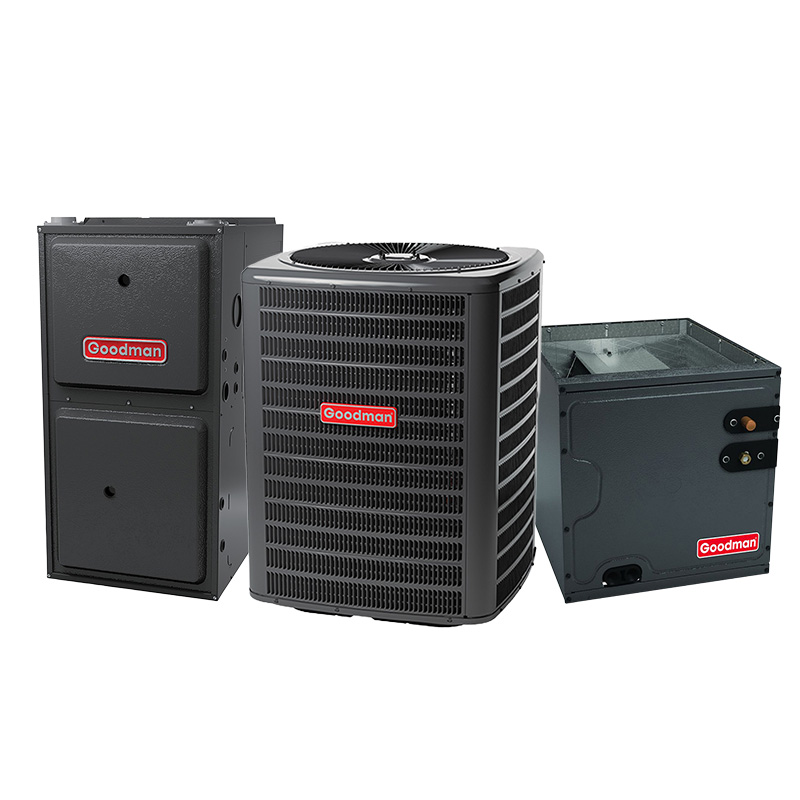
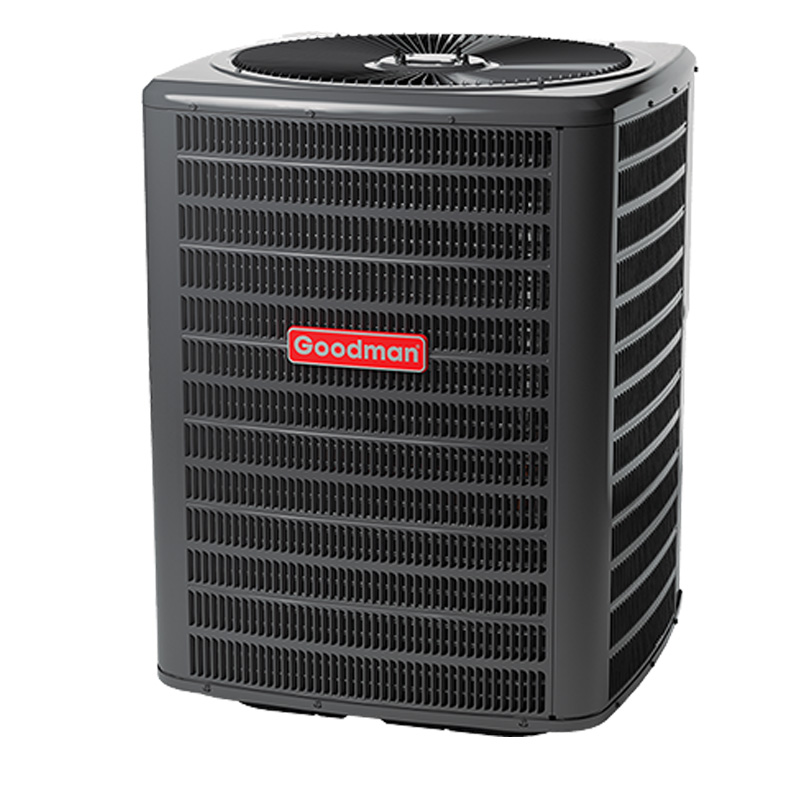
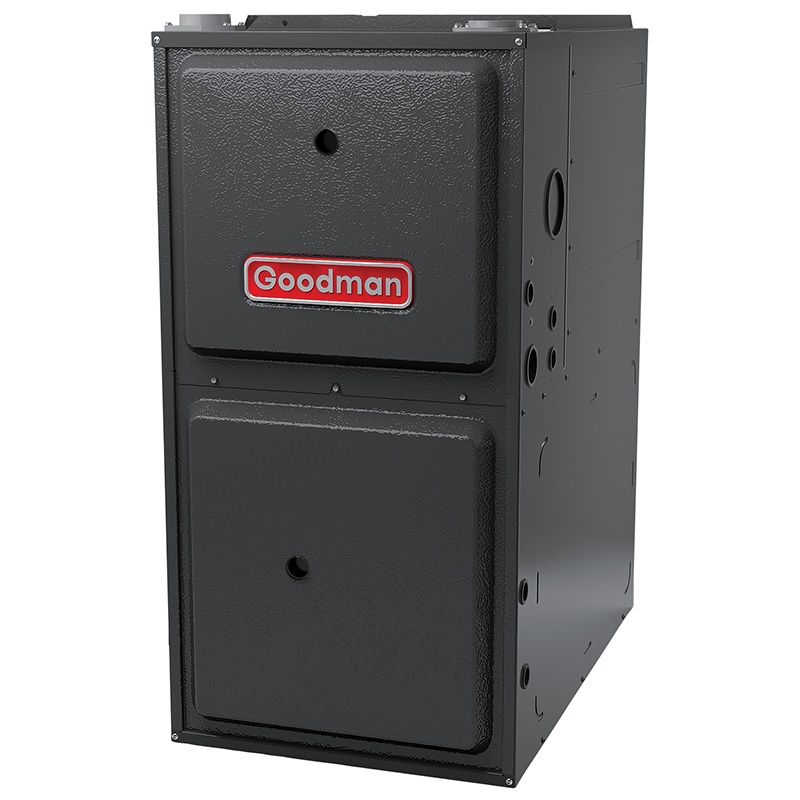
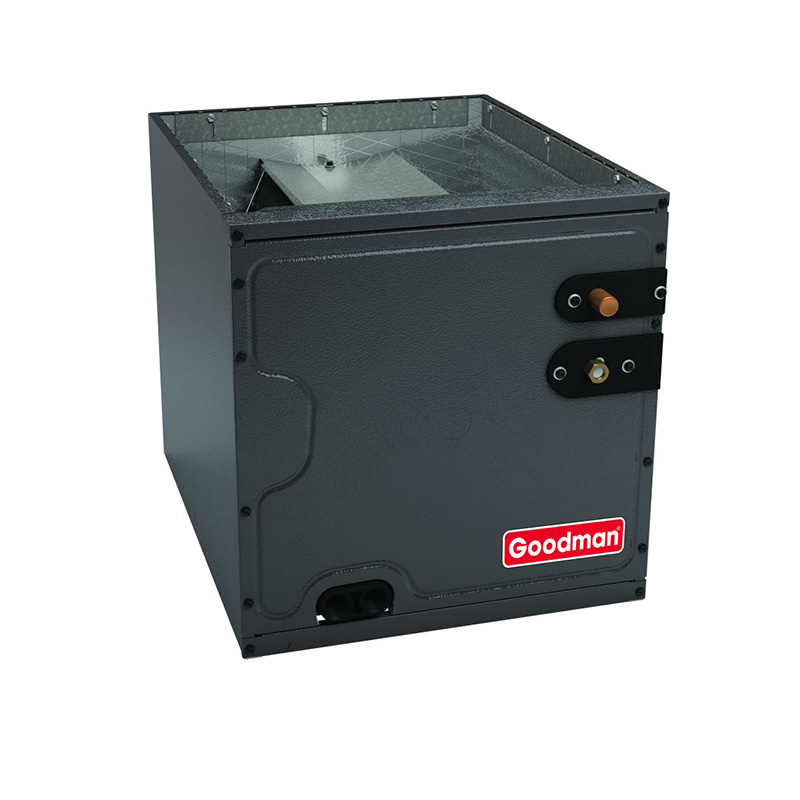
Goodman 2 Ton Dual Fuel Hybrid Heat Pump System – 80000 BTU Gas Furnace, Two Stage, 96% AFUE, Upflow, 15.2 SEER2, R32
View on AC Direct see your lowest price →Check current price on AC Direct →
Key features
- 15.2 SEER2 heat pump efficiency rating meets or exceeds current federal minimum standards
- 96% AFUE two-stage gas furnace reduces fuel waste compared to standard 80% AFUE units
- Dual fuel hybrid logic switches automatically between heat pump and gas heat based on outdoor temperature
- R-32 refrigerant with lower global warming potential than legacy R-410A systems
- Two-stage furnace operation delivers quieter, more even heating than single-stage alternatives
- Upflow configuration designed for basement, crawlspace, or utility closet installations
About this system
The Goodman 2-Ton Dual Fuel Hybrid Heat Pump System pairs a 15.2 SEER2 heat pump with an 80,000 BTU, 96% AFUE two-stage gas furnace in an upflow configuration. A dual fuel or hybrid setup automatically switches between electric heat pump operation and gas furnace heat depending on outdoor temperature, letting the system run on whichever energy source costs less at any given moment. For homeowners in climates with cold but not extreme winters, this can translate to real monthly savings without the full commitment to an all-electric setup.
The 2-ton capacity is appropriate for conditioned spaces roughly in the 800 to 1,200 square foot range, though the right size depends on local climate, insulation quality, and Manual J load calculations. The two-stage furnace modulates between a lower and higher firing rate, which means steadier temperatures and quieter operation compared to a single-stage unit. R-32 refrigerant carries a lower global warming potential than the older R-410A it replaces, and the upflow configuration suits homes where the furnace sits in a basement or utility closet blowing air upward into the duct system.
This system suits budget-conscious homeowners in mixed-climate regions who want the efficiency upside of a heat pump with a gas furnace backstop for the coldest days. It is a practical rather than premium choice, and its long-term performance will depend significantly on the quality of the installation and ongoing maintenance.
This Goodman hybrid system delivers a solid combination of heat pump and high-efficiency gas backup at a price point that undercuts comparable Carrier, Trane, and Lennox configurations by a meaningful margin. The two-stage furnace and 15.2 SEER2 rating are genuinely competitive specs, not entry-level compromises. The honest caveat is that Goodman's real-world longevity is more sensitive to install quality and maintenance than premium brands, and some owners encounter repair costs in the 7 to 10 year window that erode the upfront savings.
Overall score is the average of the five ratings above.
What we like
- Price is typically 15 to 25 percent below comparable Carrier, Trane, and Lennox dual fuel systems
- 96% AFUE furnace is among the most efficient gas combustion tiers available, limiting fuel waste
- Two-stage furnace provides more even temperatures and reduced cycling noise versus single-stage
- Dual fuel logic optimizes operating cost by automatically selecting the cheaper energy source
- R-32 refrigerant is more environmentally responsible and is becoming the industry standard
Trade-offs
- Dual-run capacitors are the most commonly reported failure, typically appearing after several years of use
- Evaporator coil leaks appear in a meaningful share of owner reports and can be costly to address
- Compressor lifespan averages 10 to 14 years, shorter than the 15 to 20 years typical of premium brands
- A minority of owners report refrigerant leaks within the first year, generally tied to install or charge issues
What homeowners and pros say about Goodman
Homeowners who choose Goodman tend to land in one of two camps after a few years of ownership. Those who had a careful, experienced installer and kept up with annual maintenance often report the system runs without incident well into its first decade. Those who experienced problems frequently trace them back either to a rushed installation or to deferred service. On ConsumerAffairs, Goodman scores around 2.5 out of 5, but that platform draws a higher share of frustrated owners looking to vent, and the recurring complaint is repair costs climbing after roughly year 7, consistent with the brand’s documented compressor lifespan of 10 to 14 years versus the 15 to 20 years more typical of premium brands. Google dealer reviews average closer to 3.8 out of 5 across hundreds of reviews per location, where affordability is the most cited reason for choosing Goodman.
HVAC technicians who work on these systems regularly point to dual-run capacitor failures as the most predictable maintenance item, a quick and inexpensive fix but one that comes up more often on Goodman units than on some premium lines. Evaporator coil leaks are a more serious concern that shows up across owner forums and review threads. For this specific dual fuel system, a small but real share of owners also report refrigerant leaks within the first year, which technicians consistently attribute to installation or charging errors rather than factory defects. The consensus among pros is that Goodman equipment is a reasonable value buy when installed correctly, and that cutting corners on installation or skipping the annual tune-up is where the brand’s reputation for reliability gets damaged most.
Sources: ConsumerAffairs Goodman owner reviews, AHRI Directory of Certified Product Performance, U.S. DOE appliance and equipment efficiency standards, Goodman product specification sheets.
What it costs to run
At 15.2 SEER2, cooling this 2-ton system for a typical 1200-hour cooling season at the U.S. average electricity rate of $0.17/kWh works out to roughly $322 per year in cooling, about $43 less per year than a minimum-efficiency 13.4 SEER2 unit of the same size. Your real cost depends on your climate and local rate.
Method: (24,000 BTU/hr ÷ 15.2 SEER2) × 1200 hours ÷ 1000 × $0.17/kWh. Rate source: U.S. EIA average; cooling hours: moderate-climate estimate.
How it compares
| Brand | Comparable model | SEER2 | Stage | Price position |
|---|---|---|---|---|
| Goodman | 2-Ton Dual Fuel Hybrid Heat Pump with 80,000 BTU 96% AFUE Two-Stage Furnace | 15.2 | Two-stage | Value pick |
| Carrier | Performance Series Hybrid Heat (25HCB / 59TP6 pairing) | 15–16 | Two-stage | Typically 15 to 25 percent more than Goodman |
| Trane | XR15 Heat Pump with S9V2 Dual Fuel pairing | 15–15.5 | Two-stage | Typically 15 to 25 percent more than Goodman |
| Lennox | Merit Series ML14XP1 Hybrid with SLP98V pairing | 15–16 | Two-stage | Typically 15 to 25 percent more than Goodman |
Competitor rows are comparable single-stage units at similar efficiency; price is relative position, not a quote.
Questions about this system
How does the dual fuel system decide when to use the heat pump versus the gas furnace?
The system uses a balance point temperature, typically set during installation, below which the gas furnace takes over from the heat pump. Above that threshold the heat pump handles heating; below it, gas combustion is more efficient or necessary to meet demand. Your installer should set this balance point based on your local utility rates and climate.
Is 2 tons the right size for my home?
Two tons is a general starting point for spaces in the 800 to 1,200 square foot range, but the correct answer requires a Manual J load calculation that accounts for your insulation, windows, ceiling height, and local climate. Installing an oversized or undersized system is one of the leading causes of early equipment problems and comfort complaints, so do not skip this step.
What should I know about the R-32 refrigerant in this system?
R-32 has a lower global warming potential than R-410A and is being adopted broadly across the HVAC industry. It does require technicians to be certified for its use, so confirm that your installer and any future service technicians are equipped to work with it before scheduling work.
What are the most common repairs owners run into with this Goodman system?
Dual-run capacitor failures are the most frequently reported issue and are generally a quick, low-cost repair in the 300 to 600 dollar range. Evaporator coil leaks show up in a meaningful share of owner reviews and are more involved to fix. A minority of owners also report refrigerant leaks within the first year, which typically point to installation or initial charge problems rather than a component defect.
Does the upflow configuration mean this system cannot be installed horizontally?
Yes, the upflow designation means the furnace is designed specifically to draw return air in from the bottom and discharge conditioned air upward. It is not interchangeable with a horizontal or downflow configuration without using a different cabinet, so confirm your existing ductwork and equipment location match before ordering.
Specifications
| Cooling capacity | 2 Ton |
| Efficiency | 15.2 SEER2 |
| Furnace output | 80000 BTU |
| Furnace efficiency | 96% AFUE |
| Configuration | Upflow |
| Refrigerant | R-32 |