Goodman 2 Ton 60000 BTU 13.4 SEER2 Gas/Electric Package Unit Multiposition
View on AC Direct see your lowest price →Check current price on AC Direct →
Key features
- 2-ton cooling capacity with 60,000 BTU gas heat in a single outdoor cabinet
- 13.4 SEER2 efficiency rating meets the 2023 federal minimum standard
- Multiposition design supports both horizontal and vertical airflow configurations
- All-in-one package eliminates the need for a separate indoor air handler or furnace
- Compatible with standard thermostat controls for straightforward homeowner operation
- Factory-tested assembly intended to reduce field refrigerant charging variables
About this system
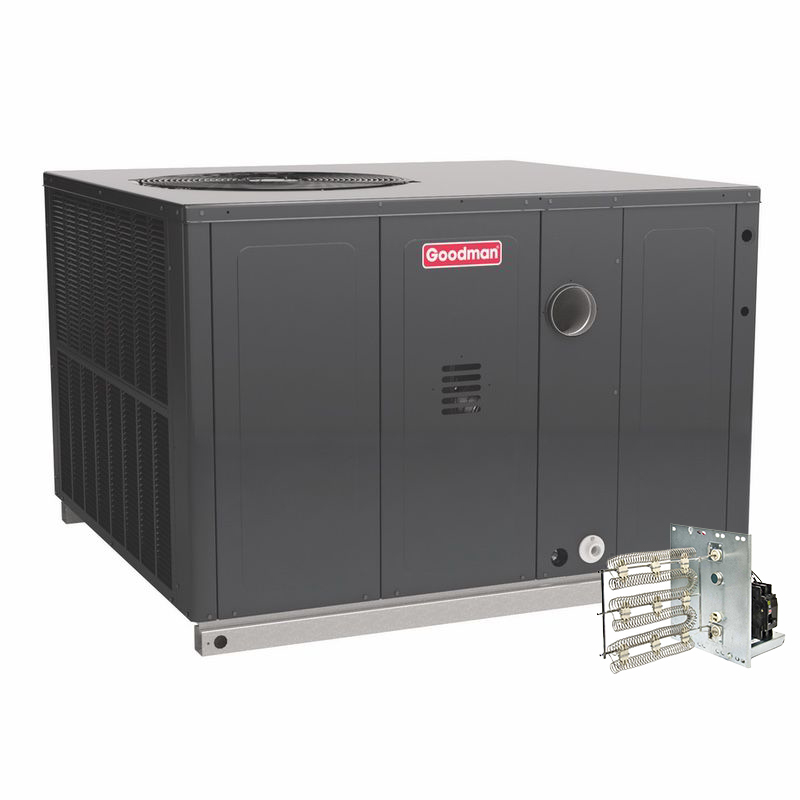
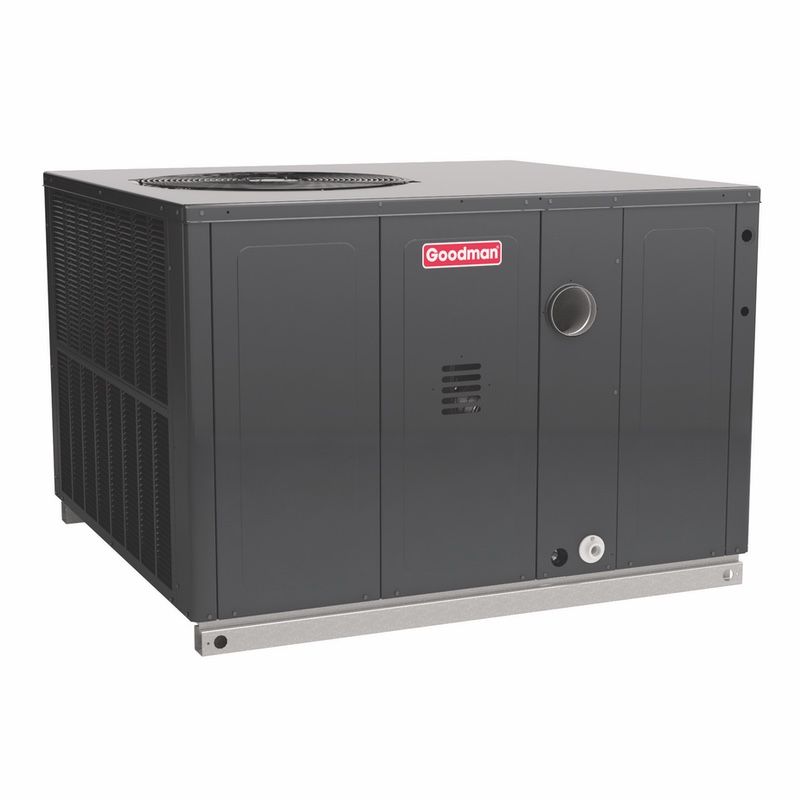
The Goodman GPGM32406041 is a 2-ton, 60,000 BTU gas/electric package unit designed for smaller homes and light commercial spaces where a single outdoor cabinet handles both heating and cooling. As a packaged system, all components sit in one weatherproof enclosure that mounts on a rooftop curb or a ground-level pad, making it a practical choice for manufactured homes, slab-on-grade construction, or any structure where a traditional split system would be awkward to install. The multiposition configuration means it can be set up for horizontal or vertical airflow, giving installers flexibility on the job site.
On the cooling side, the unit runs at 13.4 SEER2, which meets the federal minimum efficiency standard that took effect in 2023 but does not exceed it by any meaningful margin. That is a realistic expectation: buyers getting entry-level efficiency for an entry-level price. Heating is handled by a 60,000 BTU gas section, though no AFUE rating is published in the spec sheet, so buyers should confirm gas efficiency directly with the distributor or installer before purchase. Goodman prices this unit roughly 15 to 25 percent below equivalent capacity equipment from Trane, Lennox, and Carrier, which is the core of its value proposition.
The GPGM32406041 is a no-frills entry point into gas/electric package cooling and heating, best suited for buyers who prioritize upfront savings over long-term operating efficiency or premium build quality. At 13.4 SEER2 it runs at the regulatory floor, so utility savings relative to an older unit will vary widely depending on what it replaces. Install quality and routine maintenance matter more with Goodman than with premium brands, and prospective owners should budget for potential mid-life component repairs.
Overall score is the average of the five ratings above.
What we like
- Upfront cost runs 15 to 25 percent below Carrier, Trane, and Lennox in comparable capacity and efficiency tiers
- All-in-one cabinet simplifies installation and is well suited to manufactured housing and slab construction
- Multiposition airflow gives installers flexibility to match the unit to the home's duct layout
- Widely stocked through HVAC distributors, keeping replacement parts and service technicians accessible
- Factory-assembled refrigerant circuit reduces one common field-installation variable
Trade-offs
- 13.4 SEER2 is the federal minimum with no efficiency headroom, meaning higher monthly operating costs compared to mid- or high-efficiency alternatives
- Compressor lifespan averages 10 to 14 years versus 15 to 20 years for premium brands, raising the likelihood of a major repair or full replacement before comparable units from top-tier brands would need it
- Dual-run capacitors and evaporator coil leaks are documented recurring failure points that can add several hundred dollars or more in repair costs after year 7
- Performance and longevity depend heavily on installer skill, meaning a poorly commissioned unit may underperform or fail well before its potential lifespan
What homeowners and pros say about Goodman
Owners and dealers who share feedback online are largely split along predictable lines. On Google dealer review pages, where scores cluster around 3.8 out of 5 across hundreds of reviews, the most consistent praise centers on the purchase price and the availability of parts and service technicians who know the product. Buyers who went in understanding they were purchasing entry-level equipment and had a competent installer tend to report satisfactory early performance. The lower upfront cost relative to Carrier, Trane, and Lennox is the single most cited reason buyers choose Goodman, and for buyers on a fixed budget it is a genuine and honest advantage.
The harder feedback sits on ConsumerAffairs, where the score drops to roughly 2.5 out of 5, reflecting a platform where owners are more likely to post after a frustrating experience. The recurring theme there is repair costs climbing after about year 7, which aligns with the documented failure modes: dual-run capacitor replacements in the $300 to $600 range are the most common early-to-mid-life repair, followed by evaporator coil leaks that can run higher. Compressor longevity is a real concern, with Goodman units historically averaging 10 to 14 years compared to 15 to 20 for premium-brand compressors. HVAC technicians consistently point to install quality as the single biggest variable in how any Goodman unit performs long-term, and a minority of owners have reported refrigerant leaks within the first year, usually traced back to installation or initial charge issues rather than a manufacturing defect. The honest takeaway is that this unit rewards buyers who invest in a skilled installer and stay current on maintenance, and it carries more risk for those who cut corners on either.
Sources: ConsumerAffairs Goodman owner reviews, AHRI Directory of Certified Product Performance, U.S. DOE appliance and equipment efficiency standards, Goodman product specification sheets.
What it costs to run
At 13.4 SEER2, cooling this 2-ton system for a typical 1200-hour cooling season at the U.S. average electricity rate of $0.17/kWh works out to roughly $365 per year in cooling, about $0 less per year than a minimum-efficiency 13.4 SEER2 unit of the same size. Your real cost depends on your climate and local rate.
Method: (24,000 BTU/hr ÷ 13.4 SEER2) × 1200 hours ÷ 1000 × $0.17/kWh. Rate source: U.S. EIA average; cooling hours: moderate-climate estimate.
How it compares
| Brand | Comparable model | SEER2 | Stage | Price position |
|---|---|---|---|---|
| Goodman | GPGM32406041 | 13.4 | Single-stage | Value pick |
| Carrier | WeatherMaster 50XC Series | 14.0 | Single-stage | Typically 15 to 25 percent more than the Goodman |
| Trane | YCC2 Series | 14.0 | Single-stage | Typically 15 to 25 percent more than the Goodman |
| Lennox | LRP14GE Series | 13.4 | Single-stage | Typically 15 to 25 percent more than the Goodman |
Competitor rows are comparable single-stage units at similar efficiency; price is relative position, not a quote.
Questions about this system
What does 'multiposition' mean on a package unit, and does it affect how it gets installed at my house?
Multiposition means the unit can discharge conditioned air either horizontally or vertically, so it can connect to your ductwork whether the ducts run through the ceiling, a side wall, or the floor. An installer will orient the unit to match your existing duct configuration, which is especially useful in manufactured homes where the duct plenum can run in different directions depending on the floor plan.
The spec sheet does not show an AFUE rating for the gas heat section. How efficient is the heater?
Goodman does not publish an AFUE figure in the posted spec for this model, which is common with package units because gas efficiency can vary with installation configuration. Ask your distributor or installer to confirm the AFUE before purchasing, particularly if heating costs are a significant concern in your climate.
What are the most common repairs owners run into with this unit, and roughly what do they cost?
The most frequently reported failure is the dual-run capacitor, typically a straightforward repair in the $300 to $600 range depending on local labor rates. Evaporator coil leaks appear in a meaningful share of owner feedback and are more expensive to address. Compressors on Goodman units have historically averaged 10 to 14 years of service life, so budgeting for a potential compressor repair or replacement in that window is realistic.
Is it worth paying more for a higher SEER2 package unit instead of this one?
Whether the payback math works depends on your local electricity and gas rates, how many hours per year you run the system, and how long you plan to stay in the home. At 13.4 SEER2 this unit sits at the regulatory minimum, so if your climate involves long cooling seasons or high utility rates, a 15 or 16 SEER2 unit could reduce monthly bills enough to offset a higher purchase price over 5 to 8 years.
Does Goodman's warranty require professional registration, and what does it actually cover on this model?
Goodman typically requires the unit to be registered within a set window after installation to receive the full parts warranty term; without registration the coverage period is shorter. The warranty generally covers the compressor and other functional parts but does not cover labor costs, which means a repair inside the warranty window can still carry a significant out-of-pocket expense for the service call and technician time.
Specifications
| Cooling capacity | 2 Ton |
| Efficiency | 13.4 SEER2 |
| Furnace output | 60000 BTU |
| Model | GPGM32406041 |