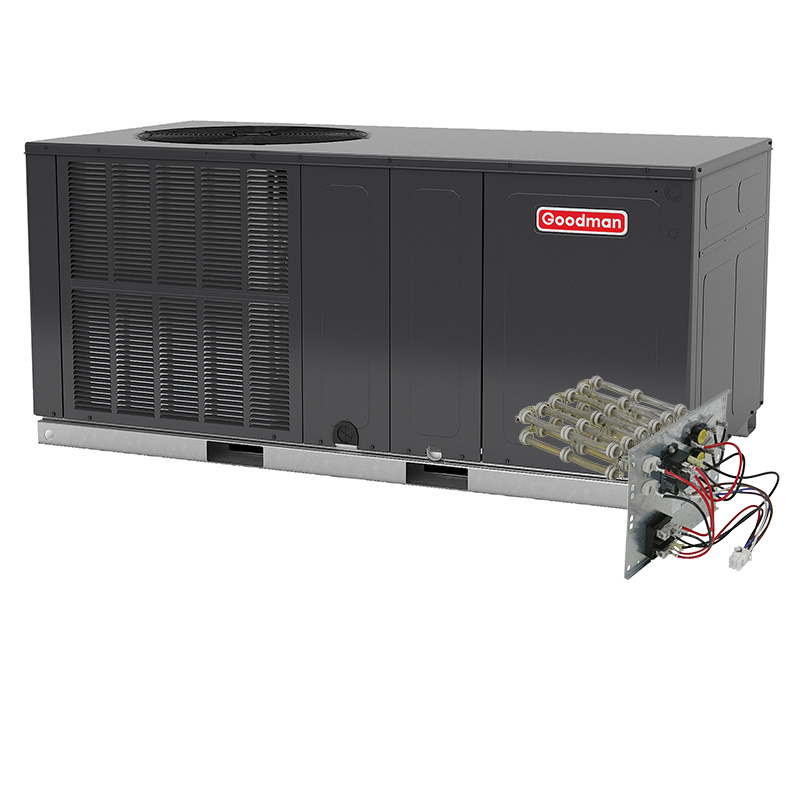
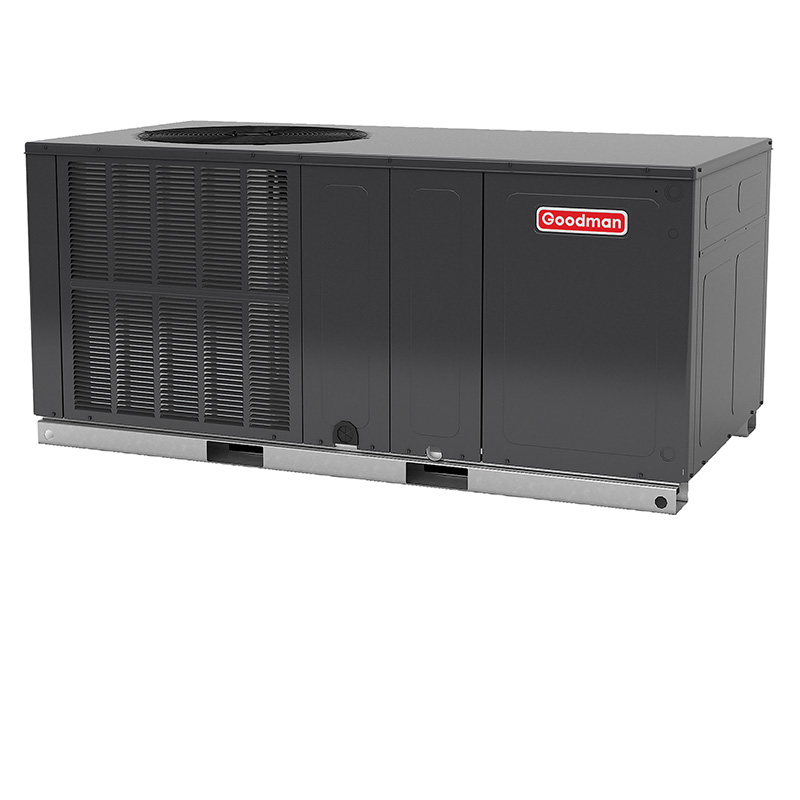
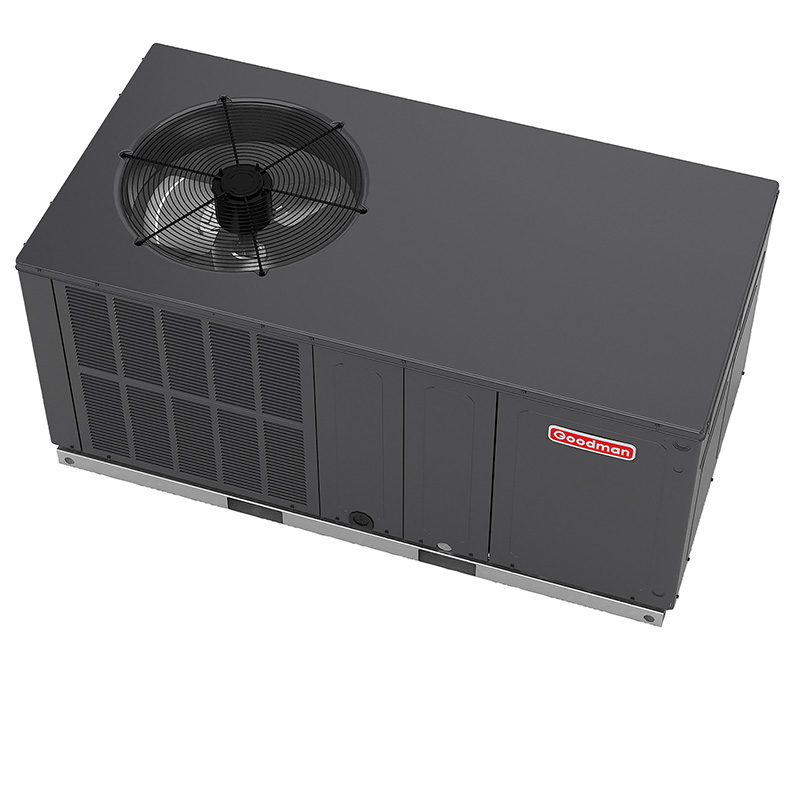
Goodman 2 Ton Package Unit Heat Pump & AC | 13.4 SEER2 Horizontal Discharge | R32
View on AC Direct see your lowest price →Check current price on AC Direct →
Key features
- Horizontal-discharge all-in-one package unit: no separate air handler or refrigerant line sets required
- 2-ton capacity (approximately 24,000 BTU/h cooling) suited for smaller conditioned spaces
- 13.4 SEER2 efficiency rating meets current federal minimum standards for packaged heat pumps
- R-32 refrigerant: lower global-warming potential than R-410A and single-component chemistry for simpler service
- Heat pump configuration provides both heating and cooling from one cabinet
- Goodman value pricing typically runs 15 to 25 percent below comparable Trane, Carrier, and Lennox package units
About this system
The Goodman 2-ton horizontal-discharge package unit is a self-contained heat pump and air conditioner built for applications where a traditional split system will not fit: manufactured homes, crawl-space installations, and buildings where all mechanical equipment must sit low to the ground with ductwork running horizontally from the unit. Everything, including the compressor, refrigerant coil, and heat pump components, ships in a single cabinet that connects directly to existing horizontal duct runs. That all-in-one design simplifies the job site and eliminates the refrigerant line sets that a split system requires, which can actually reduce one source of installation error.
At 13.4 SEER2, this unit meets current federal minimum efficiency standards for package equipment and sits at the entry tier of the efficiency scale. You will not see significant energy savings compared to higher-SEER2 alternatives, but the upfront cost is lower and the payback math can still favor this rating for moderate-use climates or rental properties where minimizing capital outlay matters more than shaving electricity costs. R-32 refrigerant is a meaningful upgrade over R-410A: it has a lower global-warming potential, and its single-component chemistry makes future servicing more straightforward as the industry moves away from blended refrigerants. The 2-ton capacity targets conditioned spaces roughly in the 900 to 1,200 square-foot range, depending on local climate, insulation, and ceiling height.
Goodman sits clearly in the value segment, typically priced 15 to 25 percent below comparable equipment from Trane, Carrier, and Lennox. For a homeowner who needs a working, code-compliant heat pump on a constrained budget, or a property manager replacing aging package equipment in a rental, this unit does the job. Buyers who prioritize long-term durability and lower lifetime repair costs will want to weigh the trade-offs carefully before committing.
The Goodman 2-ton horizontal package heat pump is a straightforward, budget-accessible choice for manufactured homes and tight-clearance installations where a split system is not an option. It does what the specs promise at an entry-level price, but buyers should go in knowing that efficiency is baseline, compressor longevity trails premium brands, and long-term costs depend heavily on installation quality and a willingness to budget for component repairs after year seven.
Overall score is the average of the five ratings above.
What we like
- All-in-one horizontal package design simplifies installation in manufactured homes and crawl-space applications
- R-32 refrigerant is lower GWP than R-410A and easier to service as a single-component refrigerant
- Priced 15 to 25 percent below comparable Trane, Carrier, and Lennox package units, lowering upfront cost
- Heat pump operation provides year-round heating and cooling from one cabinet
- Dual-run capacitor failures, the most common documented repair, are typically a quick, low-cost fix in the $300 to $600 range
Trade-offs
- 13.4 SEER2 is at the federal minimum efficiency floor, so energy bills will be higher than with mid- or high-efficiency alternatives
- Compressor lifespan averages 10 to 14 years versus 15 to 20 years documented in premium-brand equipment
- Evaporator coil leaks appear in a meaningful share of owner reviews and can be a significant repair cost
- A minority of owners report refrigerant leaks within the first year, most traced to installation or initial charge issues rather than unit defects
What homeowners and pros say about Goodman
Goodman sits in a complicated spot in homeowner conversations. On ConsumerAffairs, the brand scores around 2.5 out of 5, though that platform skews toward dissatisfied owners motivated to post complaints. The recurring theme there is repair costs that start climbing after roughly year seven, with evaporator coil leaks and compressor wear cited most often. Google dealer reviews tell a more balanced story, averaging around 3.8 out of 5, where the most common praise centers on affordability and the fact that the equipment works as advertised when it is properly installed. For this specific horizontal package unit, both of those data points hold: owners who got a careful installation and kept up with annual maintenance generally report solid performance in the first several years, while those who did not tend to hit the documented failure modes sooner.
HVAC technicians who work on Goodman equipment frequently point to dual-run capacitor failures as the most predictable service call, and most regard it as a manageable nuisance rather than a catastrophic problem given the relatively low repair cost. They are more guarded about the evaporator coil leak pattern and the compressor lifespan gap: at 10 to 14 years on average versus the 15 to 20 years more commonly seen in Trane, Carrier, and Lennox equipment, the math on total cost of ownership shifts meaningfully for anyone planning to stay in the home for a long time. The first-year refrigerant leak reports are nearly always pinned on installation rather than the unit itself, which reinforces the consistent professional advice that the quality of the installing contractor matters at least as much as the brand name on the cabinet for this class of equipment.
Sources: ConsumerAffairs Goodman owner reviews, AHRI Directory of Certified Product Performance, U.S. DOE appliance and equipment efficiency standards, Goodman product specification sheets.
What it costs to run
At 13.4 SEER2, cooling this 2-ton system for a typical 1200-hour cooling season at the U.S. average electricity rate of $0.17/kWh works out to roughly $365 per year in cooling, about $0 less per year than a minimum-efficiency 13.4 SEER2 unit of the same size. Your real cost depends on your climate and local rate.
Method: (24,000 BTU/hr ÷ 13.4 SEER2) × 1200 hours ÷ 1000 × $0.17/kWh. Rate source: U.S. EIA average; cooling hours: moderate-climate estimate.
How it compares
| Brand | Comparable model | SEER2 | Stage | Price position |
|---|---|---|---|---|
| Goodman | 2-Ton Horizontal Package Heat Pump (R-32) | 13.4 | Single-stage | Value pick |
| Carrier | WeatherMaster 50XC Series | 14.0 | Single-stage | Typically 15 to 25 percent more than this Goodman |
| Trane | Precedent TSC Series | 14.0 | Single-stage | Typically 15 to 25 percent more than this Goodman |
| Lennox | Elite LRP14 Series | 14.0 | Single-stage | Typically 15 to 25 percent more than this Goodman |
Competitor rows are comparable single-stage units at similar efficiency; price is relative position, not a quote.
Questions about this system
Will this unit work with my existing horizontal ductwork in a manufactured home?
Yes, horizontal-discharge package units are specifically designed for manufactured homes and similar applications where ductwork runs horizontally from a low-profile cabinet. You should still have a qualified technician verify that your existing duct sizing and static pressure are compatible with a 2-ton unit before installation.
What does the switch to R-32 refrigerant mean for me as an owner?
R-32 is a single-component refrigerant, which means if the system loses charge and needs a top-off, a technician can add refrigerant without replacing the entire charge the way blended refrigerants often require. It also has a lower global-warming potential than R-410A, which matters for future serviceability as regulations around older refrigerants continue to tighten.
How often do Goodman package units need repairs, and what should I budget for?
The most commonly documented failure is the dual-run capacitor, typically a straightforward repair in the $300 to $600 range. Evaporator coil leaks appear in a meaningful share of owner reviews and cost significantly more. Based on Goodman's documented compressor lifespan of 10 to 14 years, it is reasonable to budget for a compressor or full-unit replacement somewhere in that window if you plan to stay in the home long term.
Is 13.4 SEER2 going to cost me noticeably more to run than a higher-efficiency unit?
Compared to a 15 or 16 SEER2 unit, yes, you will pay somewhat more in electricity over time, though the exact difference depends on your local utility rates, how often you run the system, and your climate. In moderate climates with lower annual run hours, the gap in operating cost may not recoup the higher upfront price of a more efficient unit within a typical ownership period.
A neighbor had a refrigerant leak in the first year on their Goodman unit. Is that a manufacturing defect?
First-year refrigerant leaks are documented in a minority of Goodman owners' reports, and they are most often traced to installation issues, such as improper flare connections or an undercharged system at startup, rather than a factory defect in the unit itself. This is one reason choosing an experienced, licensed installer and verifying the charge at commissioning matters significantly for any package unit.
Specifications
| Cooling capacity | 2 Ton |
| Efficiency | 13.4 SEER2 |
| Configuration | Horizontal |
| Refrigerant | R-32 |