Goodman 3.5 Ton 13.4 SEER2 100000 BTU 96% AFUE Multi-Speed ECM Gas Furnace System – Horizontal | R32
View on AC Direct see your lowest price →Check current price on AC Direct →
Key features
- 13.4 SEER2 cooling efficiency meets current federal minimum standards for most U.S. climate zones
- 96% AFUE high-efficiency gas furnace reduces fuel waste to roughly 4% of input
- Multi-speed ECM blower motor lowers fan energy use and improves dehumidification vs. single-speed motors
- R-32 refrigerant with lower global warming potential than R-410A, aligned with industry phase-down direction
- Horizontal-configuration-only design engineered for attic, crawl space, or side-load utility closet installs
- 100,000 BTU heat output sized for larger homes or colder climate zones with significant heating loads
About this system
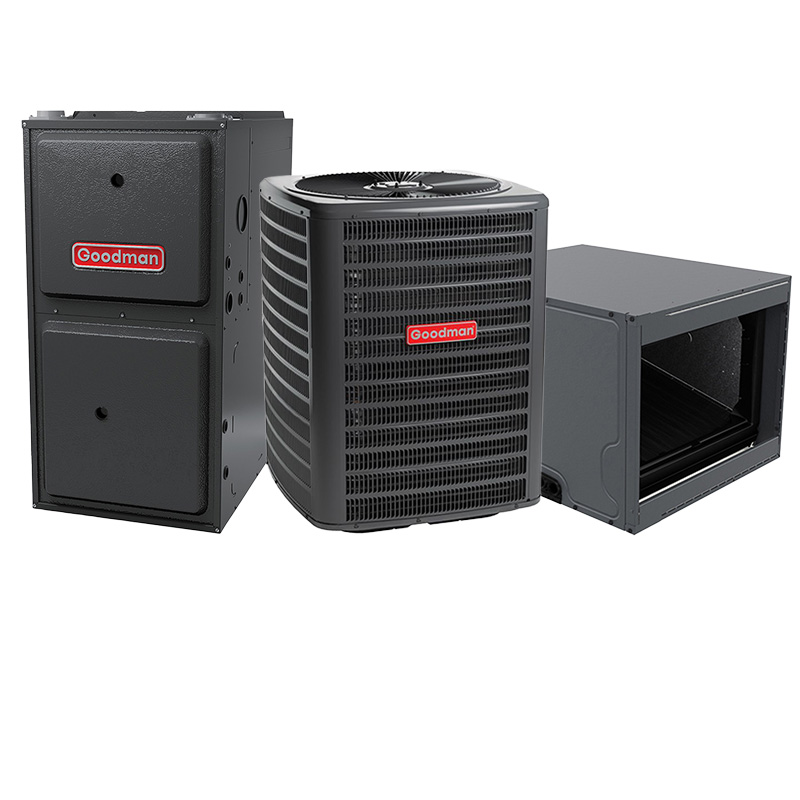
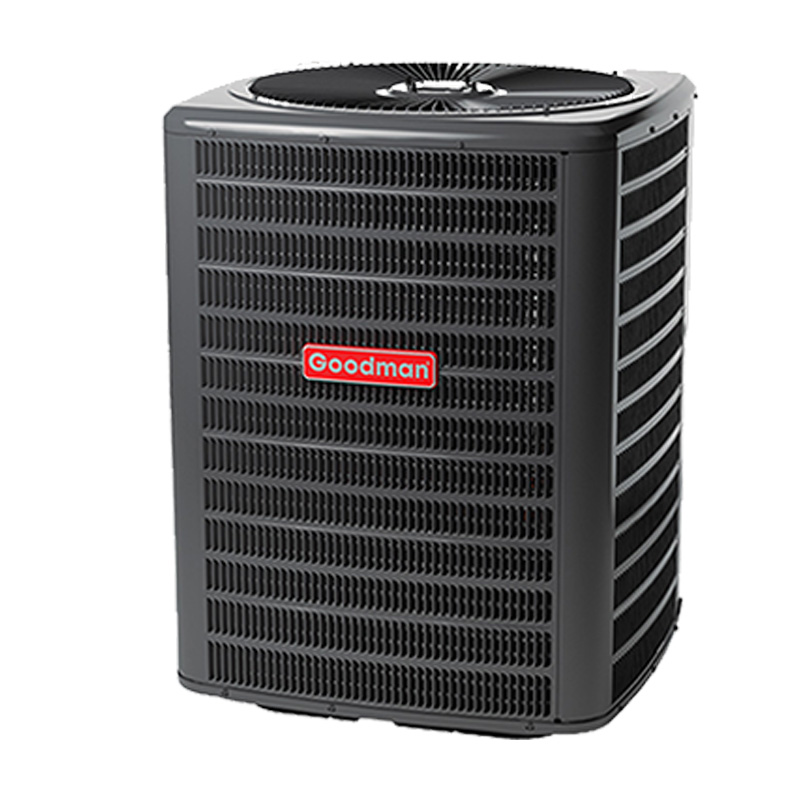
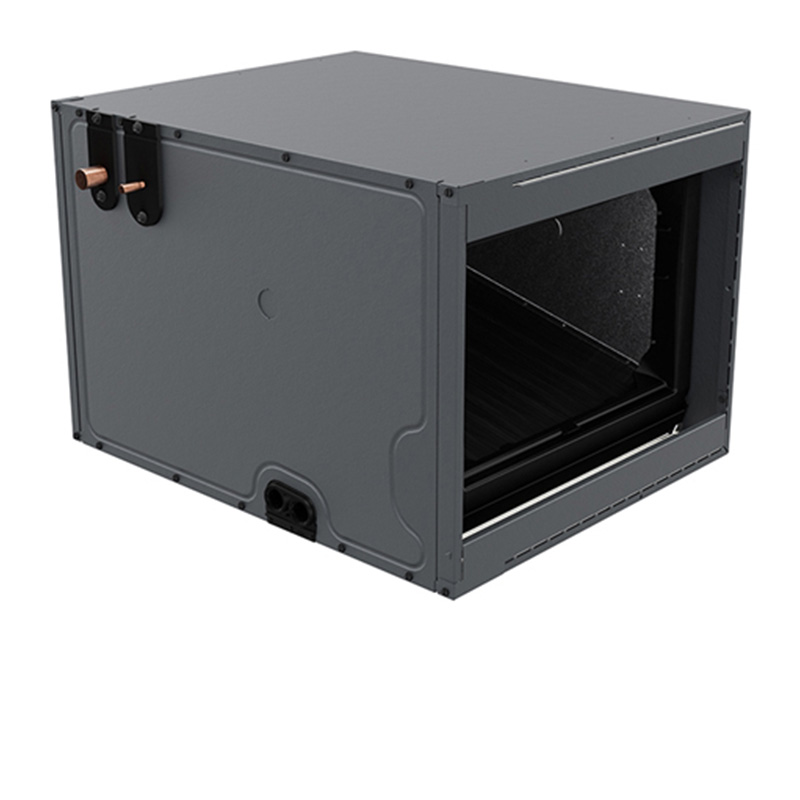
This Goodman 3.5-ton system pairs a 13.4 SEER2 R-32 air conditioner with a 100,000 BTU, 96% AFUE multi-speed ECM gas furnace in a horizontal configuration, making it a practical fit for homes where the air handler lives in a crawl space, attic, or utility closet on its side. The 3.5-ton capacity is well-suited to homes in the 1,800 to 2,400 square foot range, though Manual J load calculations should always drive that final sizing decision. R-32 refrigerant carries a lower global warming potential than the older R-410A it is replacing across the industry, so this system is positioned ahead of the regulatory curve.
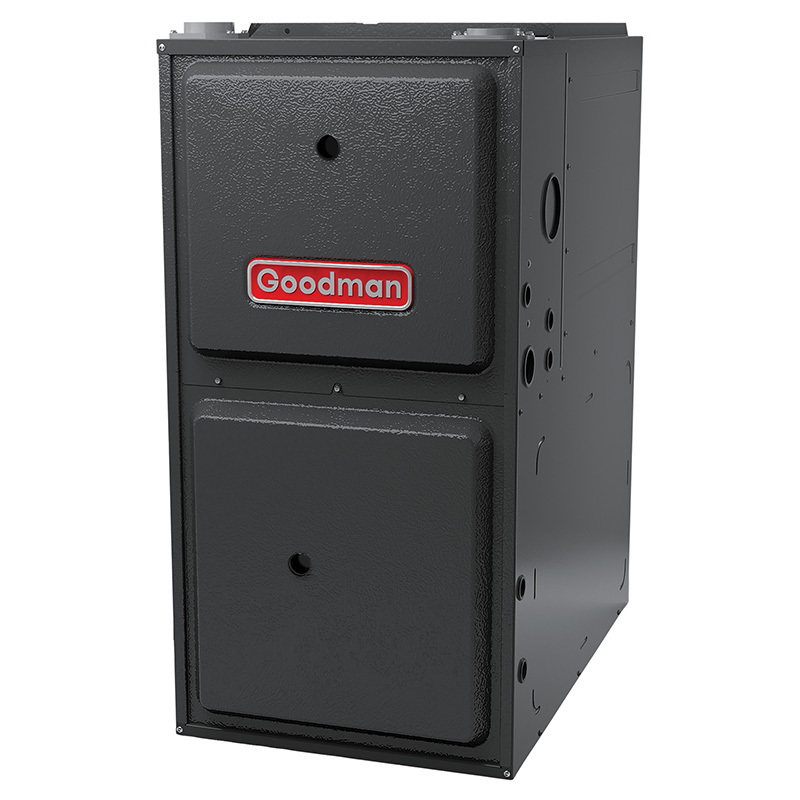
On the heating side, 96% AFUE sits in the high-efficiency tier, meaning only about 4 cents of every fuel dollar escapes as flue gas. The multi-speed ECM blower motor adjusts airflow based on demand rather than running at a single fixed speed, which typically improves comfort consistency, lowers fan electricity use, and helps the air conditioning side dehumidify more effectively. The horizontal-only configuration is a real constraint: this unit cannot be converted to upflow or downflow, so the installation location must be locked in before purchasing. Buyers who need flexibility should confirm their mechanical room layout before ordering.
This Goodman system delivers solid efficiency numbers and a practical horizontal form factor at a price point that undercuts premium brands by 15 to 25 percent. The trade-off is a documented history of mid-life repair costs and a compressor lifespan that tends to run shorter than Carrier, Trane, or Lennox equivalents. For cost-conscious buyers with a skilled installer, it is a reasonable choice; for those prioritizing long-term durability with minimal intervention, the premium brands deserve a serious look.
Overall score is the average of the five ratings above.
What we like
- Purchase price typically 15 to 25 percent below comparable Carrier, Trane, and Lennox systems
- 96% AFUE furnace genuinely reduces annual gas bills compared to 80% AFUE equipment
- Multi-speed ECM blower improves comfort and humidity control over basic single-speed units
- R-32 refrigerant keeps the system compatible with the industry's regulatory direction
- Horizontal-specific engineering suits attic and crawl space installs where upflow units cannot fit
Trade-offs
- Dual-run capacitors are the most commonly reported failure point, typically appearing in mid-life and costing $300 to $600 per service call
- Evaporator coil leaks appear in a meaningful share of owner reports, a more costly repair than a capacitor swap
- Compressor longevity averages 10 to 14 years versus 15 to 20 years cited for premium-brand compressors
- Horizontal-only configuration offers zero installation flexibility if your mechanical room layout changes or was measured incorrectly
What homeowners and pros say about Goodman
Homeowners discussing Goodman equipment online tend to split into two camps: those who had a smooth installation and are happy with the utility savings, and those who started seeing repair bills climb after roughly year 7. That pattern is consistent with the brand’s ConsumerAffairs rating of about 2.5 out of 5, a channel that skews toward frustrated owners, where climbing repair costs are the recurring theme. Google dealer reviews land at around 3.8 out of 5, and there the most common note is straightforward: the equipment costs noticeably less to buy than Trane or Carrier, and for budget-focused buyers, that matters. The honest read is that Goodman’s reputation is unevenly distributed, and installation quality is cited by HVAC technicians as the single largest variable in how long a unit lasts.
On the specific failure side, dual-run capacitors are the most frequently reported weak point across Goodman owner forums and technician accounts. They are a relatively low-cost fix in the $300 to $600 range, but they signal that mid-life maintenance is not a remote possibility with this brand. Evaporator coil leaks appear in a meaningful portion of reviews and carry a higher repair cost. Compressor lifespan is the longer-term concern, with Goodman compressors tending to average 10 to 14 years compared to the 15 to 20 years commonly cited for premium-brand compressors. For this horizontal system specifically, install complexity is a real factor: a horizontal application adds orientational demands on refrigerant line routing, drain panning, and airflow that can expose any shortcuts a cut-rate installation crew might take. A skilled installer who charges appropriately is not an optional upgrade with Goodman; it is the baseline requirement for getting the efficiency numbers and service life the specs promise.
Sources: ConsumerAffairs Goodman owner reviews, AHRI Directory of Certified Product Performance, U.S. DOE appliance and equipment efficiency standards, Goodman product specification sheets.
What it costs to run
At 13.4 SEER2, cooling this 3.5-ton system for a typical 1200-hour cooling season at the U.S. average electricity rate of $0.17/kWh works out to roughly $639 per year in cooling, about $0 less per year than a minimum-efficiency 13.4 SEER2 unit of the same size. Your real cost depends on your climate and local rate.
Method: (42,000 BTU/hr ÷ 13.4 SEER2) × 1200 hours ÷ 1000 × $0.17/kWh. Rate source: U.S. EIA average; cooling hours: moderate-climate estimate.
How it compares
| Brand | Comparable model | SEER2 | Stage | Price position |
|---|---|---|---|---|
| Goodman | 3.5 Ton 13.4 SEER2 96% AFUE Horizontal R-32 System | 13.4 | Multi-speed | Value pick |
| Carrier | Performance Series 24ACC636 with 59TP6 | 13.4-14.0 | Single-stage | Typically 15 to 25 percent more than Goodman |
| Trane | XR14c with S9X2 furnace | 13.4-14.0 | Single-stage | Typically 15 to 25 percent more than Goodman |
| Lennox | Merit Series ML14XC1 with ML196E furnace | 13.4-14.0 | Single-stage | Typically 15 to 25 percent more than Goodman |
Competitor rows are comparable single-stage units at similar efficiency; price is relative position, not a quote.
Questions about this system
Can this system be converted from horizontal to upflow or downflow if my installation needs change?
No. This unit is engineered exclusively for horizontal installation and cannot be field-converted to upflow or downflow. Confirm your mechanical room dimensions and orientation before purchasing, because this is not a flexible multi-position cabinet.
Will my existing HVAC technician be able to work on an R-32 system, or does R-32 require special certification?
R-32 is classified as an A2L mildly flammable refrigerant, which requires technicians to use R-32-rated recovery equipment and follow updated handling procedures. Not every tech in the field has the right equipment yet, so it is worth confirming your installer is set up for A2L refrigerants before you commit to this system.
Is 3.5 tons the right size for my home?
Tonnage should always be determined by a Manual J load calculation based on your home's square footage, insulation levels, window area, local climate, and duct condition. A 3.5-ton unit is often appropriate for homes in the 1,800 to 2,400 square foot range, but oversizing is a common installer mistake that leads to short-cycling and poor humidity control.
What repairs should I budget for after the warranty period ends?
Based on Goodman's documented failure patterns, dual-run capacitor replacement is the most common mid-life repair, typically running $300 to $600. Evaporator coil leaks and refrigerant loss are also reported by a meaningful portion of owners, and those repairs cost more. Setting aside a service fund after year 7 is a practical step.
Does the 96% AFUE furnace require a special venting setup compared to a standard 80% AFUE unit?
Yes. High-efficiency condensing furnaces like this one produce a cooler, wetter exhaust that cannot use traditional metal flue venting. They require PVC or CPVC direct-vent piping, typically run through a side wall rather than up through the roof. Your installer will need to account for this in the installation plan and cost estimate.
Specifications
| Cooling capacity | 3.5 Ton |
| Efficiency | 13.4 SEER2 |
| Furnace output | 100000 BTU |
| Furnace efficiency | 96% AFUE |
| Configuration | Horizontal |
| Refrigerant | R-32 |