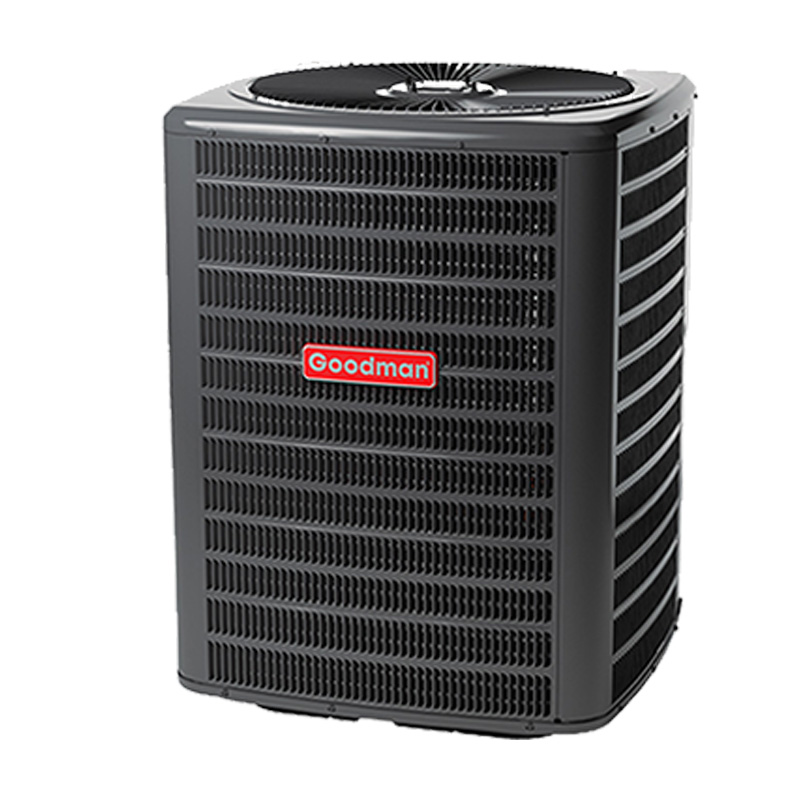
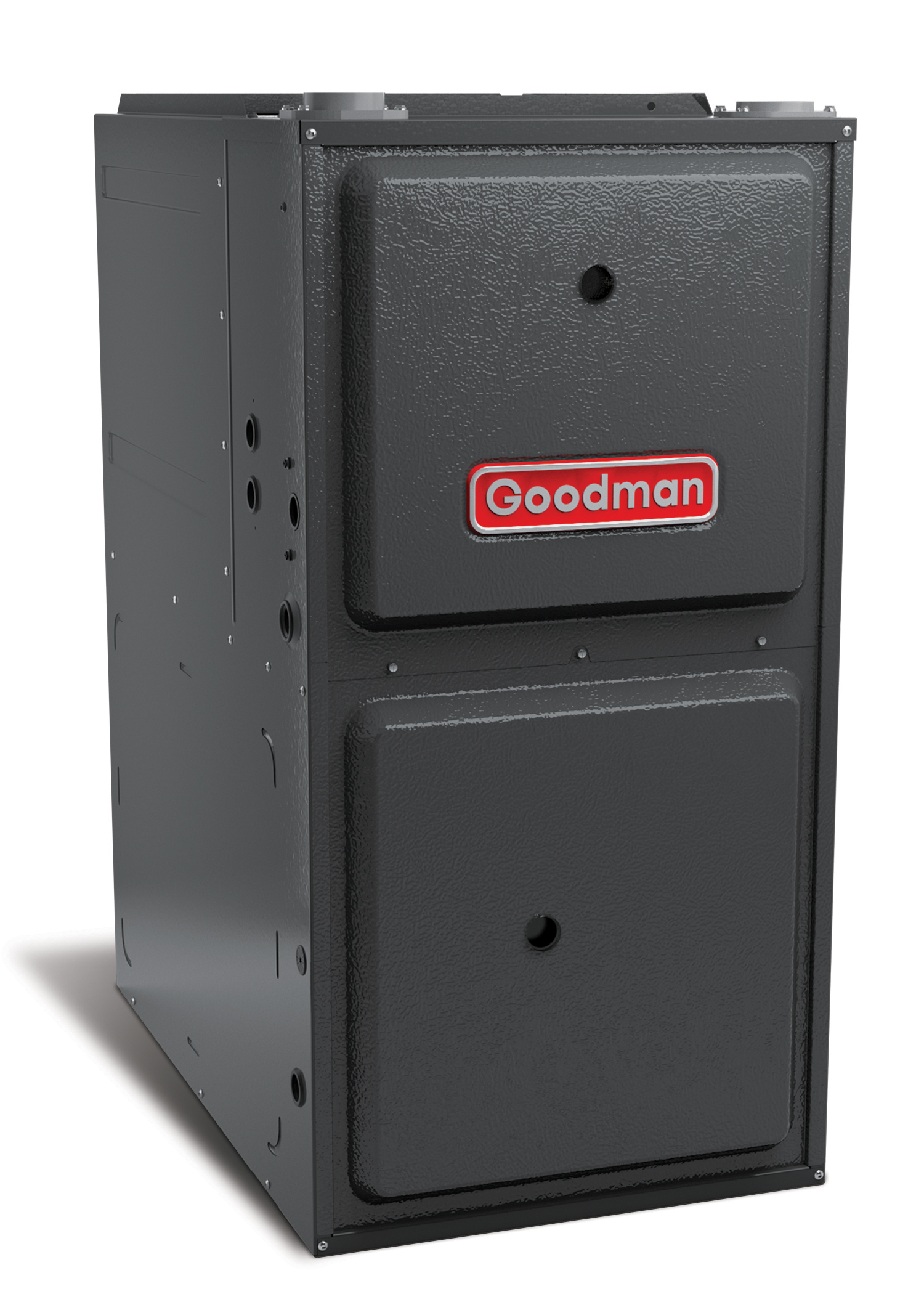
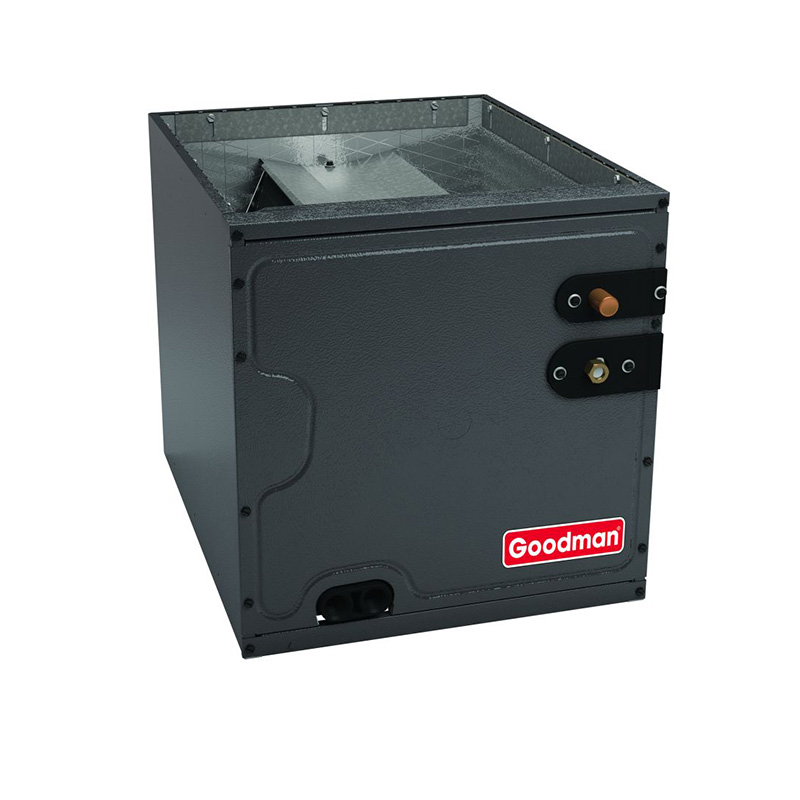
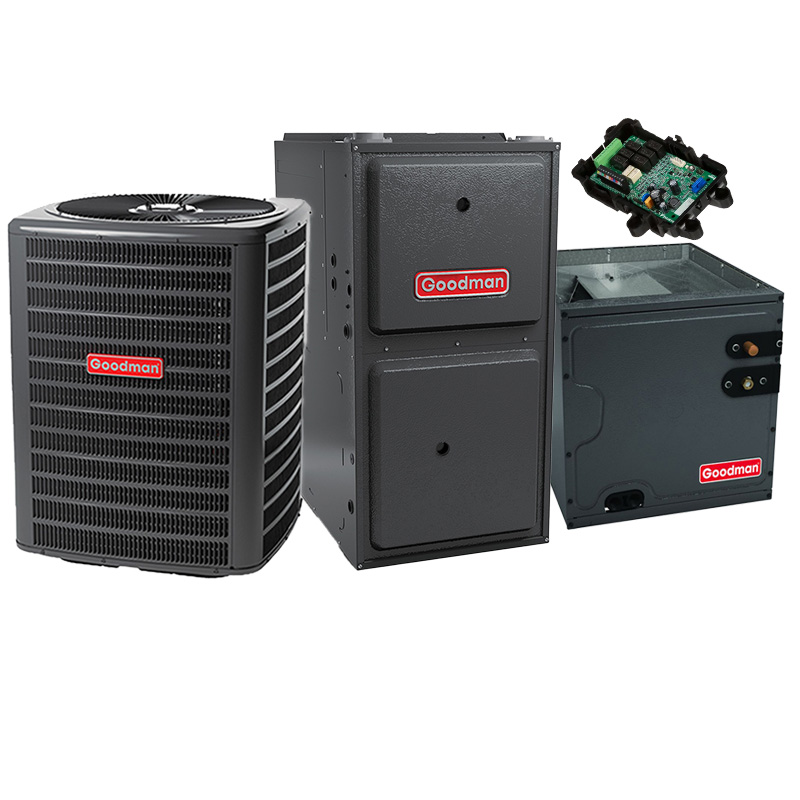
Goodman 3.5 Ton 13.4 SEER2 100000 BTU 96% AFUE Two-Stage Gas Furnace With R32 Air Condenser and Coil System – Upflow
View on AC Direct see your lowest price →Check current price on AC Direct →
Key features
- 3.5-ton R-32 condenser paired with a matched evaporator coil for rated 13.4 SEER2 efficiency
- 100,000 BTU two-stage gas furnace rated at 96% AFUE for high heating efficiency
- Two-stage heating reduces temperature swings and improves humidity control on mild days
- R-32 refrigerant with lower global warming potential than R-410A and a smaller required charge
- Upflow cabinet configuration suits basement and closet installs with overhead ductwork
- Factory-matched system components support warranty validity and rated performance
About this system
This Goodman upflow system pairs a 3.5-ton R-32 air condenser and matched evaporator coil with a 100,000 BTU, 96% AFUE two-stage gas furnace. That combination covers homes roughly in the 1,800 to 2,400 square foot range depending on climate, insulation, and ceiling height. The 13.4 SEER2 rating meets the current federal minimum for most U.S. regions, so it is code-compliant without reaching into premium efficiency territory. The two-stage furnace fires at a reduced capacity on mild days and ramps up only when temperatures drop sharply, which reduces temperature swings compared to a single-stage unit and tends to run longer, quieter cycles that do a better job of pulling humidity out of the air.
R-32 refrigerant is a meaningful upgrade over the R-410A found in older Goodman systems. It has a lower global warming potential, requires a smaller refrigerant charge by weight, and is increasingly what technicians are trained on going forward as the industry moves away from R-410A. The upflow configuration means warm air exits the top of the air handler, which suits most basement or closet installs where supply ductwork runs up through the floor system. Buyers who need a horizontal or downflow layout will need a different cabinet orientation. This is a complete matched system, meaning the coil is sized and rated specifically for this condenser and furnace, which matters for warranty coverage and rated efficiency.
This Goodman system delivers solid, code-compliant cooling and high-efficiency two-stage heating at a price that undercuts major premium brands by a meaningful margin. The trade-off is a brand track record that shows more repair activity after year seven and compressor longevity that trails premium competitors, so the long-term value depends heavily on who installs it and how well it is maintained. For buyers prioritizing upfront cost over a 20-year horizon, it is a reasonable choice with eyes open.
Overall score is the average of the five ratings above.
What we like
- Priced roughly 15 to 25 percent below comparable Trane, Carrier, and Lennox systems
- 96% AFUE two-stage furnace is a genuinely high-efficiency heating option
- R-32 refrigerant is forward-looking and more environmentally responsible than R-410A
- Factory-matched coil, condenser, and furnace support accurate efficiency ratings and warranty coverage
- Two-stage operation provides better comfort and humidity control than single-stage alternatives
Trade-offs
- Dual-run capacitors are the most frequently reported failure point, typically requiring a 300 to 600 dollar service call
- Evaporator coil leaks appear in a meaningful share of owner reports, a known weak point for this brand
- Compressor lifespan averages 10 to 14 years versus 15 to 20 years on premium brands
- A minority of owners report refrigerant leaks within the first year, often tied to install quality rather than a factory defect
What homeowners and pros say about Goodman
Homeowners who post about Goodman systems online tend to split into two camps. Those who had smooth installs and kept up with maintenance often report years of reliable service and point to the lower upfront cost as money that stayed in their pocket. Those who ran into problems frequently mention repair costs that climbed after roughly year seven, which lines up with Goodman’s ConsumerAffairs rating of around 2.5 out of 5, a score heavily weighted toward complaint-motivated reviews. Google dealer reviews across Goodman installers average closer to 3.8 out of 5, where affordability is the most commonly cited reason buyers were satisfied. The pattern that emerges is that satisfaction with a Goodman system is closely tied to who puts it in and how it is maintained, more so than with premium brands that tend to be more forgiving of marginal installs.
HVAC technicians who work on Goodman equipment frequently note that dual-run capacitors are the most common service call on these systems, a repair that typically runs 300 to 600 dollars and is generally quick to address. Evaporator coil leaks are another recurring issue documented in owner reviews and worth budgeting for over the life of the system. Compressor longevity is a legitimate concern as well, with Goodman compressors typically averaging 10 to 14 years compared to 15 to 20 years on premium brands. A small but documented share of owners have reported refrigerant leaks within the first year, which technicians generally attribute to installation or initial charge issues rather than factory defects, reinforcing how much installer selection matters with this brand.
Sources: ConsumerAffairs Goodman owner reviews, AHRI Directory of Certified Product Performance, U.S. DOE appliance and equipment efficiency standards, Goodman product specification sheets.
What it costs to run
At 13.4 SEER2, cooling this 3.5-ton system for a typical 1200-hour cooling season at the U.S. average electricity rate of $0.17/kWh works out to roughly $639 per year in cooling, about $0 less per year than a minimum-efficiency 13.4 SEER2 unit of the same size. Your real cost depends on your climate and local rate.
Method: (42,000 BTU/hr ÷ 13.4 SEER2) × 1200 hours ÷ 1000 × $0.17/kWh. Rate source: U.S. EIA average; cooling hours: moderate-climate estimate.
How it compares
| Brand | Comparable model | SEER2 | Stage | Price position |
|---|---|---|---|---|
| Goodman | 3.5T 13.4 SEER2 / 96% AFUE Two-Stage Upflow System | 13.4 | Two-stage | Value pick |
| Carrier | Performance 14 (24ACC636) with 96% AFUE Comfort 96 Furnace | 14.0 | Two-stage | Roughly 20 to 30 percent more than this Goodman system |
| Trane | XR14c Condenser with S9V2 96% AFUE Variable-Speed Furnace | 14.3 | Two-stage / variable-speed air handler | Roughly 25 to 35 percent more than this Goodman system |
| Lennox | Merit ML14XC1 Condenser with ML196E 96% AFUE Two-Stage Furnace | 14.0 | Two-stage | Roughly 20 to 30 percent more than this Goodman system |
Competitor rows are comparable single-stage units at similar efficiency; price is relative position, not a quote.
Questions about this system
Will this system qualify for the federal energy efficiency tax credit?
The 96% AFUE furnace meets the IRS requirements for the 25C tax credit on qualifying gas furnaces. The 13.4 SEER2 air conditioner is at the federal minimum and may not meet the higher efficiency threshold required for the cooling side credit, so confirm current IRS requirements or consult a tax professional before filing.
What is the warranty on this Goodman system and what do I need to do to activate it?
Goodman typically offers a 10-year parts warranty on registered systems, but registration must be completed within a set window after installation and the system must be installed by a licensed HVAC contractor. Failure to register usually drops coverage to a shorter base warranty, so registering promptly after install is important.
Is R-32 refrigerant hard to find or service if I need a repair in a few years?
R-32 is widely used in split systems internationally and is becoming more common in North America as the industry phases out R-410A. Most established HVAC contractors are already training on R-32, though in some rural markets you may want to confirm your local technician is certified to handle it before purchasing.
The upflow configuration is listed, but my furnace will be in a closet on the main floor. Does this work?
An upflow furnace pulls return air from the bottom and pushes conditioned air out the top, which works well in a main-floor closet as long as your supply ductwork runs overhead through the ceiling or into a horizontal trunk line above. If your ductwork runs under the floor or the unit needs to lay on its side, you would need a different configuration.
How much does installation typically add to the cost of this system and does it affect reliability?
Installation costs vary widely by region and contractor, but a complete matched system of this size generally requires several hours of labor plus any needed ductwork modifications or electrical work. Goodman's reliability is notably more dependent on install quality than many premium brands, so choosing a licensed contractor with specific Goodman or Daikin (parent company) experience is one of the more important decisions you will make with this purchase.
Specifications
| Cooling capacity | 3.5 Ton |
| Efficiency | 13.4 SEER2 |
| Furnace output | 100000 BTU |
| Furnace efficiency | 96% AFUE |
| Configuration | Upflow |
| Refrigerant | R-32 |