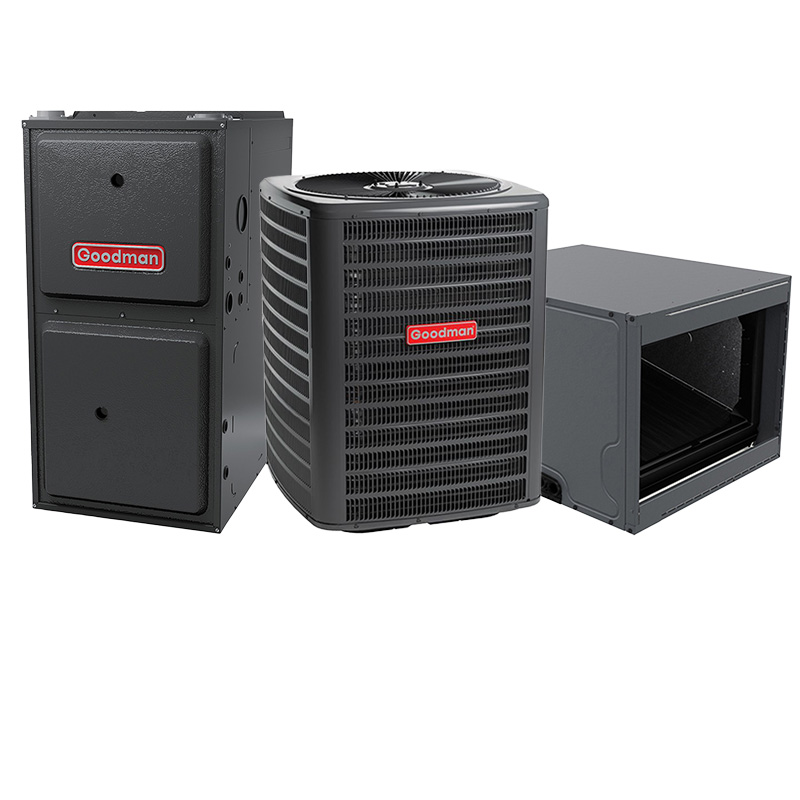
Goodman 3.5 Ton 13.4 SEER2 100000 BTU 96% AFUE Two Stage Multi-Speed ECM Gas Furnace System – Horizontal | R32
View on AC Direct see your lowest price →Check current price on AC Direct →
Key features
- 3.5-ton cooling capacity with 13.4 SEER2 efficiency rating
- 100,000 BTU two-stage gas furnace at 96% AFUE
- Horizontal configuration for attic or crawl-space installations
- Multi-speed ECM blower motor for quieter, more efficient airflow
- R-32 refrigerant with lower global-warming potential than R-410A
- Two-stage heating reduces temperature swings and short-cycling
About this system
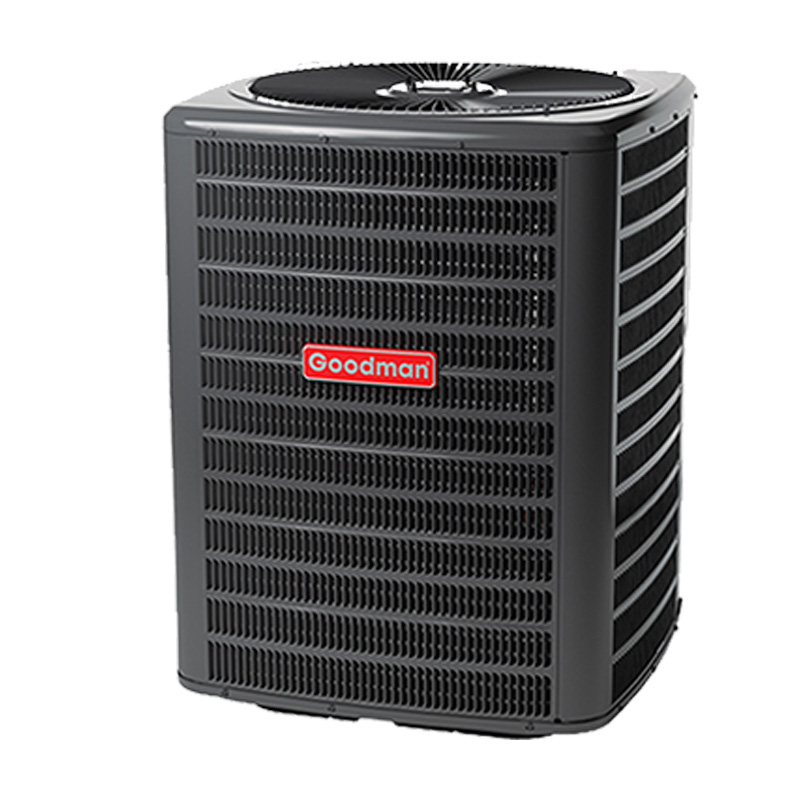
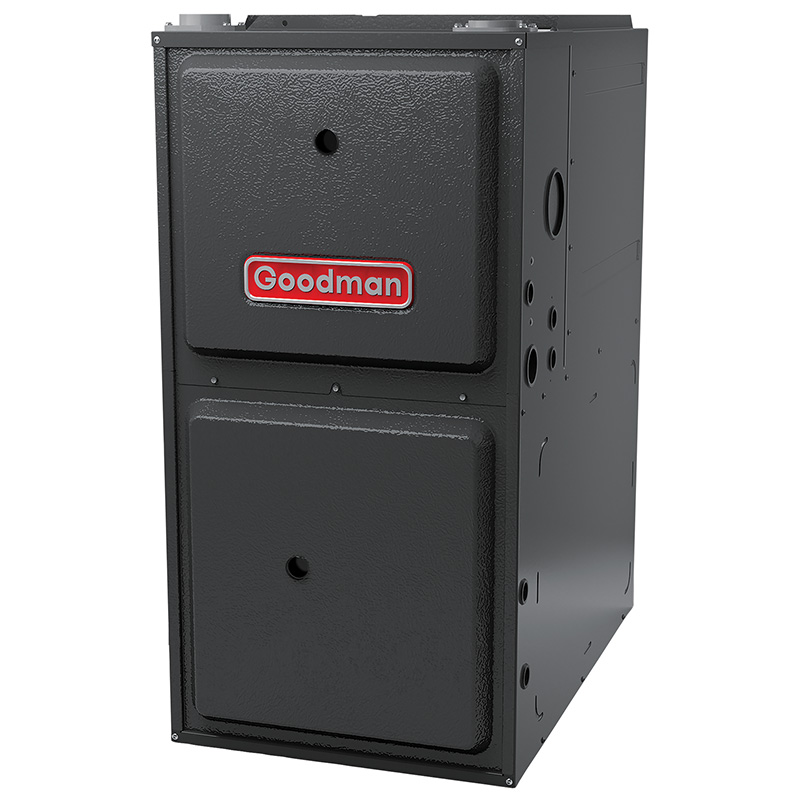
This Goodman bundle pairs a 3.5-ton, 13.4 SEER2 R-32 split-system air conditioner with a 100,000 BTU, 96% AFUE two-stage gas furnace in a horizontal configuration. The horizontal orientation is designed for attic installations or crawl-space setups where a vertical unit simply will not fit, making this a fairly specialized package. R-32 refrigerant carries a lower global-warming potential than the R-410A it replaces, and while that is better for the environment, it does mean your service technician needs to be R-32 certified, which can narrow your pool of qualified installers depending on your area.
The two-stage furnace runs at a lower firing rate on milder days, reducing temperature swings and cycling noise compared with a single-stage unit. The multi-speed ECM blower motor is more energy-efficient than a standard PSC motor and supports better humidity control in cooling mode. At 13.4 SEER2, efficiency sits at the current federal minimum for most climate regions, so this is not a high-efficiency cooling system by today’s standards, but the 96% AFUE furnace is genuinely near the top of the non-condensing category and will keep heating bills competitive. This combination suits homeowners replacing older equipment in tight horizontal spaces who want solid heating performance without paying premium-brand prices.
This Goodman horizontal system is a cost-conscious, workable solution for homeowners with tight installation spaces who want above-average heating efficiency without the price premium of Trane or Carrier. The 96% AFUE furnace and ECM blower are genuine strengths, but the 13.4 SEER2 cooling side is entry-level, and Goodman's documented history of capacitor failures, coil leaks, and shorter compressor lifespans means you should budget for maintenance after year seven.
Overall score is the average of the five ratings above.
What we like
- 96% AFUE furnace delivers near-maximum heating efficiency in this non-condensing category
- Two-stage firing and ECM blower reduce temperature swings and operating noise
- Horizontal configuration fills a specific install need many competing bundles do not address
- Priced roughly 15 to 25 percent below comparable Trane, Lennox, and Carrier packages
- R-32 refrigerant has a significantly lower global-warming potential than R-410A
Trade-offs
- 13.4 SEER2 is the federal minimum floor, so cooling efficiency is nothing beyond baseline
- Goodman's documented failure modes include dual-run capacitor failures, evaporator coil leaks, and compressors that average 10 to 14 years versus 15 to 20 for premium brands
- R-32 certification requirement can limit the number of qualified local technicians for service calls
- Horizontal installs add complexity and can increase labor costs compared with standard upflow configurations
What homeowners and pros say about Goodman
Homeowners who choose Goodman equipment most often point to the lower upfront cost as the deciding factor, and that comes through clearly in Google dealer reviews, where the brand averages around 3.8 out of 5 stars and affordability is the most frequently mentioned positive. The two-stage furnace and ECM blower in this specific system tend to get favorable comments around comfort and quieter operation compared with older single-stage setups. On the other side, ConsumerAffairs scores sit around 2.5 out of 5, and while that platform skews heavily toward frustrated owners, the recurring theme is repair costs that start climbing around year seven, which aligns with the documented shorter compressor lifespan of 10 to 14 years on Goodman equipment versus the 15 to 20 years more common with premium brands.
HVAC technicians who work on Goodman equipment regularly tend to have a measured view: the hardware is functional and the value proposition is real, but installation quality is the single biggest variable in how long a unit lasts and how few service calls it needs. The documented failure modes that come up most in the field are dual-run capacitor failures (a relatively low-cost fix at $300 to $600), evaporator coil leaks that show up in a notable share of owner reports, and first-year refrigerant leaks that are almost always traced back to an install or charge issue rather than a manufacturing defect. On a horizontal R-32 system like this one, that last point puts even more weight on hiring an installer with direct experience in both horizontal configurations and R-32 handling.
Sources: ConsumerAffairs Goodman owner reviews, AHRI Directory of Certified Product Performance, U.S. DOE appliance and equipment efficiency standards, Goodman product specification sheets.
What it costs to run
At 13.4 SEER2, cooling this 3.5-ton system for a typical 1200-hour cooling season at the U.S. average electricity rate of $0.17/kWh works out to roughly $639 per year in cooling, about $0 less per year than a minimum-efficiency 13.4 SEER2 unit of the same size. Your real cost depends on your climate and local rate.
Method: (42,000 BTU/hr ÷ 13.4 SEER2) × 1200 hours ÷ 1000 × $0.17/kWh. Rate source: U.S. EIA average; cooling hours: moderate-climate estimate.
How it compares
| Brand | Comparable model | SEER2 | Stage | Price position |
|---|---|---|---|---|
| Goodman | 3.5T 13.4 SEER2 / 96% AFUE Two-Stage Horizontal Bundle | 13.4 | Two-stage | Value pick |
| Carrier | Comfort 24ACC636 / 59TP6 Gas Furnace Bundle | 13.4 | Single-stage / Two-stage | Typically 15 to 25 percent above this Goodman bundle |
| Trane | XR14 / S9X2 Gas Furnace Bundle | 13.8 | Single-stage / Two-stage | Typically 15 to 25 percent above this Goodman bundle |
| Lennox | Merit 14ACX / ML96V Gas Furnace Bundle | 13.4 | Single-stage / Two-stage variable | Typically 20 to 30 percent above this Goodman bundle |
Competitor rows are comparable single-stage units at similar efficiency; price is relative position, not a quote.
Questions about this system
Why does this system use a horizontal configuration, and is it harder to install?
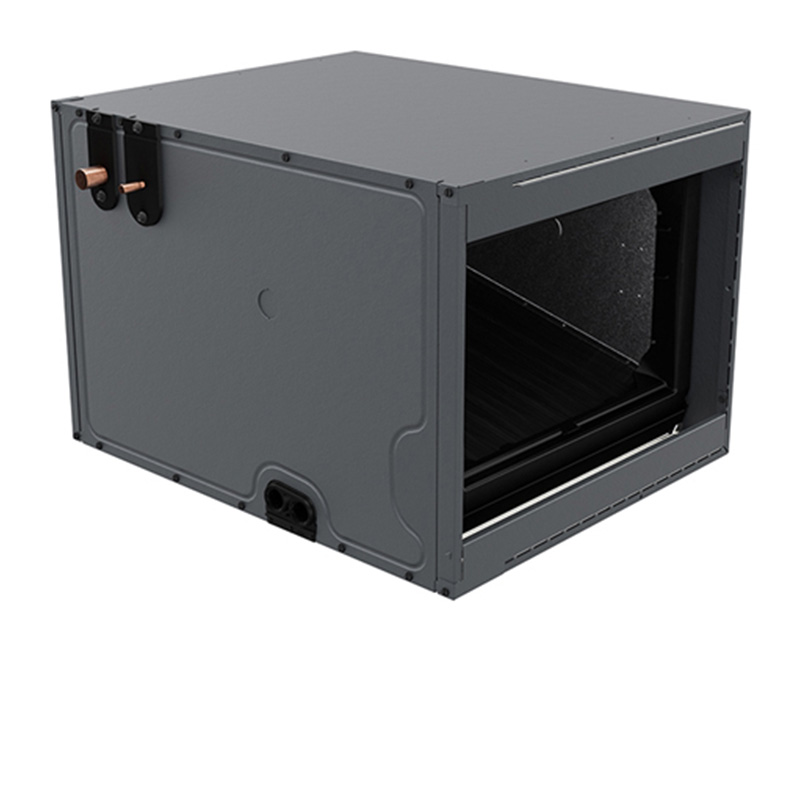
Horizontal units are built to lie on their side, which is necessary in attics, crawl spaces, or mechanical closets where vertical clearance is limited. Installation is generally more involved than a standard upflow setup, and labor costs can run higher because working in a tight attic is more demanding. Make sure your installer has specific experience with horizontal air handler placement.
Will any HVAC technician be able to service this system's R-32 refrigerant?
Not necessarily. R-32 requires technicians to hold the appropriate EPA certification and use compatible equipment, and availability of certified techs varies significantly by region. Before purchasing, confirm that at least two or three local service companies work with R-32 so you are not limited to a single provider for repairs.
What are the most likely repair costs I should budget for over the system's life?
Based on Goodman's documented failure patterns, dual-run capacitor replacement is the most common issue and typically costs between $300 and $600. Evaporator coil leaks are reported by a meaningful share of owners and can be more expensive to address. Compressors on Goodman equipment tend to average 10 to 14 years, so you should factor in the possibility of a compressor replacement or full system swap in that window.
Is 13.4 SEER2 going to cost noticeably more to run than a higher-efficiency option?
In hot climates where the system runs heavily, stepping up to a 16 or 17 SEER2 unit can produce measurable utility savings over the life of the equipment. In milder climates with shorter cooling seasons, the payback period on a higher-efficiency unit stretches considerably, and the upfront savings from this 13.4 SEER2 system may outweigh the efficiency gap.
Does Goodman's warranty require professional registration, and what does it actually cover?
Goodman requires the system to be registered within a set window after installation, typically by the installing contractor, to receive the full parts warranty period. Unregistered units generally receive a shorter coverage term. The warranty covers parts but not labor, which means a repair call after year one will still carry a labor cost even if the failed component itself is covered.
Specifications
| Cooling capacity | 3.5 Ton |
| Efficiency | 13.4 SEER2 |
| Furnace output | 100000 BTU |
| Furnace efficiency | 96% AFUE |
| Configuration | Horizontal |
| Refrigerant | R-32 |