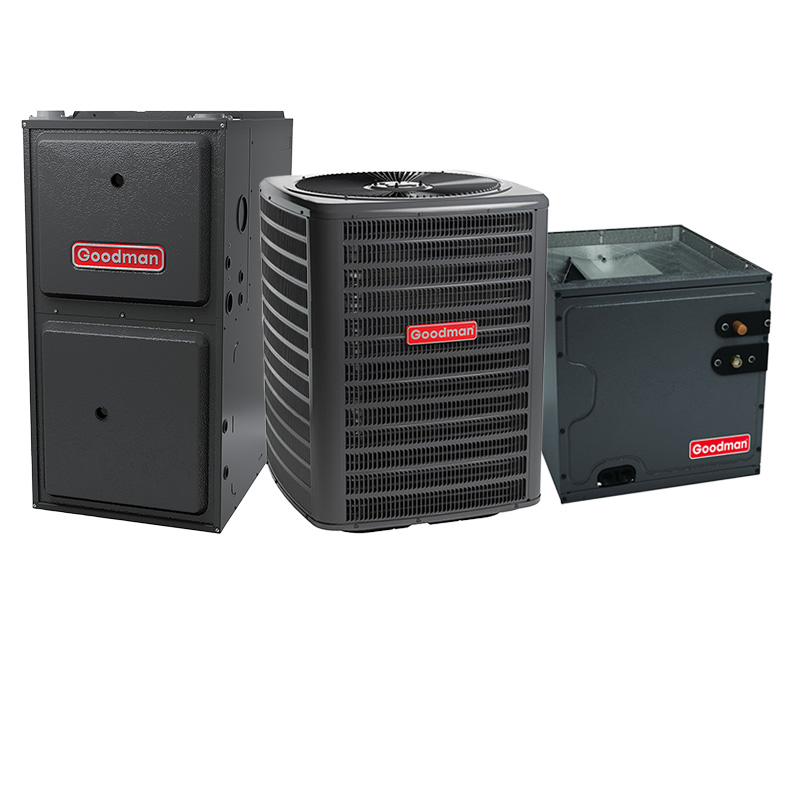
Goodman 3.5 Ton 13.4 SEER2 100000 BTU 96% AFUE Two Stage Multi-Speed ECM Gas Furnace System – Upflow | R32
View on AC Direct see your lowest price →Check current price on AC Direct →
Key features
- 96% AFUE two-stage gas furnace reduces fuel waste and short-cycling
- Multi-speed ECM blower motor lowers operating noise and improves dehumidification
- 13.4 SEER2 cooling meets current federal minimum efficiency standards
- R-32 refrigerant with lower global-warming potential than R-410A
- Upflow cabinet configuration for basement or main-floor utility room installs
- 3.5-ton / 100,000 BTU capacity suits homes roughly in the 1,800 to 2,600 sq ft range depending on climate and insulation
About this system
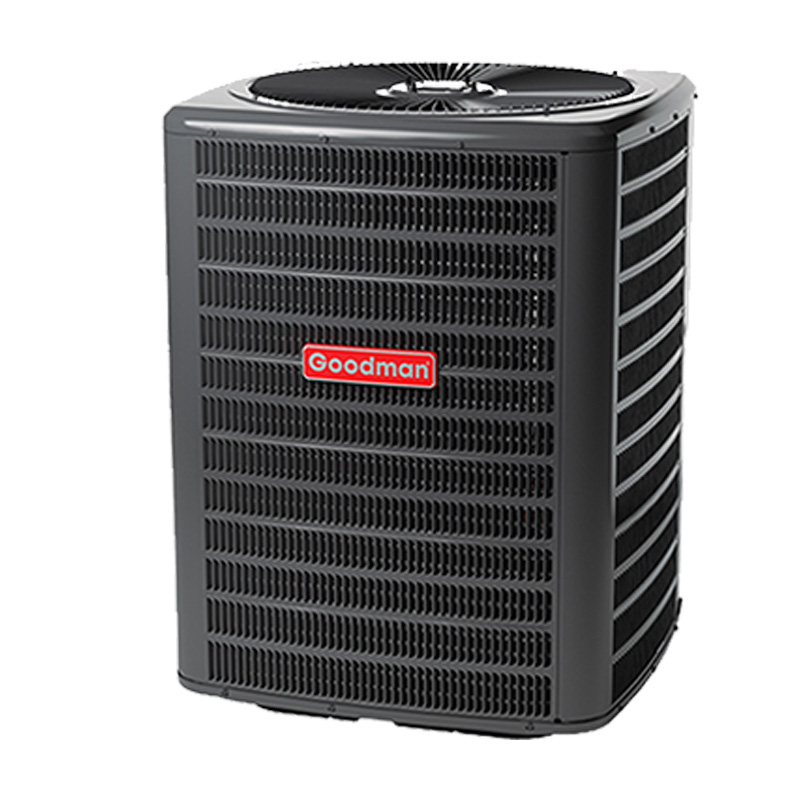
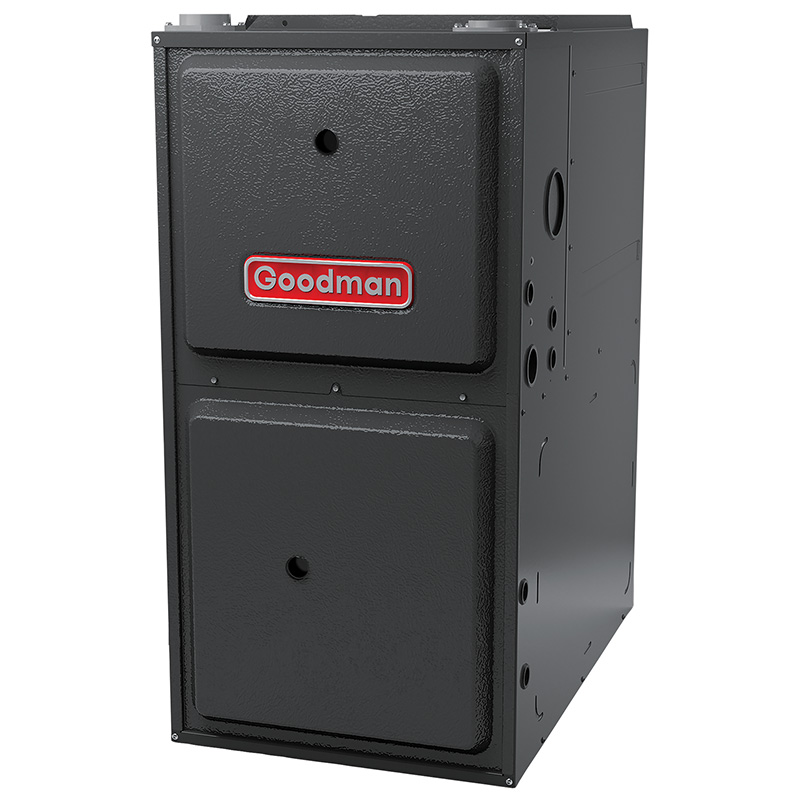
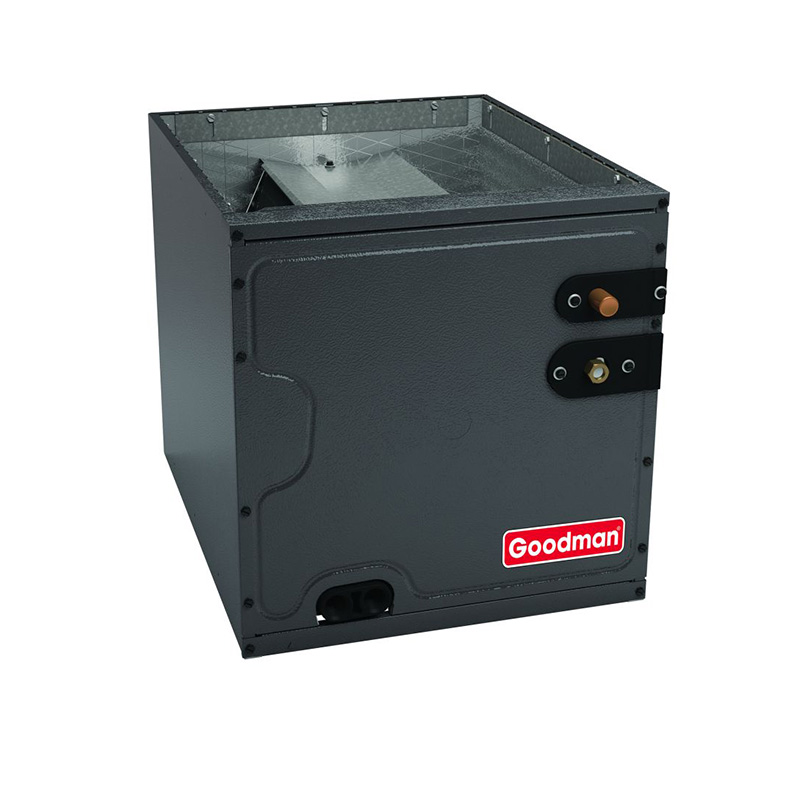
This Goodman bundle pairs a 3.5-ton, 13.4 SEER2 split-system air conditioner with a 100,000 BTU, 96% AFUE two-stage gas furnace in an upflow configuration. The 96% AFUE rating means roughly 96 cents of every fuel dollar becomes usable heat, putting this furnace solidly in the high-efficiency tier and well above the federal 80% minimum. The two-stage burner runs at low fire the majority of the time, reducing short-cycling, evening out temperatures room to room, and lowering wear on the heat exchanger compared with single-stage units. The multi-speed ECM blower motor adjusts airflow continuously, which also helps dehumidification performance during cooling season and keeps operating noise lower than a PSC motor would.
The 13.4 SEER2 cooling rating sits right at the current federal minimum for most U.S. regions, so this system meets compliance but does not exceed it. Homeowners in climates where cooling loads are modest relative to heating loads will get the most from the high-efficiency furnace, making this a reasonable fit for mixed or heating-dominant markets such as the Midwest, Great Plains, and Mountain states. The upflow cabinet orientation requires installation in a basement, utility room, or closet where supply air rises into the duct system above; it is not suited to crawlspace or attic installs without a different cabinet orientation. The system uses R-32 refrigerant, a lower global-warming-potential alternative to R-410A that is becoming standard across the industry as R-410A is phased down.
As a value-tier bundle from Goodman, this system costs noticeably less upfront than comparable Trane, Carrier, or Lennox equipment, typically 15 to 25 percent less. That price advantage is real, but so is the caveat: Goodman equipment is sensitive to installation quality, and a careless install can erode the value proposition quickly. Budgeting for a thorough commissioning by a certified technician is not optional with this brand.
This Goodman bundle delivers genuine high-efficiency heating at a price point well below premium brands, and the two-stage furnace with ECM blower is a meaningful step up from entry-level equipment. The 13.4 SEER2 cooling side is baseline rather than impressive, and long-term reliability depends heavily on who installs it and how well it is maintained through the first decade.
Overall score is the average of the five ratings above.
What we like
- 96% AFUE furnace rating cuts heating costs significantly versus 80% AFUE equipment
- Two-stage burner improves comfort and reduces heat exchanger stress over single-stage units
- ECM blower motor lowers electricity use and indoor noise during fan operation
- Price comes in 15 to 25 percent below comparable Trane, Lennox, and Carrier bundles
- R-32 refrigerant positions the system ahead of the R-410A phase-down requirements
Trade-offs
- 13.4 SEER2 is the minimum allowed in most regions, so cooling efficiency is not a selling point
- Dual-run capacitors are the most commonly documented failure on Goodman systems, typically requiring service around or before year 7
- Compressor lifespan averages 10 to 14 years versus 15 to 20 years for premium-brand compressors, which matters at a 3.5-ton load
- Evaporator coil leaks appear in a meaningful share of owner reports, and a minority of first-year refrigerant leaks have been traced to factory charge or install issues
What homeowners and pros say about Goodman
Homeowners who review Goodman equipment on ConsumerAffairs give it roughly 2.5 out of 5, a low score driven largely by owners reporting escalating repair costs after about year 7. The recurring complaint pattern centers on the cost of service calls rather than catastrophic failures, which suggests the equipment keeps running but demands more maintenance attention as it ages. Google dealer reviews, which capture a broader mix of install experiences, land around 3.8 out of 5, with affordability cited most often as the reason buyers chose the brand. The gap between those two scores reflects a real tension: buyers who stretch the budget to install a Goodman and then face a capacitor replacement or a coil leak feel the value proposition differently than buyers who factored in a service contingency from the start.
HVAC technicians who work on Goodman equipment regularly point to dual-run capacitors as the most predictable failure point, a part that is inexpensive and fast to swap but that tends to go before the ten-year mark on systems that run hard. Evaporator coil leaks are a secondary concern that shows up in enough owner accounts to be worth noting rather than dismissing. Compressor longevity sits in the 10 to 14 year range on average for Goodman, compared with 15 to 20 years cited for premium-brand compressors, a gap that becomes meaningful when you factor in the cost of a mid-life compressor replacement on a 3.5-ton system. For this specific bundle, where the furnace is a genuine high-efficiency two-stage unit, technicians tend to say the heating side holds up better than the cooling side, and that install quality remains the single biggest variable in how any Goodman system performs over its lifespan.
Sources: ConsumerAffairs Goodman owner reviews, AHRI Directory of Certified Product Performance, U.S. DOE appliance and equipment efficiency standards, Goodman product specification sheets.
What it costs to run
At 13.4 SEER2, cooling this 3.5-ton system for a typical 1200-hour cooling season at the U.S. average electricity rate of $0.17/kWh works out to roughly $639 per year in cooling, about $0 less per year than a minimum-efficiency 13.4 SEER2 unit of the same size. Your real cost depends on your climate and local rate.
Method: (42,000 BTU/hr ÷ 13.4 SEER2) × 1200 hours ÷ 1000 × $0.17/kWh. Rate source: U.S. EIA average; cooling hours: moderate-climate estimate.
How it compares
| Brand | Comparable model | SEER2 | Stage | Price position |
|---|---|---|---|---|
| Goodman | GSXH5 / GMVC96 Bundle (this system) | 13.4 | Two-stage | Value pick |
| Carrier | Comfort 24ACC636 / 59SC2 Bundle | 13.4 | Two-stage | Priced roughly 15 to 22 percent higher than this Goodman bundle |
| Trane | XR15 / S9V2 Bundle | 14.3 | Two-stage | Priced roughly 18 to 25 percent higher than this Goodman bundle |
| Lennox | Merit ML14XC1 / ML196V Bundle | 13.4 | Two-stage | Priced roughly 15 to 20 percent higher than this Goodman bundle |
Competitor rows are comparable single-stage units at similar efficiency; price is relative position, not a quote.
Questions about this system
Is 13.4 SEER2 going to cost me more on my electric bill than a higher-rated system?
Yes, compared with a 16 or 17 SEER2 unit, a 13.4 SEER2 system will use more electricity to move the same amount of cooling, and the gap widens the more hours per year your cooling runs. In heating-dominant climates where AC runs only a few months, the difference in annual operating cost is modest. In hot, humid climates where cooling runs five or six months, the payback math on a higher-SEER2 unit becomes more compelling.
What does two-stage heating actually mean day to day, and is it worth it over single-stage?
A two-stage furnace runs at a lower fire rate, typically around 65 percent of full capacity, most of the time, only stepping up to 100 percent on the coldest days. In practice this means longer, gentler heat cycles that distribute warmth more evenly, less temperature swings between thermostat calls, and reduced wear on the heat exchanger. For a 100,000 BTU furnace in a well-insulated home, the low stage handles the majority of heating days, which is where the efficiency and comfort gains come from.
What are the most likely repairs I should budget for over the first ten years?
Dual-run capacitors are the most commonly reported failure on Goodman equipment and are typically a straightforward, low-cost repair in the 300 to 600 dollar range. Evaporator coil leaks are a secondary concern that some owners report, and those repairs are more involved. A small minority of owners have reported refrigerant leaks within the first year, which usually points to a charging or installation issue rather than a manufacturing defect.
Why does R-32 matter, and does it affect who can service the system?
R-32 has a significantly lower global-warming potential than R-410A, which is being phased down under EPA regulations starting in 2025. Any EPA 608-certified technician can handle R-32, but because it is mildly flammable, some service procedures differ slightly from R-410A work. Most established HVAC contractors are already familiar with R-32 as more equipment using it enters the market, but it is worth confirming your service tech has handled it before booking a repair.
My house is around 2,200 square feet. Is 3.5 tons and 100,000 BTU the right size, or should I get a load calculation done?
Square footage is a rough guide only. A proper Manual J load calculation accounts for your insulation levels, window area and orientation, ceiling height, climate zone, and air sealing, and it is the only reliable way to confirm sizing. Oversizing a furnace or air conditioner causes short-cycling that reduces comfort and accelerates wear, so a load calculation by your installing contractor is strongly recommended before finalizing equipment selection.
Specifications
| Cooling capacity | 3.5 Ton |
| Efficiency | 13.4 SEER2 |
| Furnace output | 100000 BTU |
| Furnace efficiency | 96% AFUE |
| Configuration | Upflow |
| Refrigerant | R-32 |