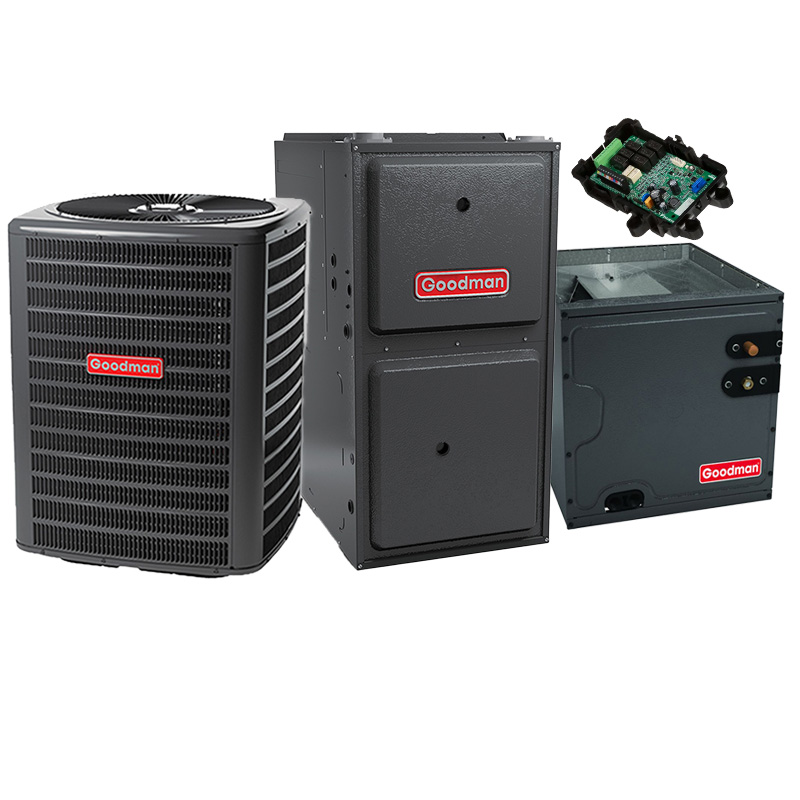
Goodman 3.5 Ton 13.4 SEER2 80000 BTU 96% AFUE Two-Stage Gas Furnace With R32 Air Condenser and Coil System – Upflow
View on AC Direct see your lowest price →Check current price on AC Direct →
Key features
- 3.5-ton cooling capacity suited to homes roughly 1,800 to 2,400 sq ft
- 13.4 SEER2 cooling efficiency meets current federal minimum standards
- 96% AFUE two-stage gas furnace reduces short-cycling and heating costs
- R-32 refrigerant with lower global warming potential than R-410A
- Upflow configuration designed for basement or ground-level air handler placement
- Matched coil included, simplifying system compatibility and warranty compliance
About this system
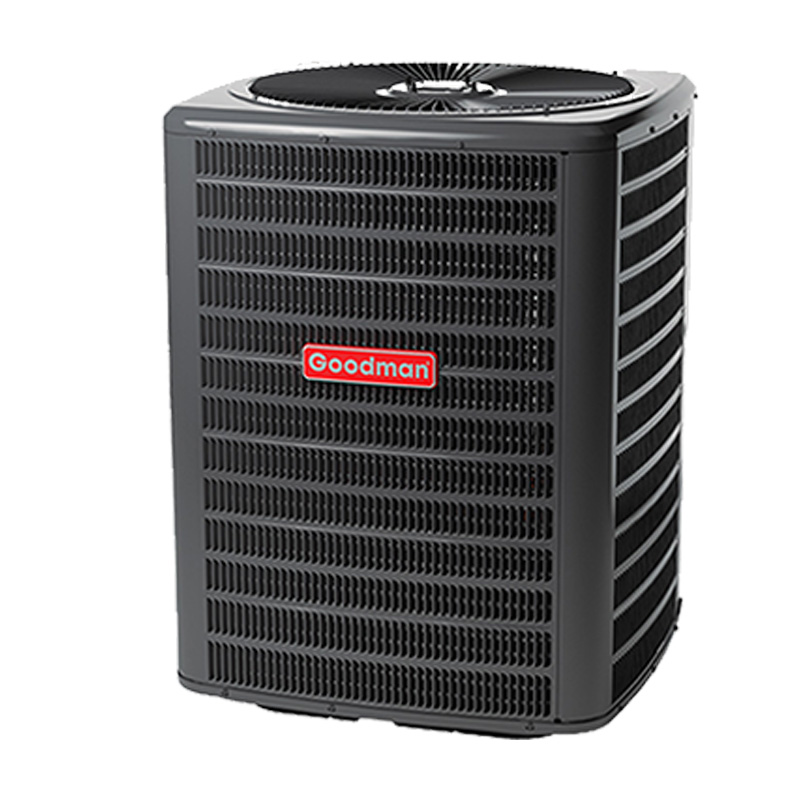
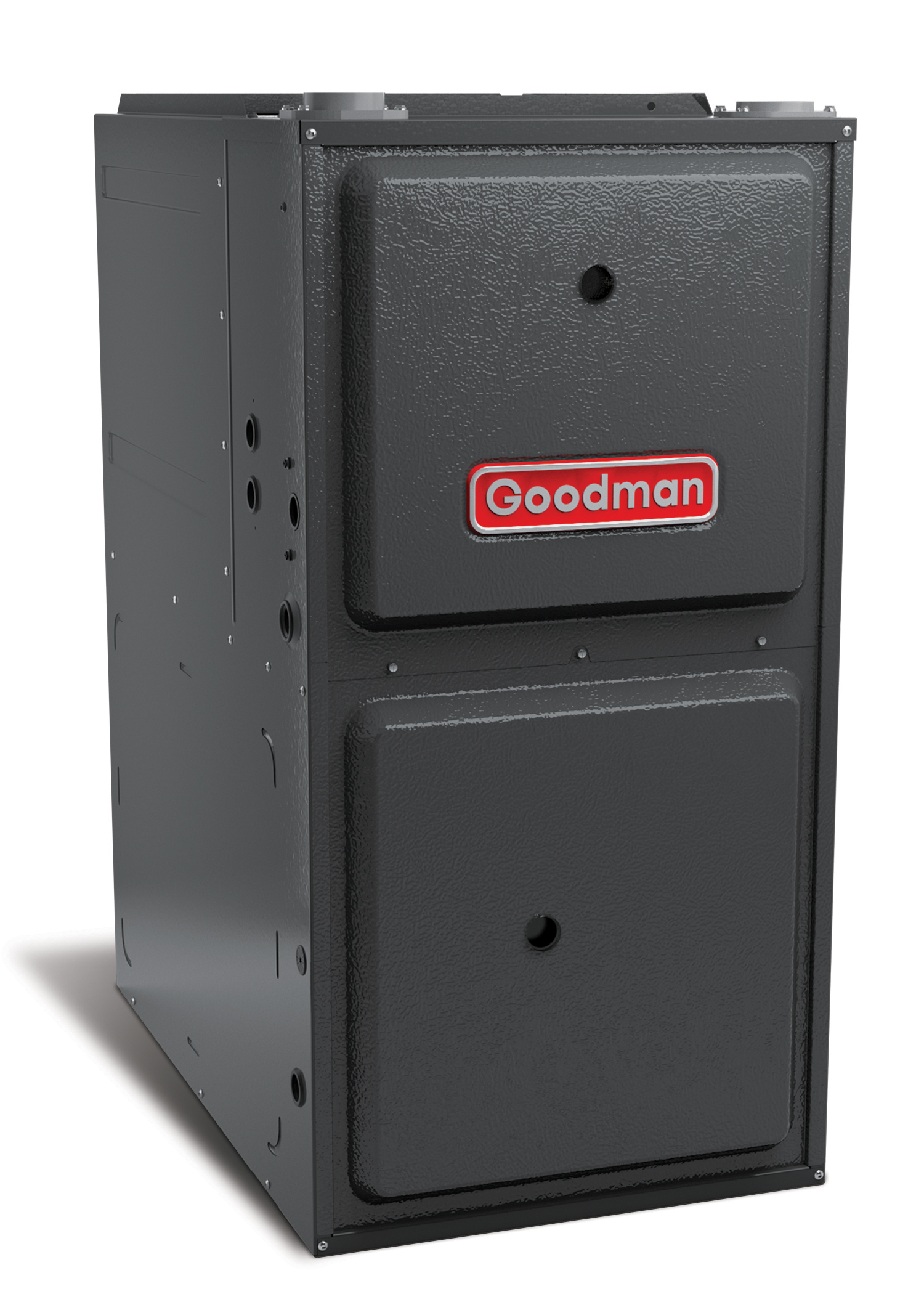
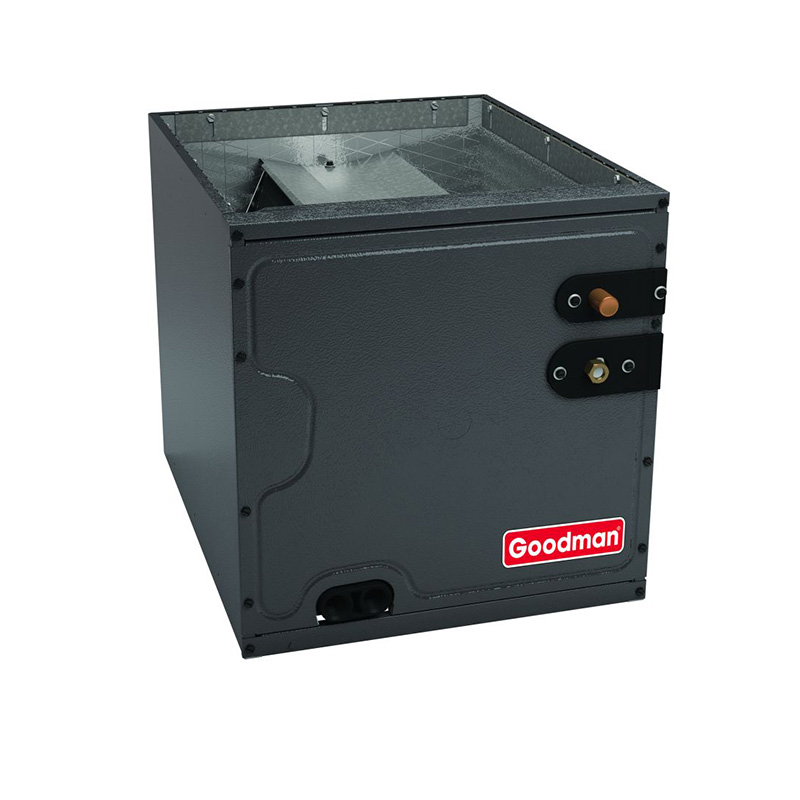
This Goodman system pairs a 3.5-ton R-32 air condenser and matching coil with an 80,000 BTU two-stage gas furnace in an upflow configuration, making it a practical choice for homes in the 1,800 to 2,400 square foot range that have a basement or ground-level mechanical room where air is delivered upward through the duct system. The 13.4 SEER2 rating sits at the federal minimum threshold for most U.S. climate zones, so it satisfies code without reaching into mid- or high-efficiency territory. The 96% AFUE furnace is a genuine strong point, recovering 96 cents of heat energy from every dollar of gas burned, which meaningfully lowers winter heating bills compared to an 80% AFUE unit.
The two-stage furnace operation is the standout feature here. Running on the lower stage during moderate weather reduces short-cycling, keeps humidity more even, and puts less wear on the heat exchanger than a single-stage unit hammering on and off all day. R-32 refrigerant has a lower global warming potential than the R-410A it replaces and is increasingly the industry direction, so the system is positioned for the near-term regulatory environment. That said, not every technician is yet certified to handle R-32, which is worth confirming before booking service. As a Goodman product, the price point runs roughly 15 to 25 percent below comparable Trane, Lennox, or Carrier systems, and the long-term value of that gap depends significantly on how carefully the system is commissioned at installation.
This system delivers a strong furnace in an affordable package that suits budget-conscious homeowners who prioritize heating efficiency and are willing to accept entry-level cooling performance and a brand reliability track record that trails premium competitors. The value proposition is real, but it comes with trade-offs in long-term compressor longevity and a greater dependence on installation quality than you would face with Trane or Carrier equipment at the same age.
Overall score is the average of the five ratings above.
What we like
- 96% AFUE furnace is a genuine high-efficiency rating that reduces gas bills
- Two-stage furnace operation improves comfort and reduces wear versus single-stage
- Priced 15 to 25 percent below comparable Trane, Lennox, and Carrier systems
- R-32 refrigerant aligns with the industry's regulatory direction
- Matched coil included, supporting warranty coverage and proper system sizing
Trade-offs
- 13.4 SEER2 is entry-level cooling efficiency; mid-efficiency options exist near this price
- Compressor lifespan averages 10 to 14 years versus 15 to 20 years for premium brands
- Dual-run capacitor failures and evaporator coil leaks are documented recurring issues
- R-32 servicing requires specifically certified technicians, who are less universally available than R-410A technicians
What homeowners and pros say about Goodman
Homeowners who have lived with Goodman equipment tend to split along familiar lines. Those who had a careful installation and kept up with annual maintenance often report years of uneventful service and point to the lower purchase price as money well spent on other home improvements. The Google dealer review average of around 3.8 out of 5, across hundreds of reviews per location, reflects this group and consistently names affordability as the reason they chose Goodman and would again. The harder-to-ignore feedback comes from the ConsumerAffairs channel, which scores Goodman at roughly 2.5 out of 5 and skews toward people who had problems: the recurring theme there is repair costs accelerating after roughly year seven, with dual-run capacitor failures being the most commonly cited issue and typically resolved for $300 to $600. Evaporator coil leaks also appear with enough regularity in owner accounts to be a real consideration, not an edge case.
HVAC technicians who work on Goodman equipment regularly tend to hold a pragmatic view of this particular system. The 96% AFUE two-stage furnace earns consistent respect as a solid performer at the price, and installers note that two-stage operation is genuinely better for homeowner comfort than a comparable single-stage unit. Where pros add caution is on the cooling side: compressor longevity averaging 10 to 14 years versus the 15 to 20 years typical of Trane, Carrier, or Lennox compressors means the system math changes if you keep the house for a long time. A minority of technicians also flag first-year refrigerant leaks, which they attribute almost entirely to installation or initial charge errors rather than manufacturing defects, reinforcing the consistent industry view that how this system is put in matters as much as what it is.
Sources: ConsumerAffairs Goodman owner reviews, AHRI Directory of Certified Product Performance, U.S. DOE appliance and equipment efficiency standards, Goodman product specification sheets.
What it costs to run
At 13.4 SEER2, cooling this 3.5-ton system for a typical 1200-hour cooling season at the U.S. average electricity rate of $0.17/kWh works out to roughly $639 per year in cooling, about $0 less per year than a minimum-efficiency 13.4 SEER2 unit of the same size. Your real cost depends on your climate and local rate.
Method: (42,000 BTU/hr ÷ 13.4 SEER2) × 1200 hours ÷ 1000 × $0.17/kWh. Rate source: U.S. EIA average; cooling hours: moderate-climate estimate.
How it compares
| Brand | Comparable model | SEER2 | Stage | Price position |
|---|---|---|---|---|
| Goodman | 3.5T 13.4 SEER2 / 96% AFUE Two-Stage Upflow (this system) | 13.4 | Two-stage furnace / single-stage condenser | Value pick |
| Carrier | Comfort 24ACC636 condenser with 58TP furnace | 14.0 | Single-stage condenser / two-stage furnace | Approximately 20 to 25 percent more than this Goodman system |
| Trane | XR14 condenser with S9V2 furnace | 14.0 | Single-stage condenser / two-stage furnace | Approximately 20 to 30 percent more than this Goodman system |
| Lennox | Merit ML14XC1 condenser with ML196E furnace | 13.8 | Single-stage condenser / two-stage furnace | Approximately 15 to 25 percent more than this Goodman system |
Competitor rows are comparable single-stage units at similar efficiency; price is relative position, not a quote.
Questions about this system
Why is the SEER2 only 13.4 if the AFUE is 96%? Is the cooling side cutting corners?
The furnace and the air conditioner are engineered separately, and Goodman put the efficiency investment in the heating side here. A 13.4 SEER2 condenser meets the current federal minimum and keeps the system price down, but if cooling is a large part of your annual runtime you can look at higher-SEER2 Goodman condensers paired with the same furnace for a moderate price increase.
What does two-stage mean for the furnace, and does it make a real difference?
Two-stage means the furnace fires at a lower capacity, typically around 65 percent, during mild weather and only steps up to full output when the house demands it. In practice this reduces the on-off cycling that causes temperature swings, helps manage humidity better in spring and fall, and puts less thermal stress on the heat exchanger over time compared to a single-stage unit.
Will any HVAC technician be able to service the R-32 refrigerant in this system?
Not automatically. R-32 requires technicians to hold specific certification beyond the standard EPA 608 license, and recovery equipment must be rated for it. Before buying, confirm that your installing contractor and at least one backup service company in your area are already equipped for R-32, because it is still less universally handled than R-410A.
Goodman gets mixed reviews online. Should I be worried about reliability?
The picture is uneven. ConsumerAffairs scores Goodman at roughly 2.5 out of 5, driven largely by owners reporting rising repair costs after about year seven, while Google dealer reviews average around 3.8 out of 5 with affordability as the most common positive. The documented failure patterns worth knowing are dual-run capacitor failures (typically a low-cost fix in the $300 to $600 range), evaporator coil leaks reported in a meaningful share of owner reviews, and compressor lifespans that average 10 to 14 years rather than the 15 to 20 years seen in premium brands. A well-executed installation and a preventive maintenance contract reduce but do not eliminate these risks.
Is the upflow configuration something I need to verify before ordering, or does it just describe the furnace position?
It is something you must verify before ordering. Upflow means the furnace draws return air from the bottom and pushes conditioned air upward into the duct system, which is correct for a basement or closet installation where ducts run overhead. If your mechanical room is in an attic or if your ducts feed down into the living space, you need a downflow or horizontal configuration, and the wrong orientation is not field-convertible on this model.
Specifications
| Cooling capacity | 3.5 Ton |
| Efficiency | 13.4 SEER2 |
| Furnace output | 80000 BTU |
| Furnace efficiency | 96% AFUE |
| Configuration | Upflow |
| Refrigerant | R-32 |