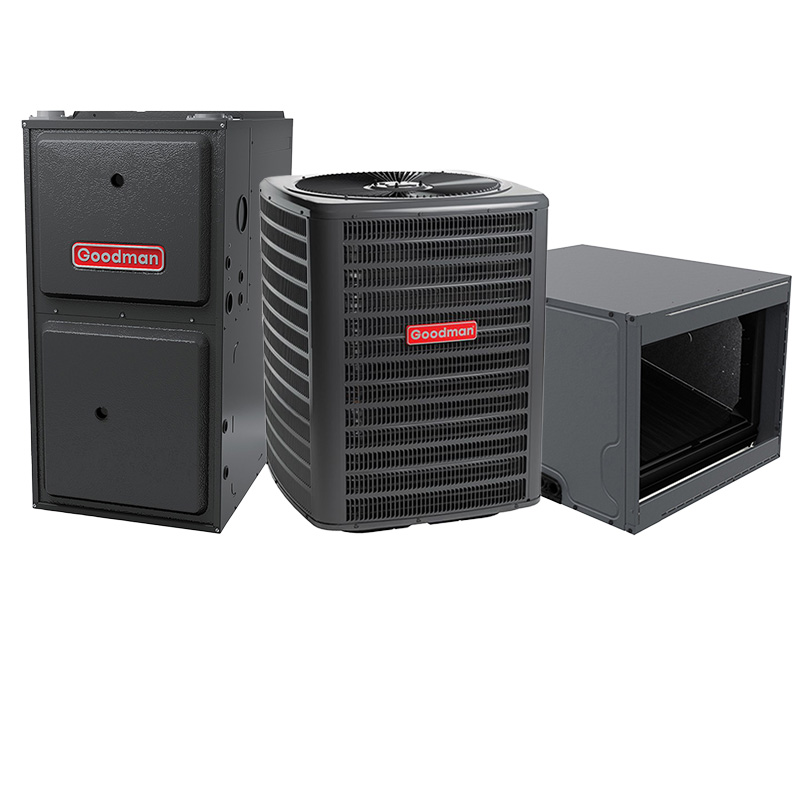
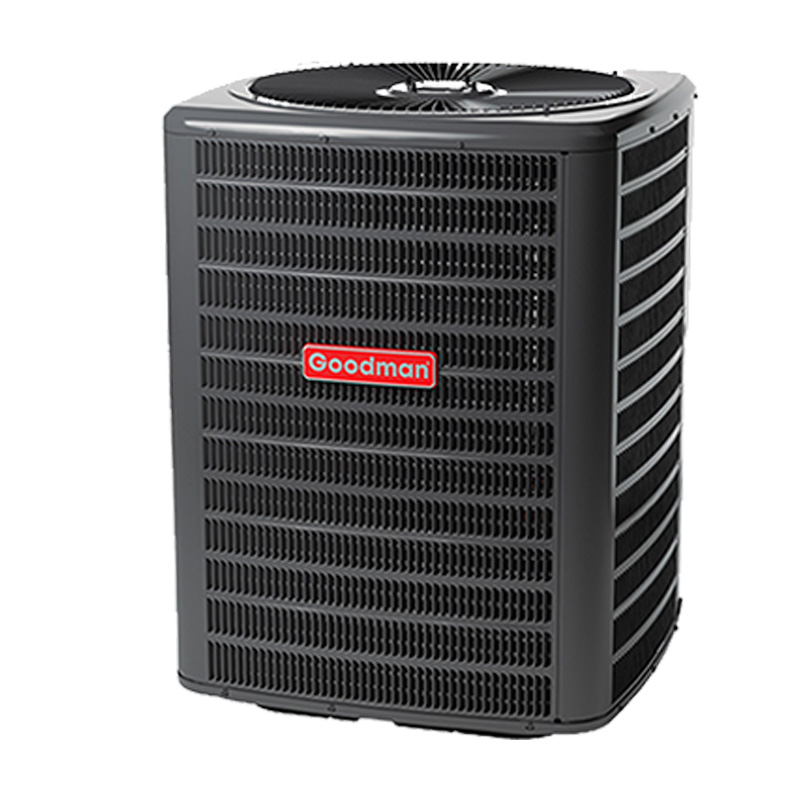
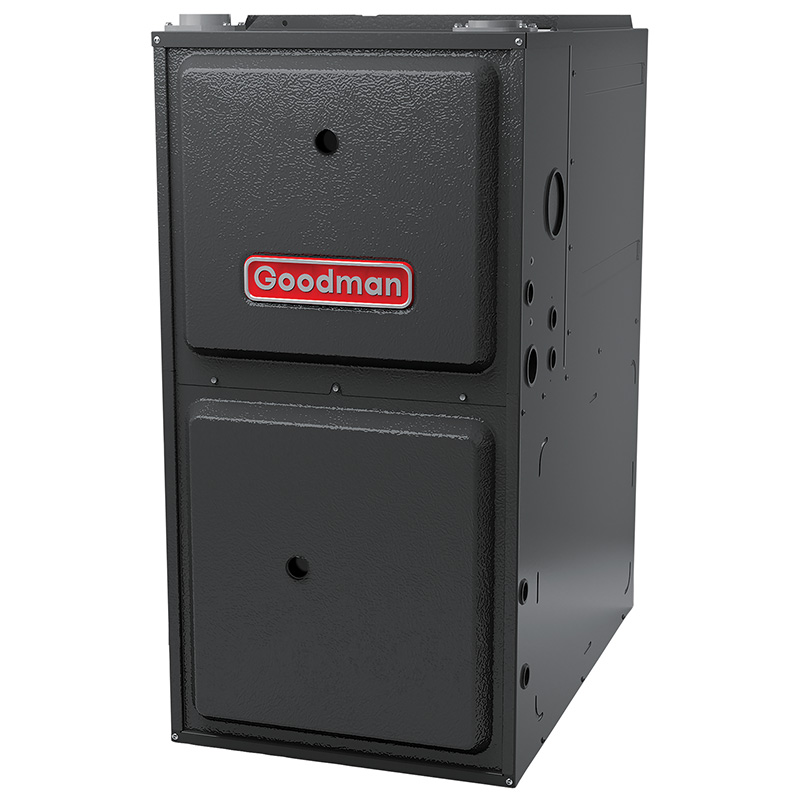
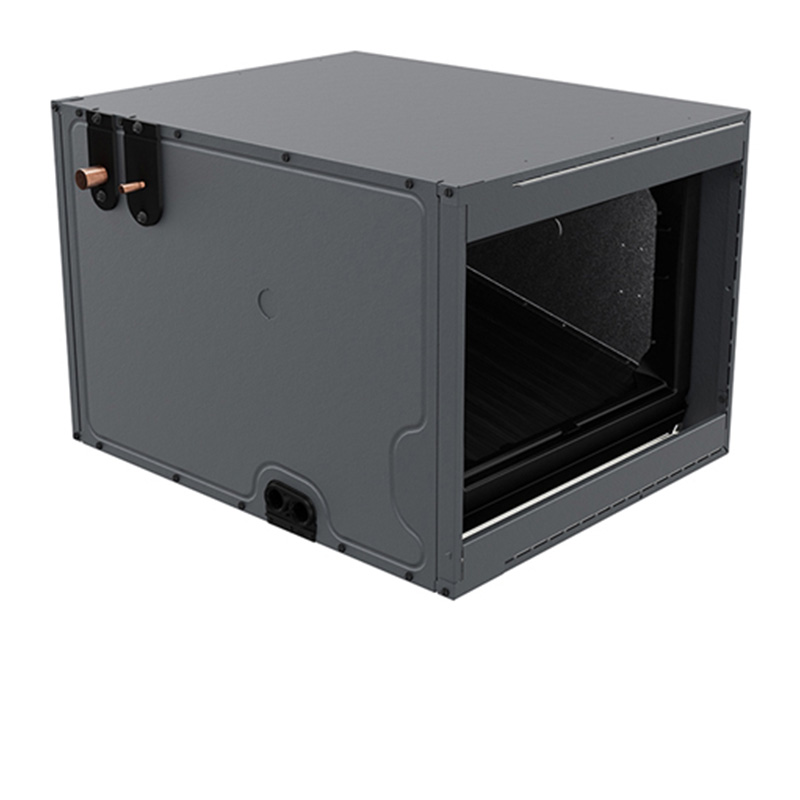
Goodman 3.5 Ton 13.4 SEER2 80000 BTU 96% AFUE Two Stage Multi-Speed ECM Gas Furnace System – Horizontal | R32
View on AC Direct see your lowest price →Check current price on AC Direct →
Key features
- 3.5-ton, 13.4 SEER2 cooling efficiency using R-32 refrigerant
- 80,000 BTU, 96% AFUE two-stage gas furnace for even, fuel-efficient heating
- ECM multi-speed blower motor reduces electricity use and improves airflow control
- Horizontal configuration designed for attic or side-entry mechanical room installs
- Two-stage operation runs at reduced capacity most of the time, limiting on-off cycling
- R-32 refrigerant with lower global-warming potential than legacy R-410A systems
About this system
This Goodman 3.5-ton horizontal system pairs a 13.4 SEER2 R-32 cooling unit with an 80,000 BTU, 96% AFUE two-stage gas furnace, making it a strong candidate for homes in the 1,800 to 2,400 square foot range that need both serious heating muscle and respectable cooling efficiency. The horizontal configuration is specifically suited to attic installs or tight crawlspace mechanical rooms where a vertical unit simply will not fit, so if your existing ductwork enters from the side, this package removes the need for costly air handler repositioning.
The two-stage furnace is one of the more meaningful upgrades in this price tier. Running at low fire (roughly 65 percent capacity) the majority of the time, it cycles less often than a single-stage unit, holds room temperature more evenly, and reduces cold-air blasts at startup. The ECM multi-speed blower reinforces that by ramping airflow gradually rather than hammering on at full speed, which also lowers operating electricity costs compared to a standard PSC motor. The 96% AFUE rating means nearly all combustion energy reaches your living space, a meaningful advantage in climates with long heating seasons. R-32 refrigerant carries a lower global-warming potential than the R-410A it replaces and is increasingly the industry standard heading into the next decade.
Goodman sits 15 to 25 percent below comparable Trane, Lennox, and Carrier systems in purchase price, which gives homeowners real budget room for a quality install or extended service contract. That trade-off is worth understanding clearly: Goodman’s longevity and reliability track record is not equal to those premium brands, and the quality of your installer matters more here than it would with a Trane or Lennox unit built to tighter tolerances. Buyers willing to invest in a certified installer and a proactive maintenance schedule tend to get solid results; those cutting corners on both often do not.
This system delivers genuinely good efficiency specs and a useful two-stage furnace at a price well below premium brands, making it a reasonable choice for budget-minded buyers who prioritize upfront savings. The horizontal configuration limits its audience to specific install situations, and Goodman's documented reliability history means owners should budget for possible mid-life repairs and not expect compressor longevity equal to Carrier or Trane. The value proposition holds up best when paired with a skilled installer and a maintenance plan.
Overall score is the average of the five ratings above.
What we like
- 96% AFUE furnace keeps heating bills low across cold-climate seasons
- Two-stage furnace and ECM blower provide more consistent comfort than single-stage alternatives at this price
- R-32 refrigerant is a future-ready choice as R-410A availability declines
- Priced 15 to 25 percent below comparable Trane, Lennox, and Carrier equipment, freeing budget for quality installation
- Horizontal cabinet solves attic and side-access installations without workarounds
Trade-offs
- Dual-run capacitors are the most frequently reported failure point, typically requiring a 300 to 600 dollar repair around or before year 7
- Evaporator coil leaks appear in a meaningful share of owner reports, a known Goodman pattern
- Compressor lifespan averages 10 to 14 years versus 15 to 20 years for premium brands, raising long-run cost-of-ownership questions
- A minority of owners report refrigerant leaks within the first year, most tied to install or initial charge quality rather than manufacturing
What homeowners and pros say about Goodman
Homeowners who research Goodman quickly run into a split picture. On ConsumerAffairs, the brand scores around 2.5 out of 5, though that platform draws disproportionately from frustrated owners filing complaints, and the recurring theme is repair costs that start climbing after roughly year 7 of ownership. Google dealer reviews tell a somewhat more balanced story, averaging around 3.8 out of 5 across hundreds of reviews per location, where affordability is the most frequently cited reason for satisfaction. For this specific two-stage, horizontal system, owners who had a clean install and kept up with annual maintenance generally report steady performance; those who hit problems most often point to the known failure points: dual-run capacitor failures (usually a fast, low-cost fix), evaporator coil leaks, and in a smaller group, refrigerant loss in the first year that investigators traced back to the install rather than the equipment itself.
HVAC technicians tend to describe Goodman as workable equipment that rewards a careful setup and penalizes a rushed one more than premium brands would. The two-stage furnace and ECM blower in this package are genuine comfort improvements over entry-level single-stage units, and pros generally credit Goodman for offering those features at an accessible price point. The candid caution from experienced installers is about compressor longevity: Goodman compressors averaging 10 to 14 years versus 15 to 20 for Trane or Carrier is a real gap that matters most to buyers planning a long stay in the home. For shorter-horizon owners or those replacing aging equipment on a firm budget, the value calculation often still works out, especially when the savings on the equipment purchase are put toward a quality installation and a service agreement.
Sources: ConsumerAffairs Goodman owner reviews, AHRI Directory of Certified Product Performance, U.S. DOE appliance and equipment efficiency standards, Goodman product specification sheets.
What it costs to run
At 13.4 SEER2, cooling this 3.5-ton system for a typical 1200-hour cooling season at the U.S. average electricity rate of $0.17/kWh works out to roughly $639 per year in cooling, about $0 less per year than a minimum-efficiency 13.4 SEER2 unit of the same size. Your real cost depends on your climate and local rate.
Method: (42,000 BTU/hr ÷ 13.4 SEER2) × 1200 hours ÷ 1000 × $0.17/kWh. Rate source: U.S. EIA average; cooling hours: moderate-climate estimate.
How it compares
| Brand | Comparable model | SEER2 | Stage | Price position |
|---|---|---|---|---|
| Goodman | 3.5T 13.4 SEER2 / 96% AFUE Two-Stage Horizontal R-32 | 13.4 | Two-stage | Value pick |
| Carrier | Performance 13 (24ACC3) with 59TP6 96% AFUE Two-Stage Furnace | 13.4 | Two-stage | Typically 15 to 25 percent more than this Goodman system |
| Trane | XR13c with S9V2 96% AFUE Two-Stage Furnace | 13.4 | Two-stage | Typically 15 to 25 percent more than this Goodman system |
| Lennox | Merit ML14XC1 with SLP98V 96% AFUE Two-Stage Furnace | 13.4 | Two-stage | Typically 15 to 25 percent more than this Goodman system |
Competitor rows are comparable single-stage units at similar efficiency; price is relative position, not a quote.
Questions about this system
Why does this system use a horizontal configuration and can I install it vertically instead?
The horizontal cabinet is designed to lie on its side, typically in an attic, crawlspace, or closet where ductwork connects from the end rather than the bottom. It is not rated for upflow or downflow vertical installation, so if your existing duct layout requires a vertical cabinet, you would need a different model rather than trying to adapt this one.
What does two-stage mean for a furnace and is it worth the step up from single-stage?
A two-stage furnace operates at a lower firing rate (roughly 65 percent capacity) during moderate weather and only kicks to full output on the coldest days. This reduces on-off cycling, keeps temperatures more even room to room, and usually lowers gas consumption compared to a single-stage unit that runs at 100 percent every time. For most climates with real heating seasons, the comfort improvement is noticeable and the efficiency gain is real.
How does the R-32 refrigerant in this system affect service and maintenance costs?
R-32 has a lower global-warming potential than R-410A and is increasingly stocked by HVAC suppliers, so availability is not a near-term concern. However, it is classified as mildly flammable (A2L), which means technicians need R-32 certification and appropriate equipment to service it. Most qualified HVAC companies are already certified, but it is worth confirming before you hire a contractor.
What are the most likely repairs I should budget for over the life of this Goodman system?
Based on documented owner reports, dual-run capacitors are the most common failure, typically a quick 300 to 600 dollar fix that often shows up around or before year 7. Evaporator coil leaks are a known issue in a meaningful share of Goodman units. Compressors on Goodman equipment average 10 to 14 years, shorter than the 15 to 20 year window seen with Trane or Carrier, so budgeting for a possible compressor replacement in the second decade is prudent.
Does Goodman's warranty cover parts and labor, and what do I need to do to keep it valid?
Goodman's registered limited warranty covers parts (typically 10 years on major components including the compressor and heat exchanger when registered within the required window after install), but labor is not included, meaning repair bills are on the homeowner. Registration must be completed by the homeowner after installation to activate the longer coverage period; without registration, coverage drops to a shorter baseline term. Always confirm current warranty terms directly with Goodman at the time of purchase, as coverage details can change.
Specifications
| Cooling capacity | 3.5 Ton |
| Efficiency | 13.4 SEER2 |
| Furnace output | 80000 BTU |
| Furnace efficiency | 96% AFUE |
| Configuration | Horizontal |
| Refrigerant | R-32 |