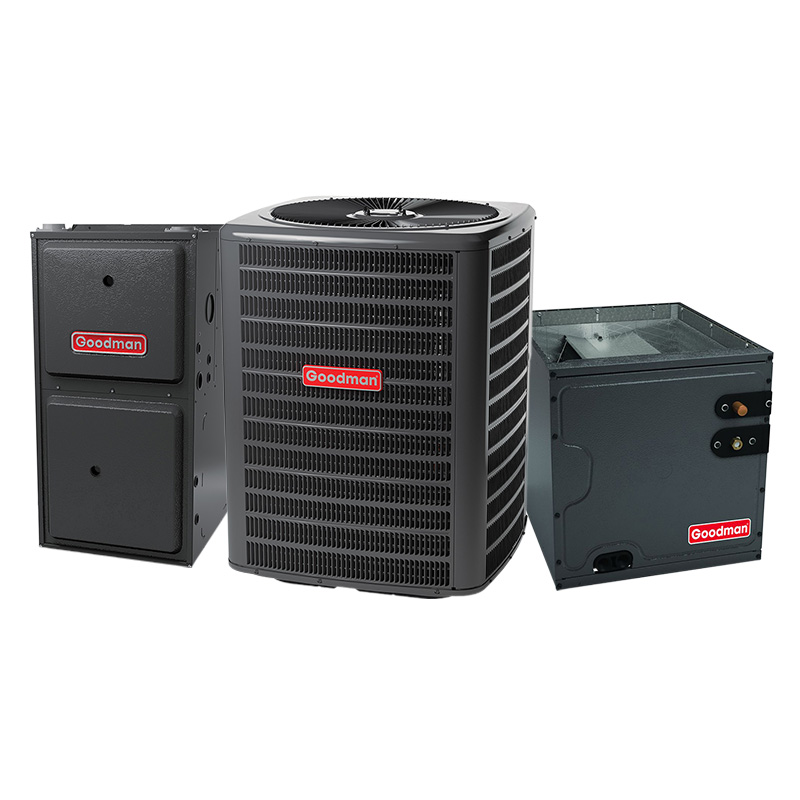
Goodman 3.5 Ton 13.4 SEER2 AC & Gas Furnace System – Multi-Speed, 80000 BTU Gas Furnace, 92% AFUE, Upflow, R32
View on AC Direct see your lowest price →Check current price on AC Direct →
Key features
- 3.5-ton cooling capacity suited for mid-size homes in moderate to warm climates
- 13.4 SEER2 efficiency meets current federal minimums for most U.S. regions
- 92% AFUE gas furnace recovers 92 cents of heating value per dollar of gas burned
- Multi-speed blower motor improves airflow distribution over single-speed designs
- R-32 refrigerant with lower global warming potential than R-410A
- Upflow configuration fits standard basement or closet vertical installations
About this system
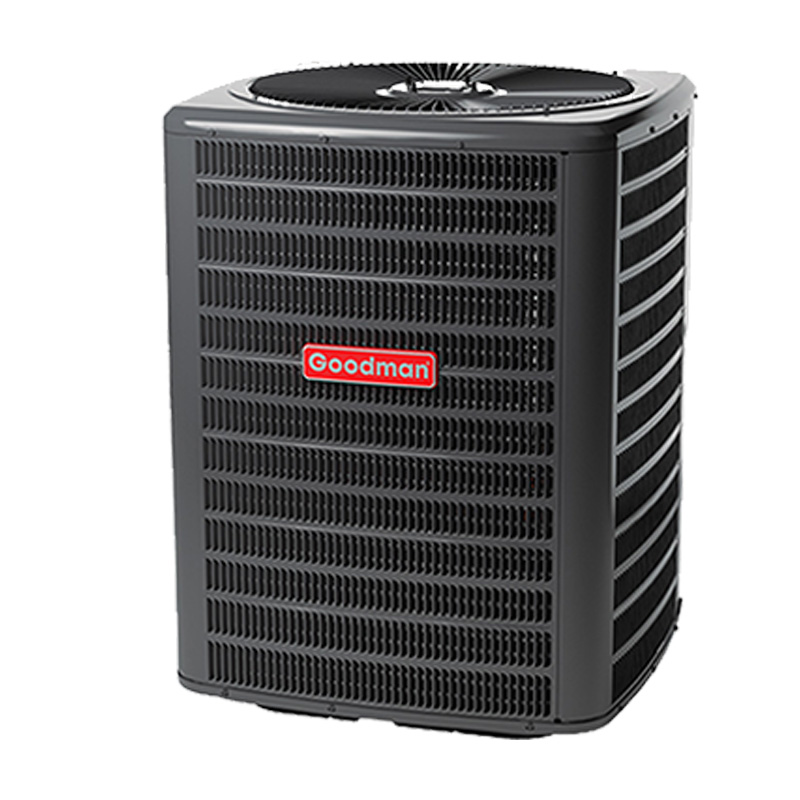
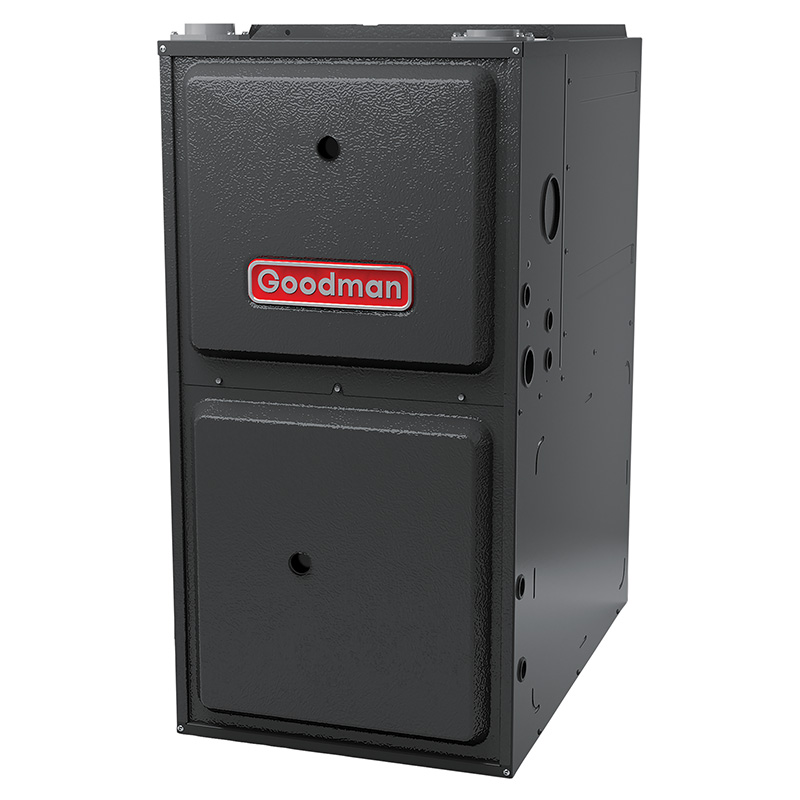
The Goodman GLXS3BN4210D pairs a 3.5-ton, 13.4 SEER2 single-stage air conditioner with an 80,000 BTU, 92% AFUE upflow gas furnace to cover homes roughly in the 1,800 to 2,400 square foot range, depending on climate, insulation quality, and local Manual J load calculations. The 92% AFUE rating means the furnace converts 92 cents of every gas dollar into usable heat, placing it in the mid-efficiency tier above the federal 80% minimums but a step below condensing 96-98% AFUE units that add a second heat exchanger and PVC venting. R-32 refrigerant runs at a lower global warming potential than legacy R-410A and is increasingly common as the industry moves away from older refrigerants.
The 13.4 SEER2 efficiency rating lands right at the current federal minimum for many U.S. climate zones, so this system is code-compliant but not a high-efficiency performer. The multi-speed blower in the furnace section helps with airflow balance and humidity management compared to a fixed-speed motor, though it does not provide the precise comfort control of a variable-speed unit. This configuration is best understood as a practical, budget-conscious replacement or new-install choice for homeowners who want a working system at a competitive price point rather than maximum long-term energy savings or premium comfort features.
The Goodman GLXS3BN4210D delivers a functional, code-compliant HVAC system at a price that is typically 15 to 25 percent below comparable Carrier, Trane, and Lennox offerings. It is a reasonable entry point for budget-focused buyers, but the brand's documented reliability record and the single-stage, minimum-efficiency specs mean owners should go in with realistic expectations about long-term costs and comfort ceilings.
Overall score is the average of the five ratings above.
What we like
- Purchase price typically 15 to 25 percent below premium brand equivalents at similar specs
- 92% AFUE furnace meaningfully reduces gas waste compared to 80% AFUE baseline units
- Multi-speed blower provides better humidity and airflow control than fixed-speed motors
- R-32 refrigerant is a forward-looking choice as the industry phases out higher-GWP options
- Upflow configuration is widely understood by technicians, simplifying future service calls
Trade-offs
- 13.4 SEER2 is the minimum compliant efficiency tier, so energy savings versus premium systems are limited
- Dual-run capacitors are the most commonly reported failure point, typically surfacing within the first several years
- Compressor lifespan averages 10 to 14 years versus 15 to 20 years seen in premium brands, raising long-term replacement risk
- A minority of owners report refrigerant leaks within the first year, often traced to install quality or factory charge issues
What homeowners and pros say about Goodman
Goodman carries a ConsumerAffairs rating of roughly 2.5 out of 5, a channel that skews toward frustrated owners, where the recurring theme is repair costs climbing after about year seven of ownership. Google dealer reviews paint a more moderate picture at around 3.8 out of 5 across multiple locations, where the most consistent praise centers on affordability at the time of purchase. The honest read from both channels is that Goodman attracts buyers who need to control upfront costs and accepts that the brand’s long-term ownership experience is more variable than premium alternatives.
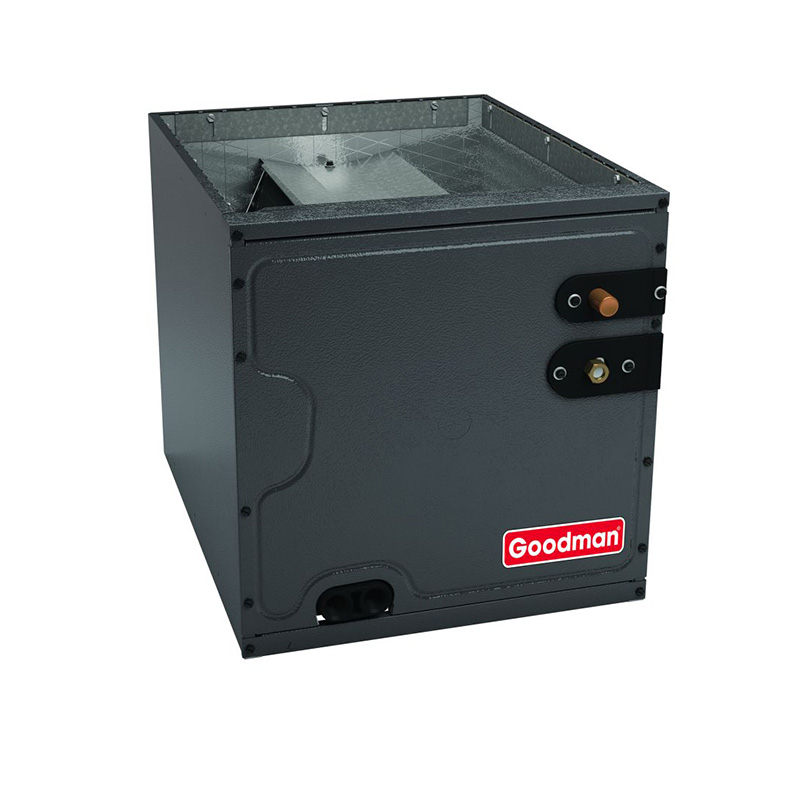
HVAC technicians who service Goodman equipment tend to echo what the data shows. The dual-run capacitor is the failure mode they see most often on these units, a relatively inexpensive fix in the 300 to 600 dollar range but one that can recur. Evaporator coil leaks appear in a meaningful share of owner accounts, and compressor lifespans averaging 10 to 14 years fall noticeably short of the 15 to 20 years technicians associate with Carrier, Trane, and Lennox compressors. Pros also consistently point out that install quality is the single largest factor in how a Goodman unit performs and how long it lasts, making contractor selection as important as the equipment choice itself for this particular brand.
Sources: ConsumerAffairs Goodman owner reviews, AHRI Directory of Certified Product Performance, U.S. DOE appliance and equipment efficiency standards, Goodman product specification sheets.
What it costs to run
At 13.4 SEER2, cooling this 3.5-ton system for a typical 1200-hour cooling season at the U.S. average electricity rate of $0.17/kWh works out to roughly $639 per year in cooling, about $0 less per year than a minimum-efficiency 13.4 SEER2 unit of the same size. Your real cost depends on your climate and local rate.
Method: (42,000 BTU/hr ÷ 13.4 SEER2) × 1200 hours ÷ 1000 × $0.17/kWh. Rate source: U.S. EIA average; cooling hours: moderate-climate estimate.
How it compares
| Brand | Comparable model | SEER2 | Stage | Price position |
|---|---|---|---|---|
| Goodman | GLXS3BN4210D | 13.4 | Single-stage | Value pick |
| Carrier | Comfort 13 Series (24ACC3) | 13.4 | Single-stage | Typically 15 to 25 percent more than Goodman |
| Trane | XR13 Series | 13.4–14.0 | Single-stage | Typically 15 to 25 percent more than Goodman |
| Lennox | Merit ML14XC1 Series | 14.0 | Single-stage | Typically 15 to 25 percent more than Goodman |
Competitor rows are comparable single-stage units at similar efficiency; price is relative position, not a quote.
Questions about this system
Is 13.4 SEER2 going to pass inspection in my state or county?
13.4 SEER2 meets the current federal minimum efficiency standard for most U.S. climate zones established under the 2023 DOE rules. However, a handful of states and local jurisdictions have stricter requirements, so confirm the minimum for your specific location with your installer or permit office before purchasing.
Why are some early owner reviews mentioning refrigerant leaks on a brand-new Goodman system?
Documented owner feedback for Goodman includes a minority of cases where refrigerant leaks appear within the first year. These are typically attributed to install-side issues such as improper line set connections, inadequate leak testing, or incorrect factory charge handling during commissioning rather than a universal manufacturing defect. Hiring a licensed, experienced installer and requesting a post-install leak check reduces this risk considerably.
How often should I expect to replace the dual-run capacitor on this unit?
Dual-run capacitors are the most commonly reported failure point in Goodman air conditioners. They can fail anywhere from a few years to a decade into service and are generally a straightforward, low-cost repair in the 300 to 600 dollar range including labor. Keeping a service agreement in place makes it easier to catch a weakening capacitor before it causes a compressor overload.
What does upflow configuration mean and will it work with my existing ductwork?
Upflow means the furnace draws return air in from the bottom and discharges conditioned air upward into the supply plenum, which is the standard orientation for systems installed in basements, utility rooms, or closets where ducts run overhead. If your existing system is also upflow and the tonnage and BTU sizing are compatible, the swap is usually straightforward, but a load calculation by your installer is still recommended.
What is the realistic service life of this system compared to a Carrier or Trane at the same price tier?
Goodman compressors average roughly 10 to 14 years in real-world use, compared to 15 to 20 years typically reported for premium brands like Carrier, Trane, and Lennox. The furnace heat exchanger can last longer if maintained properly. The gap in compressor longevity is a genuine trade-off to weigh against the lower upfront cost, especially if you plan to stay in the home long term.
Specifications
| Cooling capacity | 3.5 Ton |
| Efficiency | 13.4 SEER2 |
| Furnace output | 80000 BTU |
| Furnace efficiency | 92% AFUE |
| Configuration | Upflow |
| Refrigerant | R-32 |
| Model | GLXS3BN4210D |