Goodman 3.5 Ton 13.4 SEER2 AC With 80000 BTU 96% AFUE 2-Stage Variable-Speed ECM Gas Furnace System – Upflow | R32
View on AC Direct see your lowest price →Check current price on AC Direct →
Key features
- 3.5-ton cooling capacity, upflow configuration, uses R-32 refrigerant
- 13.4 SEER2 cooling efficiency meets 2023 federal minimum standards
- 96% AFUE two-stage gas furnace reduces fuel waste to roughly 4%
- Variable-speed ECM blower motor lowers electricity use and noise at part-load
- Two-stage burner runs at low fire most days for steadier temperatures
- Matched system arrives as a verified coil-compatible AC and furnace bundle
About this system
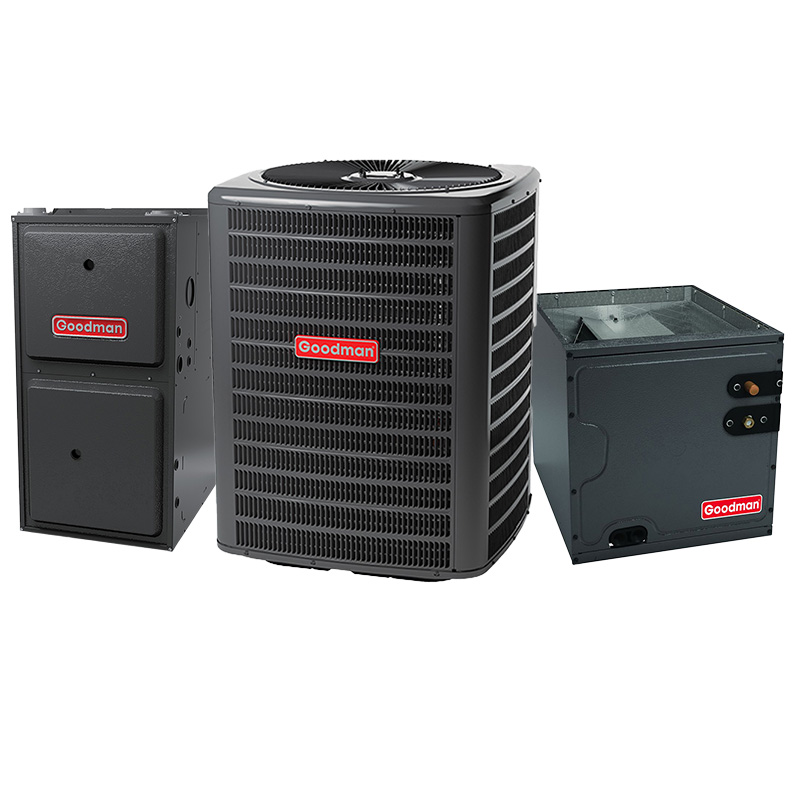
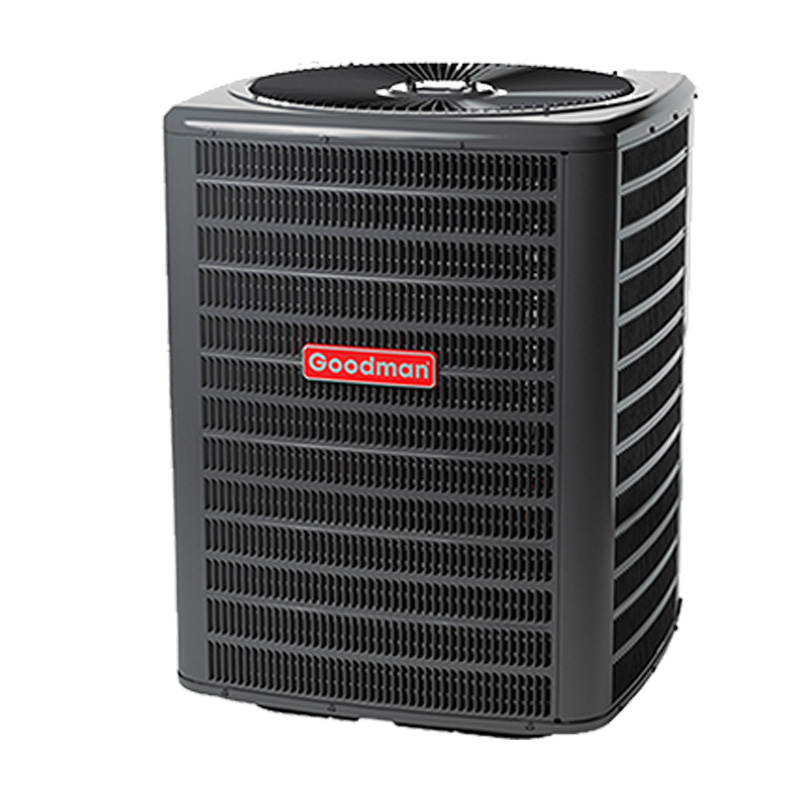
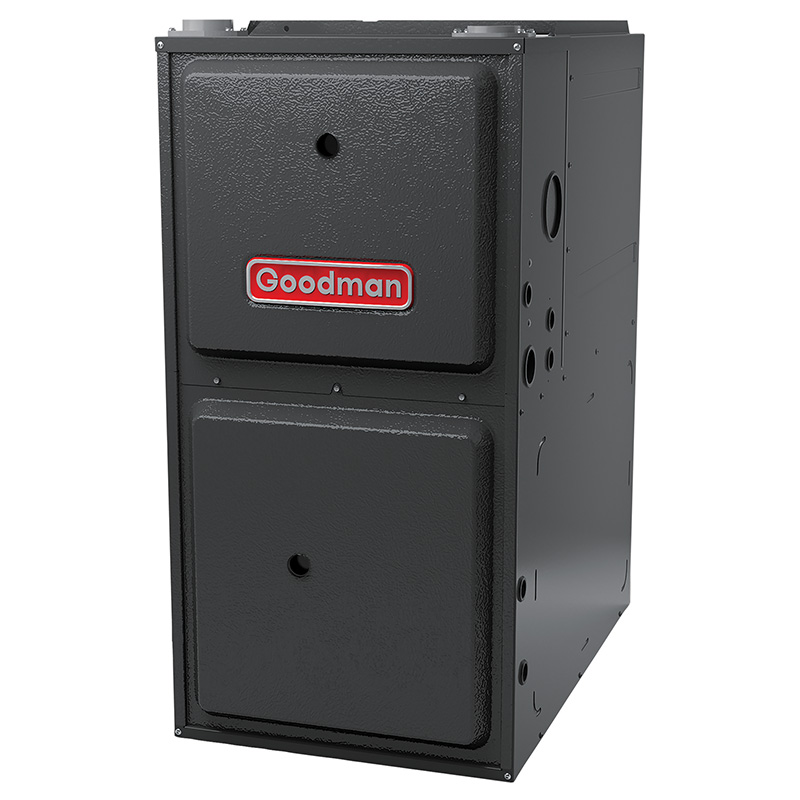
This Goodman bundle pairs a 3.5-ton, 13.4 SEER2 air conditioner with an 80,000 BTU, 96% AFUE two-stage, variable-speed ECM gas furnace in an upflow configuration. The 96% AFUE rating means only about 4 cents of every dollar spent on gas is lost to exhaust, putting this firmly in the high-efficiency tier and making it eligible for federal tax credits under current energy efficiency guidelines. The two-stage burner and variable-speed ECM blower work together to run at a lower output level most of the time, reducing temperature swings, cutting short-cycling, and moving air more quietly than a single-stage system. R-32 refrigerant, the newer lower-global-warming-potential alternative to R-410A, is increasingly standard and will remain serviceable as the industry moves away from older refrigerants.
At 3.5 tons, this system targets homes roughly in the 1,600 to 2,200 square foot range, though actual sizing depends on insulation, climate zone, window area, and a proper Manual J load calculation. The upflow configuration means the furnace discharges conditioned air upward through ductwork above it, the most common layout in homes with a basement or a ground-floor utility closet feeding a ceiling duct system. The 13.4 SEER2 rating sits at the current federal minimum for most of the country and is honest baseline efficiency, not a premium rating, so buyers in hot climates who run the AC heavily may want to compare operating costs against a higher-SEER2 option before committing.
This Goodman bundle delivers genuinely high furnace efficiency and two-stage comfort at a price point that undercuts Trane, Lennox, and Carrier by a meaningful margin. The trade-off is a brand whose long-term reliability record, particularly around dual-run capacitors, evaporator coil leaks, and compressor longevity, trails the premium tier. Buyers who prioritize low upfront cost and plan to keep up with preventive maintenance will get solid value here; those who want a system they can largely ignore for 18 to 20 years may find the premium brands worth the extra spend.
Overall score is the average of the five ratings above.
What we like
- 96% AFUE is among the highest furnace efficiency tiers available, cutting annual heating bills substantially versus 80% AFUE units
- Two-stage, variable-speed operation improves comfort and humidity control compared to single-stage systems at similar prices
- Priced roughly 15 to 25 percent below comparable Carrier, Trane, and Lennox equipment
- R-32 refrigerant is future-friendly as the industry phases out higher-GWP refrigerants
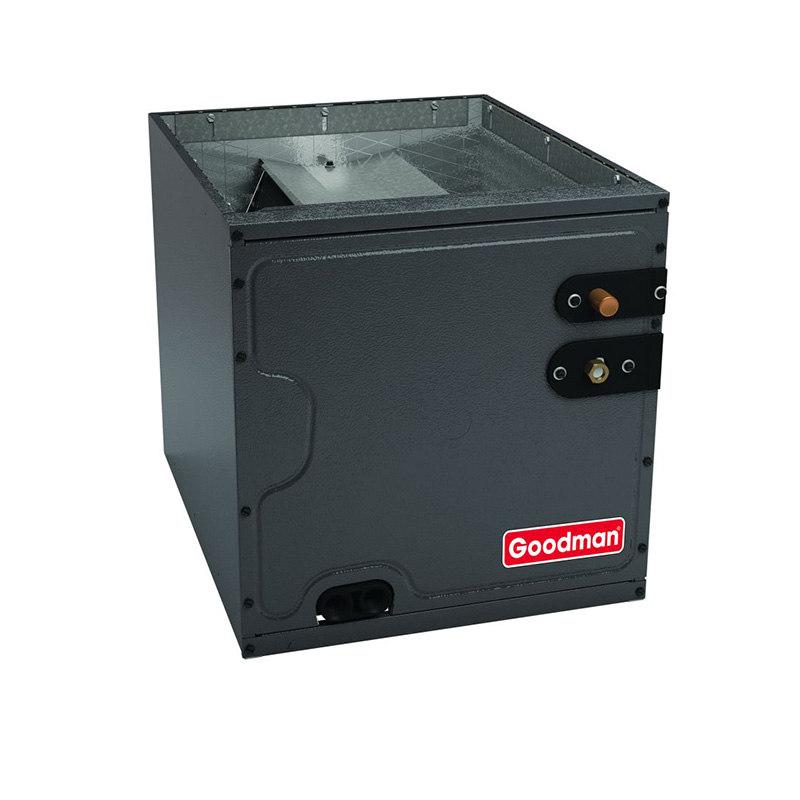
- Matched bundle reduces coil compatibility guesswork and can simplify permitting and warranty claims
Trade-offs
- Compressor lifespan averages 10 to 14 years versus 15 to 20 years reported for premium brands, a real long-run cost consideration
- Dual-run capacitor failures are the most commonly reported repair, typically arising before year 7 and costing $300 to $600 per event
- Evaporator coil leaks appear in a notable share of owner feedback, potentially requiring refrigerant recharge or coil replacement out of warranty
- 13.4 SEER2 is the federal baseline, not a high-efficiency cooling rating, so operating costs in hot climates may be higher than mid-tier or premium systems
What homeowners and pros say about Goodman
Homeowners who research Goodman online encounter a split picture. On ConsumerAffairs, the brand sits at roughly 2.5 out of 5, a low score shaped by the platform’s complaint-heavy audience, where the recurring theme is repair bills climbing after about year seven. Google dealer reviews tell a softer story, averaging around 3.8 out of 5 across hundreds of reviews per location, with affordability cited most often as the reason buyers are satisfied. For this specific system, the two-stage furnace and variable-speed blower tend to draw fewer complaints than basic single-stage Goodman equipment, partly because they run more gently and reduce thermal stress on components. That said, the brand’s documented weak points apply here the same as on any Goodman: dual-run capacitors are the most frequently reported failure, evaporator coil leaks appear in a meaningful share of long-term owner reviews, and compressor lifespan typically lands in the 10 to 14 year range rather than the 15 to 20 years associated with Trane, Lennox, or Carrier.
HVAC technicians tend to have a pragmatic view of Goodman. Many will install it without hesitation for customers who are price-constrained, while noting that installation quality matters more with this brand than with premium equipment that has tighter factory tolerances. Technicians also flag that the capacitor replacement issue is so predictable that proactively swapping it around year five or six is a reasonable preventive step that costs little compared to an emergency no-cool call in August. For this bundle specifically, the 96% AFUE furnace is the standout component and commands genuine respect in the field; the cooling side at 13.4 SEER2 is functional but unremarkable. Buyers who get a careful installation, register the warranty promptly, and schedule annual maintenance checks tend to report outcomes that align with the more favorable end of the Google dealer ratings rather than the ConsumerAffairs complaints.
Sources: ConsumerAffairs Goodman owner reviews, AHRI Directory of Certified Product Performance, U.S. DOE appliance and equipment efficiency standards, Goodman product specification sheets.
What it costs to run
At 13.4 SEER2, cooling this 3.5-ton system for a typical 1200-hour cooling season at the U.S. average electricity rate of $0.17/kWh works out to roughly $639 per year in cooling, about $0 less per year than a minimum-efficiency 13.4 SEER2 unit of the same size. Your real cost depends on your climate and local rate.
Method: (42,000 BTU/hr ÷ 13.4 SEER2) × 1200 hours ÷ 1000 × $0.17/kWh. Rate source: U.S. EIA average; cooling hours: moderate-climate estimate.
How it compares
| Brand | Comparable model | SEER2 | Stage | Price position |
|---|---|---|---|---|
| Goodman | 3.5T 13.4 SEER2 AC + 96% AFUE 2-Stage Variable-Speed Furnace (this system) | 13.4 | Two-stage cooling / Two-stage heating with variable-speed blower | Value pick |
| Carrier | Comfort 24ACC636 with 59TP6 96% AFUE furnace | ~13.4 to 14 | Single-stage cooling / Two-stage heating | Typically 15 to 25 percent more than this Goodman bundle |
| Trane | XR14c with S9X2 96% AFUE furnace | ~14 | Single-stage cooling / Two-stage heating | Typically 15 to 25 percent more than this Goodman bundle |
| Lennox | Merit ML14XC1 with ML196E 96% AFUE furnace | ~14 | Single-stage cooling / Two-stage heating | Typically 15 to 25 percent more than this Goodman bundle |
Competitor rows are comparable single-stage units at similar efficiency; price is relative position, not a quote.
Questions about this system
Is 13.4 SEER2 going to cost me more to run than a higher-rated system?
Yes, relative to units rated 16 SEER2 or higher, a 13.4 SEER2 system will use more electricity per hour of cooling. In a mild climate or a well-insulated home the gap is modest, but in a hot climate with a long cooling season the annual difference can be meaningful enough to affect the total cost of ownership over 10 to 12 years. Running the numbers against a higher-SEER2 option with your local electricity rate is worth doing before you buy.
What does the two-stage furnace actually do for comfort compared to a single-stage unit?
A two-stage burner runs at a lower heat output level, typically around 65 to 70 percent capacity, for most ordinary heating days and only steps up to full output in very cold conditions. This means the furnace cycles on for longer, more gradual runs rather than short blasts of high heat, which results in more even temperatures room to room and less dramatic temperature swings. Combined with the variable-speed ECM blower, it also tends to run more quietly.
What are the most likely repairs I should budget for over the life of this system?
Based on documented Goodman failure patterns, dual-run capacitor replacement is the most common repair, usually in the $300 to $600 range and most likely to appear after year 5 or 6. Evaporator coil leaks are a secondary concern and can be more expensive depending on whether a recharge or full coil replacement is needed. Compressor replacement, if needed, is a major expense; Goodman compressors tend to average 10 to 14 years of service life.
Does this system qualify for the federal energy efficiency tax credit?
The 96% AFUE furnace meets the efficiency threshold for the federal 25C tax credit as of current IRS guidance, which can cover up to 30 percent of the cost of qualifying equipment up to the annual cap. The 13.4 SEER2 AC portion is at the federal minimum and may or may not meet the credit threshold depending on updated IRS efficiency requirements, so confirm the specific models and current credit rules with your installer or a tax professional before filing.
Why does a minority of owners report refrigerant leaks in the first year, and how do I protect against that?
First-year refrigerant leaks with Goodman equipment are typically traced to installation errors, specifically improper line-set brazing, loose fittings, or an incorrect refrigerant charge rather than a defect in the equipment itself. The best protection is hiring an experienced, licensed HVAC contractor who has installed R-32 systems before, requesting a nitrogen pressure test before the system is charged, and verifying the superheat and subcooling readings are within spec at startup.
Specifications
| Cooling capacity | 3.5 Ton |
| Efficiency | 13.4 SEER2 |
| Furnace output | 80000 BTU |
| Furnace efficiency | 96% AFUE |
| Configuration | Upflow |
| Refrigerant | R-32 |