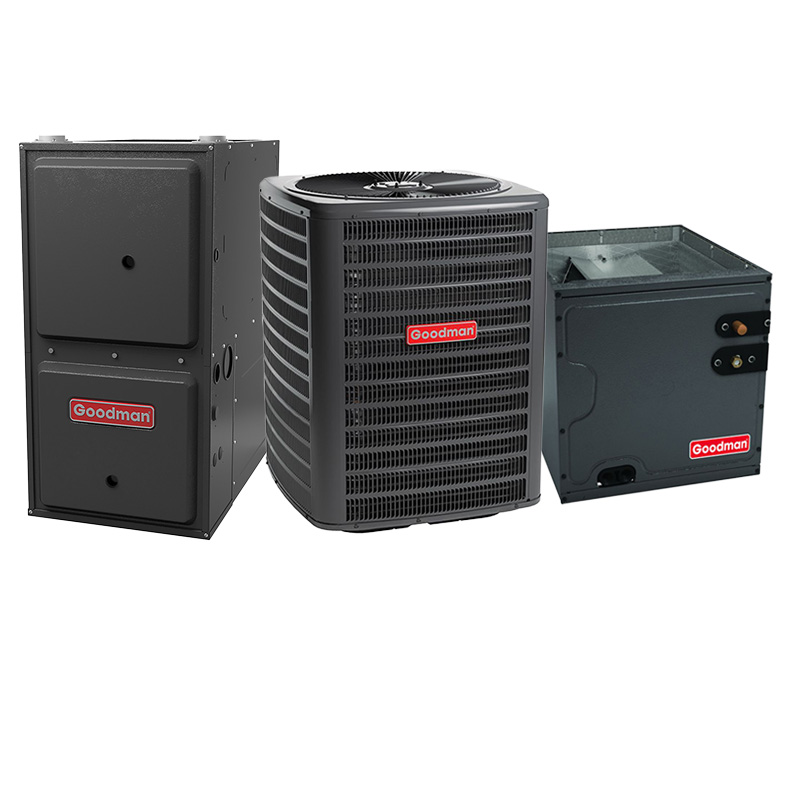
Goodman 3.5 Ton 13.6 SEER2 100000 BTU 96% AFUE Two Stage Multi-Speed ECM Gas Furnace System – Downflow | R32
View on AC Direct see your lowest price →Check current price on AC Direct →
Key features
- 3.5-ton cooling capacity rated at 13.6 SEER2 for mid-efficiency performance under DOE 2023 test standards
- 96% AFUE two-stage gas furnace with 100,000 BTU output for high fuel efficiency in cold climates
- Downflow-only configuration designed for floor-level duct systems in closets or utility spaces above crawlspaces
- Multi-speed ECM blower motor reduces electrical draw and fan noise during extended blower operation
- R-32 refrigerant with lower global-warming potential, aligned with current EPA phase-out of R-410A
- Two-stage burner operation runs at reduced capacity on mild days to limit short-cycling and temperature swings
About this system
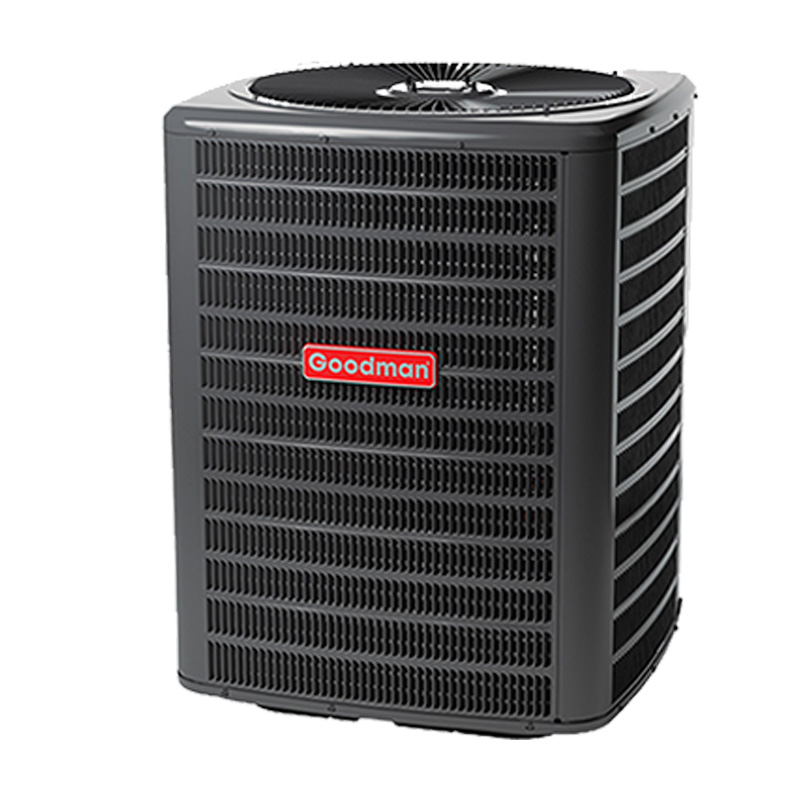
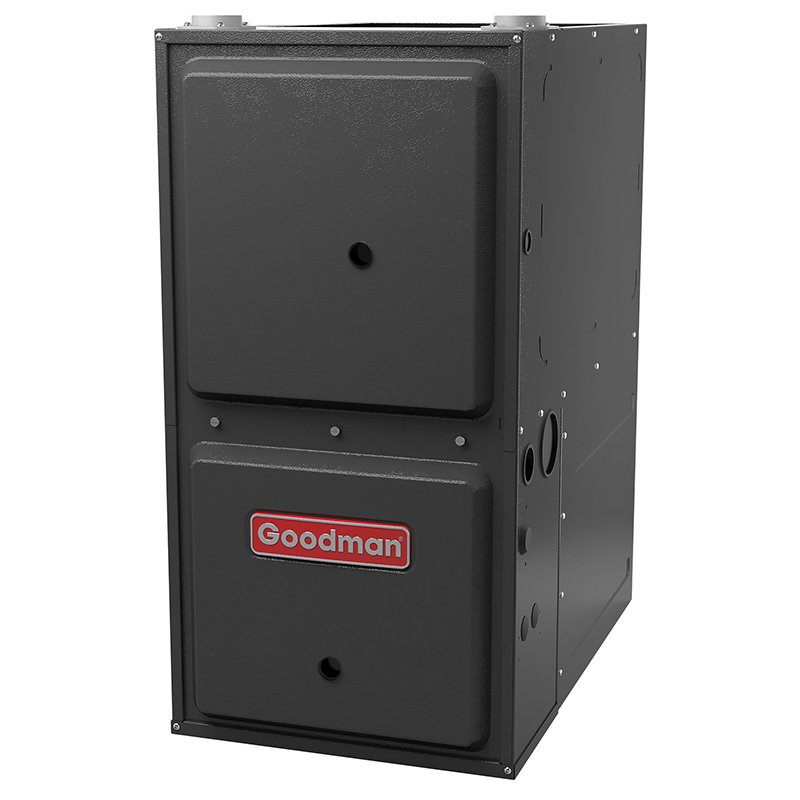
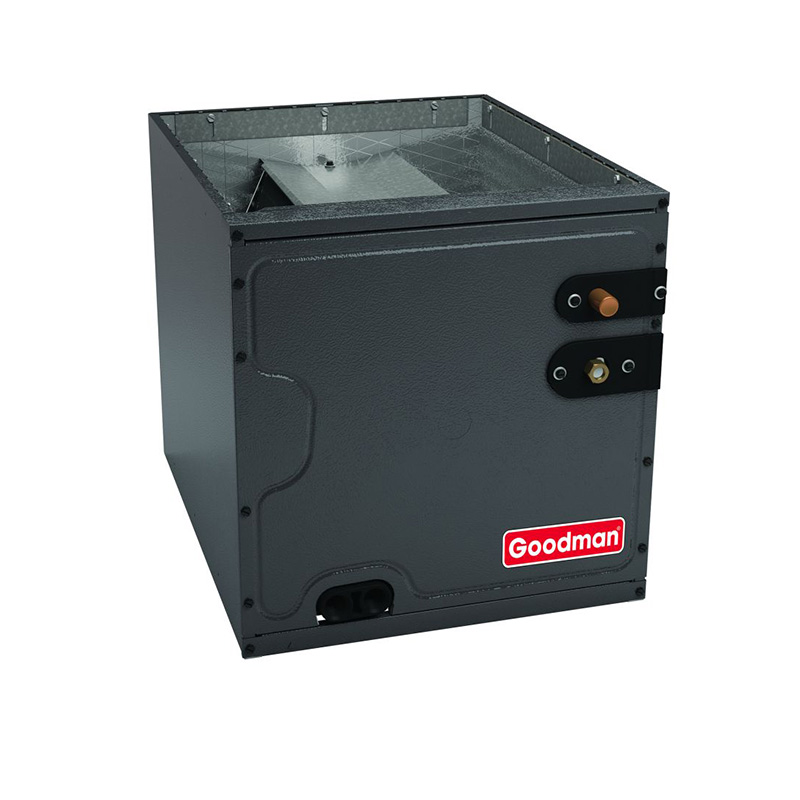
The Goodman 3.5-ton 13.6 SEER2 / 96% AFUE two-stage downflow system is a full split-system package pairing a mid-efficiency air conditioner with a high-efficiency gas furnace. The 3.5-ton cooling capacity fits homes roughly in the 1,800-to-2,400-square-foot range depending on climate, insulation, and load, while the 100,000 BTU furnace at 96% AFUE reclaims nearly all of the fuel it burns, making it well-suited for cold-winter climates where heating costs dominate the annual utility bill. The two-stage furnace operation means the unit runs at a lower firing rate on moderate days and only steps up to full output when temperatures drop sharply, which reduces temperature swings, lowers short-cycling, and is generally easier on the heat exchanger over time.
The downflow configuration is the defining installation constraint here. Downflow furnaces push heated or cooled air downward into floor-level ductwork, making this unit the correct choice for homes where the air handler sits in a closet or utility space above a crawlspace or basement slab with supply ducts running underfloor. It is not interchangeable with upflow or horizontal installations, so confirming your existing duct configuration before purchasing is essential. The system uses R-32 refrigerant, a lower global-warming-potential alternative to R-410A that is becoming the industry standard as R-410A is phased out under EPA regulations. The multi-speed ECM blower motor in the furnace section reduces electrical consumption during the long blower run times typical of a two-stage system and contributes to quieter, more consistent airflow compared to a fixed-speed PSC motor.
This system occupies the value end of the market. Goodman prices typically run 15 to 25 percent below comparable equipment from Trane, Lennox, and Carrier, which makes it attractive for budget-conscious homeowners or landlords replacing aging equipment. The trade-off is a documented reliability profile that lags premium brands, particularly after year seven, and a compressor lifespan that averages 10 to 14 years versus 15 to 20 years for top-tier competitors. Buyers who prioritize lower upfront cost and plan to offset risk with a strong extended warranty or a service agreement will find this system a reasonable fit.
This Goodman system delivers solid efficiency credentials and meaningful upfront savings compared to premium brands, making it a practical choice for cost-conscious buyers who understand they are accepting a shorter probable equipment lifespan and a reliability track record that is average rather than best-in-class. The downflow configuration and R-32 refrigerant are not dealbreakers, but both narrow the pool of installers and add a small layer of planning complexity. Paired with a quality installation and a proactive service plan, it performs its core job reliably for most of its expected service life.
Overall score is the average of the five ratings above.
What we like
- Priced 15 to 25 percent below comparable Trane, Lennox, and Carrier equipment, offering real upfront savings on a complete system
- 96% AFUE rating recaptures nearly all fuel energy, keeping winter heating bills meaningfully lower than 80% AFUE alternatives
- Two-stage furnace operation reduces temperature swings and short-cycling, improving comfort on mild heating days
- Multi-speed ECM blower lowers electricity consumption during blower-only and cooling modes compared to single-speed PSC motors
- R-32 refrigerant is future-compatible as the industry moves away from R-410A under current EPA regulations
Trade-offs
- Compressor lifespan averages 10 to 14 years versus 15 to 20 years for premium-brand compressors, meaning earlier replacement is more likely
- Dual-run capacitors are the most frequently reported failure point, typically surfacing after moderate use and costing 300 to 600 dollars per repair
- Evaporator coil leaks appear in a meaningful share of owner reports, and a minority of first-year refrigerant leak issues point to install or charge sensitivity
- ConsumerAffairs feedback (approximately 2.5 out of 5) reflects a consistent pattern of rising repair costs after roughly year seven
What homeowners and pros say about Goodman
Homeowners who have lived with Goodman equipment long enough to form an opinion tend to land in two camps. Those whose systems were installed carefully by experienced contractors and maintained on schedule often report years of unremarkable, trouble-free operation and cite the lower purchase price as money they are glad they kept. Those who encountered problems point most often to capacitor failures, which Goodman owners across multiple review channels flag as a recurring nuisance, and to evaporator coil leaks that surface after several years of use. Goodman’s Google dealer scores cluster around 3.8 out of 5 across hundreds of reviews per location, with affordability consistently leading the praise. The ConsumerAffairs score of roughly 2.5 out of 5 tells a harsher story, but that platform draws complaints disproportionately, and the specific pattern there, repair costs climbing after roughly year seven, is a useful planning signal rather than a reason to dismiss the brand outright.
HVAC technicians tend to hold a pragmatic view of Goodman. Many will install it without hesitation for price-sensitive customers while being candid that installation quality and refrigerant charge accuracy matter more with this brand than with premium alternatives, partly because the documented first-year refrigerant leak issues on Goodman systems tend to trace back to installer error or a rushed startup. For this particular system, the R-32 refrigerant and the downflow configuration both require a technician who is familiar with the current refrigerant transition and who has confirmed the duct layout in advance. Technicians also note that Goodman’s compressor lifespan, averaging 10 to 14 years rather than the 15 to 20 years typical of Trane or Carrier compressors, is the most meaningful long-term risk factor for owners who plan to stay in the home for a full 15-year horizon and want to avoid a mid-life replacement.
Sources: ConsumerAffairs Goodman owner reviews, AHRI Directory of Certified Product Performance, U.S. DOE appliance and equipment efficiency standards, Goodman product specification sheets.
What it costs to run
At 13.6 SEER2, cooling this 3.5-ton system for a typical 1200-hour cooling season at the U.S. average electricity rate of $0.17/kWh works out to roughly $630 per year in cooling, about $9 less per year than a minimum-efficiency 13.4 SEER2 unit of the same size. Your real cost depends on your climate and local rate.
Method: (42,000 BTU/hr ÷ 13.6 SEER2) × 1200 hours ÷ 1000 × $0.17/kWh. Rate source: U.S. EIA average; cooling hours: moderate-climate estimate.
How it compares
| Brand | Comparable model | SEER2 | Stage | Price position |
|---|---|---|---|---|
| Goodman | 3.5 Ton 13.6 SEER2 / 96% AFUE Two-Stage Downflow with ECM | 13.6 | Two-stage | Value pick |
| Carrier | Performance Series 59TP6 / 24ACC6 | ~14 | Two-stage | Typically 15 to 25 percent more than this Goodman system |
| Trane | S9V2 / XR14 | ~14 | Single-stage / Two-stage | Typically 15 to 25 percent more than this Goodman system |
| Lennox | ML196V / 14ACX | ~14 | Two-stage | Typically 15 to 25 percent more than this Goodman system |
Competitor rows are comparable single-stage units at similar efficiency; price is relative position, not a quote.
Questions about this system
Can I use this furnace in an upflow or horizontal installation, or is it strictly downflow?
This unit is rated and certified for downflow installation only, meaning supply air exits from the bottom of the furnace into floor-level ductwork. Using it in an upflow or horizontal orientation is not permitted and would void the warranty. Confirm your existing duct layout with your installer before purchasing.
My current system uses R-410A. Will an R-32 system require a completely new line set or different service tools?
R-32 operates at similar pressures to R-410A and can generally use existing copper line sets if they are clean, properly sized, and free of contamination, but your installer must flush the lines and verify their condition before reuse. R-32 does require refrigerant-specific manifold gauges and recovery equipment, so confirm that your contractor is equipped and certified to handle it before scheduling the job.
What does two-stage operation actually mean for my comfort and utility bills compared to a single-stage furnace?
A two-stage furnace fires at a lower capacity, often around 65 percent of full output, during mild weather and only steps up to full fire when outdoor temperatures drop sharply. This longer, gentler run time distributes heat more evenly through the home, reduces the temperature swings common with single-stage equipment, and lowers short-cycling wear on the heat exchanger. Fuel savings compared to a single-stage 96% AFUE unit are modest, but comfort improvement is the more noticeable benefit.
Goodman's ConsumerAffairs score is around 2.5 out of 5. Should that stop me from buying this system?
ConsumerAffairs is a complaint-skewed channel where dissatisfied owners are far more likely to post than satisfied ones, so the score reflects problems disproportionately rather than the full ownership population. Goodman's Google dealer reviews average around 3.8 out of 5, which is more representative of typical experiences. The honest picture is that Goodman is a mid-tier brand where installation quality has an outsized effect on outcomes and where repair frequency tends to climb after roughly year seven.
What are the most common repairs I should budget for over the life of this system?
Dual-run capacitors are the most frequently reported failure, usually a straightforward repair in the 300 to 600 dollar range. Evaporator coil leaks show up in a meaningful share of owner reports and are more expensive to address. A minority of owners report refrigerant leaks within the first year, which are typically tied to installation or initial charge rather than the equipment itself. Planning for a capacitor replacement or two over a 10-year ownership period is reasonable.
Specifications
| Cooling capacity | 3.5 Ton |
| Efficiency | 13.6 SEER2 |
| Furnace output | 100000 BTU |
| Furnace efficiency | 96% AFUE |
| Configuration | Downflow |
| Refrigerant | R-32 |