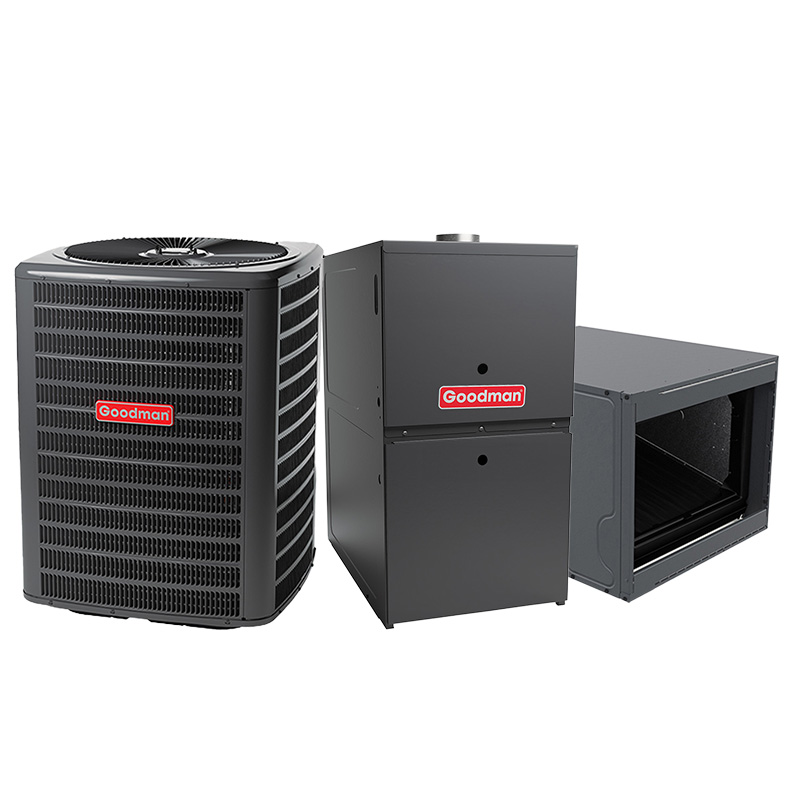
Goodman 3.5 Ton 13.6 SEER2 AC & Gas Furnace System – Two Stage Variable-Speed, 80000 BTU Gas Furnace, 80% AFUE, Horizontal, R32
View on AC Direct see your lowest price →Check current price on AC Direct →
Key features
- 3.5-ton two-stage compressor for better humidity control and fewer on/off cycles
- Variable-speed ECM blower motor for quieter, more even airflow
- 80,000 BTU gas furnace rated at 80% AFUE for code-compliant heating efficiency
- R-32 refrigerant with lower global-warming potential than R-410A
- Horizontal configuration suited to attic or crawlspace installations
- 13.6 SEER2 seasonal efficiency rating meeting current federal minimums
About this system
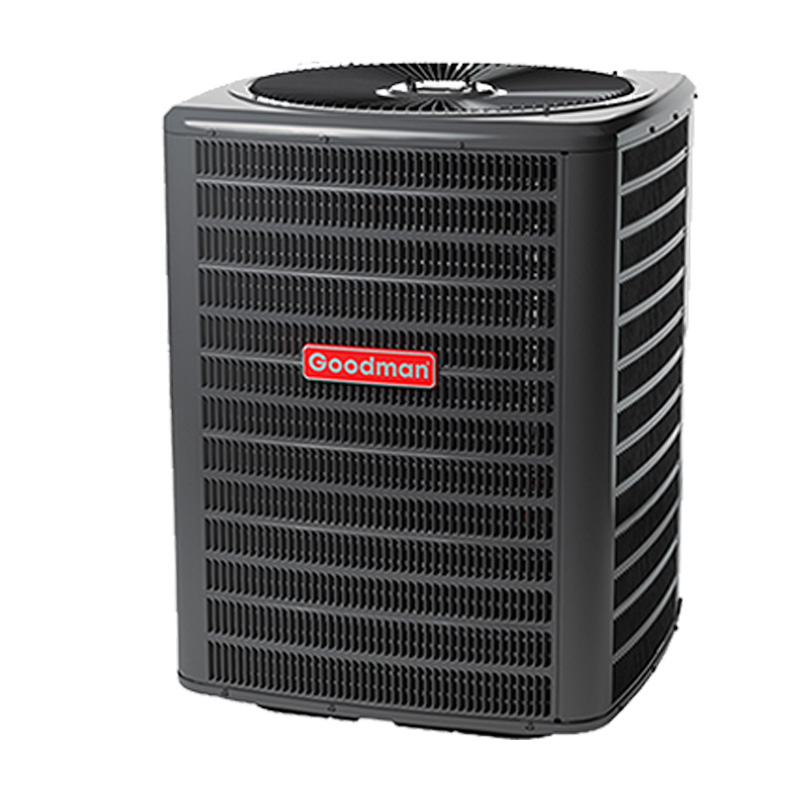
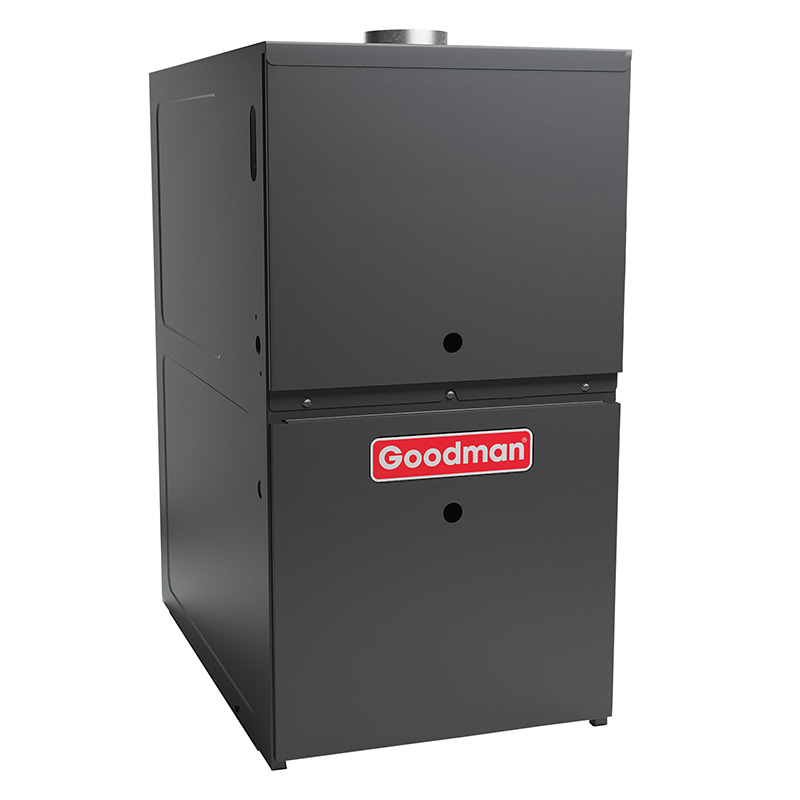
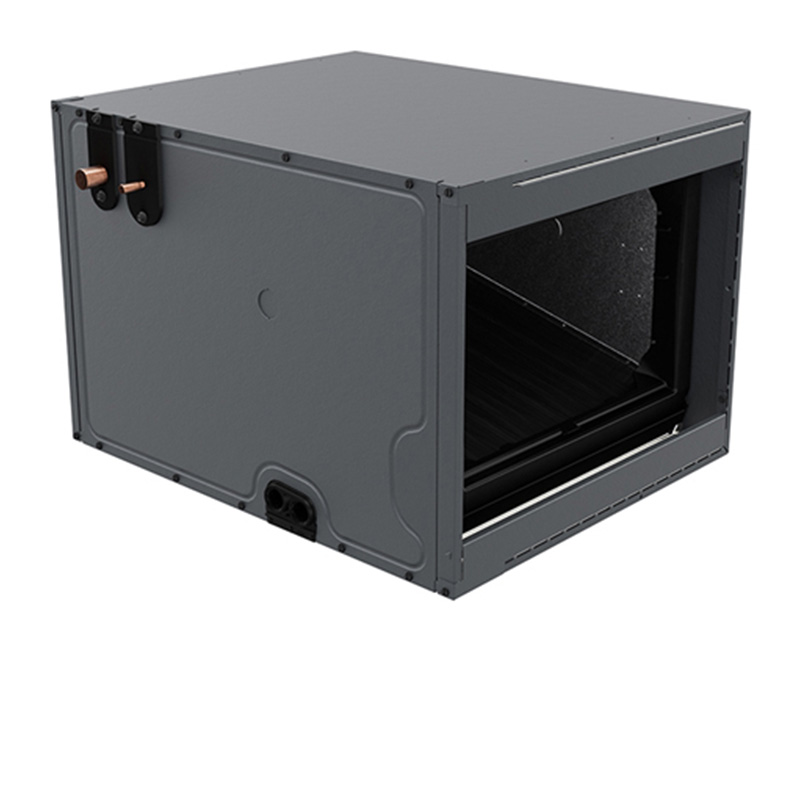
The Goodman 3.5-ton 13.6 SEER2 two-stage, variable-speed system pairs a split-system air conditioner with an 80,000 BTU, 80% AFUE gas furnace in a horizontal configuration, making it a practical choice for homes with attic or crawlspace installations where vertical clearance is limited. The R-32 refrigerant charge is a forward-looking detail: R-32 has a lower global-warming potential than R-410A and is becoming the industry standard as R-410A is phased out, so parts and refrigerant availability should remain strong for this system’s service life.
The two-stage compressor and variable-speed air handler are the functional highlights here. Two-stage cooling means the system runs at a lower capacity on mild days, cycling less frequently and holding indoor humidity closer to the comfortable 40-to-50-percent range that single-stage units often miss. The variable-speed blower adjusts airflow in smaller increments than a single- or multi-speed motor, which translates to quieter operation and more even temperatures room to room. At 13.6 SEER2, efficiency sits at the lower end of the mid-tier range, meeting current federal minimums for most U.S. climate zones without the price premium of 16-plus SEER2 systems.
An 80% AFUE furnace means roughly 20 cents of every heating dollar exits through the flue. That is code-compliant in most regions but a meaningful step below the 95-to-98% AFUE condensing furnaces that capture that otherwise-lost heat. The horizontal configuration limits swap-in compatibility to attic or side-discharge applications, so buyers should confirm their existing ductwork and platform dimensions before ordering. This system suits budget-conscious homeowners in moderate climates who want better humidity control than a basic single-stage unit offers, and who are comfortable with the understanding that Goodman’s long-term performance depends heavily on the quality of the installing contractor.
This system delivers genuine comfort upgrades over basic single-stage equipment at a price point 15 to 25 percent below comparable Carrier, Trane, and Lennox packages. The trade-off is a brand track record that shows higher-than-average component failure rates after year seven and compressor longevity that trails premium competitors. For buyers who vet their installer carefully and budget for occasional maintenance, it represents solid value; for buyers who want to minimize long-term service calls, the price gap may not fully offset the reliability difference.
Overall score is the average of the five ratings above.
What we like
- Two-stage operation improves humidity control compared to single-stage systems
- Variable-speed blower reduces noise and delivers more consistent temperatures
- R-32 refrigerant is future-proof as R-410A is phased out of production
- Horizontal configuration fills a real gap for attic and crawlspace installs
- Priced 15 to 25 percent below comparable Trane, Carrier, and Lennox systems
Trade-offs
- 80% AFUE loses roughly 20% of fuel energy up the flue, a real cost in cold climates
- 13.6 SEER2 is entry-level mid-efficiency; higher SEER2 options exist at moderate price increases
- Dual-run capacitors and evaporator coils are documented weak points that can add service costs after year seven
- Compressor lifespan averages 10 to 14 years versus 15 to 20 years for premium-brand compressors
What homeowners and pros say about Goodman
Homeowners who shop Goodman most often point to the price as the deciding factor, and that sentiment shows up clearly in Google dealer reviews, where the brand averages around 3.8 out of 5 across hundreds of location-level reviews. The praise is consistent: buyers feel they got a functional, properly sized system without paying the premium attached to Carrier, Trane, or Lennox. The frustration, documented on ConsumerAffairs where Goodman scores closer to 2.5 out of 5, tends to arrive in years seven through ten, when dual-run capacitor failures, evaporator coil refrigerant leaks, and early compressor wear start generating service bills that erode the original savings. That ConsumerAffairs channel skews toward people motivated to write a complaint, so the true failure rate sits somewhere between those two data points, but the pattern of component issues after the midpoint of the system’s life is real and consistent enough that it deserves weight in any honest purchase decision.
HVAC technicians who work on Goodman equipment frequently echo the same point: the install matters more with this brand than with premium competitors. A well-charged system on a clean, correctly sized duct system with proper airflow can run cleanly for a decade or more, while a rushed install with an improper refrigerant charge or marginal airflow tends to accelerate the documented failure modes. For this specific two-stage, variable-speed system, the stakes are slightly higher because variable-speed motors and two-stage controls add diagnostic complexity compared to a basic single-stage unit. The takeaway from both camps is that Goodman rewards buyers who invest in a quality contractor even when they save money on the equipment itself.
Sources: ConsumerAffairs Goodman owner reviews, AHRI Directory of Certified Product Performance, U.S. DOE appliance and equipment efficiency standards, Goodman product specification sheets.
What it costs to run
At 13.6 SEER2, cooling this 3.5-ton system for a typical 1200-hour cooling season at the U.S. average electricity rate of $0.17/kWh works out to roughly $630 per year in cooling, about $9 less per year than a minimum-efficiency 13.4 SEER2 unit of the same size. Your real cost depends on your climate and local rate.
Method: (42,000 BTU/hr ÷ 13.6 SEER2) × 1200 hours ÷ 1000 × $0.17/kWh. Rate source: U.S. EIA average; cooling hours: moderate-climate estimate.
How it compares
| Brand | Comparable model | SEER2 | Stage | Price position |
|---|---|---|---|---|
| Goodman | GSXH5 / GMVC8 Series (this system) | 13.6 | Two-stage | Value pick |
| Carrier | Comfort 14 (24ACC4) with 58MCA Gas Furnace | 13.8 | Single-stage | Typically 15 to 25 percent more than this Goodman system |
| Trane | XR14c with S9X1 Gas Furnace | 14.0 | Single-stage | Typically 15 to 25 percent more than this Goodman system |
| Lennox | Merit 14ACX with ML180 Gas Furnace | 13.8 | Single-stage | Typically 15 to 25 percent more than this Goodman system |
Competitor rows are comparable single-stage units at similar efficiency; price is relative position, not a quote.
Questions about this system
Why does this system use R-32 instead of R-410A, and will refrigerant be easy to find?
R-32 is replacing R-410A across the industry because it has a significantly lower global-warming potential and is more energy-efficient to compress. As R-410A production winds down under EPA regulations, R-32 availability and technician familiarity will grow, so this is actually a forward-compatible choice. Most larger HVAC supply houses already stock it.
Is 80% AFUE good enough, or should I upgrade to a 96% AFUE furnace?
In mild-winter climates where heating accounts for a small share of your annual utility bill, 80% AFUE is often sufficient and the payback period on a 96% AFUE upgrade can stretch to ten years or more. In cold climates where the furnace runs heavily from November through March, a high-efficiency condensing furnace typically pays back the cost difference within five to seven years while also reducing carbon output. Run your local heating degree-days against both options before deciding.
What are the most common repairs I should expect with a Goodman system, and roughly what do they cost?
The most frequently reported failure on Goodman equipment is the dual-run capacitor, which typically runs 300 to 600 dollars to replace and is a straightforward repair most technicians complete in under an hour. Evaporator coil refrigerant leaks are a second documented issue and can cost significantly more if the coil itself needs replacement. Compressors on Goodman units average a 10-to-14-year lifespan, so budgeting for a potential compressor replacement or full system swap in that window is prudent.
My installation is horizontal in the attic. Are there any specific concerns with this configuration?
Horizontal attic installs require a properly leveled, structurally sound platform and a secondary condensate drain pan with a float switch to protect against ceiling damage if the primary drain clogs. Attic heat extremes can also stress components, so ensuring the air handler compartment has adequate clearance and insulation is important. Confirm your installer has specific experience with horizontal attic setups, as poor condensate management is a common source of callbacks.
How does two-stage cooling actually help with comfort compared to the single-stage unit I'm replacing?
A single-stage system runs at full capacity whenever it calls for cooling, which often leads to short cycles that pull temperature down quickly but don't run long enough to remove significant humidity. A two-stage system runs at lower capacity for longer periods on most days, keeping the coil cold and pulling more moisture out of the air. The result is a steadier indoor temperature and lower relative humidity, which many homeowners notice as a tangible improvement in comfort even at the same thermostat setting.
Specifications
| Cooling capacity | 3.5 Ton |
| Efficiency | 13.6 SEER2 |
| Furnace output | 80000 BTU |
| Furnace efficiency | 80% AFUE |
| Configuration | Horizontal |
| Refrigerant | R-32 |