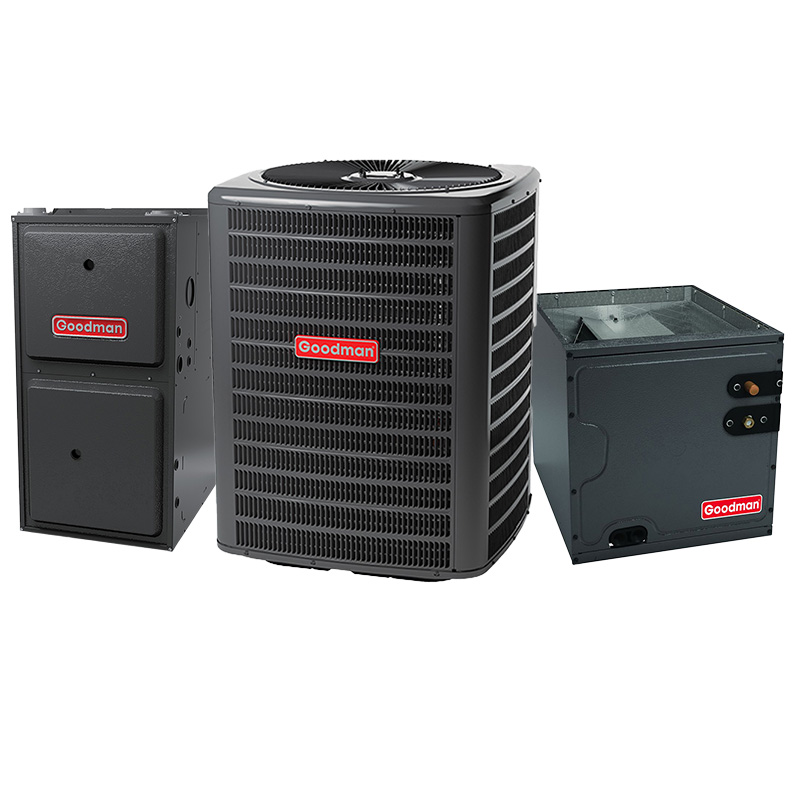
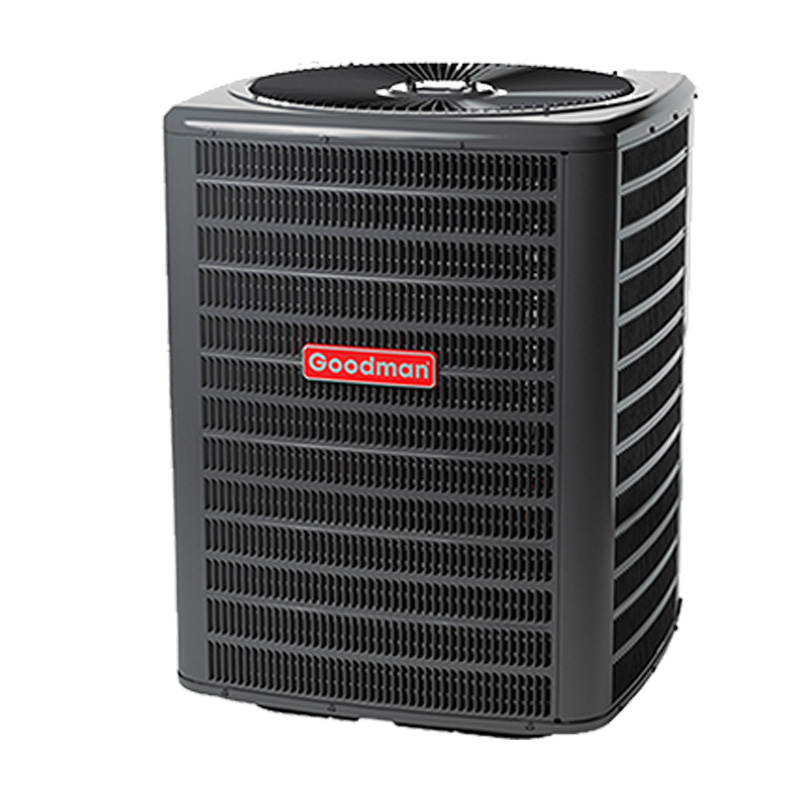
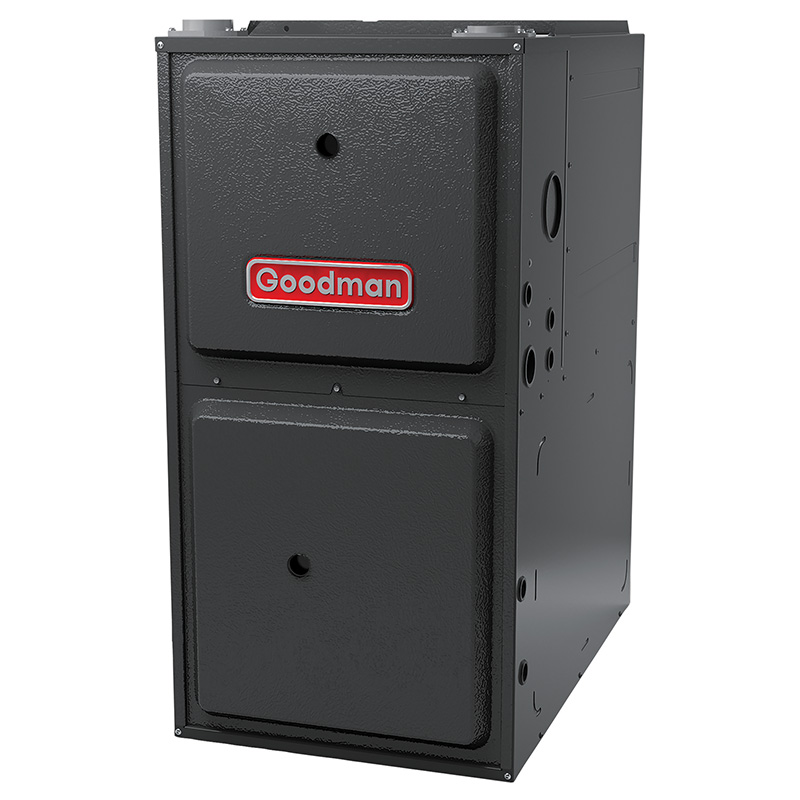
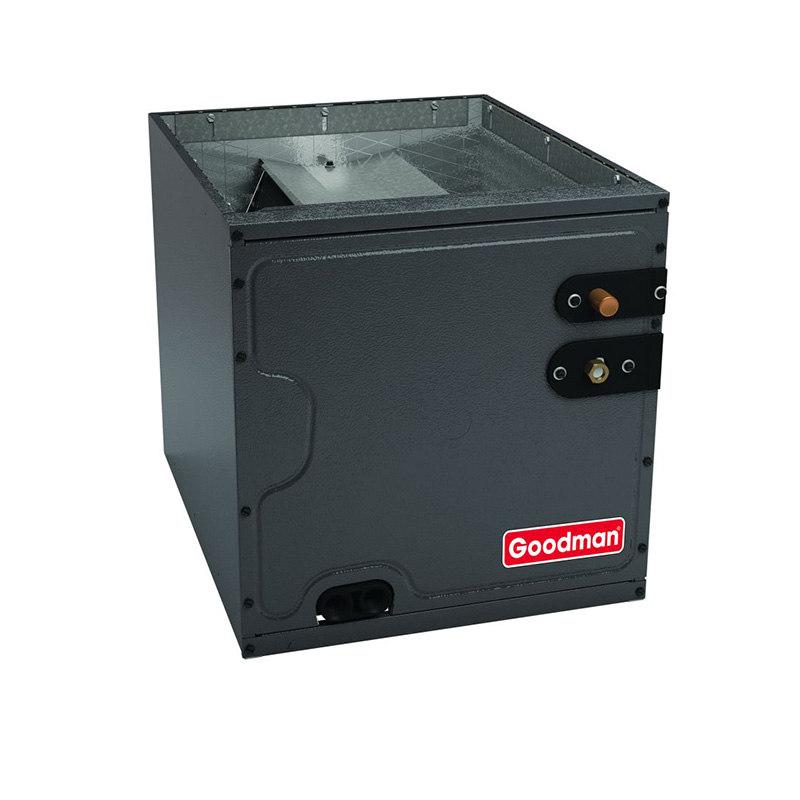
Goodman 3.5 Ton 13.6 SEER2 AC With 120000 BTU 96% AFUE 2-Stage Variable-Speed ECM Gas Furnace System – Upflow | R32
View on AC Direct see your lowest price →Check current price on AC Direct →
Key features
- 3.5-ton cooling capacity with 13.6 SEER2 efficiency rating
- 120,000 BTU two-stage gas furnace at 96% AFUE
- Variable-speed ECM blower motor for quieter, more consistent airflow
- R-32 refrigerant with lower global warming potential than R-410A
- Upflow configuration designed for basement or ground-floor utility installations
- Two-stage heating reduces short-cycling and improves comfort on mild days
About this system
This Goodman bundle pairs a 3.5-ton, 13.6 SEER2 air conditioner with a 120,000 BTU, 96% AFUE two-stage gas furnace in an upflow configuration, making it a strong candidate for larger homes in cold-climate regions where heating demand is the dominant energy cost. The 96% AFUE rating means only 4% of combustion energy escapes as exhaust, which sits at the top of the high-efficiency category and can meaningfully reduce gas bills compared with an 80% AFUE furnace. The two-stage burner and variable-speed ECM blower allow the system to run at a lower capacity on mild days, improving comfort, reducing short-cycling, and lowering operating noise relative to single-stage equipment.
The 13.6 SEER2 cooling rating meets current federal minimum efficiency standards and delivers adequate performance, though it is not a high-efficiency cooling system. Buyers primarily motivated by cooling efficiency may want to compare variable-speed or higher SEER2 options. R-32 refrigerant is the forward-looking choice here: it has a lower global warming potential than R-410A, and its use signals that this system will remain serviceable as the industry moves away from older refrigerants. The upflow configuration works with ductwork above the air handler, which is typical in basement or ground-level utility closet installations across the Midwest, South, and Northeast.
At 3.5 tons and 120,000 BTU, this system is sized for larger homes, typically in the 1,800 to 2,600 square foot range depending on climate zone, insulation, and window load. Proper Manual J load calculation before purchase is essential; oversizing a furnace this large in a smaller home will cause short-cycling and uneven heat distribution regardless of how good the equipment is.
This Goodman system offers a compelling combination of high-efficiency heating and adequate cooling at a price point that undercuts comparable Carrier, Trane, and Lennox bundles by roughly 15 to 25 percent. The 96% AFUE furnace with variable-speed ECM is the standout feature for cold-climate buyers, while the 13.6 SEER2 cooling is functional but unremarkable. Long-term satisfaction will depend heavily on the quality of the installing contractor and how proactively the owner handles routine maintenance.
Overall score is the average of the five ratings above.
What we like
- 96% AFUE furnace ranks among the most efficient gas furnaces available, reducing heating bills in cold climates
- Two-stage burner plus variable-speed ECM blower improves comfort and reduces temperature swings
- R-32 refrigerant is future-ready and has a lower environmental impact than R-410A
- Priced 15 to 25 percent below comparable Trane, Lennox, and Carrier systems, freeing budget for a quality install or extended service plan
- Upflow design is widely compatible with existing duct layouts in basement and utility room setups
Trade-offs
- 13.6 SEER2 cooling efficiency is at the low end of current offerings; buyers in hot climates may pay more in summer utility bills than with a higher-SEER2 system
- Dual-run capacitor failures are the most commonly reported repair, typically arising within 7 to 10 years and costing $300 to $600 per incident
- Compressor lifespan averages 10 to 14 years versus 15 to 20 years for premium brands, meaning potential replacement costs arrive sooner
- A minority of owners have reported refrigerant and evaporator coil leaks, risks that are heightened by poor installation quality
What homeowners and pros say about Goodman
Homeowners who share feedback on Goodman equipment tend to split along a familiar line. Those who had an experienced contractor handle the install and who stay current on filter changes and annual tune-ups generally report years of reliable service and appreciate the lower purchase price. Those who run into trouble most often point to repair costs arriving after the 7-year mark, which aligns with the recurring theme on ConsumerAffairs, where Goodman sits at roughly 2.5 out of 5, a complaint-skewed channel but one that consistently surfaces frustration around climbing maintenance bills in the second half of the system’s life. Google dealer reviews tell a more balanced story, with Goodman averaging around 3.8 out of 5 across dealer locations, where affordability is the most frequently cited reason for satisfaction.
HVAC technicians who work on Goodman equipment regularly point to dual-run capacitor failures as the most predictable service call, a repair that is relatively inexpensive at $300 to $600 but one that owners should anticipate. Evaporator coil leaks show up in a meaningful share of owner accounts and are a more significant repair. Compressor lifespan tends to average 10 to 14 years on Goodman units compared with 15 to 20 years on premium brands, which is a real trade-off worth factoring into the total cost of ownership calculation. For this particular system, the 96% AFUE two-stage furnace draws more positive commentary than the cooling side, especially from buyers in northern climates where heating season dominates the utility bill. The R-32 refrigerant is noted by technicians as a forward-looking specification, though they also flag that refrigerant leaks within the first year, while uncommon, do appear in Goodman owner reports and are almost always tied to installation or initial charge errors rather than equipment defects.
Sources: ConsumerAffairs Goodman owner reviews, AHRI Directory of Certified Product Performance, U.S. DOE appliance and equipment efficiency standards, Goodman product specification sheets.
What it costs to run
At 13.6 SEER2, cooling this 3.5-ton system for a typical 1200-hour cooling season at the U.S. average electricity rate of $0.17/kWh works out to roughly $630 per year in cooling, about $9 less per year than a minimum-efficiency 13.4 SEER2 unit of the same size. Your real cost depends on your climate and local rate.
Method: (42,000 BTU/hr ÷ 13.6 SEER2) × 1200 hours ÷ 1000 × $0.17/kWh. Rate source: U.S. EIA average; cooling hours: moderate-climate estimate.
How it compares
| Brand | Comparable model | SEER2 | Stage | Price position |
|---|---|---|---|---|
| Goodman | 3.5 Ton 13.6 SEER2 AC + 120,000 BTU 96% AFUE 2-Stage ECM Furnace (this system) | 13.6 | Two-stage furnace / single-stage AC | Value pick |
| Carrier | Performance 13 Central Air Conditioner (24ACC3) + 96% AFUE Performance Gas Furnace (59TP6) | ~13.4 to 14 | Two-stage furnace / single-stage AC | Typically 15 to 25 percent more than this Goodman bundle |
| Trane | XR13c Central Air Conditioner + S9X2 96% AFUE Two-Stage Furnace | ~13.4 to 14 | Two-stage furnace / single-stage AC | Typically 15 to 25 percent more than this Goodman bundle |
| Lennox | Merit ML14XC1 Air Conditioner + ML296V 96% AFUE Two-Stage Furnace | ~14 | Two-stage furnace / single-stage AC | Typically 15 to 25 percent more than this Goodman bundle |
Competitor rows are comparable single-stage units at similar efficiency; price is relative position, not a quote.
Questions about this system
Is a 3.5-ton, 120,000 BTU system the right size for my home?
Size depends on your climate zone, insulation, ceiling height, and window area, not square footage alone. A qualified HVAC contractor should perform a Manual J load calculation before you purchase. Oversizing this furnace in a smaller home will cause frequent short-cycling, uneven temperatures, and excess humidity in cooling mode.
What does two-stage heating actually mean for comfort and energy use?
A two-stage furnace runs at a lower capacity (typically around 65%) on moderately cold days and steps up to full capacity only when outdoor temps drop significantly. This means longer, gentler heating cycles, more even room temperatures, and less wasted energy from frequent on-off cycling compared with a single-stage furnace.
Why does this system use R-32 refrigerant instead of R-410A?
R-32 has about one-third the global warming potential of R-410A and is part of the industry-wide shift away from older refrigerants under updated EPA and DOE guidelines. Practically, this means the system will remain compliant as regulations tighten and that service technicians increasingly stock R-32, though you should confirm your local contractor is certified and equipped to handle it.
What are the most likely repair costs I should budget for over the first 10 years?
Dual-run capacitor failure is the most commonly documented issue on Goodman AC units, typically running $300 to $600 to fix and often surfacing after year 7. Evaporator coil leaks appear in a meaningful share of owner reports and can be more expensive to repair. Setting aside a small annual maintenance budget and buying an extended labor warranty from your installer is a practical step given these documented failure modes.
How important is the installer, and how do I find a good one for this system?
Installation quality is the single most cited factor in how long a Goodman system lasts and how efficiently it runs, according to HVAC technicians. Refrigerant charge, airflow balance, and electrical connections all affect performance and reliability more than the equipment brand alone. Look for a contractor with documented Goodman or Daikin (Goodman's parent company) experience, check Google dealer reviews, and ask specifically whether they will perform a Manual J calculation and a refrigerant charge verification at startup.
Specifications
| Cooling capacity | 3.5 Ton |
| Efficiency | 13.6 SEER2 |
| Furnace output | 120000 BTU |
| Furnace efficiency | 96% AFUE |
| Configuration | Upflow |
| Refrigerant | R-32 |