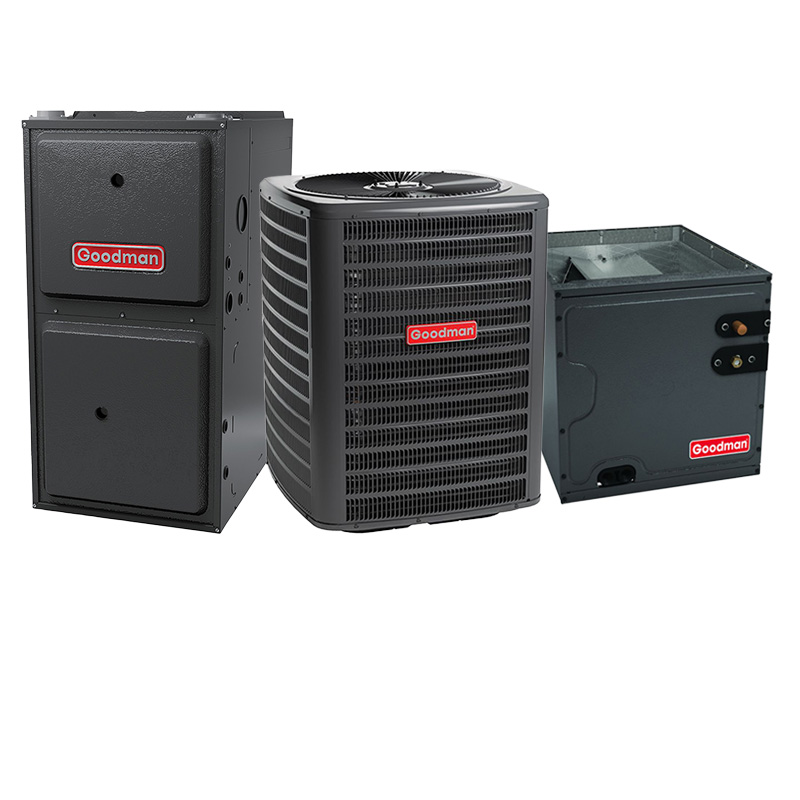
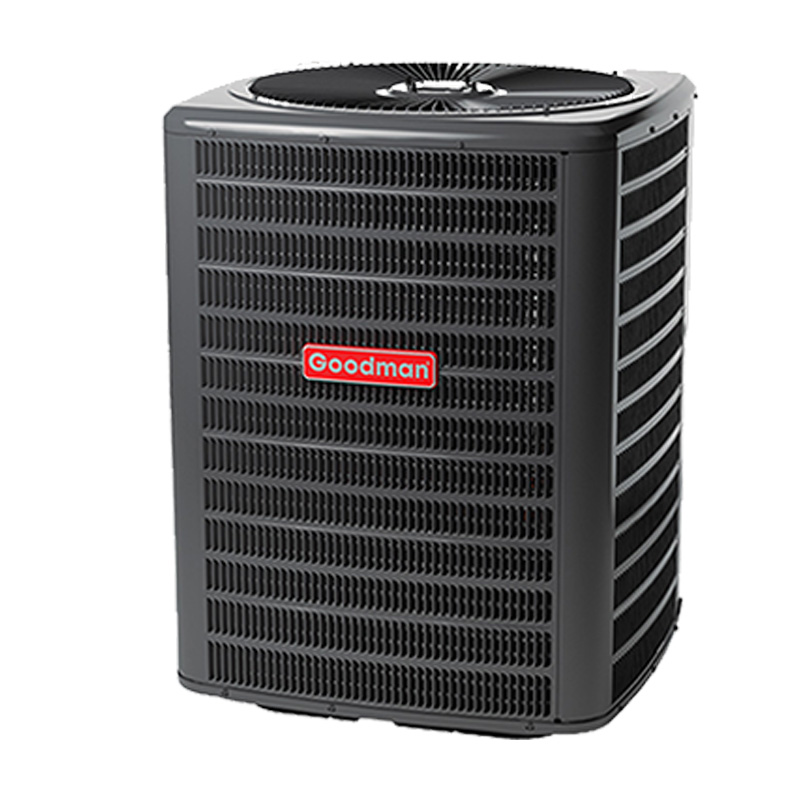
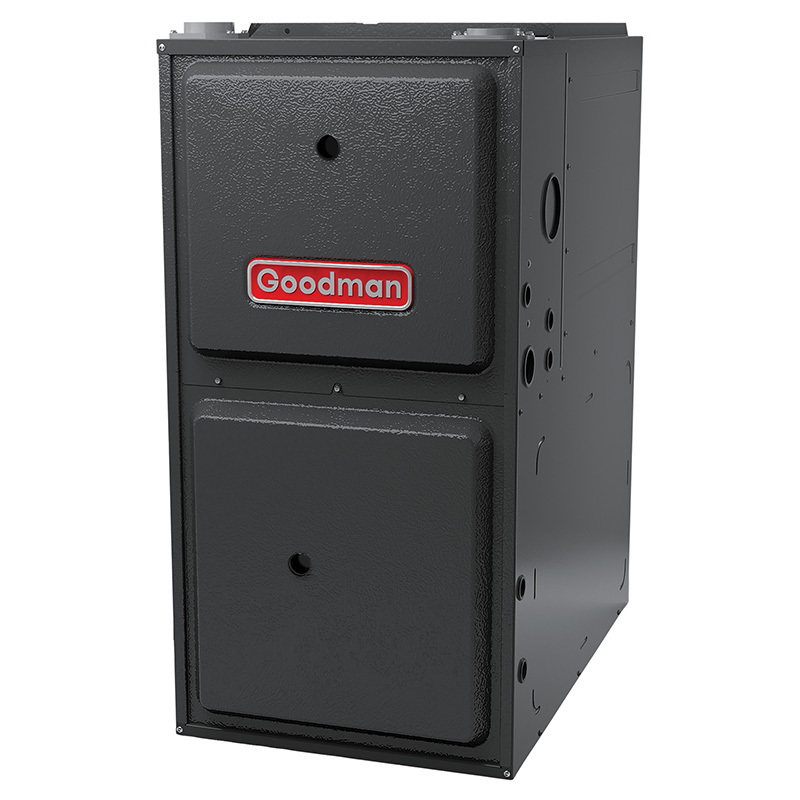
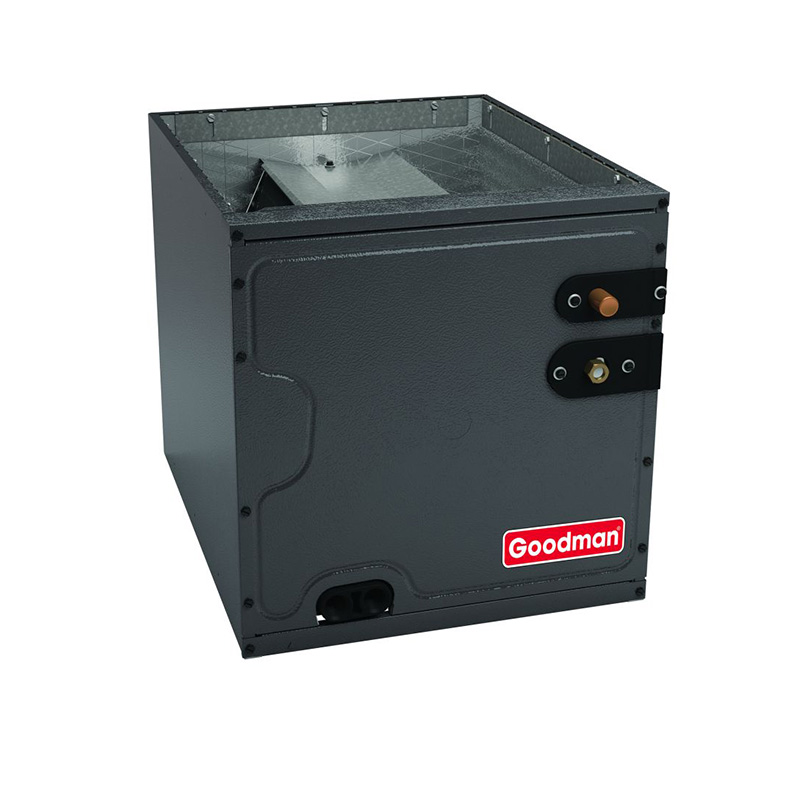
Goodman 3.5 Ton 13.8 SEER2 100000 BTU 96% AFUE Multi-Speed ECM Gas Furnace System – Upflow | R32
View on AC Direct see your lowest price →Check current price on AC Direct →
Key features
- 3.5-ton cooling capacity rated at 13.8 SEER2 under DOE 2023 test standards
- 100,000 BTU, 96% AFUE multi-speed ECM gas furnace for high-efficiency heating
- ECM blower motor reduces blower electricity use and improves dehumidification
- R-32 refrigerant with lower global-warming potential than R-410A
- Upflow air-handler configuration for basement or ground-level closet installs
- Matched system design supports cleaner AHRI-certified performance verification
About this system
The Goodman 3.5-ton, 13.8 SEER2, 96% AFUE upflow system pairs a mid-efficiency central air conditioner with a high-efficiency, multi-speed ECM gas furnace in a single matched package. The 3.5-ton cooling capacity suits homes in the 1,800-to-2,400-square-foot range depending on climate zone, insulation, and ceiling height, and the 100,000 BTU furnace output is well-suited to colder climates or larger floor plans where heating loads are substantial. The 96% AFUE rating means 96 cents of every dollar in gas is converted to usable heat, which places this unit firmly in the high-efficiency furnace tier and qualifies it for many utility rebate programs.
The ECM (electronically commutated motor) blower is a meaningful upgrade over standard PSC motors: it ramps speed up and down to match demand, lowering electricity consumption on the air-handling side and improving humidity control compared to single-speed alternatives. R-32 refrigerant replaces the legacy R-410A used in older Goodman units, offering a lower global-warming potential and slightly better thermodynamic efficiency. The upflow configuration means the air handler draws return air from the bottom and discharges conditioned air upward, making it the standard choice for basement or closet installs where ductwork runs above the unit. This is a straightforward matched system, not a variable-capacity or inverter-driven setup, so expect solid performance within its efficiency class rather than top-tier comfort refinement.
This Goodman system delivers genuinely high heating efficiency and a respectable cooling rating at a price point that undercuts major premium brands by 15 to 25 percent. The ECM furnace motor and 96% AFUE rating are real, substantive upgrades that translate to lower utility bills. The trade-off is a brand history that shows more frequent minor repairs after year seven and compressor longevity that lags premium competitors.
Overall score is the average of the five ratings above.
What we like
- 96% AFUE furnace rating qualifies for utility rebates in many states and meaningfully cuts annual gas bills
- ECM multi-speed blower reduces blower electricity consumption and handles humidity better than single-speed PSC motors
- R-32 refrigerant is more environmentally responsible and avoids the supply issues beginning to affect R-410A systems
- Matched system simplifies AHRI certification and warranty claims compared to mixing brands
- Purchase price typically 15 to 25 percent below comparable Carrier, Trane, or Lennox equipment
Trade-offs
- Dual-run capacitors are the most commonly reported failure point, typically surfacing within 5 to 10 years and costing $300 to $600 per repair visit
- Evaporator coil leaks show up in a meaningful share of owner reviews, a recurring complaint across the Goodman line
- Compressor lifespan averages 10 to 14 years versus 15 to 20 years for premium-brand compressors, which narrows long-run cost savings
- A minority of owners report refrigerant leaks in year one, generally tied to install quality or initial charge errors rather than the unit itself
What homeowners and pros say about Goodman
Homeowners who shop Goodman almost always lead with the price, and dealer Google reviews averaging around 3.8 out of 5 stars back up the idea that most buyers get a functional, working system without major drama, at least in the early years. Affordability is the praise that appears most consistently in those reviews, and for families replacing a failed system on a tight timeline, the lower upfront cost is a real, tangible benefit. The picture on ConsumerAffairs is harsher, with Goodman sitting at roughly 2.5 out of 5, though that platform attracts frustrated owners disproportionately. The recurring theme there is repair costs climbing after roughly year seven, which aligns with the documented failure profile: dual-run capacitors going out (a $300 to $600 fix that stings but is not catastrophic), evaporator coil leaks that show up in a meaningful share of reviews, and compressors that tend to average 10 to 14 years rather than the 15 to 20 years premium-brand owners typically see.
HVAC technicians who work on Goodman equipment regularly tend to offer a more nuanced take. Most say the equipment is adequate for its price tier, but they are quick to point out that a poorly executed install can accelerate every one of those documented failure modes, particularly refrigerant-related issues. A minority of owners do report refrigerant leaks within the first year, and field experience suggests these trace more often to installation errors or charge problems than to factory defects in the unit itself. For this specific system, the ECM multi-speed furnace motor is a genuine quality step up from the base Goodman line, and the 96% AFUE rating is not marketing language but a measurable efficiency threshold. If a competent, certified installer sets this system up correctly and the homeowner commits to annual maintenance, including capacitor checks, the system can perform reliably for a decade or more. The trade-off is accepting more uncertainty in years 10 through 15 compared to what a Trane or Carrier buyer might reasonably expect.
Sources: ConsumerAffairs Goodman owner reviews, AHRI Directory of Certified Product Performance, U.S. DOE appliance and equipment efficiency standards, Goodman product specification sheets.
What it costs to run
At 13.8 SEER2, cooling this 3.5-ton system for a typical 1200-hour cooling season at the U.S. average electricity rate of $0.17/kWh works out to roughly $621 per year in cooling, about $18 less per year than a minimum-efficiency 13.4 SEER2 unit of the same size. Your real cost depends on your climate and local rate.
Method: (42,000 BTU/hr ÷ 13.8 SEER2) × 1200 hours ÷ 1000 × $0.17/kWh. Rate source: U.S. EIA average; cooling hours: moderate-climate estimate.
How it compares
| Brand | Comparable model | SEER2 | Stage | Price position |
|---|---|---|---|---|
| Goodman | 3.5T 13.8 SEER2 / 96% AFUE ECM Upflow R-32 | 13.8 | Multi-speed | Value pick |
| Carrier | Comfort Series (24ACC6 condenser / 58CVA furnace) | ~14.0 | Single-stage | Typically 15 to 25 percent more than Goodman |
| Trane | XR14 condenser / S9V2 furnace | ~14.0 | Single-stage | Typically 15 to 25 percent more than Goodman |
| Lennox | Merit Series (ML14XC1 condenser / SL280V furnace) | ~14.0 | Single-stage / multi-speed | Typically 15 to 25 percent more than Goodman |
Competitor rows are comparable single-stage units at similar efficiency; price is relative position, not a quote.
Questions about this system
Is 3.5 tons the right size for my home, or should I go up to 4 tons?
Tonnage should be determined by a Manual J load calculation, not square footage alone. In general, 3.5 tons covers roughly 1,800 to 2,400 square feet in moderate climates with average insulation, but a hot southern climate, high ceilings, or poor insulation can push the requirement higher. Have your installer run the calculation before ordering; an oversized unit will short-cycle and handle humidity poorly.
Does the 96% AFUE furnace actually qualify for a federal or utility tax credit?
As of the current federal Inflation Reduction Act guidelines, gas furnaces must meet a 97% AFUE threshold in most U.S. climate zones to qualify for the federal tax credit, so this 96% AFUE unit may fall just short federally. However, many state and local utility rebate programs have lower AFUE thresholds, so check your utility's program directly, as rebate eligibility varies significantly by region.
What does R-32 refrigerant mean for me if I need a service call?
R-32 is a mildly flammable (A2L class) refrigerant, which means technicians need specific certification and recovery equipment to service it. Most established HVAC companies are already equipped or training for A2L refrigerants as the industry transitions away from R-410A, but it is worth confirming your service provider is R-32 certified before signing a maintenance contract.
How long should I expect this Goodman system to last?
The furnace and air-handler components commonly reach 15 to 20 years with proper maintenance. The compressor, statistically the most expensive single component, averages 10 to 14 years on Goodman equipment based on documented owner experience, which is shorter than the 15-to-20-year average seen with premium brands. Dual-run capacitors are the most frequently reported early failure, but they are a low-cost fix when caught during annual maintenance.
Why does install quality matter so much for Goodman specifically?
HVAC technicians consistently note that Goodman performance and longevity are more sensitive to installation quality than premium brands that have tighter factory tolerances and more forgiving controls. Refrigerant charge accuracy, duct sizing, and proper airflow setup are especially important: a minority of first-year refrigerant leak complaints trace back to install or initial charge errors rather than factory defects. Using an NATE-certified installer and requesting a commissioning checklist is a worthwhile safeguard.
Specifications
| Cooling capacity | 3.5 Ton |
| Efficiency | 13.8 SEER2 |
| Furnace output | 100000 BTU |
| Furnace efficiency | 96% AFUE |
| Configuration | Upflow |
| Refrigerant | R-32 |