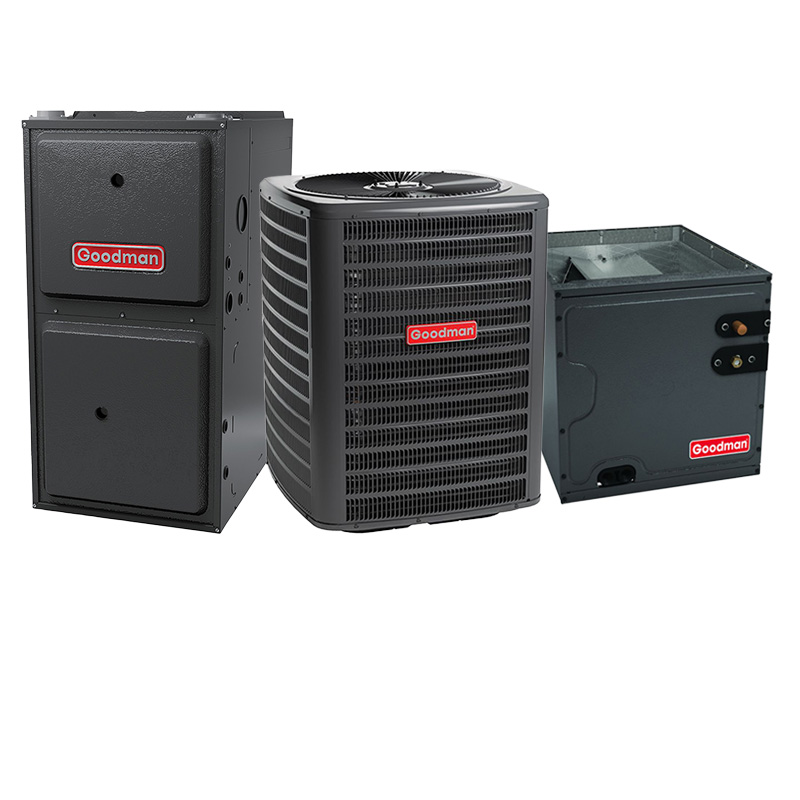
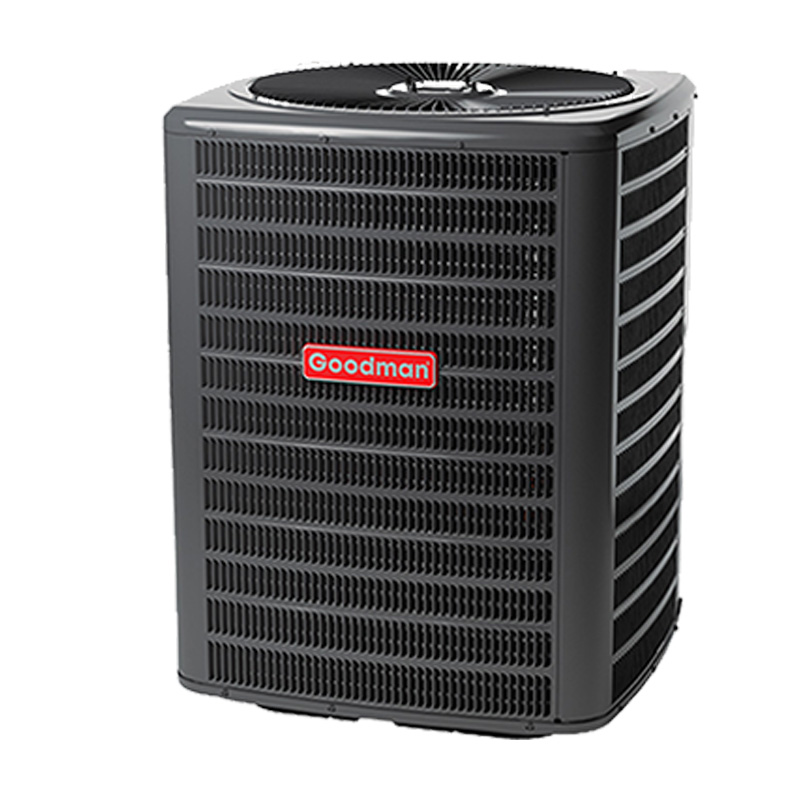
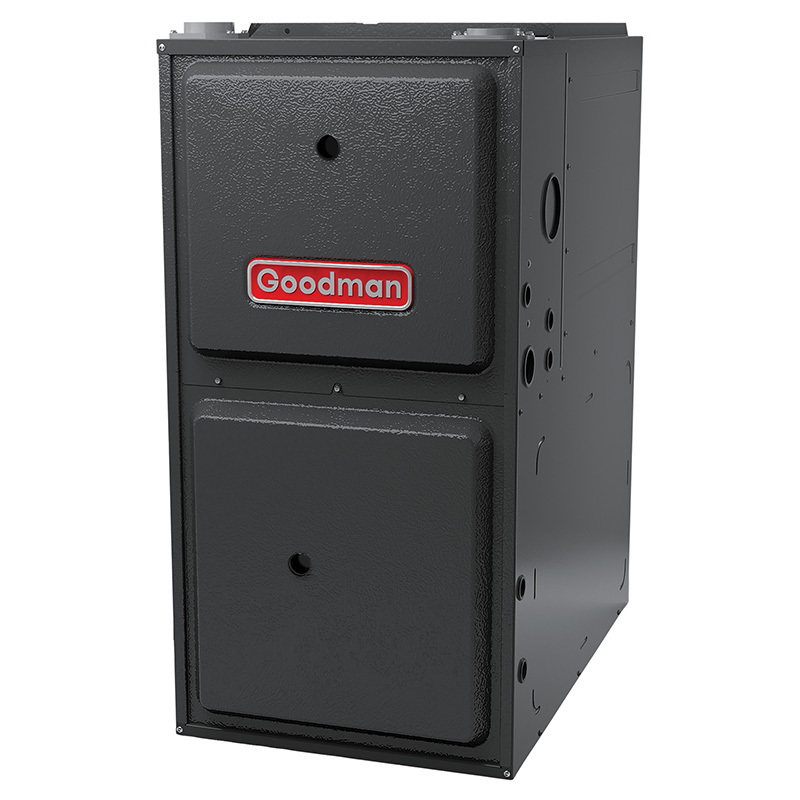
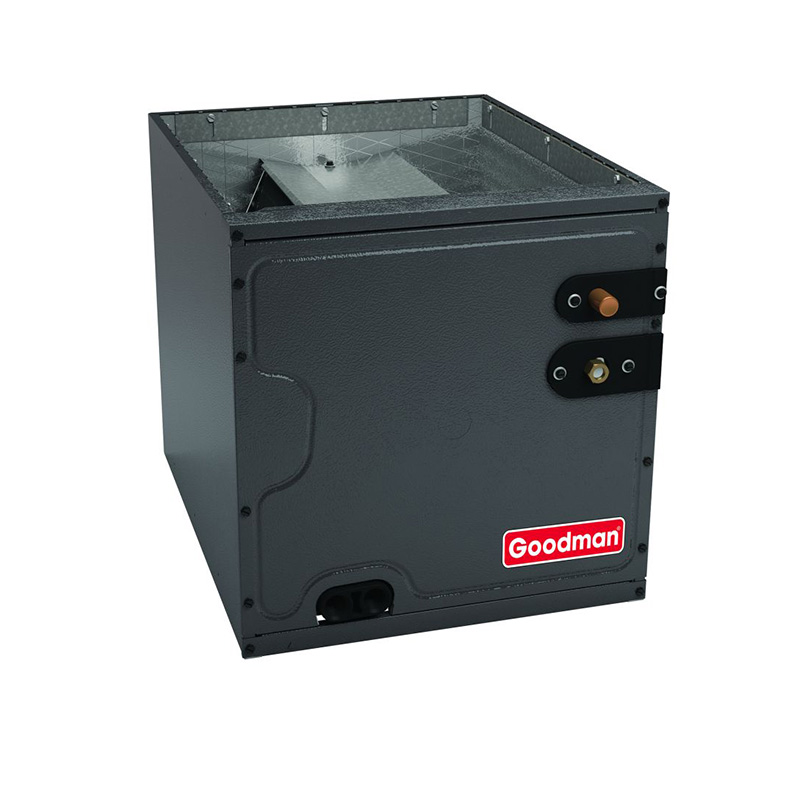
Goodman 3.5 Ton 13.8 SEER2 120000 BTU 96% AFUE Multi-Speed ECM Gas Furnace System – Upflow | R32
View on AC Direct see your lowest price →Check current price on AC Direct →
Key features
- 3.5-ton cooling capacity paired with 120,000 BTU heating output for larger homes
- 96% AFUE high-efficiency gas furnace reduces fuel waste compared to 80% AFUE units
- 13.8 SEER2 cooling rating meets 2023 federal minimum efficiency standards
- Multi-speed ECM blower motor lowers operating electricity costs vs. PSC motors
- R-32 refrigerant with lower global warming potential than R-410A
- Upflow configuration designed for basement or ground-level air handler installations
About this system
This Goodman bundle pairs a 3.5-ton, 13.8 SEER2 R-32 split system with a 120,000 BTU, 96% AFUE multi-speed ECM gas furnace in an upflow configuration. The combination is sized for larger homes, typically in the 1,800 to 2,600 square foot range depending on climate zone, insulation quality, and local load calculations. The 96% AFUE rating means roughly 96 cents of every dollar spent on gas goes toward heating, which puts this furnace solidly in the high-efficiency category without reaching the price tier of condensing units above 97%. The ECM blower motor runs at multiple speeds, reducing electricity consumption compared to a standard PSC motor and providing quieter, more even air distribution throughout the home.
The 13.8 SEER2 cooling efficiency meets the federal minimum for most northern U.S. regions and falls just above the 2023 southern minimum thresholds, so this is not a top-tier efficiency system but a compliant, practical one. R-32 refrigerant carries a lower global warming potential than legacy R-410A, and availability is improving as the industry transitions. The upflow configuration suits installations where the furnace sits in a basement or utility closet with supply air ducting above. Buyers who need a reliable, no-frills replacement or a first-time system for a new construction home on a defined budget will find the spec sheet reasonable; buyers chasing the lowest possible utility bills over a 20-year horizon may want to weigh higher-SEER2 options carefully.
This Goodman system delivers solid spec coverage at a price point that is genuinely hard to match from premium brands, and the 96% AFUE furnace with ECM motor represents real heating efficiency. The trade-off is a documented history of mid-life component failures and compressor longevity that trails Trane, Carrier, and Lennox, so the long-term math depends heavily on how well it is installed and how diligently it is maintained.
Overall score is the average of the five ratings above.
What we like
- Purchase price typically 15 to 25 percent below comparable Trane, Carrier, and Lennox systems
- 96% AFUE furnace meaningfully cuts gas consumption versus standard 80% AFUE models
- ECM multi-speed blower reduces electricity use and improves comfort over single-speed setups
- R-32 refrigerant is a forward-looking choice as the industry moves away from R-410A
- Dual-run capacitor failures, the most common reported issue, are a low-cost repair when caught early
Trade-offs
- Compressor lifespan averages 10 to 14 years, roughly 3 to 6 years shorter than premium brand benchmarks
- A meaningful share of owner reviews report evaporator coil leaks over time, which can be a costly repair
- A minority of owners have reported refrigerant leaks within the first year, typically tied to installation or initial charge quality
- ConsumerAffairs score of approximately 2.5 out of 5 reflects recurring complaints about repair costs climbing after year 7
What homeowners and pros say about Goodman
Homeowners who have lived with Goodman equipment tend to split into two camps. Those who had a careful, experienced installer and kept up with annual tune-ups often report years of trouble-free operation and point to the lower purchase price as a genuine win. Those who ran into problems more frequently mention two specific issues: dual-run capacitor failures and evaporator coil leaks. The capacitor failures are widely reported but are generally a quick, low-cost fix in the 300 to 600 dollar range when caught promptly. Coil leaks are a more serious concern and show up consistently enough in owner feedback to be worth factoring into your decision. On ConsumerAffairs, Goodman earns roughly 2.5 out of 5, though that platform draws a disproportionate share of owners who are frustrated; the recurring complaint is repair costs that begin stacking up after around year 7. Google dealer reviews tell a more moderate story, averaging around 3.8 out of 5 across hundreds of reviews per location, with affordability cited most often as the reason buyers chose the brand.
HVAC technicians tend to be candid about Goodman: it is workable equipment that punches at its price point, but they are quick to note that compressor longevity averages 10 to 14 years on these units versus the 15 to 20 years more commonly seen on Trane, Carrier, and Lennox compressors. For a 3.5-ton system like this one, a compressor replacement is not a small bill, and that gap in expected lifespan is the most important reliability trade-off to understand before buying. Pros also flag that a small but documented share of owners have reported refrigerant leaks within the first year, almost always traced back to installation or initial charge quality rather than a factory defect, which reinforces why choosing a licensed, experienced installer matters at least as much as which brand you pick.
Sources: ConsumerAffairs Goodman owner reviews, AHRI Directory of Certified Product Performance, U.S. DOE appliance and equipment efficiency standards, Goodman product specification sheets.
What it costs to run
At 13.8 SEER2, cooling this 3.5-ton system for a typical 1200-hour cooling season at the U.S. average electricity rate of $0.17/kWh works out to roughly $621 per year in cooling, about $18 less per year than a minimum-efficiency 13.4 SEER2 unit of the same size. Your real cost depends on your climate and local rate.
Method: (42,000 BTU/hr ÷ 13.8 SEER2) × 1200 hours ÷ 1000 × $0.17/kWh. Rate source: U.S. EIA average; cooling hours: moderate-climate estimate.
How it compares
| Brand | Comparable model | SEER2 | Stage | Price position |
|---|---|---|---|---|
| Goodman | 3.5 Ton 13.8 SEER2 / 120,000 BTU 96% AFUE Multi-Speed ECM Upflow R-32 Bundle | 13.8 | Multi-speed | Value pick |
| Carrier | Comfort Series (24ACC636 / 59SC2) | 14.0 | Single-stage | Typically 15 to 25 percent more than this Goodman bundle |
| Trane | XR14 / S9X2 Series | 14.0 | Single-stage | Typically 15 to 25 percent more than this Goodman bundle |
| Lennox | Merit Series (14ACX / ML196) | 13.8 | Single-stage | Typically 15 to 25 percent more than this Goodman bundle |
Competitor rows are comparable single-stage units at similar efficiency; price is relative position, not a quote.
Questions about this system
Is 3.5 tons and 120,000 BTU the right size for my home?
Sizing depends on your climate zone, insulation, windows, and ceiling height, not square footage alone. A proper Manual J load calculation by a licensed HVAC contractor is the only reliable way to confirm this system is sized correctly for your specific home. Oversizing or undersizing both hurt comfort and longevity.
What does R-32 refrigerant mean for me as a homeowner, and will I have trouble finding service?
R-32 has a lower global warming potential than R-410A and is increasingly common as the industry transitions away from older refrigerants. Most certified HVAC technicians can service R-32 systems, though availability of the refrigerant itself varies by region. Confirm your local service providers carry it before committing.
How worried should I be about the evaporator coil leak reports?
Evaporator coil leaks appear in a meaningful share of Goodman owner reviews, and coil replacement is not a cheap repair. Keeping the coil clean, ensuring proper refrigerant charge at installation, and scheduling annual maintenance are the best defenses. Registering your equipment promptly to activate the full warranty period is also important.
The upflow configuration is listed, but my current system is a horizontal unit. Can I still use this?
No, this specific air handler and furnace are configured for upflow installations only, where air enters from the bottom and is discharged upward into overhead ductwork. A horizontal or downflow application requires a different model. Confirm your duct layout with your installer before ordering.
Goodman has a mixed reputation online. Should I be concerned about long-term reliability?
The concern is real but context matters. Goodman scores around 2.5 out of 5 on ConsumerAffairs, a channel that skews toward dissatisfied owners, with recurring complaints about repair costs after roughly year 7. Google dealer reviews average closer to 3.8 out of 5, where affordability is the most common praise. Most HVAC technicians say installation quality is the single biggest factor in how long any Goodman system lasts, so choosing an experienced, licensed installer and committing to annual maintenance will do more for your outcome than the brand name alone.
Specifications
| Cooling capacity | 3.5 Ton |
| Efficiency | 13.8 SEER2 |
| Furnace output | 120000 BTU |
| Furnace efficiency | 96% AFUE |
| Configuration | Upflow |
| Refrigerant | R-32 |