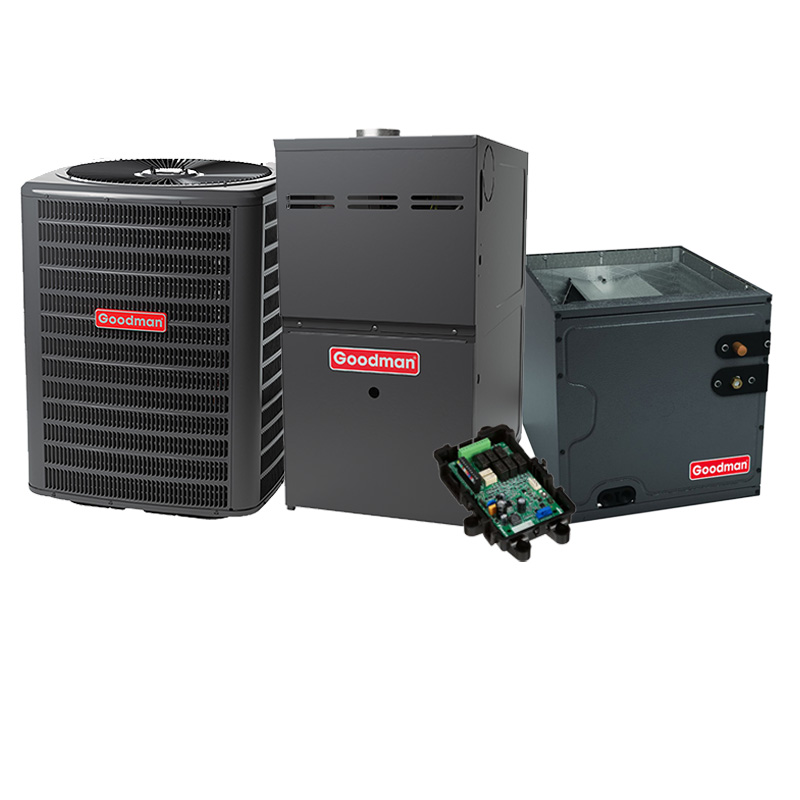
Goodman 3.5 Ton 13.8 SEER2 60000 BTU 80% Two-Stage Variable Speed Gas Furnace With R32 AC Condenser And Coil System – Upflow
View on AC Direct see your lowest price →Check current price on AC Direct →
Key features
- 3.5-ton cooling capacity paired with 60,000 BTU two-stage gas heat
- 13.8 SEER2 efficiency rating meets 2023 federal minimum standards
- Variable-speed ECM blower for quieter, more consistent airflow
- R-32 refrigerant with lower global-warming potential than R-410A
- 80% AFUE furnace in upflow configuration for basement or closet installs
- Two-stage heating reduces short-cycling and temperature swings
About this system
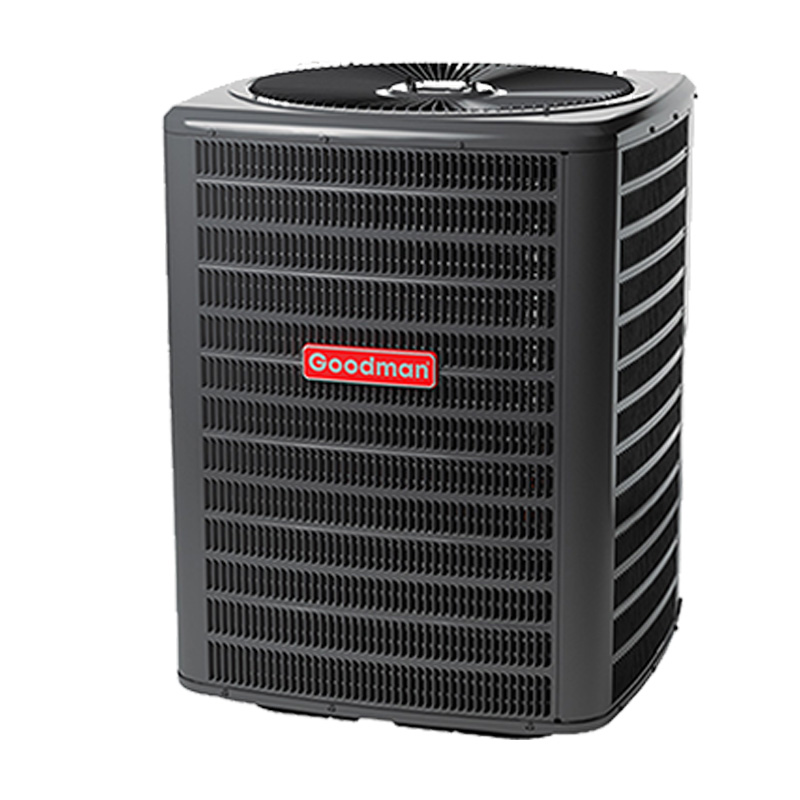
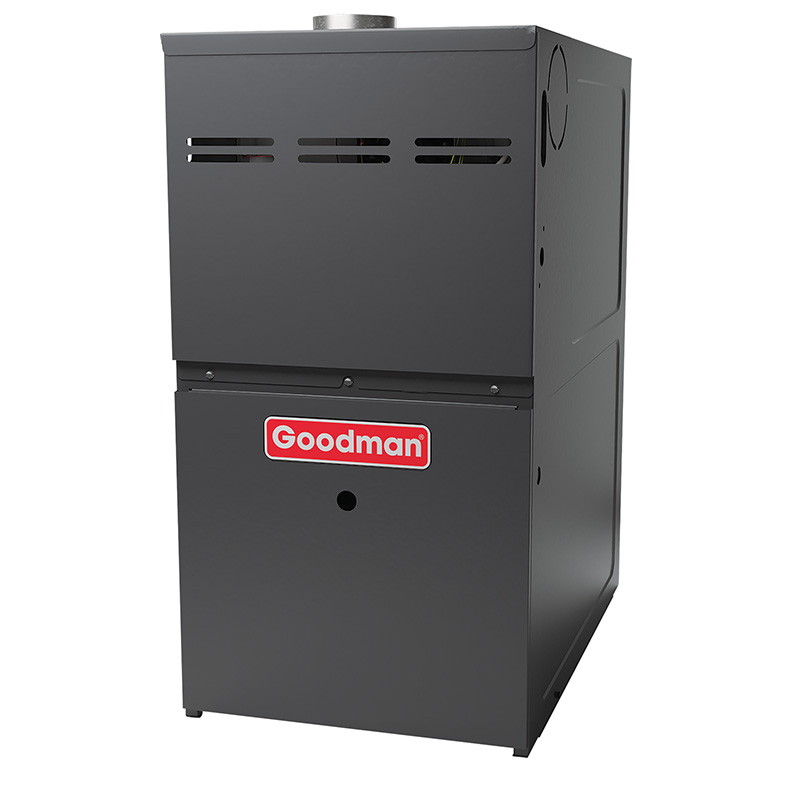
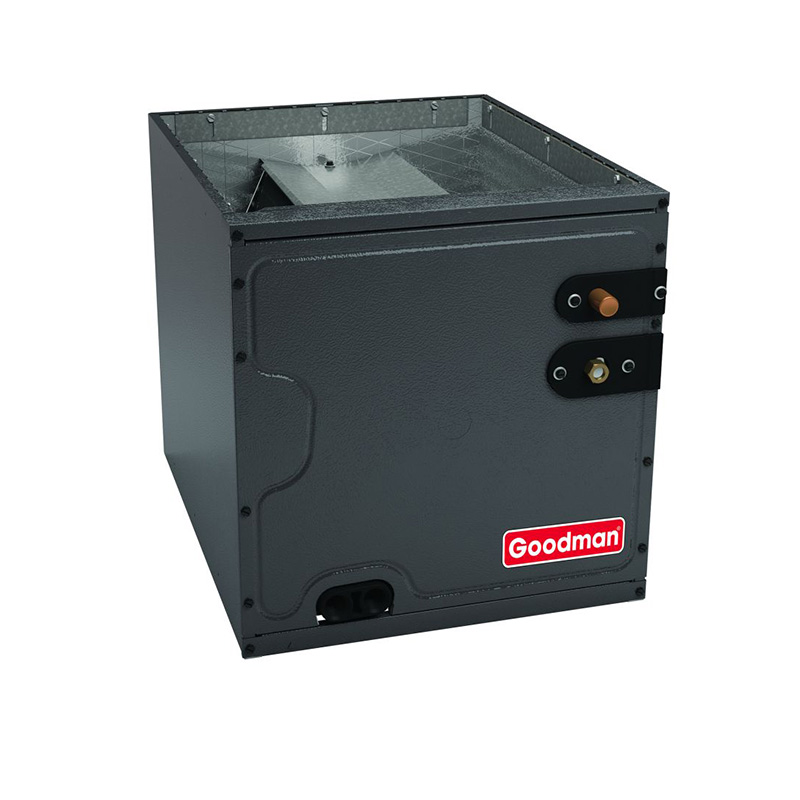
This Goodman upflow system bundles a 3.5-ton R-32 air conditioner condenser and matching evaporator coil with a 60,000 BTU 80% AFUE two-stage, variable-speed gas furnace into a single purchase. The combination suits mid-size homes in the 1,600 to 2,400 square foot range that have existing ductwork routed through a basement or utility closet where the furnace sits below the air handler. Two-stage heating means the furnace runs at a lower output most of the time, cycling up only on the coldest nights, which keeps indoor temperatures steadier and reduces short-cycling compared with a single-stage unit. The variable-speed air handler adds to that comfort by moving air more quietly and consistently than a fixed-speed blower.
The 13.8 SEER2 efficiency rating clears the federal minimum for most U.S. regions but sits at the entry level of the efficiency spectrum. Homeowners in moderate climates or those primarily concerned with upfront cost will find it adequate; those in the Sun Belt running the system four to six months a year will likely see meaningful utility savings by stepping up to a higher-SEER2 system instead. R-32 refrigerant is a lower global-warming-potential alternative to R-410A and is increasingly common in new residential equipment, so finding a qualified technician to service it is straightforward in most markets. The 80% AFUE furnace means one-fifth of fuel energy is vented as exhaust, which is acceptable for mild-winter climates but a tangible operating-cost disadvantage compared with 96% or higher condensing furnaces in cold-climate states.
This Goodman bundle delivers a functional, code-compliant heating and cooling system at a price point that is genuinely 15 to 25 percent below comparable Trane, Lennox, or Carrier configurations. The two-stage furnace and variable-speed blower add real comfort over single-stage alternatives at this tier, but buyers should go in with clear eyes about the brand's mixed long-term reliability record and plan for likely component service after year seven.
Overall score is the average of the five ratings above.
What we like
- Upfront cost is significantly lower than Trane, Carrier, or Lennox equivalents
- Two-stage heating and variable-speed blower improve comfort over basic single-stage setups
- R-32 refrigerant is serviceable by most certified HVAC technicians
- Matched system (condenser, coil, furnace) simplifies installation and warranty compliance
- 80% AFUE is adequate for mild-winter and shoulder-season climates
Trade-offs
- 13.8 SEER2 is entry-level efficiency; higher cooling loads will show meaningful utility cost differences versus 16+ SEER2 alternatives
- 80% AFUE furnace costs more to operate than 95-96% condensing options in cold-climate regions
- Documented capacitor failures and evaporator coil leaks are recurring issues in owner feedback, and repair frequency tends to rise after year seven
- Compressor longevity averages 10 to 14 years versus 15 to 20 years reported for premium brands
What homeowners and pros say about Goodman
On ConsumerAffairs, Goodman holds roughly 2.5 out of 5 stars, a score shaped heavily by the nature of that platform, where owners who experienced problems are far more likely to post than satisfied ones. The recurring theme in those reviews is repair costs climbing after the seven-year mark, with dual-run capacitor failures and evaporator coil leaks appearing frequently. On Google dealer reviews, where the full range of customers tends to weigh in, Goodman-installed systems average closer to 3.8 out of 5, and affordability is by far the most cited reason for the positive ratings. The gap between those two scores tells most of the story: buyers who get a clean install, do their annual maintenance, and accept that this is a value-tier product generally come away satisfied; those who expected premium-brand durability at a budget price are more likely to be disappointed.
HVAC technicians who work on both Goodman and premium brands tend to say roughly the same thing in online forums and trade discussions: Goodman is not a bad product, but it is more sensitive to install quality than a Trane or Carrier, and it will show you that sensitivity sooner. Capacitor swaps are considered a routine call on older Goodman equipment, usually a straightforward and affordable fix. Evaporator coil leaks and refrigerant issues in the first year are the more frustrating scenarios, and technicians note that first-year refrigerant problems almost always trace back to the installation rather than the equipment itself. Compressor lifespan averaging 10 to 14 years versus the 15 to 20 years reported for premium brands is a real consideration over the life of the home, though it often pencils out in Goodman’s favor when the upfront savings are factored in.
Sources: ConsumerAffairs Goodman owner reviews, AHRI Directory of Certified Product Performance, U.S. DOE appliance and equipment efficiency standards, Goodman product specification sheets.
What it costs to run
At 13.8 SEER2, cooling this 3.5-ton system for a typical 1200-hour cooling season at the U.S. average electricity rate of $0.17/kWh works out to roughly $621 per year in cooling, about $18 less per year than a minimum-efficiency 13.4 SEER2 unit of the same size. Your real cost depends on your climate and local rate.
Method: (42,000 BTU/hr ÷ 13.8 SEER2) × 1200 hours ÷ 1000 × $0.17/kWh. Rate source: U.S. EIA average; cooling hours: moderate-climate estimate.
How it compares
| Brand | Comparable model | SEER2 | Stage | Price position |
|---|---|---|---|---|
| Goodman | 3.5T 13.8 SEER2 / 60K BTU 80% Two-Stage Upflow Bundle | 13.8 | Two-stage furnace / variable-speed blower | Value pick |
| Carrier | Comfort 14 / 58MCA 80% AFUE Series | 14.0 | Two-stage | Typically 15 to 25 percent higher than this Goodman bundle |
| Trane | XR14 / S8X2 80% AFUE Series | 14.0 | Two-stage | Typically 20 to 30 percent higher than this Goodman bundle |
| Lennox | Merit 14 / ML180 80% AFUE Series | 14.0 | Two-stage | Typically 20 to 30 percent higher than this Goodman bundle |
Competitor rows are comparable single-stage units at similar efficiency; price is relative position, not a quote.
Questions about this system
Will 3.5 tons and 60,000 BTU be the right size for my house?
A proper Manual J load calculation is the only reliable way to answer that. As a rough reference, 3.5 tons is often used in homes between 1,600 and 2,400 square feet in moderate climates, but insulation, ceiling height, window area, and local design temperatures all shift that number. Oversizing the system is one of the most common and costly installation mistakes, so have your contractor run the calculation before you order.
What does the 80% AFUE rating actually cost me compared with a 96% furnace?
For every dollar of gas burned, an 80% furnace delivers 80 cents of heat and vents 20 cents up the flue; a 96% unit delivers 96 cents. On a $1,200 annual gas bill the gap is roughly $192 per year. In warmer climates where the furnace runs fewer hours the payback period on the more expensive high-efficiency unit stretches out, but in cold-climate states it can close in five to seven years.
My area requires R-32 certified technicians. Is that a common certification?
R-32 handling requires EPA 608 certification, which most licensed HVAC technicians already hold. R-32 is increasingly standard in residential split systems, so finding a qualified service technician is not difficult in most metro and suburban markets. It is worth confirming with your local contractor before purchase if you are in a rural area.
What are the most likely repair costs I should budget for over the first ten years?
Dual-run capacitor replacement is the most commonly documented failure on Goodman equipment and typically runs $300 to $600 including labor. Evaporator coil leaks are a documented issue in a meaningful share of owner reports and are more expensive to address. Setting aside $500 to $1,000 in a maintenance reserve is a reasonable cushion, particularly as the system moves past year seven when repair frequency tends to increase according to owner feedback patterns.
Does Goodman's warranty require registration, and what does it actually cover?
Yes, Goodman typically requires product registration within a set window after installation to qualify for the full parts warranty period. Without registration the coverage period is shorter. The warranty covers parts but not labor, which means a compressor replacement under warranty can still cost several hundred dollars in technician time. Confirm the current registration window and labor coverage terms with your dealer at the time of purchase.
Specifications
| Cooling capacity | 3.5 Ton |
| Efficiency | 13.8 SEER2 |
| Furnace output | 60000 BTU |
| Configuration | Upflow |
| Refrigerant | R-32 |