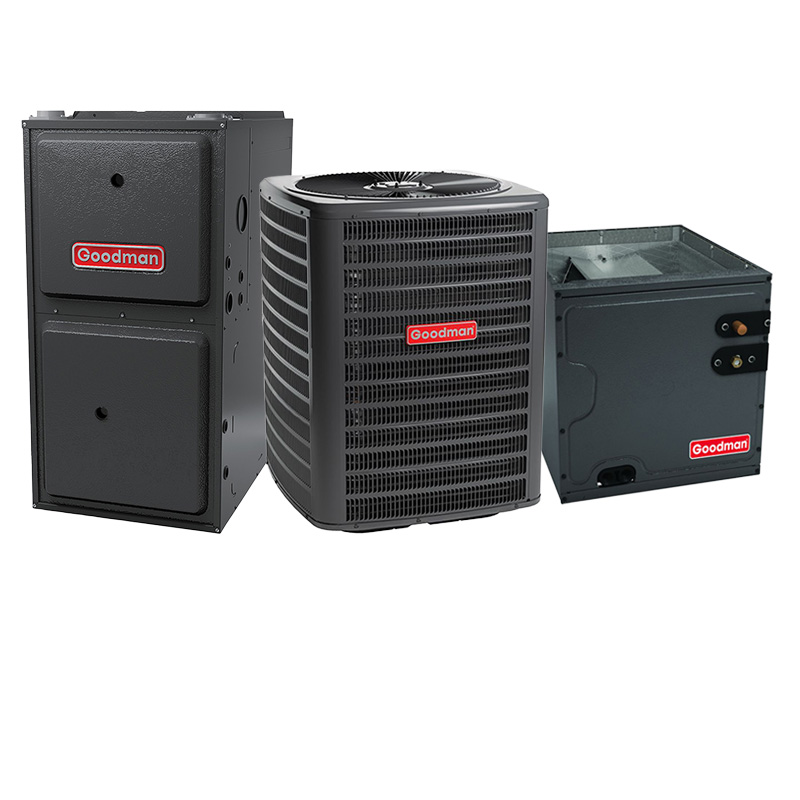
Goodman 3.5 Ton 13.8 SEER2 80000 BTU 96% AFUE Multi-Speed ECM Gas Furnace System – Upflow | R32
View on AC Direct see your lowest price →Check current price on AC Direct →
Key features
- 3.5-ton cooling capacity with 13.8 SEER2 efficiency rating
- 96% AFUE gas furnace with 80,000 BTU output for genuine high-efficiency heating
- Multi-speed ECM blower motor for better humidity control and lower fan energy use
- R-32 refrigerant with lower global-warming potential than R-410A
- Upflow configuration for basement or closet installations with overhead duct systems
- Priced 15 to 25 percent below comparable Trane, Carrier, and Lennox systems
About this system
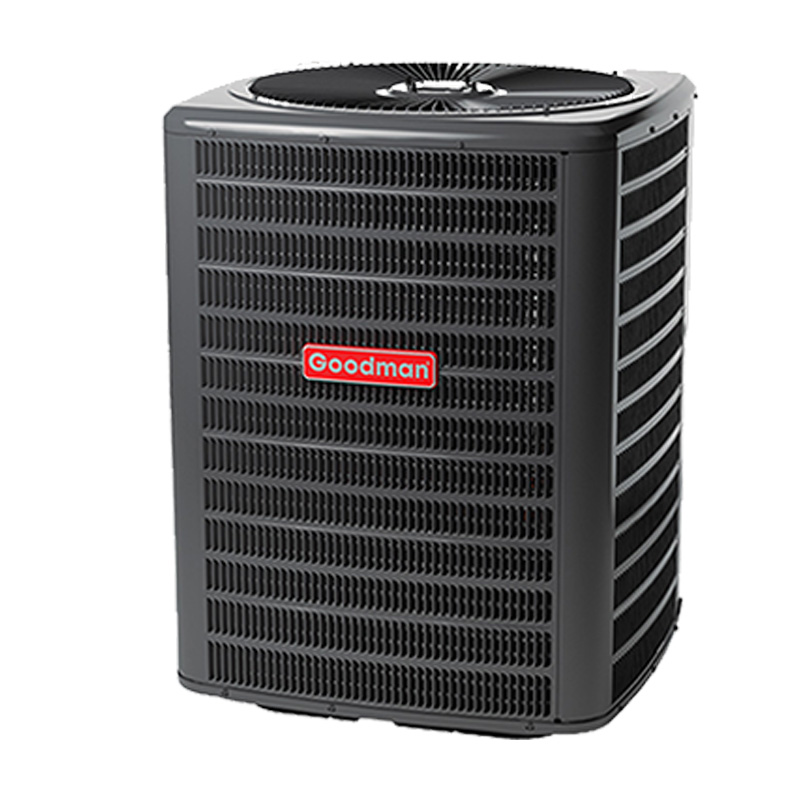
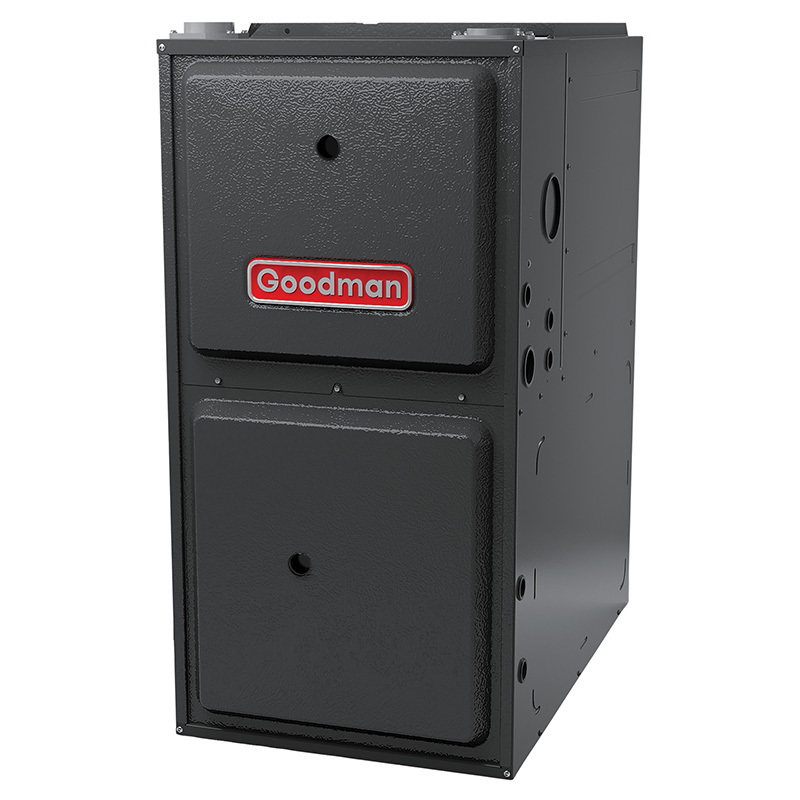
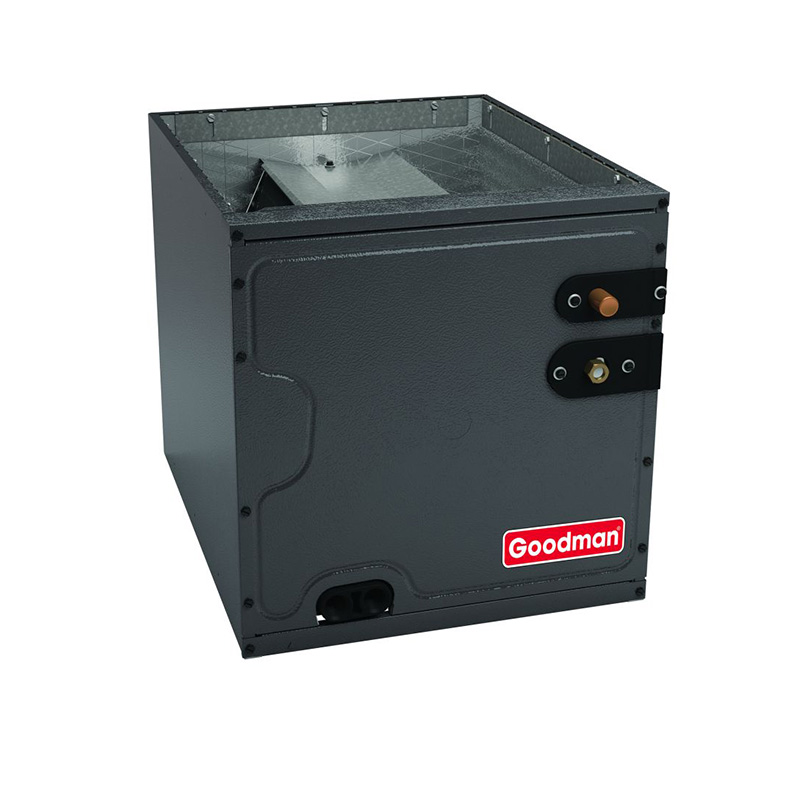
This Goodman bundle pairs a 3.5-ton, 13.8 SEER2 split-system air conditioner with an 80,000 BTU, 96% AFUE multi-speed ECM gas furnace in an upflow configuration, and it uses R-32 refrigerant rather than the older R-410A. The 13.8 SEER2 rating clears the current federal minimum and sits at the lower end of the mid-efficiency range, meaning cooling bills will be noticeably lower than with a legacy 14 SEER (pre-2023) system but noticeably higher than with a 17+ SEER2 variable-speed setup. The 96% AFUE furnace is a genuine high-efficiency unit: only 4 cents of every heating dollar escapes through the flue, which is a real advantage in climates with cold winters and high gas rates.
The multi-speed ECM blower motor is a meaningful upgrade over a basic single-speed motor. It ramps airflow up and down in steps rather than running flat-out all the time, which improves humidity control, reduces temperature swings between cycles, and cuts blower electricity use compared to a PSC motor. R-32 is a lower global-warming-potential refrigerant with slightly better thermodynamic properties than R-410A, though it does require technicians who are certified to handle mildly flammable refrigerants. The upflow furnace configuration suits the most common residential installation scenario: basement or closet placement with supply ducts running up through the floor system above. This bundle suits a homeowner replacing aging equipment in a 1,800 to 2,400 square foot home who wants high-efficiency heating and a competent but not premium cooling system, and who is more focused on keeping first cost down than on achieving top-tier efficiency scores.
This Goodman system delivers real high-efficiency heating and adequate mid-range cooling at a price that is meaningfully lower than comparable name-brand equipment, making it a reasonable choice for budget-conscious homeowners who prioritize the furnace side of the system. The trade-off is a brand history that shows shorter compressor life and more component failures after year seven compared to premium competitors, so the savings at purchase need to be weighed against potentially higher repair costs later. If your HVAC installer is experienced and thorough, this system can perform reliably for a decade or more; if the install is rushed or the refrigerant charge is off, early problems are more likely.
Overall score is the average of the five ratings above.
What we like
- 96% AFUE furnace delivers genuine high-efficiency heating with minimal flue loss
- Multi-speed ECM blower improves comfort and reduces blower electricity costs versus single-speed alternatives
- R-32 refrigerant is a lower-impact choice with slightly better efficiency characteristics than R-410A
- Upfront cost is 15 to 25 percent below comparable Trane, Carrier, and Lennox bundles
- 13.8 SEER2 cooling meets current federal standards and beats legacy minimum-efficiency equipment on operating costs
Trade-offs
- Compressor lifespan averages 10 to 14 years, roughly 3 to 6 years shorter than premium-brand compressors
- Dual-run capacitor failures are the most common reported issue, typically appearing after several years of use
- Evaporator coil leaks appear in a meaningful share of owner reports and can be costly to address
- A minority of owners report refrigerant leaks in the first year, usually tied to install or charge quality rather than the equipment itself
What homeowners and pros say about Goodman
Homeowners who have owned Goodman equipment tend to sort themselves into two camps fairly quickly. Those who had a careful installation and kept up with annual maintenance often report years of uneventful service and point to the lower purchase price as a genuine win. Those who ran into trouble tend to describe the same handful of issues: a dual-run capacitor that needed replacing somewhere between years four and eight (typically a 300 to 600 dollar service call and generally not a disaster), or, more frustratingly, an evaporator coil leak that surfaced after several seasons of use and carried a much steeper repair bill. On Google dealer review pages, Goodman equipment averages around 3.8 out of 5 stars, with affordability coming up again and again as the reason buyers chose the brand. On ConsumerAffairs, the score drops to roughly 2.5 out of 5, though that platform captures a disproportionate share of owners who had something go wrong.
HVAC technicians who work on Goodman equipment regularly tend to have a pragmatic view of it. They note that the brand’s performance is closely tied to how carefully the system was commissioned: refrigerant charge, airflow, and electrical connections all matter more with this equipment than with some premium brands that have tighter factory tolerances. The R-32 refrigerant in this specific system is a newer variable for many techs, and confirming your contractor is certified to handle A2L refrigerants before booking service is a practical step. The compressor longevity gap is real: Goodman compressors typically average 10 to 14 years in field reports, compared to 15 to 20 years for top-tier brands, which is a meaningful consideration if you plan to stay in the home for a long time. For a buyer who wants to keep first cost down, has a qualified installer lined up, and is realistic about the possibility of a repair call in the second half of the system’s life, this bundle represents a straightforward value calculation rather than a gamble.
Sources: ConsumerAffairs Goodman owner reviews, AHRI Directory of Certified Product Performance, U.S. DOE appliance and equipment efficiency standards, Goodman product specification sheets.
What it costs to run
At 13.8 SEER2, cooling this 3.5-ton system for a typical 1200-hour cooling season at the U.S. average electricity rate of $0.17/kWh works out to roughly $621 per year in cooling, about $18 less per year than a minimum-efficiency 13.4 SEER2 unit of the same size. Your real cost depends on your climate and local rate.
Method: (42,000 BTU/hr ÷ 13.8 SEER2) × 1200 hours ÷ 1000 × $0.17/kWh. Rate source: U.S. EIA average; cooling hours: moderate-climate estimate.
How it compares
| Brand | Comparable model | SEER2 | Stage | Price position |
|---|---|---|---|---|
| Goodman | 3.5 Ton 13.8 SEER2 / 80K BTU 96% AFUE Multi-Speed ECM Bundle | 13.8 | Multi-speed | Value pick |
| Carrier | Comfort Series (24ACC636 / 58CVA) | 14.0 | Single-stage | Typically 15 to 25 percent more than this Goodman bundle |
| Trane | XR14 / S9X1 (80% or 96% AFUE pairing) | 14.0 | Single-stage | Typically 15 to 25 percent more than this Goodman bundle |
| Lennox | Merit ML14XC1 / ML296V | 14.3 | Single-stage | Typically 15 to 25 percent more than this Goodman bundle |
Competitor rows are comparable single-stage units at similar efficiency; price is relative position, not a quote.
Questions about this system
Is R-32 refrigerant safe, and can any HVAC technician service this system?
R-32 is classified as mildly flammable (A2L), so it requires technicians who are trained and certified to handle it safely. Most established HVAC companies are already equipped to work with A2L refrigerants as the industry transitions away from R-410A, but it is worth confirming your service contractor has the proper certification before scheduling work.
Will the 96% AFUE furnace require a special venting setup?
Yes. A 96% AFUE condensing furnace produces a cool, moisture-laden exhaust that cannot use a standard metal flue. It requires PVC or CPVC direct-vent pipes, typically run horizontally through a side wall or vertically through the roof. This is standard work for any competent installer but does add labor cost if your existing home has only a conventional chimney flue.
What does the multi-speed ECM blower actually do differently from a standard motor?
An ECM motor adjusts its speed electronically across several steps rather than running at a fixed full speed. In practice this means the blower can run at a lower, quieter speed for longer periods, which removes more humidity from the air, reduces temperature swings between cycles, and uses significantly less electricity than a conventional PSC motor running at full speed.
Goodman gets mixed reviews online. How worried should I be about long-term reliability?
The concern is legitimate but needs context. Goodman scores around 2.5 out of 5 on ConsumerAffairs, a channel that skews toward complaint writers, with repair costs after roughly year seven being the most common theme. Google dealer reviews average closer to 3.8 out of 5, where affordability is frequently cited as a positive. The documented weak points are dual-run capacitor failures (a low-cost fix), evaporator coil leaks, and compressors that tend to last 10 to 14 years rather than the 15 to 20 years typical of premium brands. A strong install and a maintenance plan reduce but do not eliminate those risks.
Is 3.5 tons the right size for my home, and can I confirm that before ordering?
Tonnage should always be confirmed with a Manual J load calculation done by your HVAC contractor before purchase. As a rough reference, 3.5 tons is commonly appropriate for homes in the range of roughly 1,800 to 2,400 square feet, but insulation levels, window area, climate zone, and ceiling height all affect the correct size. Oversizing or undersizing causes comfort problems and shortens equipment life, so the calculation is worth doing properly.
Specifications
| Cooling capacity | 3.5 Ton |
| Efficiency | 13.8 SEER2 |
| Furnace output | 80000 BTU |
| Furnace efficiency | 96% AFUE |
| Configuration | Upflow |
| Refrigerant | R-32 |