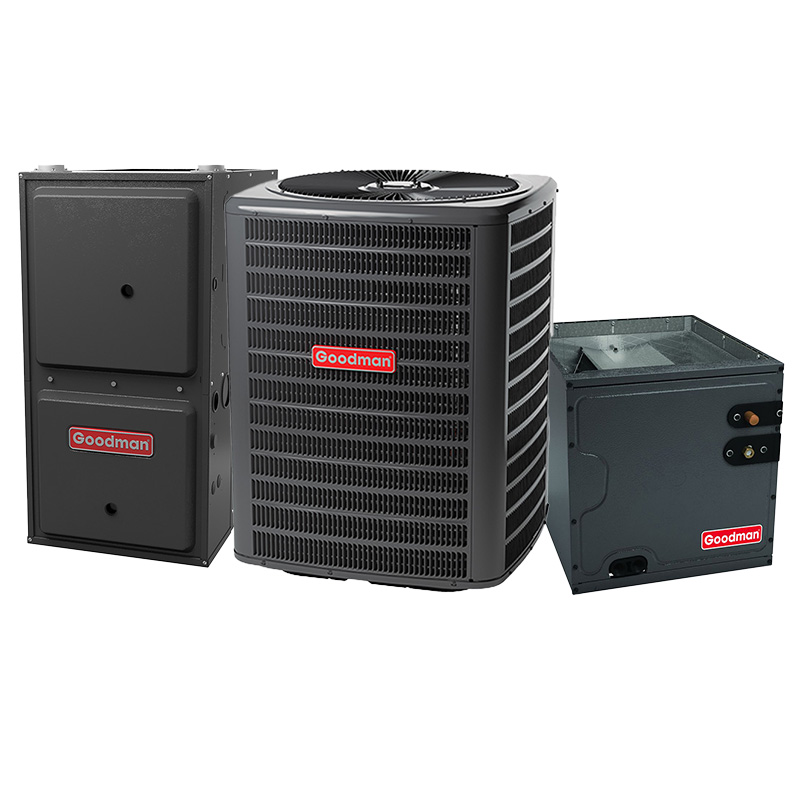
Goodman 3.5 Ton 13.8 SEER2 AC With 80000 BTU 96% AFUE 2-Stage Variable-Speed ECM Gas Furnace System – Downflow | R32
View on AC Direct see your lowest price →Check current price on AC Direct →
Key features
- 3.5-ton cooling capacity rated at 13.8 SEER2 for federal minimum compliance in most U.S. regions
- 96% AFUE two-stage gas furnace reduces temperature swings and fuel waste on mild heating days
- Variable-speed ECM blower motor improves humidity control and runs quieter than standard PSC motors
- Downflow configuration designed for closet or platform installations where supply air exits the bottom
- R-32 refrigerant with lower global-warming potential than legacy R-410A systems
- 80,000 BTU heating output suitable for mid-to-large homes in moderate to cold climates
About this system
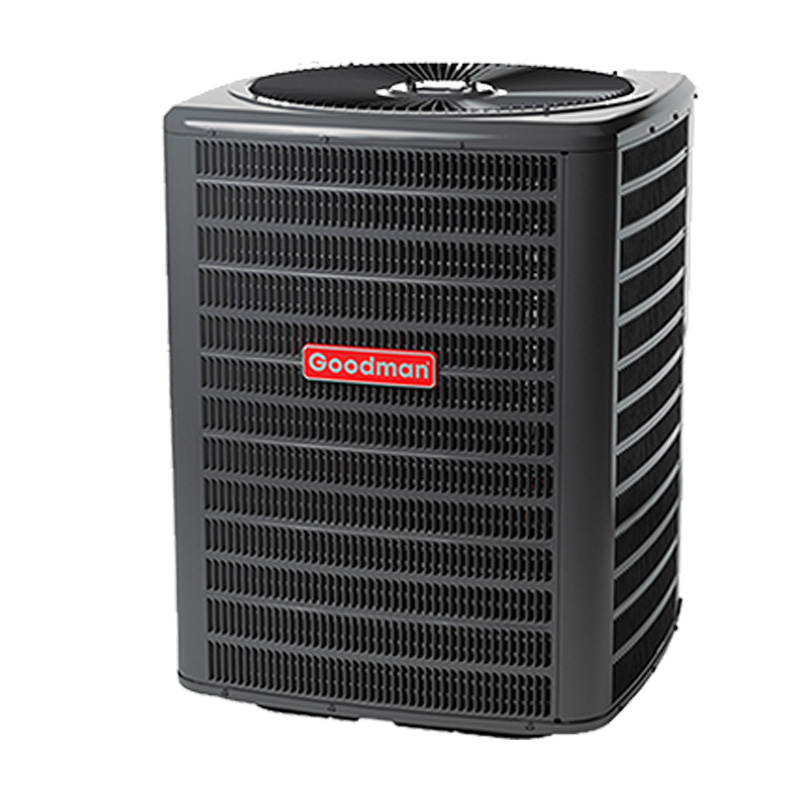
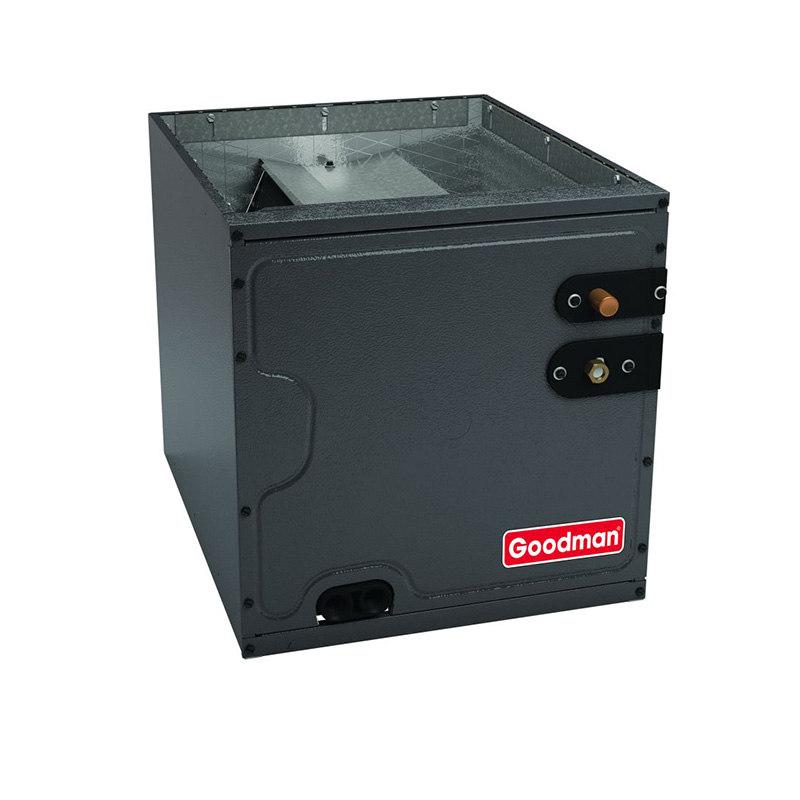
This Goodman bundle pairs a 3.5-ton, 13.8 SEER2 air conditioner with an 80,000 BTU, 96% AFUE two-stage gas furnace in a downflow configuration, making it a practical choice for homes where the air handler sits in a closet or platform above a crawlspace and the supply air flows downward. The R-32 refrigerant charge is a forward-looking element: R-32 has a lower global-warming potential than the R-410A it replaces, and it is becoming the industry standard as R-410A is phased out. At 13.8 SEER2, the cooling side clears the federal minimum for most of the country but sits at the lower end of the mid-efficiency range, so buyers in climates with long, brutal cooling seasons should weigh whether a higher-SEER2 option would pay back the price difference over time.
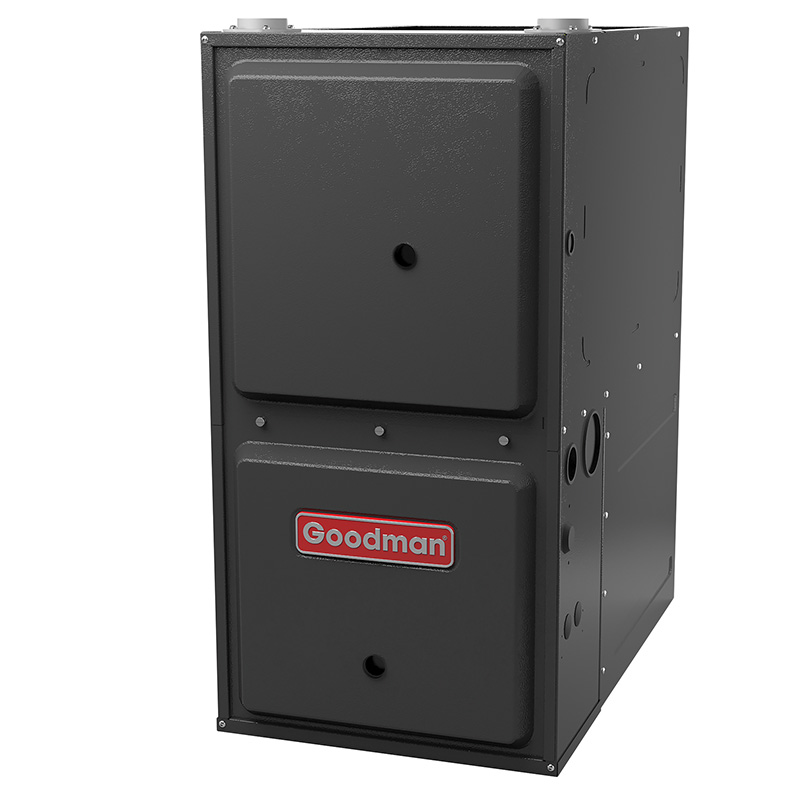
The furnace is the stronger half of this system on paper. A 96% AFUE rating means 96 cents of every dollar spent on gas goes to usable heat, which is competitive with any brand at this tier. The two-stage burner lets the furnace run at a lower output on mild days, reducing temperature swings and short-cycling. The variable-speed ECM blower motor quietly moves air at the precise rate the system calls for rather than blasting on at full speed, which improves humidity control in summer and comfort in winter while trimming electricity use. Together, those furnace features meaningfully raise the comfort ceiling compared to a single-stage, PSC-motor alternative. The downflow orientation limits this system to specific installation footprints, so confirming your existing ductwork and equipment closet match before purchasing is essential.
This Goodman combo delivers a high-performing furnace and a code-compliant AC at a price point meaningfully below premium brands, making it a reasonable budget-conscious choice for homeowners who understand they are accepting a shorter compressor lifespan and a higher likelihood of mid-cycle repairs than they would get from Trane, Carrier, or Lennox. The 96% AFUE two-stage furnace with ECM blower is a genuine standout, but the 13.8 SEER2 cooling side offers little efficiency headroom for hot-climate households. Install quality will determine a large share of how this system performs over its life.
Overall score is the average of the five ratings above.
What we like
- 96% AFUE two-stage furnace is genuinely efficient and comparable to premium-brand offerings at this BTU level
- Variable-speed ECM motor improves comfort and humidity management versus standard single-speed blowers
- R-32 refrigerant is future-ready as R-410A is phased out industry-wide
- Priced roughly 15 to 25 percent below comparable Trane, Lennox, and Carrier systems
- Downflow design fills a specific installation need that not all brands stock at this tonnage and efficiency tier
Trade-offs
- Compressor lifespan averages 10 to 14 years versus 15 to 20 years for premium-brand compressors
- Dual-run capacitor failures are a documented recurring issue, typically requiring a service call in the 300 to 600 dollar range
- Evaporator coil leaks appear in a notable share of owner reviews, especially after year 7
- 13.8 SEER2 efficiency provides limited cooling-cost savings in high-usage climates compared to 16+ SEER2 alternatives
What homeowners and pros say about Goodman
Homeowners who post about Goodman online tend to split along a familiar line. Those who had a careful, experienced installer report years of uneventful service and point to the price savings as a clear win. Those who ran into trouble often trace the problem back to either install quality or the brand’s documented weak points: the dual-run capacitor is the most commonly replaced component, typically a straightforward repair but an annoying one that averages 300 to 600 dollars when it lands outside the warranty window. Evaporator coil leaks also surface in a meaningful number of owner accounts, particularly in systems that have passed the seven-year mark. Goodman’s ConsumerAffairs score sits at roughly 2.5 out of 5, though that platform draws a disproportionate share of frustrated owners. Google dealer reviews, which capture a broader cross-section of customers, land closer to 3.8 out of 5, with affordability cited most often as the reason buyers chose Goodman in the first place.
HVAC technicians tend to have a pragmatic view of Goodman. Many will install it without hesitation for cost-sensitive customers, provided the homeowner understands that compressors on Goodman equipment tend to average 10 to 14 years of service rather than the 15 to 20 years a Trane or Carrier compressor might reach. The techs who are most positive about the brand emphasize that a well-commissioned Goodman system, meaning one that was properly sized, charged to spec, and had all electrical connections verified, performs reliably through its expected lifespan. The ones who are more cautious point out that a minority of units arrive from the factory or field with refrigerant charge issues, which can present as underperformance or early component wear if not caught at startup. For this specific system, the 96% AFUE two-stage furnace with ECM blower draws more consistent praise than the cooling side, and that is where most of the long-term comfort story will be written for buyers in mixed or cold climates.
Sources: ConsumerAffairs Goodman owner reviews, AHRI Directory of Certified Product Performance, U.S. DOE appliance and equipment efficiency standards, Goodman product specification sheets.
What it costs to run
At 13.8 SEER2, cooling this 3.5-ton system for a typical 1200-hour cooling season at the U.S. average electricity rate of $0.17/kWh works out to roughly $621 per year in cooling, about $18 less per year than a minimum-efficiency 13.4 SEER2 unit of the same size. Your real cost depends on your climate and local rate.
Method: (42,000 BTU/hr ÷ 13.8 SEER2) × 1200 hours ÷ 1000 × $0.17/kWh. Rate source: U.S. EIA average; cooling hours: moderate-climate estimate.
How it compares
| Brand | Comparable model | SEER2 | Stage | Price position |
|---|---|---|---|---|
| Goodman | This system (3.5T AC + 80K BTU 96% AFUE 2-stage ECM furnace, downflow, R-32) | 13.8 | Two-stage furnace / single-stage condenser | Value pick |
| Carrier | Performance 13 / 14 series condenser with 96% AFUE Performance furnace (58TP / 24ACC) | 13.4 to 14.3 | Two-stage furnace / single-stage condenser | Typically 15 to 25 percent more than Goodman |
| Trane | XR14 condenser with S9V2 96% AFUE variable-speed furnace | 13.8 to 14.3 | Two-stage furnace / single-stage condenser | Typically 15 to 25 percent more than Goodman |
| Lennox | Merit ML14 condenser with SLP98V 96% AFUE furnace | 13.8 to 14.5 | Two-stage furnace / single-stage condenser | Typically 15 to 25 percent more than Goodman |
Competitor rows are comparable single-stage units at similar efficiency; price is relative position, not a quote.
Questions about this system
Is a downflow furnace going to work with my existing ductwork, or do I need modifications?
Downflow furnaces are designed specifically for installations where the supply plenum exits the bottom of the unit, typically in a closet, alcove, or raised platform above a crawlspace or basement. If your current system is upflow or horizontal, you would likely need significant duct and platform modifications, so confirming your existing configuration with a licensed HVAC contractor before ordering is strongly recommended.
Why does this system use R-32 instead of R-410A, and does that affect service costs?
R-32 has a lower global-warming potential than R-410A and is part of the industry-wide refrigerant transition ahead of the R-410A phase-out. Service technicians will need R-32 certification and equipment to work on this system, which is increasingly common but worth confirming with your local contractor to avoid any service gaps in rural areas.
The two-stage furnace sounds like it runs more often at low fire. Will that raise my gas bill?
No. Running at low stage more frequently is actually more efficient than short-cycling at full capacity because the furnace spends less time in the inefficient startup and cooldown phases. Combined with the 96% AFUE rating, most homeowners see flat or lower gas costs compared to a single-stage 80% AFUE furnace, particularly in climates with long shoulder seasons.
Goodman has mixed reviews online. Should I be worried about reliability?
Goodman scores around 2.5 out of 5 on ConsumerAffairs, a platform that skews toward complaints, and approximately 3.8 out of 5 across Google dealer reviews, where affordability is frequently praised. The documented weak points are dual-run capacitor failures (a 300 to 600 dollar fix when they occur), evaporator coil leaks in a notable number of units, and compressor lifespans that average 10 to 14 years rather than the 15 to 20 years associated with premium brands. A proper installation and an extended labor warranty from your contractor will significantly reduce your exposure to costly surprises.
At 3.5 tons, how do I know this is the right size for my home?
Tonnage should always be determined by a Manual J load calculation, not by square footage rules of thumb, because insulation levels, window area, ceiling height, and local climate all affect the result. An oversized unit short-cycles and leaves humidity uncontrolled; an undersized unit runs continuously on peak days. Have your contractor run the calculation before finalizing this purchase, especially since returning or exchanging installed HVAC equipment is difficult.
Specifications
| Cooling capacity | 3.5 Ton |
| Efficiency | 13.8 SEER2 |
| Furnace output | 80000 BTU |
| Furnace efficiency | 96% AFUE |
| Configuration | Downflow |
| Refrigerant | R-32 |