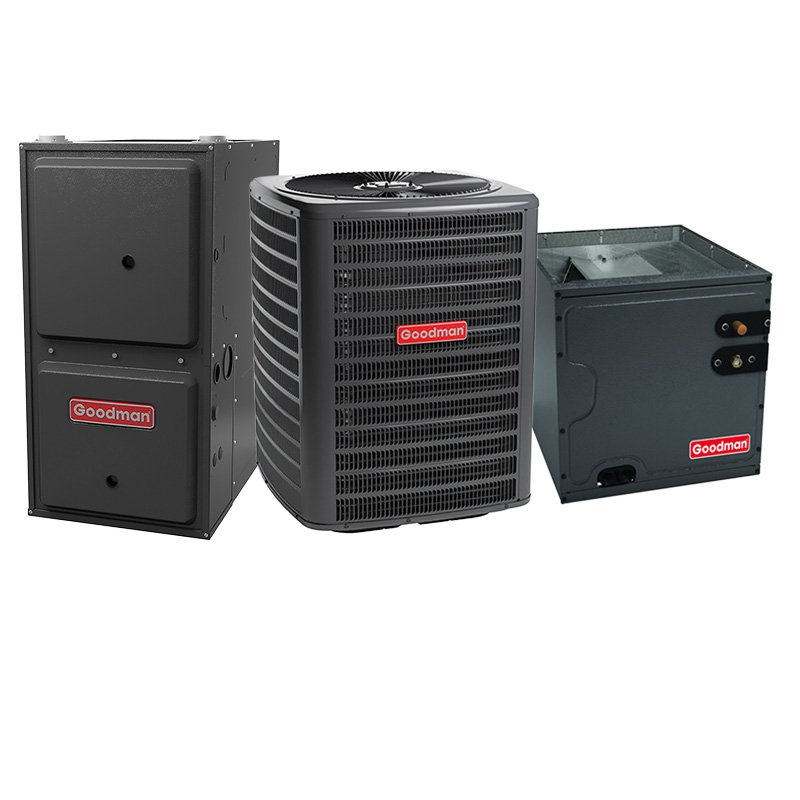
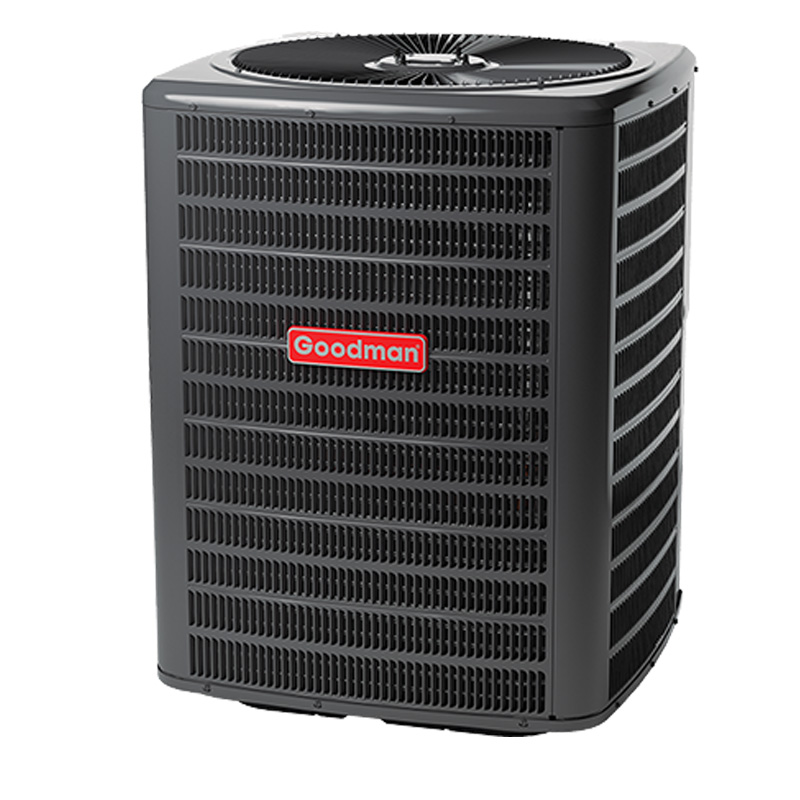
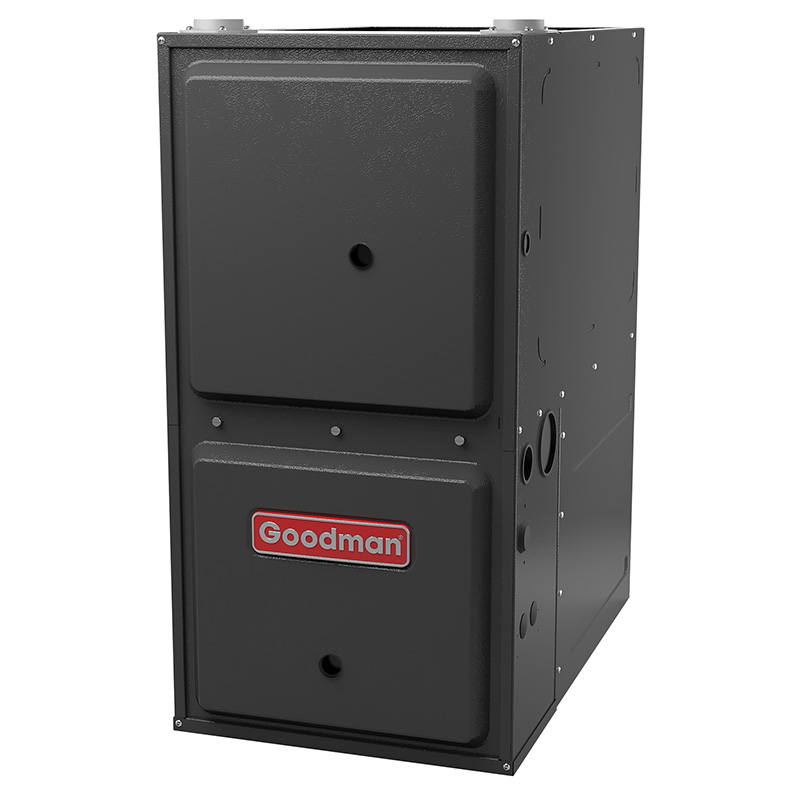
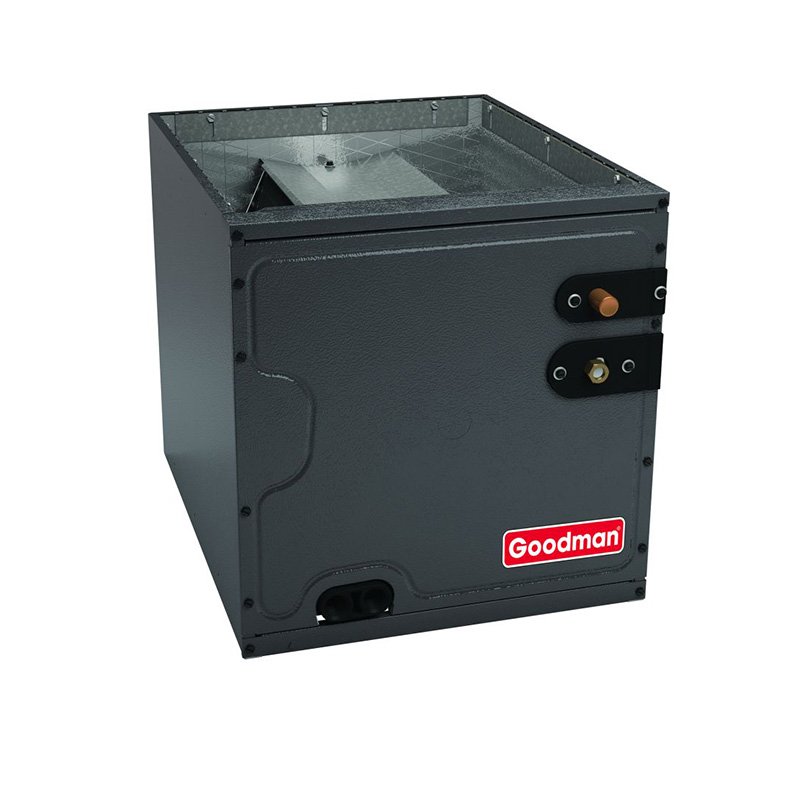
Goodman 3.5 Ton 14.5 SEER2 80000 BTU 80% AFUE Two Stage Multi-Speed ECM Gas Furnace System – Low NOX For California Downflow | R32
View on AC Direct see your lowest price →Check current price on AC Direct →
Key features
- 3.5-ton cooling capacity with 14.5 SEER2 efficiency rating
- 80,000 BTU two-stage gas furnace at 80% AFUE
- R-32 refrigerant with California Low NOx certification
- Downflow air handler configuration for closet and crawlspace installations
- ECM multi-speed blower motor for reduced electricity use and steadier airflow
- Compatible with most standard 24V thermostats, including two-stage-capable models
About this system
The Goodman GLXS4BA4210 is a 3.5-ton, 14.5 SEER2 split system paired with an 80,000 BTU, 80% AFUE two-stage gas furnace in a downflow configuration. It is built around R-32 refrigerant, a lower-global-warming-potential alternative to R-410A, and carries California Low NOx certification, making it one of the few setups that clears air-quality rules in SCAQMD-regulated districts without an add-on kit. The downflow orientation routes conditioned air downward through the duct system, which suits homes where the air handler sits in a closet on the main floor, a utility room above a crawlspace, or an attic platform where supply ducts run below the unit.
The two-stage furnace runs at a reduced fire rate roughly 70 to 80 percent of the time, which smooths out temperature swings compared with single-stage equipment and helps the ECM blower motor maintain steadier airflow at lower electricity draw. The 14.5 SEER2 rating sits at the federal minimum efficiency tier for this region and equipment class, so operating costs will be moderate rather than low. Households with above-average cooling loads, comfort-sensitive occupants, or high local utility rates may want to weigh a higher-SEER2 system. This package makes the most sense for budget-conscious buyers replacing older R-22 or R-410A equipment who want a code-compliant California system without paying premium-brand prices.
This Goodman package covers a specific need well: California Low NOx compliance at a value price point, with a two-stage furnace that improves comfort over entry-level single-stage alternatives. The 14.5 SEER2 rating is baseline rather than impressive, and long-term costs depend heavily on install quality and the luck of the component draw. Buyers who want longer compressor life expectancy and fewer mid-decade repair bills should factor premium-brand pricing into the total-cost calculation before deciding.
Overall score is the average of the five ratings above.
What we like
- Priced roughly 15 to 25 percent below comparable Carrier, Trane, and Lennox systems
- California Low NOx certified out of the box, no additional compliance hardware needed
- Two-stage furnace reduces temperature swings and short-cycling compared with single-stage models
- ECM blower lowers fan electricity consumption versus PSC motors
- R-32 refrigerant is a forward-looking refrigerant choice as R-410A is phased out
Trade-offs
- 80% AFUE is the lowest efficiency tier; high-use households will pay more to operate than with a 96% AFUE furnace
- 14.5 SEER2 is minimum-compliance efficiency, not a standout for cooling energy costs
- Compressor lifespan averages 10 to 14 years versus 15 to 20 for premium brands, raising long-term replacement risk
- Documented failure modes include dual-run capacitor failures, evaporator coil leaks, and a minority of early refrigerant leaks tied to install or charge issues
What homeowners and pros say about Goodman
Homeowners and HVAC technicians tend to land in the same place on Goodman: the price is real, and so are the trade-offs. On ConsumerAffairs, Goodman scores roughly 2.5 out of 5, but that platform skews toward people who had a problem worth writing about, and the recurring theme is repair bills climbing after around year seven. Google dealer reviews tell a more balanced story, sitting at about 3.8 out of 5 across hundreds of location-level reviews, where affordability comes up most often as a reason buyers are satisfied. For this particular system, both camps are relevant.
On the technical side, contractors flag dual-run capacitor failure as the most common call-back on Goodman equipment, typically a quick fix in the 300 to 600 dollar range but an annoyance if it happens during a heat wave. Evaporator coil leaks show up in a meaningful share of owner accounts and cost considerably more to handle. Compressor longevity averaging 10 to 14 years versus 15 to 20 for premium brands is not a dealbreaker on a budget-focused purchase, but it does affect the honest total-cost math. The minority of owners who report refrigerant leaks within year one are almost always dealing with an install or charge issue rather than a factory defect, which underscores how much the outcome of any Goodman system depends on the quality of the contractor doing the work.
Sources: ConsumerAffairs Goodman owner reviews, AHRI Directory of Certified Product Performance, U.S. DOE appliance and equipment efficiency standards, Goodman product specification sheets.
What it costs to run
At 14.5 SEER2, cooling this 3.5-ton system for a typical 1200-hour cooling season at the U.S. average electricity rate of $0.17/kWh works out to roughly $591 per year in cooling, about $48 less per year than a minimum-efficiency 13.4 SEER2 unit of the same size. Your real cost depends on your climate and local rate.
Method: (42,000 BTU/hr ÷ 14.5 SEER2) × 1200 hours ÷ 1000 × $0.17/kWh. Rate source: U.S. EIA average; cooling hours: moderate-climate estimate.
How it compares
| Brand | Comparable model | SEER2 | Stage | Price position |
|---|---|---|---|---|
| Goodman | GLXS4BA4210 (this system) | 14.5 | Two-stage | Value pick |
| Carrier | Performance 14 / 59TP6 series | 14.3 to 15.2 | Single-stage | Typically 15 to 25 percent more than this Goodman package |
| Trane | XR14 / S8X1 series | 14.3 to 15.1 | Single-stage | Typically 15 to 25 percent more than this Goodman package |
| Lennox | Merit 14 / ML14 / SL280 series | 14.3 to 15.0 | Single-stage | Typically 15 to 25 percent more than this Goodman package |
Competitor rows are comparable single-stage units at similar efficiency; price is relative position, not a quote.
Questions about this system
Does this system actually meet California Low NOx requirements without extra parts?
Yes. The GLXS4BA4210 carries the Low NOx certification required by the South Coast and other California air quality districts, so it can be permitted and installed as shipped. No separate Low NOx burner kit or modification is needed.
What does the downflow configuration mean for my installation, and can it be converted?
Downflow means the supply air exits from the bottom of the air handler, which suits closets, utility rooms above crawlspaces, or attic platforms where ductwork runs below the unit. Most downflow units cannot be field-converted to upflow or horizontal without replacing the cabinet, so confirm your duct layout before ordering.
Will my existing thermostat work with the two-stage furnace and ECM blower?
A standard single-stage thermostat will operate the system but will only call for one heat stage, leaving the two-stage benefit partially unused. For full two-stage operation and better comfort, a two-stage-compatible thermostat such as a Honeywell T6 Pro or Ecobee is worth the modest added cost.
What are the most common repair costs I should budget for over the first ten years?
Dual-run capacitors are the most frequently reported failure on Goodman equipment and typically run 300 to 600 dollars including a service call. Evaporator coil leaks appear in a meaningful share of owner reports and cost substantially more to address. Keeping a service agreement or setting aside a repair reserve is a practical step.
Is R-32 refrigerant harder or more expensive to service than R-410A?
R-32 is mildly flammable (A2L classification), so technicians need specific training and tools to handle it safely, and not every HVAC contractor is currently equipped. Availability is growing as R-410A is phased out, but you should confirm your service provider is R-32 certified before committing to this system.
Specifications
| Cooling capacity | 3.5 Ton |
| Efficiency | 14.5 SEER2 |
| Furnace output | 80000 BTU |
| Furnace efficiency | 80% AFUE |
| Configuration | Downflow |
| Refrigerant | R-32 |
| Model | GLXS4BA4210 |