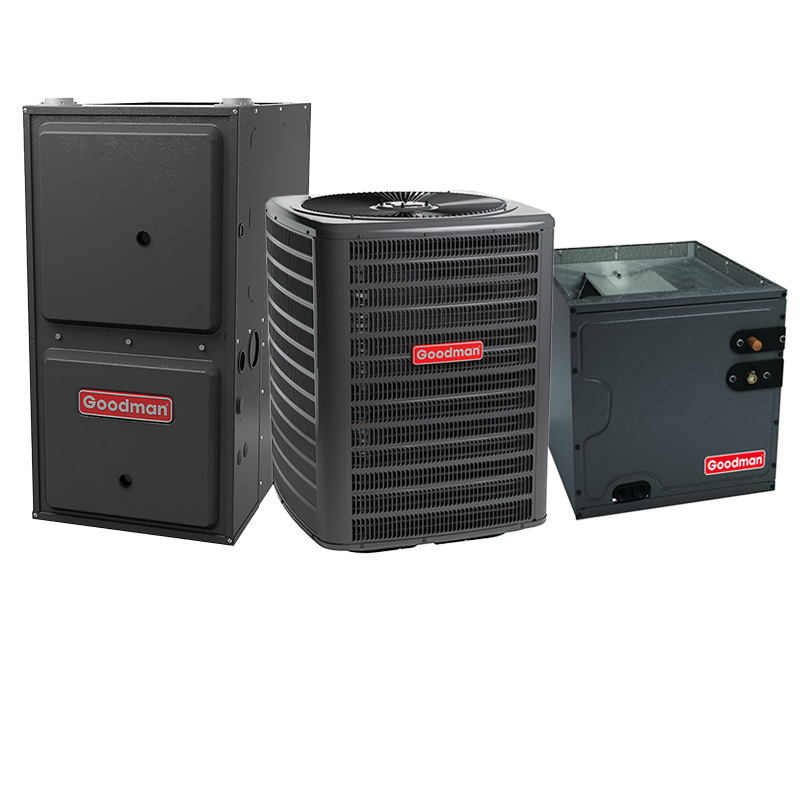
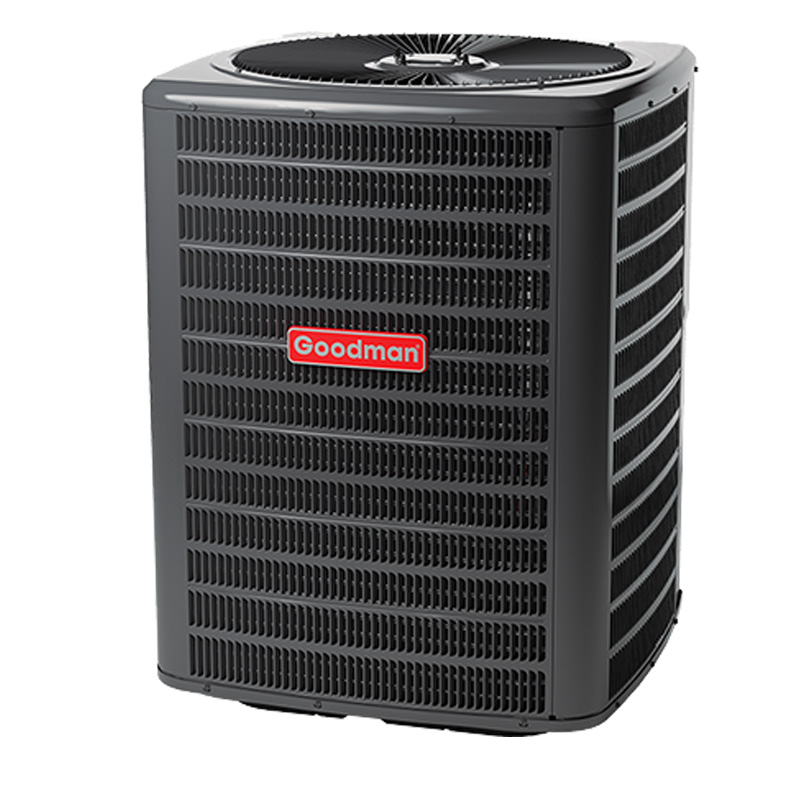
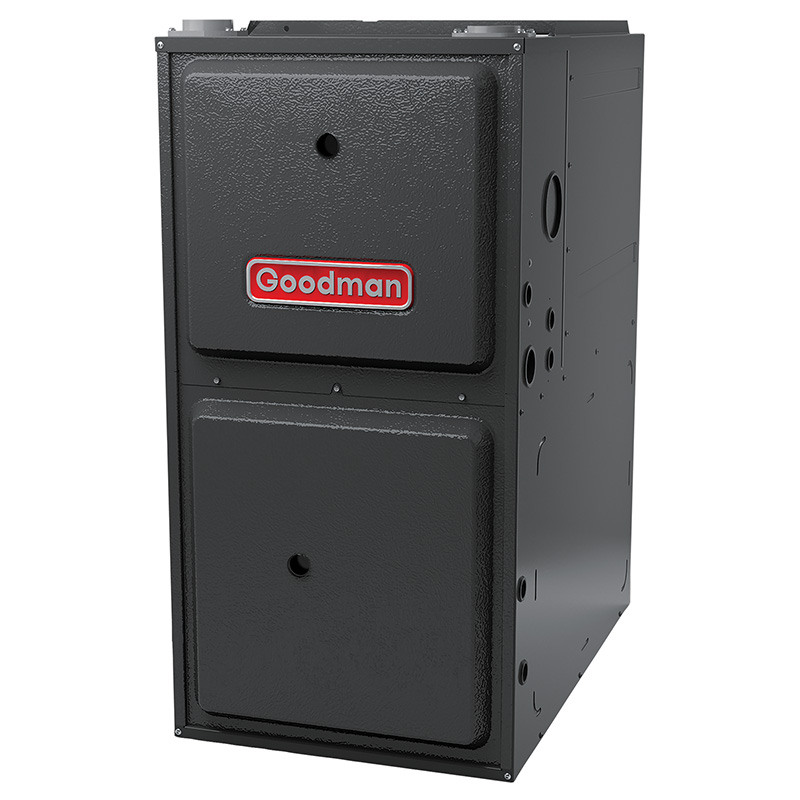
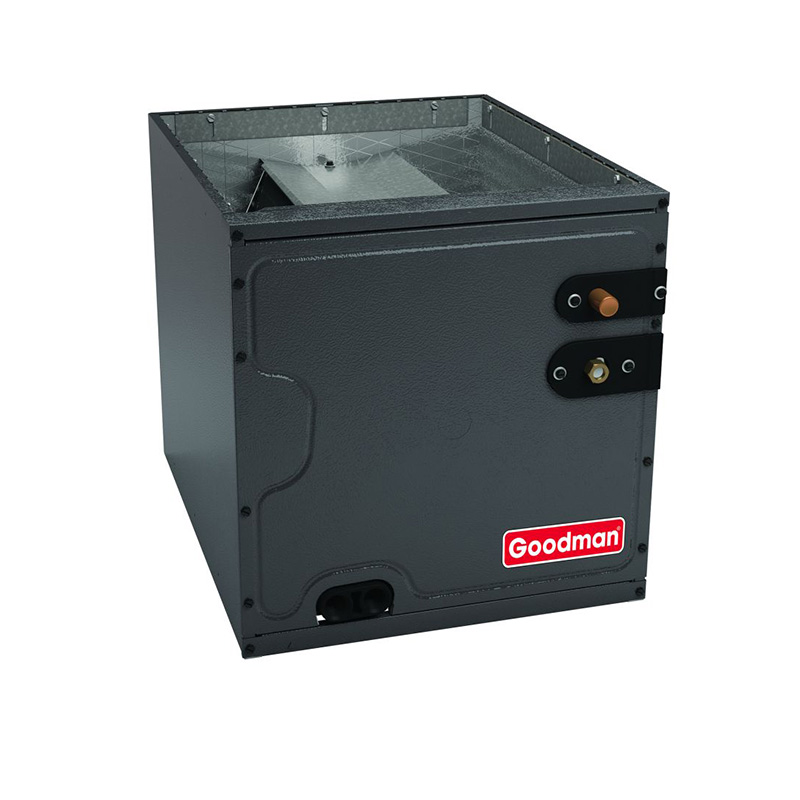
Goodman 3.5 Ton 14.5 SEER2 R32 AC System with 80,000 BTU 96% AFUE Gas Furnace – California & Colorado Ultra Low NOx, Upflow, Multi-Speed ECM
View on AC Direct see your lowest price →Check current price on AC Direct →
Key features
- 14.5 SEER2 cooling efficiency meets current federal minimum standards
- 96% AFUE gas furnace with multi-speed ECM blower motor for even airflow
- R-32 refrigerant with lower global warming potential than R-410A
- California and Colorado Ultra Low NOx certified for strict emissions compliance
- Upflow configuration suits basement, closet, or utility room installations
- 3.5-ton capacity sized for approximately 1,600 to 2,200 square feet depending on climate and insulation
About this system
The Goodman 3.5-ton 14.5 SEER2 R-32 air conditioning system paired with an 80,000 BTU 96% AFUE gas furnace is a full split system aimed at mid-size homes in the 1,600 to 2,200 square foot range that need both summer cooling and winter heating covered in one purchase. The 14.5 SEER2 rating sits at the current federal minimum efficiency tier, which keeps the upfront cost down but means operating costs will run higher than a 17 or 18 SEER2 system over a decade of use. The 96% AFUE furnace is a genuine bright spot, converting 96 cents of every dollar of gas into usable heat, and the multi-speed ECM blower motor helps even out airflow and reduce electricity draw compared to a single-speed PSC motor.
This configuration is specifically certified for California and Colorado Ultra Low NOx requirements, making it one of the few ready-to-ship options for homeowners in those states who face strict nitrogen oxide emissions limits. The upflow orientation is the most common residential configuration, suited to systems where the furnace sits in a basement, closet, or utility room and air moves upward into the duct system. R-32 refrigerant replaces the older R-410A in Goodman’s newer lineup and carries a lower global warming potential, which also matters for long-term serviceability as refrigerant regulations tighten. As a package, this system works well for buyers who want code-compliant, reliable-enough performance at a price point that leaves room in the budget for professional installation.
This Goodman combo system delivers code-compliant heating and cooling at a price that undercuts Carrier, Trane, and Lennox by a meaningful margin, and the 96% AFUE furnace with ECM blower is genuinely efficient hardware. The trade-off is that Goodman's track record shows more mid-life repair costs than premium brands, and the outcome depends heavily on who installs it and how well they charge the refrigerant circuit. For budget-conscious buyers in California or Colorado who hire a careful installer, it is a reasonable choice; buyers who prioritize long-term low maintenance costs may want to look at a step up.
Overall score is the average of the five ratings above.
What we like
- Priced roughly 15 to 25 percent below comparable Carrier, Trane, and Lennox systems
- 96% AFUE furnace is near the top of gas heating efficiency and reduces monthly gas bills meaningfully
- Multi-speed ECM blower improves comfort and lowers fan electricity use compared to single-speed motors
- R-32 refrigerant is ready for tightening environmental regulations and has a lower leak-impact profile
- Ultra Low NOx certification means no added permits or workarounds for California and Colorado buyers
Trade-offs
- Dual-run capacitors are the most commonly reported failure point, typically around years 5 to 9, adding repair costs of $300 to $600
- Compressor lifespan averages 10 to 14 years versus 15 to 20 years for premium brands, affecting long-term cost of ownership
- A minority of owners report refrigerant leaks within the first year, most traced to installation or improper charging rather than factory defect
- Evaporator coil leaks appear in a meaningful share of owner reviews and can be expensive to address outside of warranty
What homeowners and pros say about Goodman
Owners and technicians who discuss Goodman equipment tend to agree on a few consistent points. On Google dealer review pages, where the aggregate score sits around 3.8 out of 5 across hundreds of reviews per location, affordability is the most frequently mentioned reason for choosing Goodman, and many owners report years of trouble-free operation when the system was correctly sized and installed. On ConsumerAffairs, where the brand scores closer to 2.5 out of 5, the tone shifts sharply: that platform attracts a disproportionate share of frustrated owners, and the recurring complaint is that repair costs begin to stack up after roughly year seven. Neither score tells the complete story on its own, but together they suggest a brand that performs adequately in the short run and shows more wear variance over the long haul than premium competitors.
Among the specific failure modes technicians flag with Goodman equipment, dual-run capacitor failure comes up most often. It is a relatively inexpensive fix, typically $300 to $600 with labor, but it is common enough that experienced technicians often check capacitor condition proactively during annual tune-ups on Goodman systems. More expensive concerns include evaporator coil leaks, which appear in a meaningful share of owner reports and can be a significant out-of-pocket cost if they occur outside the warranty window. Compressor lifespan is another honest consideration: Goodman compressors tend to average 10 to 14 years in practice, which is a shorter window than the 15 to 20 years more commonly associated with Trane, Carrier, or Lennox compressors. A small but documented minority of owners also report refrigerant leaks within the first year of operation, and technicians generally attribute those to installation or charging errors rather than factory defects, which underscores why installer quality matters as much as the brand name on the equipment.
Sources: ConsumerAffairs Goodman owner reviews, AHRI Directory of Certified Product Performance, U.S. DOE appliance and equipment efficiency standards, Goodman product specification sheets.
What it costs to run
At 14.5 SEER2, cooling this 3.5-ton system for a typical 1200-hour cooling season at the U.S. average electricity rate of $0.17/kWh works out to roughly $591 per year in cooling, about $48 less per year than a minimum-efficiency 13.4 SEER2 unit of the same size. Your real cost depends on your climate and local rate.
Method: (42,000 BTU/hr ÷ 14.5 SEER2) × 1200 hours ÷ 1000 × $0.17/kWh. Rate source: U.S. EIA average; cooling hours: moderate-climate estimate.
How it compares
| Brand | Comparable model | SEER2 | Stage | Price position |
|---|---|---|---|---|
| Goodman | GSX15 / GMVC96 series (R-32, Ultra Low NOx) | 14.5 | Single-stage / Multi-speed ECM | Value pick |
| Carrier | Comfort 14 (24ACC4) series | 14.5 | Single-stage | Typically 15 to 25 percent more than this Goodman system |
| Trane | XR14c series | 14.5 | Single-stage | Typically 15 to 25 percent more than this Goodman system |
| Lennox | Merit ML14XC1 series | 14.5 | Single-stage | Typically 15 to 25 percent more than this Goodman system |
Competitor rows are comparable single-stage units at similar efficiency; price is relative position, not a quote.
Questions about this system
Is this system actually legal to install in California and Colorado, or do I need additional equipment to meet the Ultra Low NOx rules?
This specific configuration is factory-certified for California and Colorado Ultra Low NOx emissions standards, so it can be installed as sold without additional NOx-reduction hardware. Always confirm with your local HVAC contractor that the model number on the unit matches what your regional air quality district requires, since rules can change between model years.
What does R-32 refrigerant mean for me as a homeowner, and can my current technician service it?
R-32 is the refrigerant Goodman has moved to in its newer systems as R-410A is phased down under EPA rules. It has a lower global warming potential and is generally available through HVAC supply houses. Most certified technicians can handle R-32, but you should confirm your service provider is equipped for it before scheduling any warranty or maintenance work.
How worried should I be about the capacitor failures I keep reading about in Goodman reviews?
Dual-run capacitor failure is the most commonly reported issue with Goodman equipment and typically shows up after several years of use. The repair is generally straightforward and costs between $300 and $600 including labor. Scheduling annual maintenance where a technician checks capacitor health can catch a weakening capacitor before it causes a no-cool situation in summer.
My home is about 1,900 square feet in Sacramento. Is 3.5 tons the right size, or should I go up to 4 tons?
Sizing depends on more than square footage, including ceiling height, insulation quality, window area, and local design temperatures. In Sacramento's hot dry climate, 3.5 tons is often appropriate for 1,800 to 2,100 square feet in a reasonably insulated home, but a proper Manual J load calculation by your installer is the only reliable way to confirm. Oversizing causes short-cycling and humidity problems, so resist the urge to round up without the calculation.
The 80,000 BTU furnace seems large for a 3.5-ton AC system. Will it short-cycle in mild Colorado winters?
80,000 BTU output is common for this system class, but whether it is correctly sized for your home depends on your Manual J heat load calculation, not the AC tonnage. In milder Colorado climates or well-insulated homes, an 80,000 BTU furnace can short-cycle if the actual heat loss of the home is significantly lower. Ask your installer to verify the furnace sizing independently of the cooling equipment.
Specifications
| Cooling capacity | 3.5 Ton |
| Efficiency | 14.5 SEER2 |
| Furnace output | 80,000 BTU |
| Furnace efficiency | 96% AFUE |
| Configuration | Upflow |
| Refrigerant | R-32 |