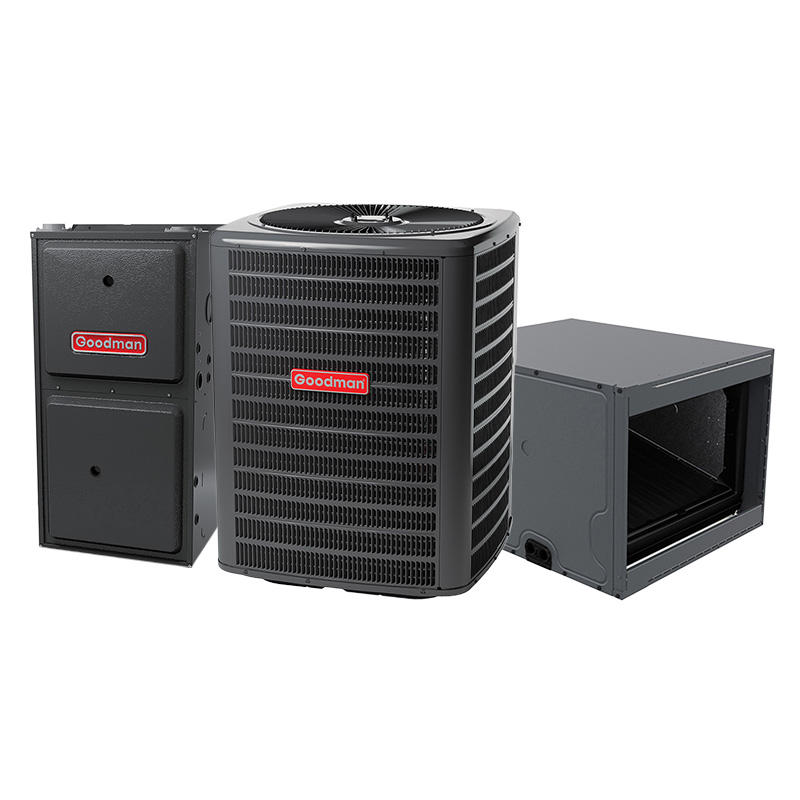
Goodman 3.5 Ton 14.5 SEER2 AC & Gas Furnace System – Modulating Variable-Speed, 100000 BTU Gas Furnace, 97% AFUE, Horizontal, R32
View on AC Direct see your lowest price →Check current price on AC Direct →
Key features
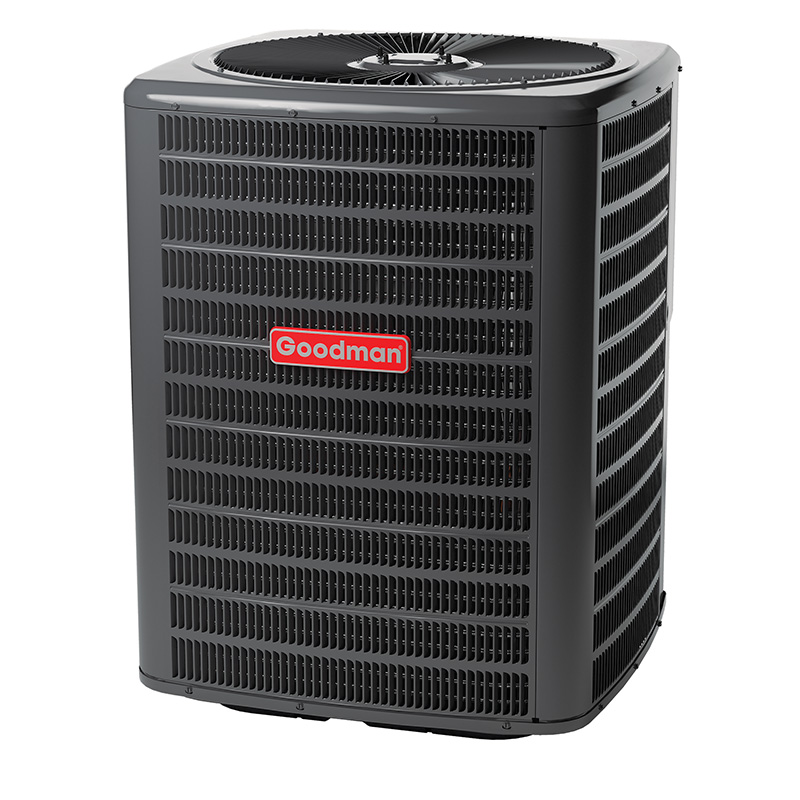
- 3.5-ton variable-speed air conditioner rated at 14.5 SEER2
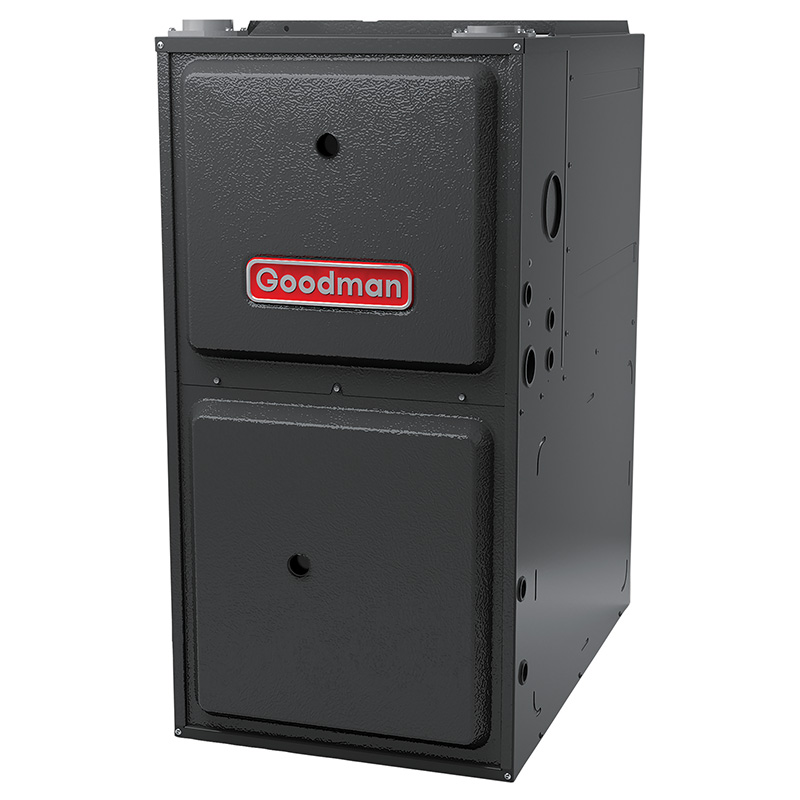
- 100,000 BTU modulating gas furnace at 97% AFUE
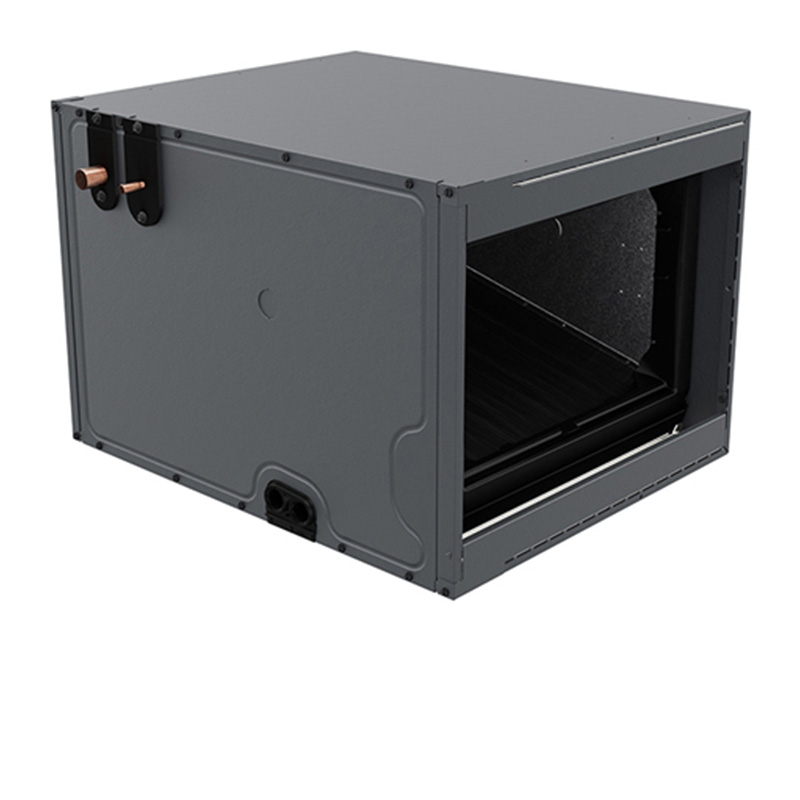
- Horizontal installation configuration for crawl spaces and attics with low clearance
- R-32 refrigerant — lower global-warming potential than R-410A
- Variable-speed blower for improved humidity control and quieter part-load operation
- Modulating burner adjusts output incrementally to reduce temperature swings
About this system
The Goodman GLXS5BA4210D pairs a 3.5-ton, 14.5 SEER2 variable-speed air conditioner with a 100,000 BTU modulating gas furnace rated at 97% AFUE. That furnace efficiency number is genuinely high — 97% AFUE means nearly all the fuel burned becomes usable heat, which matters in climates with long, cold winters. The modulating burner adjusts output in small increments rather than cycling full-on or full-off, so the system holds indoor temperatures steadily and runs quieter during mild weather. The R-32 refrigerant charge is a lower global-warming-potential option compared to R-410A, which is being phased out industry-wide, so this system is reasonably future-oriented on that front.
The horizontal configuration is the key practical detail here. This setup is designed to be installed on its side — think crawl spaces, attic applications with limited vertical clearance, or utility closets where a standard upflow or downflow orientation simply will not fit. That specificity is a feature for the right home and a hard constraint for everyone else. The variable-speed blower motor and modulating furnace together can improve humidity control and reduce temperature swings compared to single-stage equipment, though realizing those benefits depends substantially on correct sizing, duct design, and installation quality — all of which Goodman’s own track record underscores as critical variables.
This system offers genuinely high furnace efficiency and a capable variable-speed platform at a price point meaningfully below comparable Carrier, Trane, and Lennox equipment. The horizontal-only configuration makes it the right answer for specific installation constraints, not a universal pick. Long-term ownership costs depend heavily on install quality and the awareness that Goodman components — particularly capacitors and coils — have documented failure patterns that should factor into your service budget planning.
Overall score is the average of the five ratings above.
What we like
- 97% AFUE furnace efficiency is near the top of what residential gas equipment offers, reducing fuel costs in heating-heavy climates
- Modulating and variable-speed operation improves comfort and humidity control compared to single-stage systems
- R-32 refrigerant is better positioned for the ongoing industry refrigerant transition than R-410A systems
- Priced 15 to 25 percent below comparable Trane, Lennox, and Carrier systems, which meaningfully lowers the upfront barrier
- Horizontal configuration solves a real installation problem for homes with attic or crawl-space air handlers where vertical units will not fit
Trade-offs
- Dual-run capacitors are the most commonly reported failure on Goodman equipment and typically need replacement within the first 7 to 10 years, though the repair cost is usually modest at roughly 300 to 600 dollars
- Evaporator coil leaks appear in a meaningful share of owner reports and can be significantly more expensive to address than capacitor failures
- Compressor lifespan averages 10 to 14 years, shorter than the 15 to 20 years more common in premium-brand equipment, which affects long-term cost of ownership calculations
- A minority of owners report refrigerant leaks in the first year, typically tracing back to installation or initial charge issues rather than the equipment itself — making installer selection especially important
What homeowners and pros say about Goodman
Homeowners who buy Goodman equipment most often point to the upfront price as the deciding factor, and that praise shows up in Google dealer reviews that average around 3.8 out of 5 across hundreds of reviews per location. The affordability argument is real — a 15 to 25 percent gap versus Trane, Lennox, or Carrier is a meaningful dollar difference on a system this size. Where the sentiment turns is in the years following installation. ConsumerAffairs scores for Goodman sit at roughly 2.5 out of 5, and while that platform skews toward people who are frustrated enough to write a review, the recurring theme of repair costs climbing after year 7 is consistent enough to be taken seriously. The most commonly cited failure mode is the dual-run capacitor, which technicians describe as a quick, low-cost fix in the 300 to 600 dollar range — aggravating but not catastrophic. Evaporator coil leaks are a more serious documented concern, and compressor longevity averaging 10 to 14 years falls noticeably short of the 15 to 20 years owners of premium brands tend to report.
HVAC professionals who work on Goodman equipment regularly tend to say the same thing: the hardware is adequate for the price, but the outcome varies more than it should based on who installs it. Refrigerant leaks in the first year — reported by a minority of owners — typically trace back to installation or initial charge issues rather than defective parts, which is consistent with that view. For this specific horizontal system, that installer-dependency is even more pointed, since horizontal applications require correct pitch, proper condensate management, and attention to flue orientation that less experienced technicians occasionally get wrong. The practical takeaway is that a Goodman system installed by a careful, experienced contractor often performs well for a decade or more; the same unit installed carelessly tends to generate the kind of complaints that pull down the brand’s average scores.
Sources: ConsumerAffairs Goodman owner reviews, AHRI Directory of Certified Product Performance, U.S. DOE appliance and equipment efficiency standards, Goodman product specification sheets.
What it costs to run
At 14.5 SEER2, cooling this 3.5-ton system for a typical 1200-hour cooling season at the U.S. average electricity rate of $0.17/kWh works out to roughly $591 per year in cooling, about $48 less per year than a minimum-efficiency 13.4 SEER2 unit of the same size. Your real cost depends on your climate and local rate.
Method: (42,000 BTU/hr ÷ 14.5 SEER2) × 1200 hours ÷ 1000 × $0.17/kWh. Rate source: U.S. EIA average; cooling hours: moderate-climate estimate.
How it compares
| Brand | Comparable model | SEER2 | Stage | Price position |
|---|---|---|---|---|
| Goodman | GLXS5BA4210D (this system) | 14.5 | Variable / Modulating | Value pick |
| Carrier | Performance 14 Series (24ACC4) | 14.3–14.5 | Single-stage | Typically 15 to 25 percent more than this Goodman |
| Trane | XR14 Series | 14.3–15.0 | Single-stage | Typically 15 to 25 percent more than this Goodman |
| Lennox | Merit ML14 Series | 14.3–15.0 | Single-stage | Typically 15 to 25 percent more than this Goodman |
Competitor rows are comparable single-stage units at similar efficiency; price is relative position, not a quote.
Questions about this system
Why does this system have to be installed horizontally — can it be converted to upflow or downflow?
No. The GLXS5BA4210D is designed and certified specifically for horizontal installation. The heat exchanger, flue passages, and drain are oriented for that position. Attempting another orientation would void the warranty and create safety risks. If your application is upflow or downflow, you need a different model.
Is R-32 refrigerant going to be hard to service, and do I need a special technician?
R-32 is becoming more common in residential equipment as the industry moves away from R-410A, so technician familiarity is growing. It does require EPA 608 certification and equipment rated for A2L refrigerants, which most established HVAC contractors already have or are acquiring. Confirm your installer is R-32 qualified before booking the job.
What does 97% AFUE actually save me compared to an 80% furnace?
In simple terms, an 80% AFUE furnace sends roughly 20 cents of every fuel dollar up the flue, while a 97% unit loses only about 3 cents. The annual dollar savings depend on your local gas rates and how many heating degree days your climate has, but in colder northern climates the payback period on the efficiency premium can be relatively short. In mild climates the math is less compelling.
Goodman gets mixed reviews online — should I be worried about reliability on a system this complex?
The concern is legitimate and worth factoring into your decision. Goodman scores around 2.5 out of 5 on ConsumerAffairs, where recurring themes include rising repair costs after roughly year 7, and documented failure modes include dual-run capacitors, evaporator coil leaks, and compressor lifespans that average 10 to 14 years. The good news is that capacitor failures are low-cost repairs, and much of Goodman's variability traces to installation quality — choosing a skilled, reputable installer is the single most important thing you can do to protect this investment.
What warranty comes with this system, and what do I need to do to activate it?
Goodman typically offers a 10-year parts warranty on registered equipment and a limited lifetime heat exchanger warranty on qualifying furnaces — but you must register the product within a set window after installation (usually 60 days) to get the full term. Failure to register typically drops coverage to a shorter base period. Confirm the current registration terms at Goodman's website and have your installer provide documentation of the install date.
Specifications
| Cooling capacity | 3.5 Ton |
| Efficiency | 14.5 SEER2 |
| Furnace output | 100000 BTU |
| Furnace efficiency | 97% AFUE |
| Configuration | Horizontal |
| Refrigerant | R-32 |
| Model | GLXS5BA4210D |