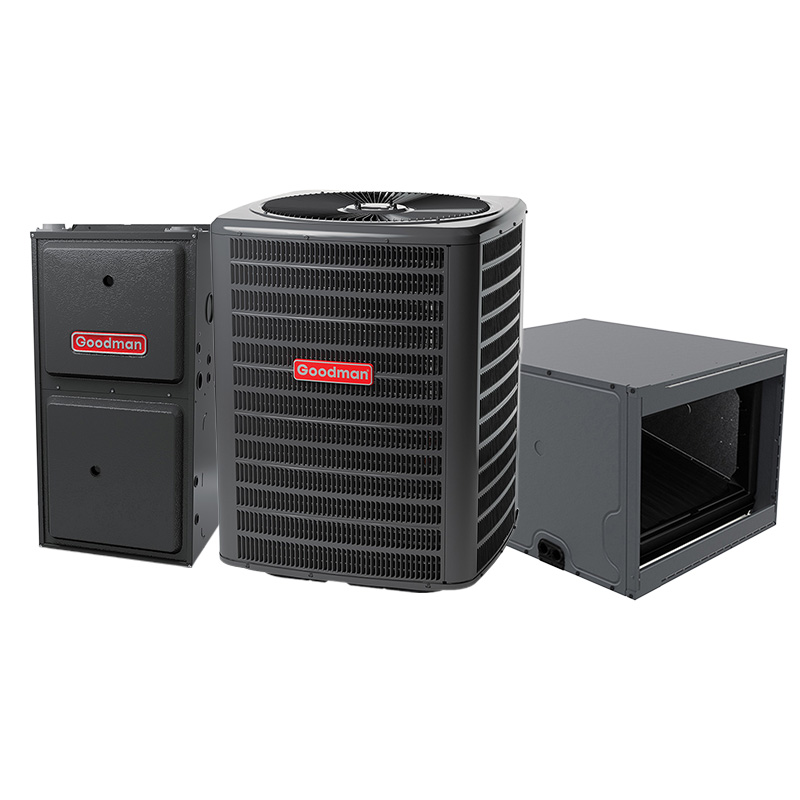
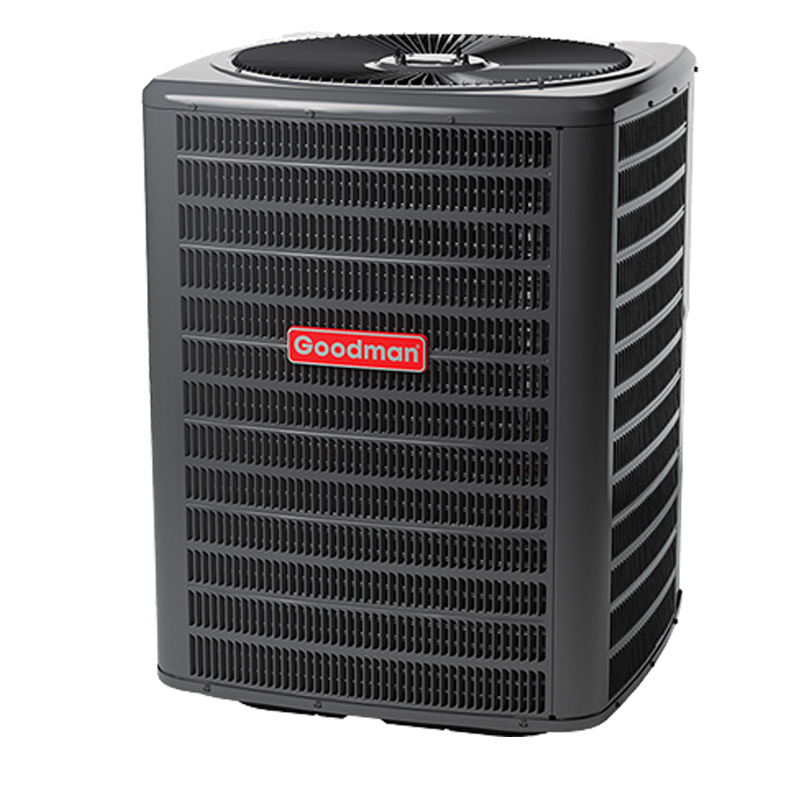
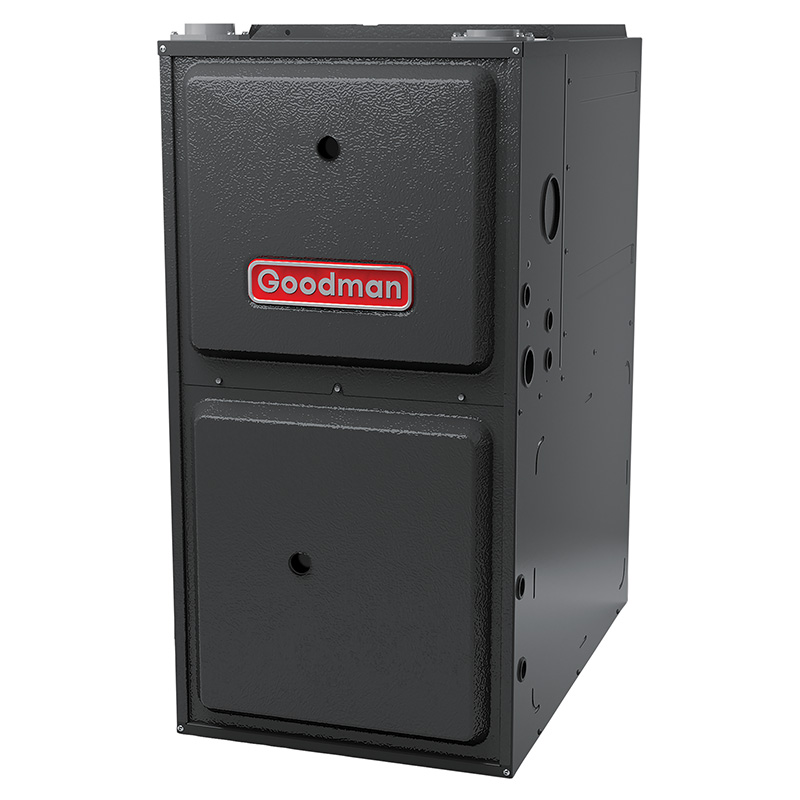
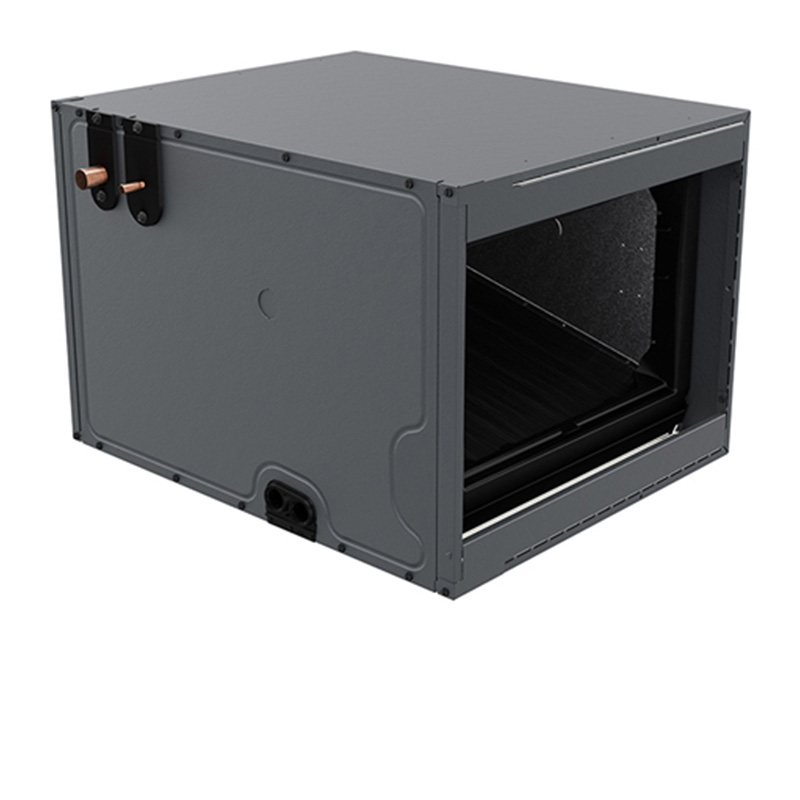
Goodman 3.5 Ton 14.5 SEER2 AC & Gas Furnace System – Multi-Speed, 100000 BTU Gas Furnace, 92% AFUE, Horizontal, R32
View on AC Direct see your lowest price →Check current price on AC Direct →
Key features
- 3.5-ton cooling capacity with 14.5 SEER2 efficiency rating
- 100,000 BTU gas furnace at 92% AFUE for moderate heating efficiency
- Horizontal configuration designed for attic or crawlspace installs
- Multi-speed blower motor for improved comfort and humidity management
- R-32 refrigerant with lower global-warming potential than R-410A
- Factory-matched system designed for straightforward compatibility between indoor and outdoor units
About this system
The Goodman GLXS4BA4210 pairs a 3.5-ton, 14.5 SEER2 air conditioner with a 100,000 BTU, 92% AFUE multi-speed gas furnace in a horizontal configuration, making it sized for homes roughly in the 1,800 to 2,600 square foot range depending on local climate and insulation. The horizontal orientation is specifically designed for attic or crawlspace installations where vertical clearance is limited, so this is not a drop-in replacement for a standard upflow basement setup. R-32 refrigerant is a lower global-warming-potential alternative to R-410A and is increasingly common in new equipment, though your servicing technician will need to be certified to handle it.
At 14.5 SEER2 and 92% AFUE, this system sits at the lower-middle tier of efficiency. It will satisfy federal minimum efficiency standards in most U.S. regions, but it will not qualify for the federal tax credit that requires 15 SEER2 or higher for split systems in most climate zones. The multi-speed furnace blower adds a measure of comfort over single-speed units by running at a lower speed during mild conditions, which can improve humidity control and reduce temperature swings. Buyers who want predictable monthly energy bills or who live in regions with high utility rates may eventually want to weigh a higher-SEER2 option, while those prioritizing upfront cost in a moderate climate will find the efficiency trade-off more acceptable.
The Goodman GLXS4BA4210 is a competent entry-level system for budget-conscious homeowners who need a horizontal-configuration setup and can accept mid-range efficiency numbers. It delivers real savings over premium brands upfront, but that gap can narrow if you encounter one of the brand's documented failure patterns in later years. How well it performs long-term depends heavily on who installs it and how well they size and charge it.
Overall score is the average of the five ratings above.
What we like
- Priced roughly 15 to 25 percent below comparable Trane, Lennox, and Carrier systems
- Horizontal configuration fills a genuine installation niche for attic and crawlspace applications
- Multi-speed blower improves comfort over basic single-speed furnaces at a similar price point
- R-32 refrigerant is increasingly well-supported and has lower environmental impact than R-410A
- Factory-matched indoor and outdoor components simplify compatibility and warranty claims
Trade-offs
- Dual-run capacitors are the most commonly reported failure, often appearing within the first several years and costing 300 to 600 dollars to fix
- Evaporator coil leaks appear in a meaningful share of owner feedback and can be costly to address out of warranty
- Compressor lifespan averages 10 to 14 years versus 15 to 20 years seen on premium-brand equipment
- At 14.5 SEER2 and 92% AFUE, this system does not meet thresholds for the federal energy-efficiency tax credit in most climate zones
What homeowners and pros say about Goodman
Homeowners who choose Goodman tend to focus on the upfront savings and accept that they may see more maintenance calls over the system’s life. On ConsumerAffairs, where Goodman scores around 2.5 out of 5, the feedback that appears most often involves climbing repair bills after roughly year seven, with capacitor failures and evaporator coil leaks showing up repeatedly in the complaints. That is a real pattern worth knowing before you buy. On Google dealer reviews, the brand averages closer to 3.8 out of 5, and the tone shifts: customers at that level tend to praise the price point and say the equipment works as advertised when the installation was done right.
HVAC technicians tend to have a more nuanced view of Goodman. Most will install it without hesitation for a price-sensitive customer, but many are candid that the dual-run capacitor is a when, not an if, failure item on these units, typically a 300 to 600 dollar fix. They also note that compressor lifespan runs about 10 to 14 years on Goodman equipment compared to 15 to 20 years on premium brands, which is meaningful math if you plan to stay in the home long-term. For horizontal attic applications specifically, pros emphasize that access difficulty amplifies the cost of any repair, so a tight budget on installation can become a recurring expense every time a technician has to work overhead in a cramped space.
Sources: ConsumerAffairs Goodman owner reviews, AHRI Directory of Certified Product Performance, U.S. DOE appliance and equipment efficiency standards, Goodman product specification sheets.
What it costs to run
At 14.5 SEER2, cooling this 3.5-ton system for a typical 1200-hour cooling season at the U.S. average electricity rate of $0.17/kWh works out to roughly $591 per year in cooling, about $48 less per year than a minimum-efficiency 13.4 SEER2 unit of the same size. Your real cost depends on your climate and local rate.
Method: (42,000 BTU/hr ÷ 14.5 SEER2) × 1200 hours ÷ 1000 × $0.17/kWh. Rate source: U.S. EIA average; cooling hours: moderate-climate estimate.
How it compares
| Brand | Comparable model | SEER2 | Stage | Price position |
|---|---|---|---|---|
| Goodman | GLXS4BA4210 | 14.5 | Single-stage | Value pick |
| Carrier | Comfort 14 Series (24ACC4) | 14.3 to 15 | Single-stage | Typically 15 to 25 percent more than this Goodman |
| Trane | XR14 Series | 14.5 | Single-stage | Typically 15 to 25 percent more than this Goodman |
| Lennox | Merit 14 Series (ML14XC1) | 14.3 to 15 | Single-stage | Typically 15 to 25 percent more than this Goodman |
Competitor rows are comparable single-stage units at similar efficiency; price is relative position, not a quote.
Questions about this system
Is a horizontal-configuration furnace harder to find a technician to service?
Most licensed HVAC technicians are familiar with horizontal installations, but the physical access in attics and crawlspaces can make routine maintenance and repairs more time-consuming and occasionally more expensive. Ask your installer about service clearances before the unit goes in, since a tight installation can add labor cost to every future visit.
Does this system qualify for the federal energy-efficiency tax credit?
In most U.S. climate zones, the split-system AC portion needs to be rated at 15 SEER2 or higher to qualify for the federal tax credit under current IRS guidelines. At 14.5 SEER2, this unit does not meet that threshold. The 92% AFUE furnace may qualify separately for the furnace credit depending on your region, so confirm with a tax professional using current IRS guidance.
Why does Goodman have mixed reviews, and should I be worried?
Goodman scores around 2.5 out of 5 on ConsumerAffairs, a channel that skews heavily toward complaint submissions, with recurring mentions of repair costs rising after roughly year seven. Google dealer reviews average closer to 3.8 out of 5, where affordability is the most common positive theme. The pattern suggests the brand performs reasonably when properly installed but has a shorter window before component wear becomes a maintenance cost factor compared to premium brands.
How do I know if a refrigerant leak in the first year is a warranty issue or an install problem?
A minority of Goodman owners report refrigerant leaks within the first year, and these are typically traced to improper installation or charging rather than a defective unit. If a leak occurs in year one, start by having a different certified technician inspect the line set connections and verify the charge. If the leak is at a factory joint, Goodman's warranty should cover it, but an install error is generally the installer's responsibility, not the manufacturer's.
What is a dual-run capacitor and how much does it cost to replace on this system?
The dual-run capacitor is an electrical component that helps start and run the compressor and condenser fan motor. It is the most commonly reported failure point on Goodman equipment. Replacement typically runs 300 to 600 dollars including labor and is a relatively quick repair, but it can catch owners off guard if they are not expecting it within the first several years of ownership.
Specifications
| Cooling capacity | 3.5 Ton |
| Efficiency | 14.5 SEER2 |
| Furnace output | 100000 BTU |
| Furnace efficiency | 92% AFUE |
| Configuration | Horizontal |
| Refrigerant | R-32 |
| Model | GLXS4BA4210 |