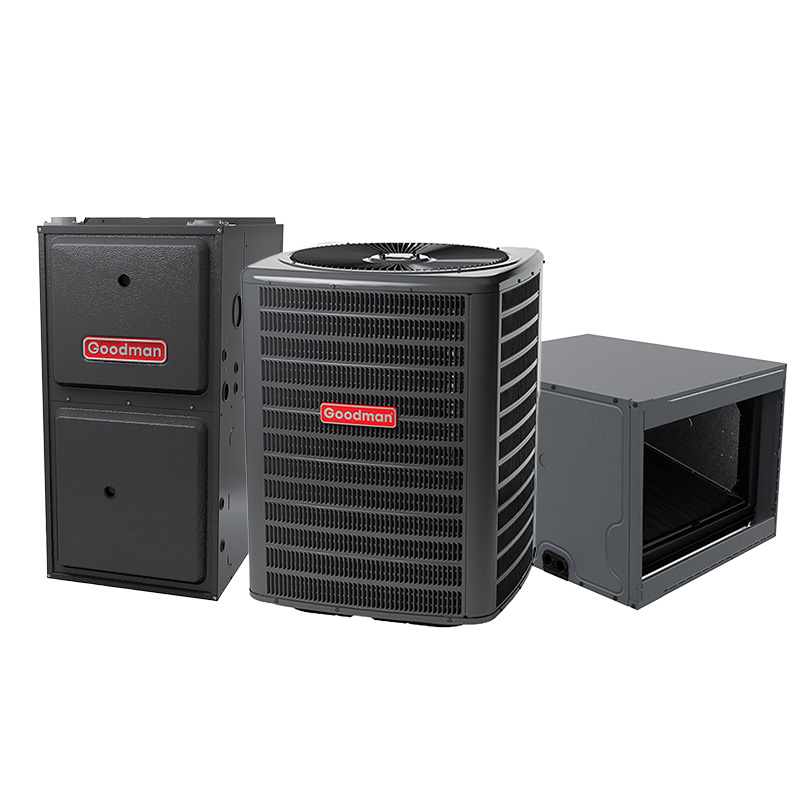
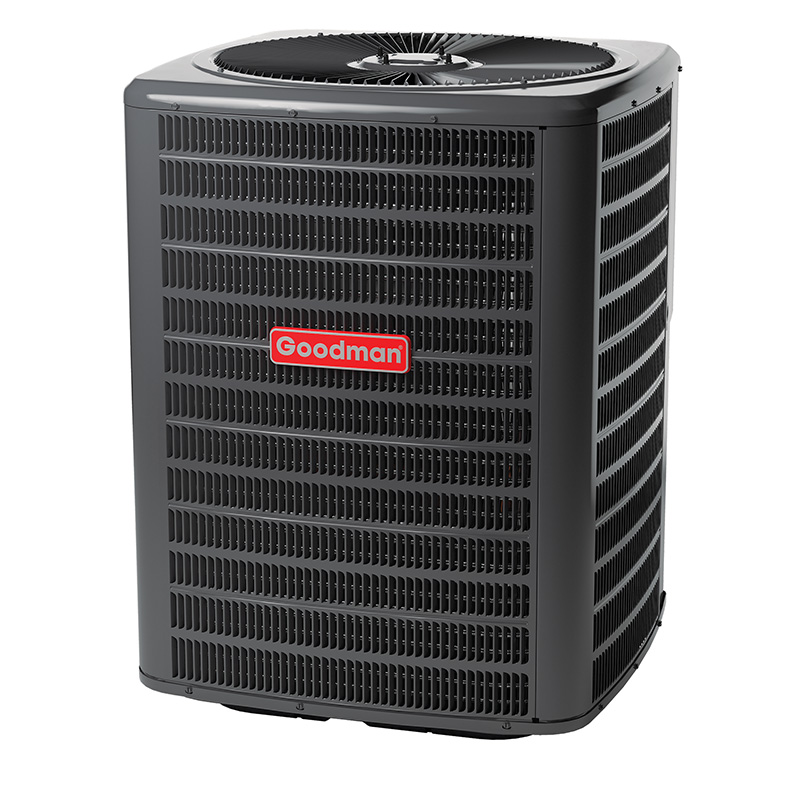
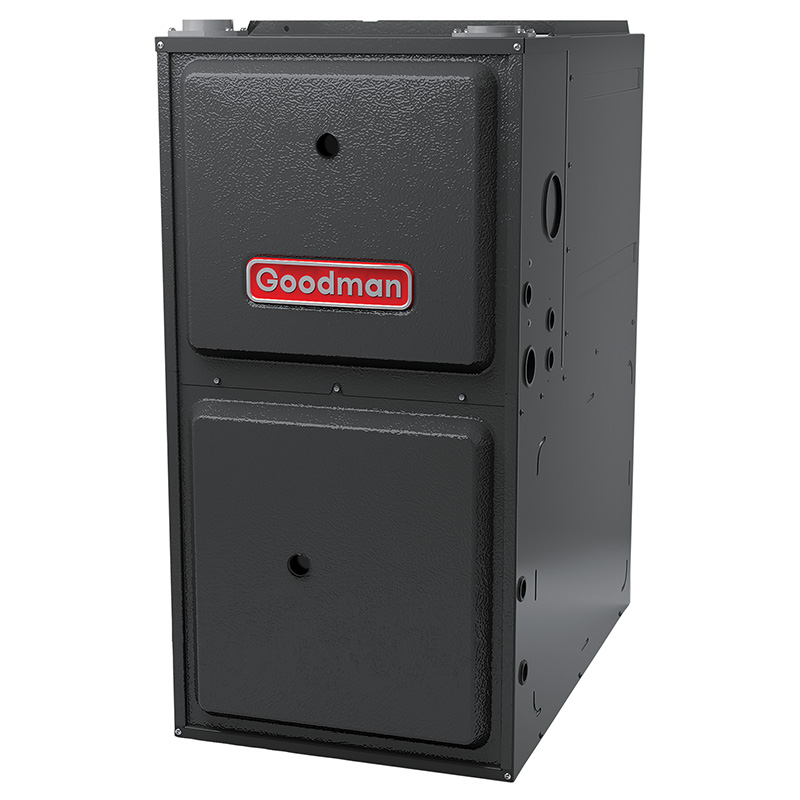
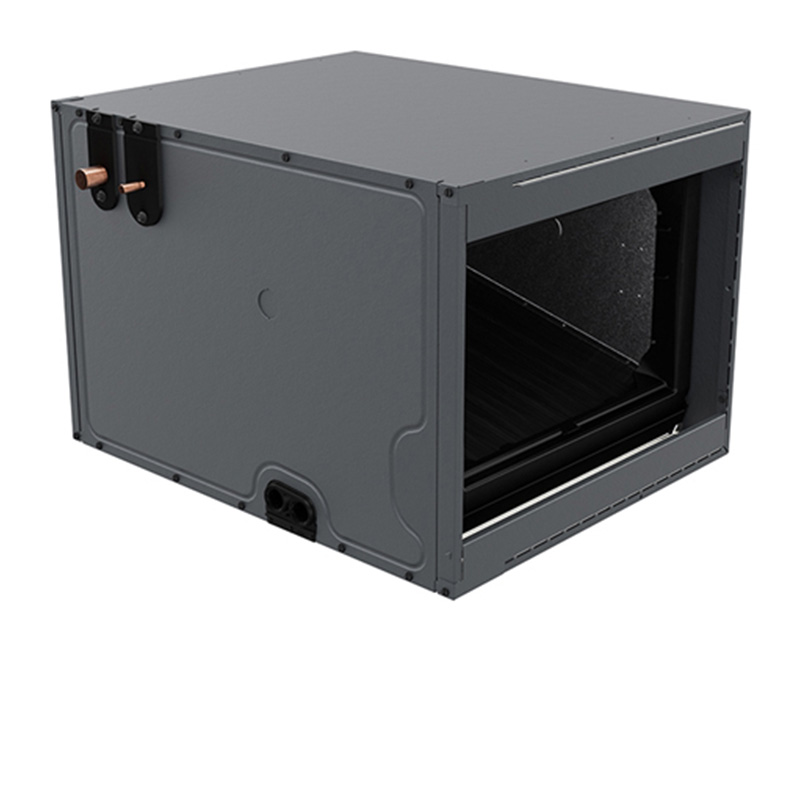
Goodman 3.5 Ton 14.5 SEER2 AC & Gas Furnace System – Two Stage Variable-Speed, 80000 BTU Gas Furnace, 96% AFUE, Horizontal, R32
View on AC Direct see your lowest price →Check current price on AC Direct →
Key features
- 3.5-ton two-stage cooling at 14.5 SEER2 for improved humidity control and energy use over single-stage
- 96% AFUE condensing gas furnace recovers nearly all combustion heat, meets federal high-efficiency thresholds
- 80,000 BTU heating output suited for mid-to-large homes in moderate to cold climates
- Variable-speed ECM blower motor reduces noise and improves air distribution and filter performance
- Horizontal configuration designed for attic, crawlspace, or side-discharge installations
- R-32 refrigerant with lower global warming potential than R-410A, ahead of tightening regulations
About this system
The Goodman 3.5-ton, 14.5 SEER2 two-stage air conditioner paired with a 96% AFUE, 80,000 BTU variable-speed gas furnace is a mid-efficiency combo system sized for homes roughly in the 1,800 to 2,400 square-foot range, depending on climate and insulation. The horizontal configuration means this unit is set up to run through attic or crawlspace installations where vertical airflow is not practical, so it suits ranch-style homes, manufactured housing, and tight mechanical rooms where a standard upflow orientation simply will not fit. R-32 refrigerant replaces the older R-410A and carries a lower global warming potential, which positions this system ahead of refrigerant regulations that are tightening across several states.
The two-stage compressor runs at a lower capacity during mild weather and steps up only when demand requires it, which reduces short-cycling, steadies indoor humidity, and trims energy use compared with single-stage equipment. The 96% AFUE furnace recovers 96 cents of heat energy from every dollar of gas burned, placing it in the condensing-furnace tier and making it eligible for federal tax credits under current efficiency thresholds. The variable-speed air handler moves air more quietly and precisely than a single-speed blower, improving both comfort and filtration performance. Together, these features represent a meaningful step up from builder-grade single-stage systems without reaching the price of a premium brand.
Goodman prices this package roughly 15 to 25 percent below comparable Trane, Lennox, and Carrier equipment, which is the primary reason buyers choose it. That discount comes with real trade-offs: Goodman’s documented compressor lifespan averages 10 to 14 years versus 15 to 20 for premium competitors, and evaporator coil leaks and dual-run capacitor failures appear with regularity in owner histories. For budget-conscious homeowners who want a capable, modern system and who understand that long-term costs depend heavily on the quality of the installing contractor, this package makes a practical case for itself.
This Goodman combo delivers genuine mid-efficiency comfort features, including two-stage cooling and a 96% AFUE furnace, at a price point that undercuts the major premium brands by a meaningful margin. The horizontal configuration limits it to specific installation scenarios, and Goodman's track record of capacitor failures, coil leaks, and shorter-than-premium compressor lifespans means long-term ownership costs can narrow that upfront savings gap. It is a reasonable buy when installed by a skilled contractor and when the household budget requires holding the line on initial cost.
Overall score is the average of the five ratings above.
What we like
- Priced 15 to 25 percent below comparable Trane, Lennox, and Carrier systems, making two-stage and high-AFUE features more accessible
- 96% AFUE qualifies for federal energy-efficiency tax credits under current IRS thresholds
- Two-stage compressor reduces short-cycling and improves humidity management versus single-stage equipment
- R-32 refrigerant is a forward-looking choice that stays ahead of upcoming regulatory changes
- Variable-speed blower delivers quieter operation and more even temperatures than fixed-speed alternatives
Trade-offs
- Compressor lifespan averages 10 to 14 years, roughly 5 to 6 years shorter than premium-brand benchmarks
- Evaporator coil leaks appear with notable frequency in owner reviews, a potentially costly repair outside warranty
- Dual-run capacitor failures are the most common service call, typically after year 7, adding to lifecycle costs
- Horizontal-only configuration restricts this unit to attic or crawlspace setups; it cannot be repurposed for a standard upflow closet install
What homeowners and pros say about Goodman
Homeowners who review Goodman equipment through ConsumerAffairs give the brand roughly 2.5 out of 5 stars, a score that reflects a complaint-heavy audience and a recurring pattern of repair costs climbing after year 7. The specific failure modes that come up most often are dual-run capacitor replacements, evaporator coil leaks, and compressor wear that tends to peak between years 10 and 14, noticeably earlier than the 15 to 20-year benchmarks owners of Trane and Lennox systems often report. That picture is more negative than the broader contractor-facing view, where Google dealer reviews for Goodman-selling shops average closer to 3.8 out of 5 across hundreds of locations, with affordability cited repeatedly as the deciding factor for buyers who stretched to get two-stage comfort or high-AFUE heating they could not otherwise afford.
HVAC technicians who install this horizontal two-stage package tend to frame the Goodman question the same way regardless of model: the equipment is capable when it leaves the factory, but installation quality is the single biggest variable in how long it performs and how much it costs to own. A well-charged system with properly sealed ductwork and correctly sized refrigerant lines can run reliably for a decade or more; an under-charged or over-cycled one accelerates exactly the coil and compressor issues that show up in the complaint records. For this specific configuration, the horizontal orientation also adds a layer of complexity since attic and crawlspace installs involve condensate management and access challenges that favor contractors with direct experience in tight-space horizontal work. Buyers willing to spend time vetting the installer, rather than just the equipment price, tend to come away with better outcomes from this system than those who shop on upfront cost alone.
Sources: ConsumerAffairs Goodman owner reviews, AHRI Directory of Certified Product Performance, U.S. DOE appliance and equipment efficiency standards, Goodman product specification sheets.
What it costs to run
At 14.5 SEER2, cooling this 3.5-ton system for a typical 1200-hour cooling season at the U.S. average electricity rate of $0.17/kWh works out to roughly $591 per year in cooling, about $48 less per year than a minimum-efficiency 13.4 SEER2 unit of the same size. Your real cost depends on your climate and local rate.
Method: (42,000 BTU/hr ÷ 14.5 SEER2) × 1200 hours ÷ 1000 × $0.17/kWh. Rate source: U.S. EIA average; cooling hours: moderate-climate estimate.
How it compares
| Brand | Comparable model | SEER2 | Stage | Price position |
|---|---|---|---|---|
| Goodman | This system (two-stage AC + 96% AFUE furnace, horizontal, R-32) | 14.5 | Two-stage | Value pick |
| Carrier | Comfort 14 Series (24ACC6 AC + 59SC2 furnace) | 14.3–15.0 | Single-stage | Typically 15 to 25 percent more than this Goodman package |
| Trane | XR14 AC + S9V2 furnace | 14.3–15.0 | Single-stage | Typically 15 to 25 percent more than this Goodman package |
| Lennox | Merit ML14XC1 AC + ML196E furnace | 14.3–15.0 | Single-stage | Typically 15 to 25 percent more than this Goodman package |
Competitor rows are comparable single-stage units at similar efficiency; price is relative position, not a quote.
Questions about this system
Does the horizontal configuration mean I need a different coil or air handler than a standard system?
Yes. A horizontal unit is specifically oriented for installations where the airflow runs side to side rather than up through the cabinet, as is the case in many attic and crawlspace setups. The coil and air handler in this package are matched for that orientation, and using it in a vertical upflow application would require different components. Confirm your installation layout with your contractor before ordering.
Will this furnace qualify for the federal energy-efficiency tax credit?
A 96% AFUE gas furnace meets the current IRS efficiency threshold for the 25C residential clean energy tax credit, which allows up to $600 on qualified furnace equipment. Tax rules can change and eligibility depends on your specific situation, so verify current thresholds with a tax professional or the ENERGY STAR website before filing.
What does R-32 refrigerant mean for service costs compared to the older R-410A?
R-32 has a lower global warming potential than R-410A and is being adopted ahead of tightening EPA refrigerant regulations. Most certified HVAC technicians can service R-32 systems, but availability and pricing of R-32 in your local market is worth asking about before you commit. Early adopters occasionally see slightly higher service call costs simply because not every shop has stocked the refrigerant yet.
How serious is the capacitor failure issue Goodman is known for, and what does it cost to fix?
Dual-run capacitor failure is the most commonly reported service issue with Goodman equipment, and it tends to surface after roughly year 7. The repair itself is generally straightforward and typically runs in the $300 to $600 range including labor, so it is an inconvenience and an added cost rather than a system-ending event. Keeping a service agreement in place and having the capacitor checked at annual tune-ups can catch it before it causes a summer breakdown.
My house is 2,200 square feet in a mixed climate. Is 3.5 tons the right size?
Ton sizing depends on much more than square footage, including insulation levels, window area, ceiling height, local design temperatures, and duct condition. A 3.5-ton unit can be appropriate for a 2,200-square-foot home in many climates, but it can also be oversized if the home is well insulated, which causes short-cycling and humidity problems. Ask your contractor to run a Manual J load calculation before finalizing the equipment size, regardless of what online calculators suggest.
Specifications
| Cooling capacity | 3.5 Ton |
| Efficiency | 14.5 SEER2 |
| Furnace output | 80000 BTU |
| Furnace efficiency | 96% AFUE |
| Configuration | Horizontal |
| Refrigerant | R-32 |