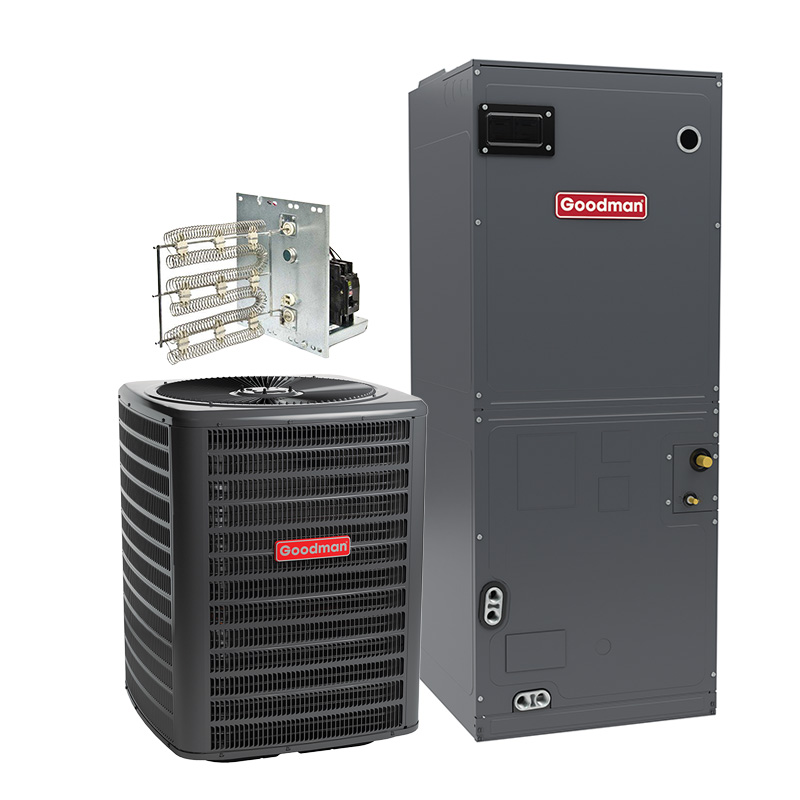
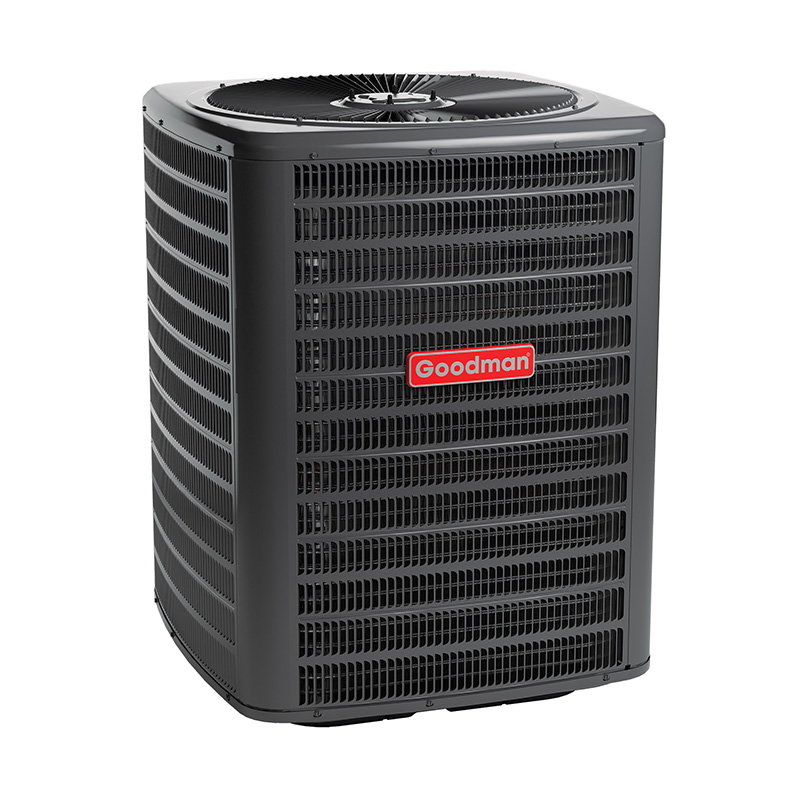
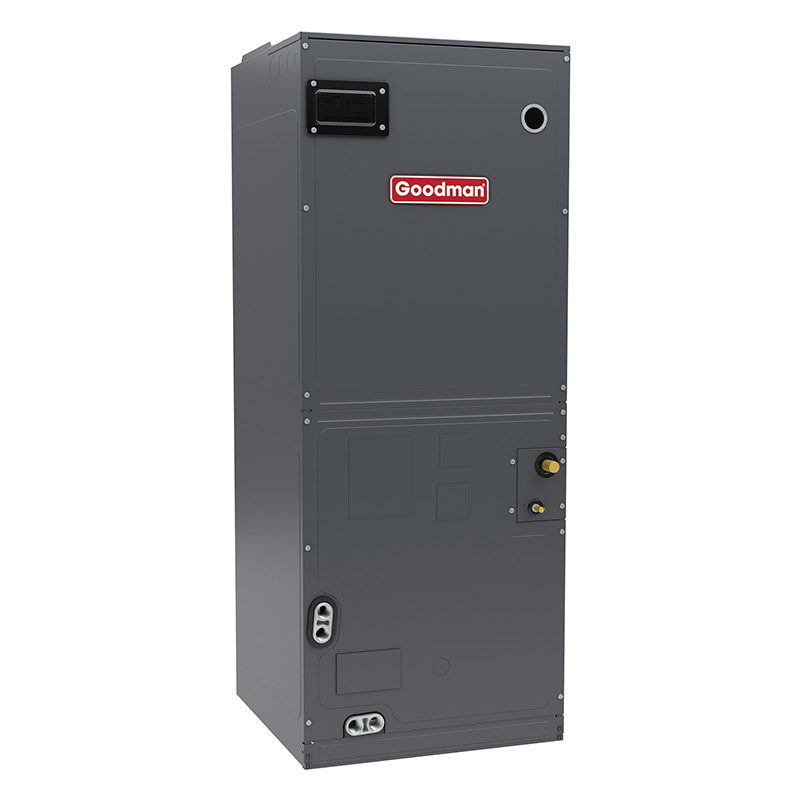
Goodman 3.5 Ton 14.5 SEER2 R32 Air Conditioner Split System With Electric Heat
View on AC Direct see your lowest price →Check current price on AC Direct →
Key features
- 3.5-ton capacity suited to roughly 1,800 to 2,400 sq ft depending on local climate and load calculation
- 14.5 SEER2 rating meets current federal efficiency minimums with single-stage scroll compressor operation
- R-32 refrigerant with lower global warming potential than R-410A and simpler single-component handling
- Electric heat configuration eliminates gas line and combustion venting requirements
- 10-year parts warranty with product registration within 60 days of installation
- Manufactured in Waller, Texas under Daikin parent company component sourcing
About this system
The Goodman 3.5-ton 14.5 SEER2 split system with electric heat is built for mid-size homes in the 1,800 to 2,400 square-foot range that need reliable cooling and supplemental electric heat without the price tag of a premium brand. At 14.5 SEER2, it clears the current federal minimum efficiency threshold and sits at the entry tier of modern rated equipment, meaning it will cost more to run annually than a 17 or 18 SEER2 unit but considerably less than pre-2023 baseline systems. The R-32 refrigerant is a genuine step forward: R-32 has a global warming potential roughly 68 percent lower than R-410A and is easier to handle in single-component recovery, so this system is better positioned for long-term serviceability as R-410A is phased out.
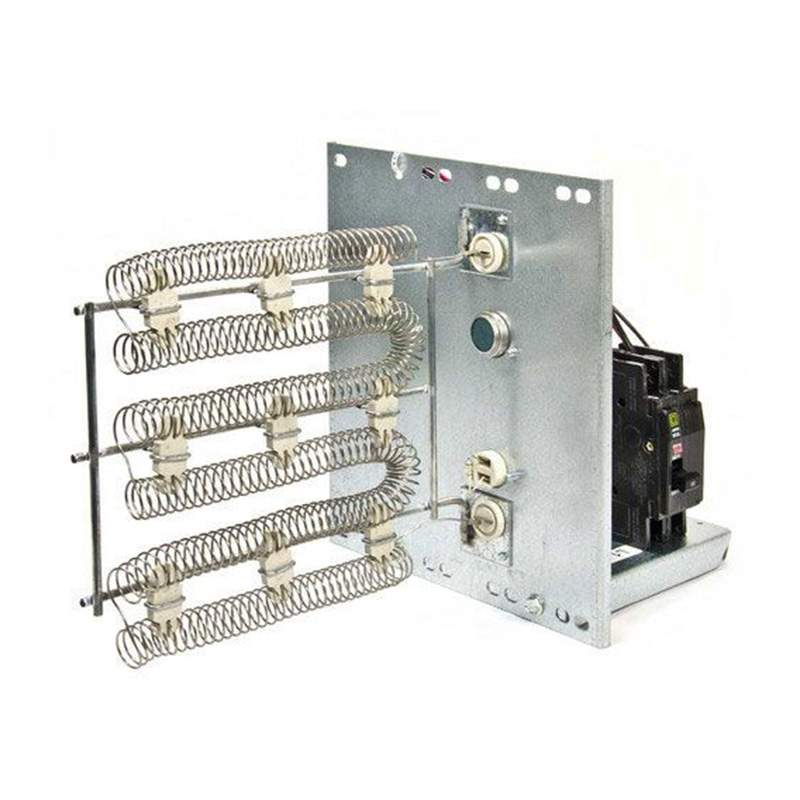
The electric heat designation means the air handler or furnace side uses electric resistance strips rather than a gas burner, which keeps installation straightforward in homes without a gas line and eliminates combustion venting. Trade-off: electric resistance heat is the most expensive heat source to run in cold climates, so this configuration is best suited to mild-winter markets or homes where heat runs are short and infrequent. Goodman builds this unit at its Waller, Texas facility under the same Daikin ownership umbrella that supplies many of the core components, and the system carries a 10-year parts warranty when registered within 60 days of installation.
This Goodman system delivers a functional, code-compliant cooling and electric heat solution at a price point 15 to 25 percent below comparable Carrier, Trane, and Lennox equipment, making it a realistic choice for budget-conscious buyers who prioritize upfront cost. The R-32 refrigerant is a legitimate long-term advantage, but owners should budget for likely capacitor replacement in the mid-life years and understand that compressor longevity trends shorter than premium alternatives. The system earns its place in the market honestly, provided installation quality is not compromised.
Overall score is the average of the five ratings above.
What we like
- Upfront cost runs 15 to 25 percent less than comparable Carrier, Trane, and Lennox single-stage units
- R-32 refrigerant reduces environmental impact and simplifies future servicing compared to R-410A
- No gas line or combustion venting needed, lowering installation complexity in all-electric homes
- 10-year parts warranty (registered) is competitive with other value-tier brands at this price point
- Daikin parent company ownership improves component sourcing consistency versus older standalone Goodman era
Trade-offs
- Dual-run capacitors are the most commonly reported failure point, typically requiring a 300 to 600 dollar service call around years 5 to 10
- Compressor lifespan averages 10 to 14 years, notably shorter than the 15 to 20 years reported for premium-brand compressors
- Evaporator coil leaks appear in a meaningful share of owner reports, which can be a costly mid-life repair
- Electric resistance heat is expensive to operate in colder climates and is not a substitute for a heat pump or gas furnace where winters are long
What homeowners and pros say about Goodman
On consumer review platforms, Goodman’s reputation is genuinely split depending on where you look. The brand scores around 2.5 out of 5 on ConsumerAffairs, a channel that skews toward owners who had problems, and the recurring theme in those reviews is repair costs climbing after roughly year 7. The most documented failure modes align with that window: dual-run capacitors are the single most commonly reported part to fail, costing 300 to 600 dollars to fix, and evaporator coil leaks appear frequently enough to be a known risk rather than a fluke. Compressor longevity averaging 10 to 14 years also trails the 15 to 20 years that owners of premium-brand systems tend to report. For this specific R-32 model, a small number of early owners have noted refrigerant leaks in the first year, which experienced technicians typically attribute to installation or initial charge quality rather than a factory defect.
On Google dealer reviews, where buyers who had smooth installs are more likely to weigh in, Goodman equipment clusters around 3.8 out of 5 across hundreds of reviews per location, with affordability being the most consistent praise. HVAC technicians who work on Goodman equipment regularly tend to hold a measured view: the hardware is serviceable and parts are widely available, but they emphasize that installation quality is the single biggest factor in how long any Goodman system lasts. A properly charged, correctly sized, and well-commissioned unit from this brand can run for over a decade without major incident; a rushed or improperly sized install accelerates every one of the documented failure modes. For this 3.5-ton R-32 unit specifically, choosing an installer who has hands-on R-32 experience is more important than it would be with an R-410A system, given that R-32 handling procedures are still less routine in some markets.
Sources: ConsumerAffairs Goodman owner reviews, AHRI Directory of Certified Product Performance, U.S. DOE appliance and equipment efficiency standards, Goodman product specification sheets.
What it costs to run
At 14.5 SEER2, cooling this 3.5-ton system for a typical 1200-hour cooling season at the U.S. average electricity rate of $0.17/kWh works out to roughly $591 per year in cooling, about $48 less per year than a minimum-efficiency 13.4 SEER2 unit of the same size. Your real cost depends on your climate and local rate.
Method: (42,000 BTU/hr ÷ 14.5 SEER2) × 1200 hours ÷ 1000 × $0.17/kWh. Rate source: U.S. EIA average; cooling hours: moderate-climate estimate.
How it compares
| Brand | Comparable model | SEER2 | Stage | Price position |
|---|---|---|---|---|
| Goodman | 3.5-Ton 14.5 SEER2 R-32 Split System with Electric Heat | 14.5 | Single-stage | Value pick |
| Carrier | Comfort 24ACC4 Series | 14.5 | Single-stage | Typically 15 to 25 percent more than this Goodman |
| Trane | XR14 Series | 14.5 | Single-stage | Typically 15 to 25 percent more than this Goodman |
| Lennox | Merit ML14XC1 Series | 14.5 | Single-stage | Typically 15 to 25 percent more than this Goodman |
Competitor rows are comparable single-stage units at similar efficiency; price is relative position, not a quote.
Questions about this system
Why does this system use R-32 refrigerant instead of R-410A, and does that affect who can service it?
R-32 is a single-component refrigerant with a lower global warming potential and simpler recovery than R-410A, which is being phased out under federal rules. Most licensed HVAC technicians can handle R-32, but you should confirm your installer is familiar with it, since it requires slightly different handling procedures than R-410A.
What does 'electric heat' mean for this split system, and is it efficient enough for winter use?
Electric heat refers to resistance heating strips in the air handler, similar in principle to a baseboard heater. It is reliable and simple but converts electricity to heat at a 1-to-1 ratio, making it the most expensive heating method per BTU. It works well for short heating seasons or as emergency backup, but in climates with extended cold winters the operating cost can be significantly higher than a gas furnace or heat pump.
What are the most common repairs owners report on Goodman air conditioners, and how much do they typically cost?
Dual-run capacitor failure is the most frequently cited issue, usually showing up in years 5 through 10 and typically costing 300 to 600 dollars for parts and labor. Evaporator coil leaks are reported by a meaningful share of owners and can run higher depending on the repair approach. A small minority of owners also report refrigerant leaks within the first year, which are generally traced to installation or initial charge issues rather than the equipment itself.
Does the 10-year warranty cover labor costs, or just the parts?
Goodman's registered warranty covers parts for 10 years, but labor is not included under the manufacturer warranty. Labor costs for a covered repair are paid by the homeowner, so it is worth asking your installer whether they offer a separate labor warranty and for how long.
Is 14.5 SEER2 going to cost significantly more to operate than a higher-efficiency unit?
A 14.5 SEER2 system is the current minimum efficiency tier, so a 17 or 18 SEER2 unit will use noticeably less electricity over a full cooling season. The actual dollar difference depends on your local utility rate, run hours, and climate, but in a hot climate with long cooling seasons the operating cost gap compounds meaningfully over 10 to 15 years. If your cooling loads are moderate or you are in a milder climate, the payback period on a higher-efficiency unit stretches out and the 14.5 SEER2 option may be reasonable.
Specifications
| Cooling capacity | 3.5 Ton |
| Efficiency | 14.5 SEER2 |
| Refrigerant | R-32 |