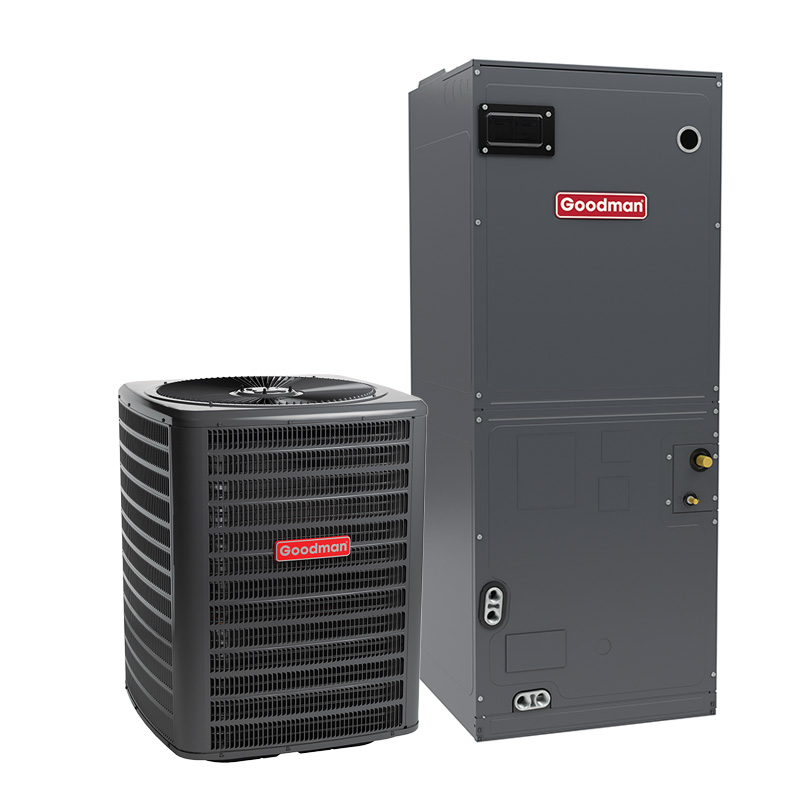
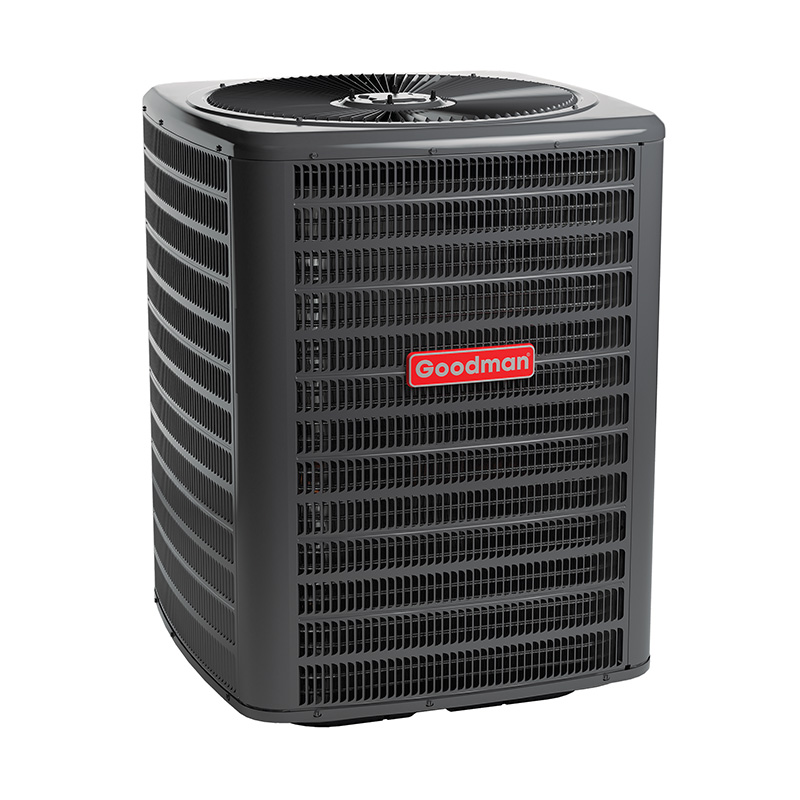
Goodman 3.5 Ton 14.5 SEER2 R32 Cooling Only Split System
View on AC Direct see your lowest price →Check current price on AC Direct →
Key features
- 3.5-ton cooling capacity for mid-to-large residential spaces
- 14.5 SEER2 efficiency rating, meeting current federal minimums
- R-32 refrigerant with lower global warming potential than R-410A
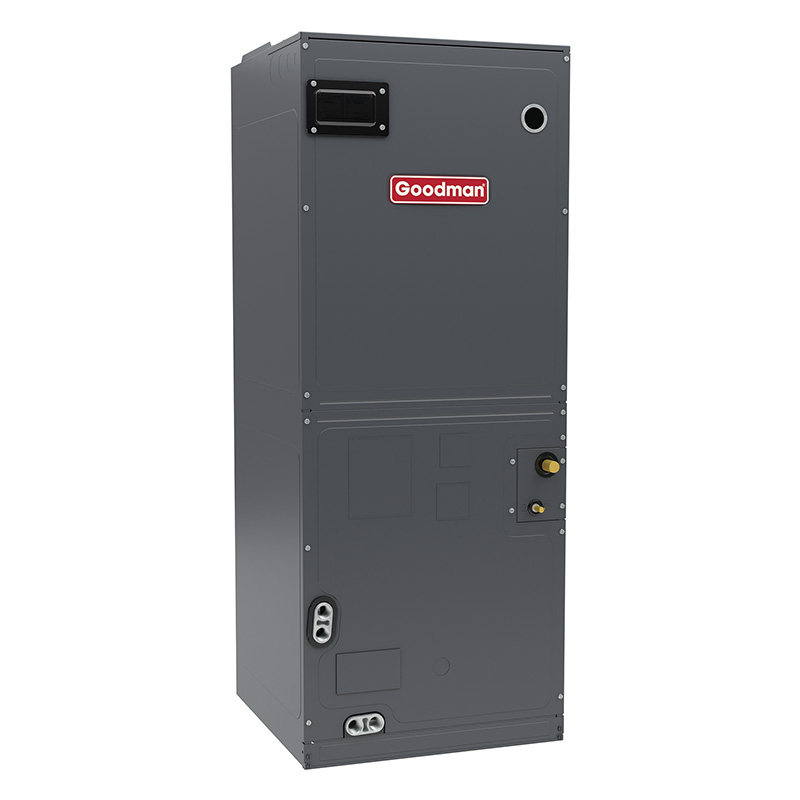
- Cooling-only configuration pairs with a separate furnace or air handler
- Single-stage compressor operation for straightforward maintenance
- Priced approximately 15 to 25 percent below comparable Carrier, Trane, and Lennox units
About this system
The Goodman 3.5 Ton 14.5 SEER2 Cooling Only Split System is built for homeowners who need reliable air conditioning without the premium price tag of top-tier brands. At 3.5 tons, it is sized for mid-to-large homes, typically in the 1,800 to 2,400 square foot range depending on climate, insulation, and layout. The 14.5 SEER2 rating meets the current federal minimum efficiency standard for most U.S. regions, so this is an entry-level efficiency unit rather than an energy-saver, but it will satisfy code requirements and deliver straightforward cooling performance.
One notable spec is the R-32 refrigerant, which replaces the older R-410A that Goodman and most manufacturers have used for years. R-32 has a lower global warming potential and operates at slightly different pressures, meaning any technician who services this system needs to be familiar with R-32 handling procedures. This is a forward-looking choice that aligns with EPA phase-down rules, but it also means a smaller pool of experienced service techs in some markets right now. Because this is a cooling-only system, it pairs with a separate gas furnace or air handler rather than a heat pump, making it well suited to climates where heating is handled by a dedicated heating appliance.
This Goodman unit is a practical, budget-conscious choice for homeowners who want to meet efficiency minimums and keep upfront costs down, provided they invest in a skilled installation. Its value proposition is real, but the trade-offs in long-term compressor lifespan and documented coil issues mean it suits buyers who are cost-focused now and prepared for the possibility of earlier maintenance costs down the road.
Overall score is the average of the five ratings above.
What we like
- Meaningfully lower purchase price than Carrier, Trane, or Lennox equivalents at this efficiency tier
- R-32 refrigerant adoption keeps the system current with EPA refrigerant phase-down requirements
- 3.5-ton output covers a wide range of mid-to-large home footprints
- Single-stage design is straightforward for technicians to diagnose and service
- Dual-run capacitor failures, the most common repair issue, are typically low-cost fixes in the $300 to $600 range
Trade-offs
- Compressor lifespan averages 10 to 14 years, noticeably shorter than the 15 to 20 years typical of premium brands
- Evaporator coil leaks are a recurring complaint in owner reviews and can be a costly mid-life repair
- A minority of owners report refrigerant leaks within the first year, often tied to installation quality rather than the unit itself
- R-32 servicing requires technicians specifically trained on this refrigerant, which may limit options in some markets
What homeowners and pros say about Goodman
Homeowners who review Goodman equipment tend to split into two camps, and both camps are reflected in the brand’s ratings. On ConsumerAffairs, Goodman sits at roughly 2.5 out of 5, a score shaped heavily by owners who experienced repair costs climbing after about year 7, with dual-run capacitor failures and evaporator coil leaks appearing repeatedly in complaint threads. On Google dealer reviews, where buyers are rating the installation experience alongside the equipment, the brand lands around 3.8 out of 5, with affordability consistently cited as the top reason people chose it. The gap between those two numbers is telling: the unit often starts fine and the problems arrive later, which is consistent with documented compressor lifespans of 10 to 14 years versus the 15 to 20 years more commonly reported for premium brands.
HVAC technicians tend to have a pragmatic view of Goodman equipment specifically. Many will note that the first year of refrigerant leaks, which a minority of owners report, almost always traces back to installation quality rather than a factory defect, reinforcing how much this brand’s real-world performance depends on who puts it in. For this particular system, the move to R-32 refrigerant adds a layer of consideration: pros who have not yet added R-32 certification to their credentials may be less familiar with proper handling, so vetting your installer’s R-32 experience is genuinely important here, not just a formality. For buyers who secure a careful, experienced installer and keep up with annual maintenance, Goodman’s value proposition holds up through the early years. The honest caution is in the longer view.
Sources: ConsumerAffairs Goodman owner reviews, AHRI Directory of Certified Product Performance, U.S. DOE appliance and equipment efficiency standards, Goodman product specification sheets.
What it costs to run
At 14.5 SEER2, cooling this 3.5-ton system for a typical 1200-hour cooling season at the U.S. average electricity rate of $0.17/kWh works out to roughly $591 per year in cooling, about $48 less per year than a minimum-efficiency 13.4 SEER2 unit of the same size. Your real cost depends on your climate and local rate.
Method: (42,000 BTU/hr ÷ 14.5 SEER2) × 1200 hours ÷ 1000 × $0.17/kWh. Rate source: U.S. EIA average; cooling hours: moderate-climate estimate.
How it compares
| Brand | Comparable model | SEER2 | Stage | Price position |
|---|---|---|---|---|
| Goodman | 3.5 Ton 14.5 SEER2 R-32 Cooling Only | 14.5 | Single-stage | Value pick |
| Carrier | Comfort Series (24ACC6) | 14.5 | Single-stage | Typically 15 to 25 percent more than Goodman |
| Trane | XR14c | 14.5 | Single-stage | Typically 15 to 25 percent more than Goodman |
| Lennox | Merit Series (ML14XC1) | 14.5 | Single-stage | Typically 15 to 25 percent more than Goodman |
Competitor rows are comparable single-stage units at similar efficiency; price is relative position, not a quote.
Questions about this system
Do I need a special technician to service an R-32 system?
Yes. R-32 requires technicians who are specifically certified to handle it, as it operates at different pressures than R-410A and is mildly flammable. Most established HVAC companies are or are quickly becoming R-32 certified, but it is worth confirming this with your service contractor before purchase, especially in smaller or rural markets.
What size home is a 3.5-ton unit actually suited for?
A rough rule of thumb puts 3.5 tons at around 1,800 to 2,400 square feet, but the real answer depends on your climate zone, insulation quality, ceiling height, and window area. A proper Manual J load calculation by your installer is the only reliable way to confirm this unit is the right size for your specific home.
What are the most likely repair costs I should plan for over the life of this system?
Dual-run capacitors are the most frequently reported failure on Goodman units and typically cost $300 to $600 to replace. Evaporator coil leaks are documented in a meaningful share of owner reviews and can run significantly higher. Budget for routine annual maintenance and consider whether an extended service plan makes sense given the brand's repair history after year 7.
This is listed as cooling only. What do I need to complete the system?
A cooling-only split system requires a compatible indoor air handler or a gas furnace with a coil cabinet to move air across the evaporator coil. You will also need refrigerant line sets, electrical disconnects, and a properly sized thermostat. Your installer should assess compatibility with any existing indoor equipment before the unit ships.
How does Goodman's warranty work, and are there conditions I need to meet?
Goodman typically requires product registration within a set window after installation to receive the full warranty term, which for registered equipment on residential systems generally covers the compressor and functional parts for 10 years. If registration is missed, the coverage period drops substantially. Warranty claims also require proof of professional installation and documented regular maintenance, so keeping service records matters.
Specifications
| Cooling capacity | 3.5 Ton |
| Efficiency | 14.5 SEER2 |
| Refrigerant | R-32 |