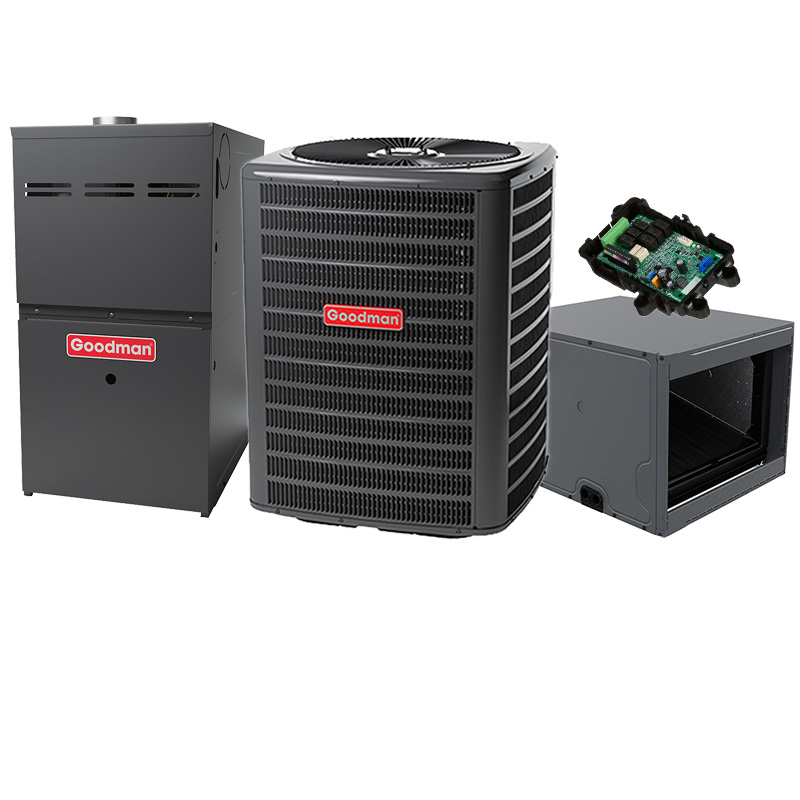
Goodman 3.5 Ton 14 SEER2 100000 BTU 80% Two-Stage Gas Furnace With R32 Air Conditioner Condenser And Coil System – Horizontal
View on AC Direct see your lowest price →Check current price on AC Direct →
Key features
- 3.5-ton cooling capacity suited to homes roughly 1,800 to 2,400 square feet depending on insulation and climate
- 14 SEER2 efficiency meets current federal minimums for northern regions
- Two-stage furnace operation reduces short-cycling and temperature swings on mild heating days
- 100,000 BTU input with 80% AFUE delivers 80,000 BTU of usable heat output
- R-32 refrigerant has roughly 68% lower global warming potential than R-410A
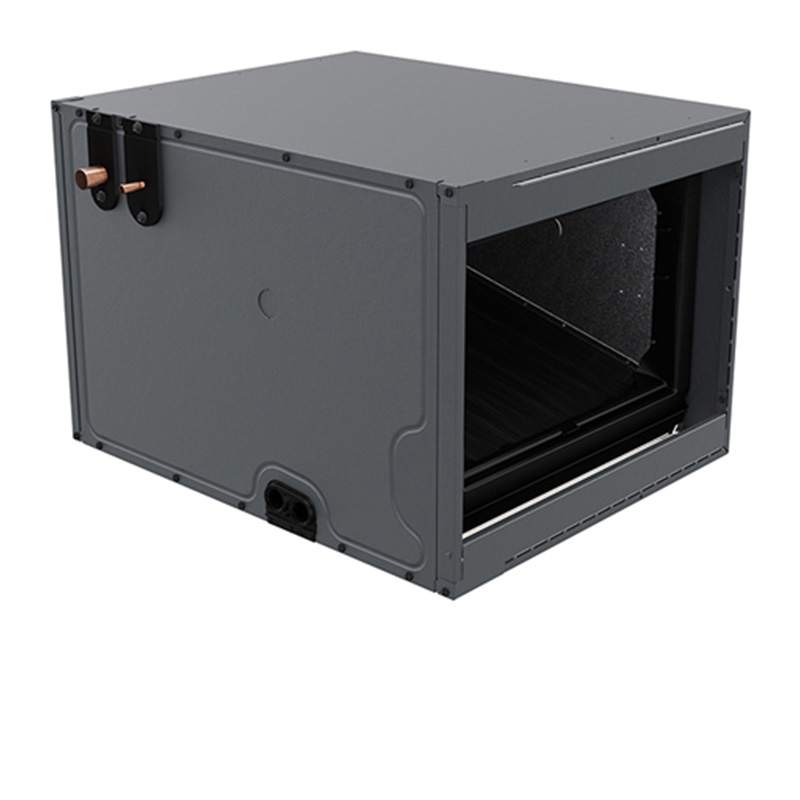
- Horizontal coil configuration designed for crawl-space, low-attic, or side-discharge installations
About this system
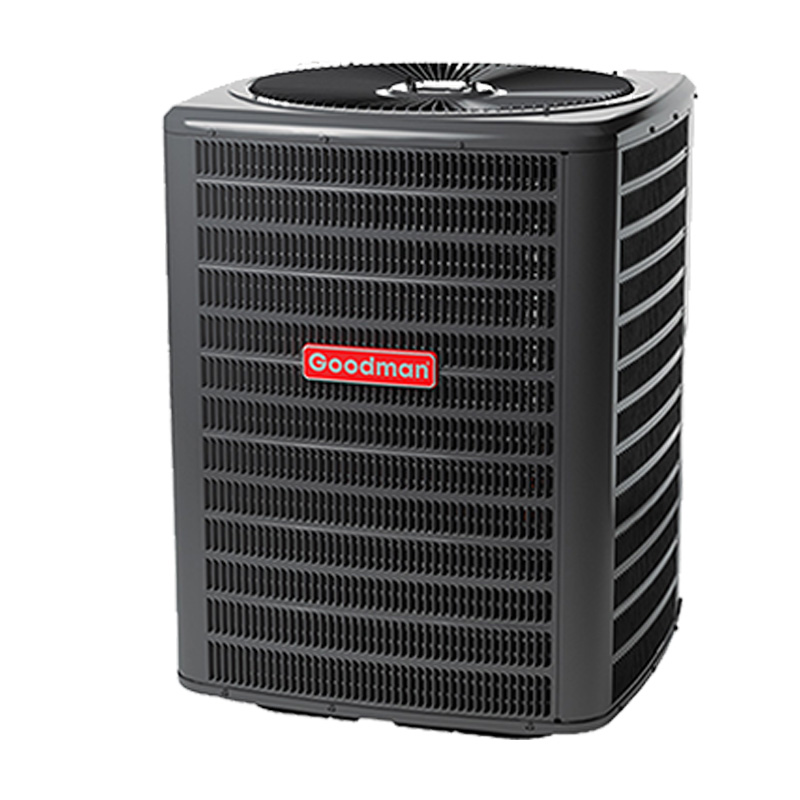
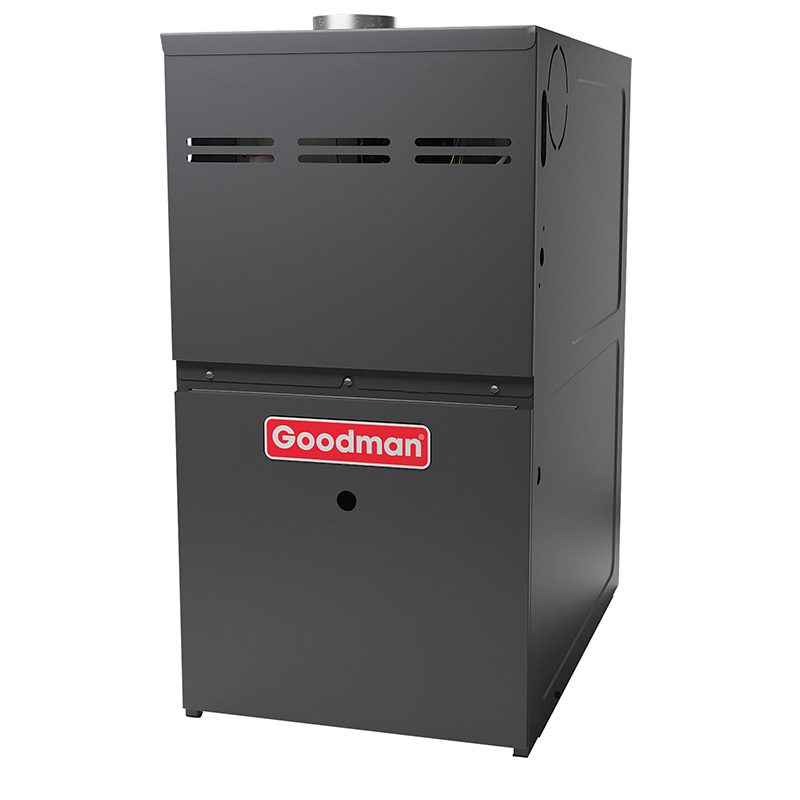
This Goodman horizontal split system pairs a 3.5-ton, 14 SEER2 air conditioner condenser with a 100,000 BTU 80% AFUE two-stage gas furnace and a matching evaporator coil, all configured for horizontal airflow. That orientation suits homes where the air handler lives in a crawl space, a low attic, or a tight mechanical closet where vertical clearance is limited. The R-32 refrigerant charge is a step forward environmentally, carrying a lower global warming potential than the R-410A it replaces, and it is becoming the standard for new residential equipment.
The two-stage furnace is a meaningful comfort upgrade over a single-stage unit. On most winter days the burner runs at the lower stage, cycling less aggressively, reducing temperature swings, and keeping operating costs lower than full-fire operation on every call. The 14 SEER2 rating sits at the federal minimum efficiency threshold for many northern climate regions, which keeps purchase price down but means cooling costs will be higher over time compared with 16 SEER2 or above equipment. This system is best matched to budget-conscious buyers in moderate climates, or to rental property owners and builders who need reliable performance without spending up for a premium nameplate.
This Goodman system gives budget-focused buyers a two-stage furnace and R-32 refrigerant at a price point 15 to 25 percent below comparable Trane, Lennox, or Carrier equipment. The trade-off is a modest efficiency ceiling at 14 SEER2, a compressor lifespan that historically runs shorter than premium brands, and component reliability that depends heavily on who installs it and how carefully. For homeowners who prioritize upfront cost and are comfortable with the possibility of earlier component service, it is a workable choice.
Overall score is the average of the five ratings above.
What we like
- Two-stage furnace improves comfort and reduces short-cycling compared to single-stage alternatives at the same price tier
- R-32 refrigerant is environmentally cleaner than R-410A and is better supported for future servicing as R-410A phases out
- Horizontal configuration fills an installation need that many standard vertical systems cannot accommodate
- Priced 15 to 25 percent below Trane, Lennox, and Carrier at comparable specs, freeing budget for quality installation labor
- Parts are widely stocked at HVAC distributors nationwide, keeping repair wait times short when service is needed
Trade-offs
- 14 SEER2 is the efficiency floor, not the ceiling, meaning higher cooling operating costs over the system's life compared to 16 SEER2 or better equipment
- 80% AFUE is a mid-efficiency furnace rating; homes in cold climates could save meaningfully on gas bills with a 96% AFUE alternative
- Documented failure modes include dual-run capacitor failures, evaporator coil leaks, and compressor lifespans that average 10 to 14 years versus 15 to 20 years for premium brands
- ConsumerAffairs ratings average around 2.5 out of 5, with repair costs after year seven being a recurring owner complaint
What homeowners and pros say about Goodman
Homeowners who post about Goodman online tend to split into two camps. Those who had a careful installation by an experienced contractor and stayed on top of basic maintenance, annual filter changes and coil cleaning, generally report years of trouble-free operation and point to the lower purchase price as the reason they chose the brand. Google dealer review aggregates sit around 3.8 out of 5 across dealer locations, and affordability is consistently the most cited reason for satisfaction. That score reflects a product that, under good conditions, delivers on its core promise without drama.
The friction shows up later. ConsumerAffairs ratings average closer to 2.5 out of 5, and that channel is dominated by owners who started seeing repair bills climb after roughly the seven-year mark. The specific failure modes documented in owner feedback are consistent: dual-run capacitors going out (a low-cost fix, typically 300 to 600 dollars, but annoying on a newer system), evaporator coil leaks that can be more expensive to diagnose and repair, and compressors that tend to hit the end of their service life at 10 to 14 years rather than the 15 to 20 years owners of Trane or Carrier equipment sometimes report. HVAC technicians who work on Goodman frequently note that install quality is the single biggest predictor of longevity, meaning a poorly charged system or an undersized line set matters far more than the nameplate on the cabinet. Budget for a quality installation, not just quality equipment, and the odds improve considerably.
Sources: ConsumerAffairs Goodman owner reviews, AHRI Directory of Certified Product Performance, U.S. DOE appliance and equipment efficiency standards, Goodman product specification sheets.
What it costs to run
At 14 SEER2, cooling this 3.5-ton system for a typical 1200-hour cooling season at the U.S. average electricity rate of $0.17/kWh works out to roughly $612 per year in cooling, about $27 less per year than a minimum-efficiency 13.4 SEER2 unit of the same size. Your real cost depends on your climate and local rate.
Method: (42,000 BTU/hr ÷ 14 SEER2) × 1200 hours ÷ 1000 × $0.17/kWh. Rate source: U.S. EIA average; cooling hours: moderate-climate estimate.
How it compares
| Brand | Comparable model | SEER2 | Stage | Price position |
|---|---|---|---|---|
| Goodman | 3.5T 14 SEER2 / 100K BTU 80% Two-Stage Horizontal | 14 | Two-stage furnace / single-stage condenser | Value pick |
| Carrier | Comfort 24ACC636 condenser with 58TP two-stage furnace | 14-15 | Two-stage furnace / single-stage condenser | 15 to 25 percent above Goodman |
| Trane | XR14 condenser with S8X2 two-stage furnace | 14-15 | Two-stage furnace / single-stage condenser | 15 to 25 percent above Goodman |
| Lennox | Merit ML14XC1 condenser with ML196E two-stage furnace | 14-15 | Two-stage furnace / single-stage condenser | 20 to 30 percent above Goodman |
Competitor rows are comparable single-stage units at similar efficiency; price is relative position, not a quote.
Questions about this system
Why is this system configured horizontal, and can I install it vertically instead?
Horizontal refers to the evaporator coil orientation, which is designed for air handlers lying on their side in crawl spaces, low attics, or side-discharge plenums. Using a horizontal coil in a vertical application will cause condensate drainage problems and potential coil flooding. If your air handler stands upright, you need a vertical or multi-position coil, not this configuration.
What does R-32 refrigerant mean for me as a homeowner, and is it harder to service?
R-32 has a lower global warming potential than R-410A and is increasingly the refrigerant of choice as R-410A phases out under EPA regulations. Most certified HVAC technicians can work with R-32, but it does require specific recovery equipment and is classified as mildly flammable, so confirm your service contractor is trained and equipped for it before signing a maintenance contract.
The documented failure modes mention capacitor failures and coil leaks. How worried should I be?
Dual-run capacitor failures are among the most common HVAC repairs across all brands, not just Goodman, and typically cost 300 to 600 dollars to fix. Evaporator coil leaks appear in a meaningful share of Goodman owner reviews and are more expensive to address, sometimes involving refrigerant recharge costs. Budgeting for one or two service calls in the 7 to 12 year window is a realistic expectation.
Is 14 SEER2 going to cost me significantly more in electricity than a higher-efficiency unit?
Compared to a 16 SEER2 system, a 14 SEER2 unit uses roughly 12 to 14 percent more electricity for the same cooling output. In a hot climate with long cooling seasons that gap adds up over years; in a mild climate with short summers the payback period on the higher-efficiency unit is much longer. Run the numbers for your local utility rate and cooling degree days before deciding.
Goodman scores around 2.5 on ConsumerAffairs and 3.8 on Google dealer reviews. Which reflects reality better?
ConsumerAffairs is complaint-driven by nature, meaning dissatisfied owners are far more likely to post there, which pulls ratings down relative to the broader owner population. Google dealer reviews at around 3.8 capture a wider range of experiences and skew toward affordability as a genuine positive. The truth is somewhere between the two: Goodman is a serviceable value brand that performs acceptably when installed well, with a higher-than-premium probability of component service needs after the first several years.
Specifications
| Cooling capacity | 3.5 Ton |
| Efficiency | 14 SEER2 |
| Furnace output | 100000 BTU |
| Configuration | Horizontal |
| Refrigerant | R-32 |