Goodman 3.5 Ton 15.2 SEER2 80000 BTU 80% AFUE Multi-Speed ECM Gas Furnace System – Horizontal | R32
View on AC Direct see your lowest price →Check current price on AC Direct →
Key features
- Horizontal discharge configuration for attic, crawlspace, and tight utility-closet installs
- Multi-speed ECM blower motor reduces electrical draw and improves humidity management
- 15.2 SEER2 rating meets current federal minimum efficiency standards
- 80,000 BTU capacity with 80% AFUE single-stage gas heat
- R-32 refrigerant with lower global warming potential than R-410A
- 3.5-ton cooling capacity suited to roughly 1,800 to 2,400 sq ft depending on load
About this system
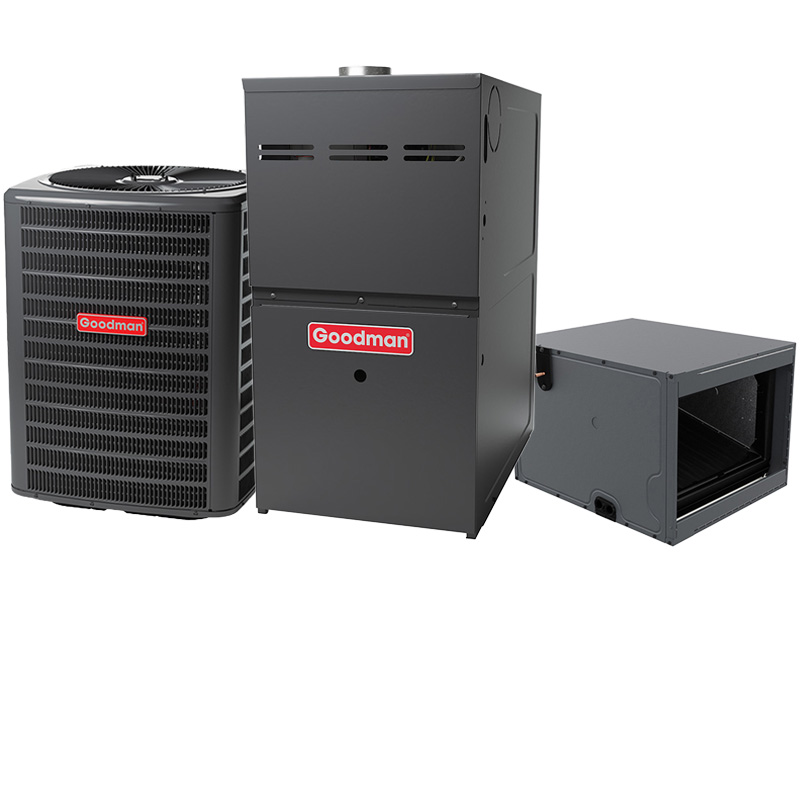
The Goodman 3.5-ton horizontal split system pairs a 15.2 SEER2 air conditioner with an 80,000 BTU, 80% AFUE gas furnace in a side-discharge horizontal configuration. That configuration is specifically engineered for tight attic installations, crawl spaces, and utility closets where a standard upflow or downflow unit simply will not fit. At 3.5 tons, this system is sized for homes roughly in the 1,800 to 2,400 square foot range, though a proper Manual J load calculation by your installer is the only reliable way to confirm that for your specific structure and climate.
The 15.2 SEER2 rating clears the federal minimum efficiency standard that took effect in 2023, though it sits at the lower end of mid-efficiency territory rather than the upper end. The 80% AFUE furnace means roughly 20 cents of every heating dollar escapes through the flue, which is acceptable in mild to moderate heating climates but becomes a real operating cost disadvantage in regions where the furnace runs hard for five or six months per year. The multi-speed ECM blower motor is the standout mechanical feature here: it uses significantly less electricity than a single-speed PSC motor, runs more quietly at partial capacity, and improves humidity control by allowing longer, gentler air cycles. R-32 refrigerant has a lower global warming potential than the R-410A it replaces and is gradually becoming the industry standard in residential equipment.
This system is a workable, budget-conscious option for homeowners who need a horizontal-configuration replacement and want to keep first costs down. The ECM motor is a genuine upgrade, but the 80% AFUE furnace and entry-level SEER2 rating mean operating costs will be higher than mid-tier alternatives over the system's life. Long-term performance depends heavily on installation quality and a willingness to budget for component repairs after year seven.
Overall score is the average of the five ratings above.
What we like
- Horizontal configuration fills a niche that most standard upflow systems cannot serve
- Multi-speed ECM blower lowers fan energy use and improves comfort compared to single-speed motors
- Priced roughly 15 to 25 percent below comparable Trane, Carrier, and Lennox systems
- R-32 refrigerant is increasingly supported by service technicians and aligns with current industry direction
- Broad dealer network means parts and service availability is generally not a problem
Trade-offs
- 80% AFUE furnace leaves meaningful heating efficiency on the table versus 96% AFUE alternatives, especially in cold climates
- 15.2 SEER2 is the low end of mid-efficiency; long-run utility savings versus a 17 or 18 SEER2 unit can offset the price gap over time
- Dual-run capacitors and evaporator coil leaks are documented recurring failure modes, and repair costs tend to climb after roughly year seven per owner feedback
- Compressor lifespan averages 10 to 14 years versus 15 to 20 years for premium brands, shortening the effective replacement horizon
What homeowners and pros say about Goodman
Homeowners who choose Goodman generally do so because the price gap versus Carrier, Trane, and Lennox is real and documented at 15 to 25 percent, and for a buyer replacing an older system on a limited budget that difference matters. On Google dealer reviews, Goodman equipment scores around 3.8 out of 5 across hundreds of reviews per location, with affordability showing up as the most consistent praise. The picture is more mixed on ConsumerAffairs, where the brand averages roughly 2.5 out of 5, a channel that skews toward complaint-driven posts, and the recurring theme there is repair costs that climb noticeably after roughly the seventh year of ownership.
HVAC technicians who work on Goodman equipment regularly point to install quality as the single biggest predictor of how long a unit lasts, more so than with premium brands that tend to be more forgiving of minor installation imperfections. The documented failure modes worth knowing about before you buy are dual-run capacitor failures, which are common but usually inexpensive to fix in the $300 to $600 range; evaporator coil leaks, which show up in a meaningful share of owner accounts and carry higher repair costs; and compressor longevity that averages 10 to 14 years rather than the 15 to 20 years more typical of premium brands. A small number of owners also report refrigerant leaks in the first year, which technicians typically attribute to charge or connection issues at installation rather than a factory defect. For a horizontal system where access is already limited, getting the installation right the first time by a licensed technician experienced with Goodman equipment is especially important.
Sources: ConsumerAffairs Goodman owner reviews, AHRI Directory of Certified Product Performance, U.S. DOE appliance and equipment efficiency standards, Goodman product specification sheets.
What it costs to run
At 15.2 SEER2, cooling this 3.5-ton system for a typical 1200-hour cooling season at the U.S. average electricity rate of $0.17/kWh works out to roughly $564 per year in cooling, about $75 less per year than a minimum-efficiency 13.4 SEER2 unit of the same size. Your real cost depends on your climate and local rate.
Method: (42,000 BTU/hr ÷ 15.2 SEER2) × 1200 hours ÷ 1000 × $0.17/kWh. Rate source: U.S. EIA average; cooling hours: moderate-climate estimate.
How it compares
| Brand | Comparable model | SEER2 | Stage | Price position |
|---|---|---|---|---|
| Goodman | 3.5T 15.2 SEER2 / 80K BTU 80% AFUE Horizontal ECM | 15.2 | Single-stage | Value pick |
| Carrier | Comfort 15 (24ACC636) with 80% AFUE 58STA furnace | 15.2 | Single-stage | Typically 15 to 20 percent above this Goodman system |
| Trane | XR15 (4TTR5042) with S8X1 80% AFUE furnace | 15.2 | Single-stage | Typically 20 to 25 percent above this Goodman system |
| Lennox | Merit ML15 with ML180 80% AFUE furnace | 15.2 | Single-stage | Typically 20 to 25 percent above this Goodman system |
Competitor rows are comparable single-stage units at similar efficiency; price is relative position, not a quote.
Questions about this system
Why does this system have a horizontal configuration and can it be installed in any other orientation?
Horizontal configuration means the unit is designed to lie on its side with supply and return air flowing laterally, which is specifically intended for attics, crawlspaces, and closets with limited vertical clearance. Installing it in an upflow or downflow orientation it was not designed for can cause drainage problems with the condensate system and may void the warranty, so you should confirm the required orientation with your installer before purchase.
Is 80% AFUE good enough, or should I pay more for a 96% furnace?
In climates with mild winters where the furnace runs infrequently, 80% AFUE is often good enough and the payback period for a more efficient unit stretches out considerably. In colder regions where the furnace runs five or six months a year, the roughly 16-percentage-point efficiency gap between 80% and 96% AFUE translates to a meaningful annual savings, and upgrading often pays back within five to eight years through lower gas bills.
What does the multi-speed ECM blower motor actually do for me day to day?
The ECM motor runs at lower speeds during mild conditions rather than always blasting at full capacity, which keeps the fan from cycling on and off as abruptly, reduces operating noise in the ducts, and allows the system to dehumidify more effectively by moving air through the coil more slowly. It also uses substantially less electricity than a standard single-speed PSC motor, which shows up as a small but consistent reduction in your monthly electric bill.
What are the most common repairs on Goodman systems and how much should I budget?
The most frequently documented failure point is the dual-run capacitor, which typically costs between $300 and $600 to diagnose and replace and is a straightforward repair most technicians can handle quickly. Evaporator coil leaks are a second documented issue and carry a higher repair cost depending on whether the coil is still under warranty. Owner feedback suggests repair frequency tends to increase after roughly year seven, so setting aside a small annual maintenance reserve is a practical approach.
Does this system come with a warranty, and what does it actually cover?
Goodman typically offers a 10-year parts warranty on registered equipment, which covers the compressor, coil, and other functional components but does not cover labor, refrigerant, or diagnosis fees. Registration must be completed within a set window after installation, and the warranty is generally tied to the original installation address. Labor costs for covered repairs still come out of your pocket, so a separate labor warranty or extended service agreement from your installing contractor is worth considering.
Specifications
| Cooling capacity | 3.5 Ton |
| Efficiency | 15.2 SEER2 |
| Furnace output | 80000 BTU |
| Furnace efficiency | 80% AFUE |
| Configuration | Horizontal |
| Refrigerant | R-32 |