Goodman 3.5 Ton 15.2 SEER2 80000 BTU 80% AFUE Multi-Speed ECM Gas Furnace System – Upflow | R32
View on AC Direct see your lowest price →Check current price on AC Direct →
Key features
- 15.2 SEER2 cooling efficiency meets current federal minimum standards for most U.S. regions
- 80% AFUE single-stage gas furnace rated at 80,000 BTU/h heating output
- Multi-speed ECM blower motor reduces fan electricity use versus fixed-speed PSC motors
- R-32 refrigerant with roughly two-thirds lower global warming potential than R-410A
- Upflow configuration for basement or ground-level mechanical room installations
- Factory-matched system designed for straightforward compatibility between indoor and outdoor units
About this system
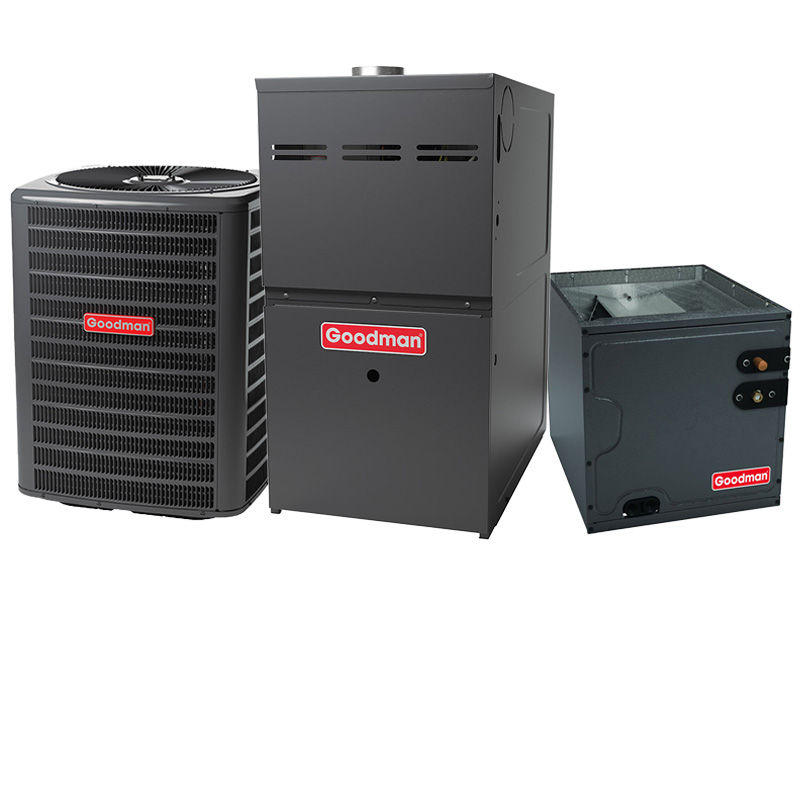
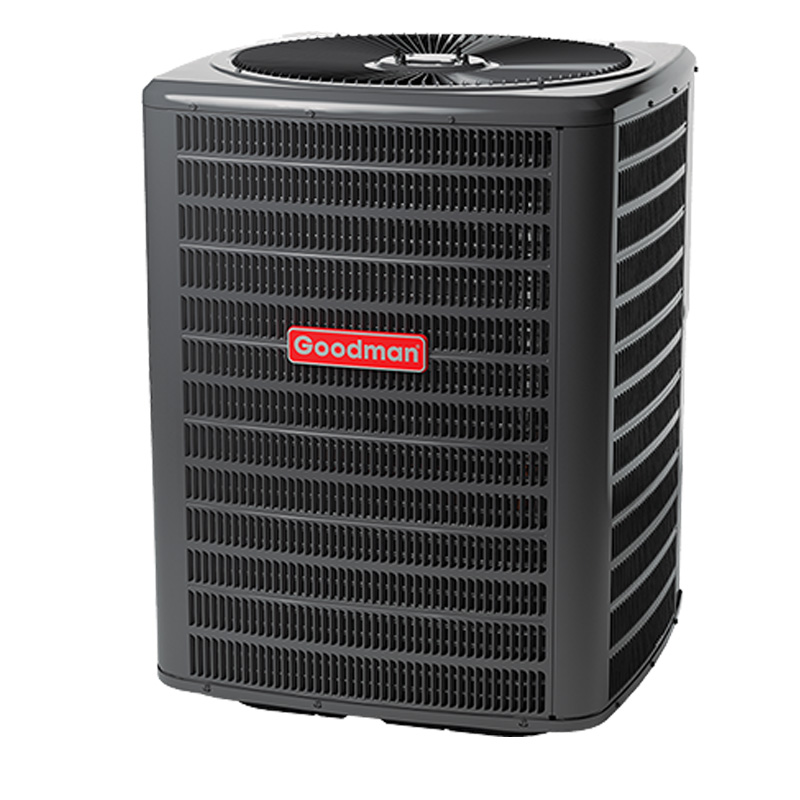
The Goodman 3.5-ton, 15.2 SEER2, 80,000 BTU upflow system pairs a mid-efficiency central air conditioner with an 80% AFUE gas furnace in a single matched package. The 3.5-ton cooling capacity is sized for roughly 1,600 to 2,200 square feet of conditioned space, depending on local climate, ceiling height, and insulation quality, so a proper Manual J load calculation before purchase is essential. The R-32 refrigerant charge is a meaningful step forward: R-32 has a global warming potential about two-thirds lower than R-410A, and its slightly higher efficiency ceiling is part of why this unit clears the federal 15.2 SEER2 minimum for most U.S. climate zones.
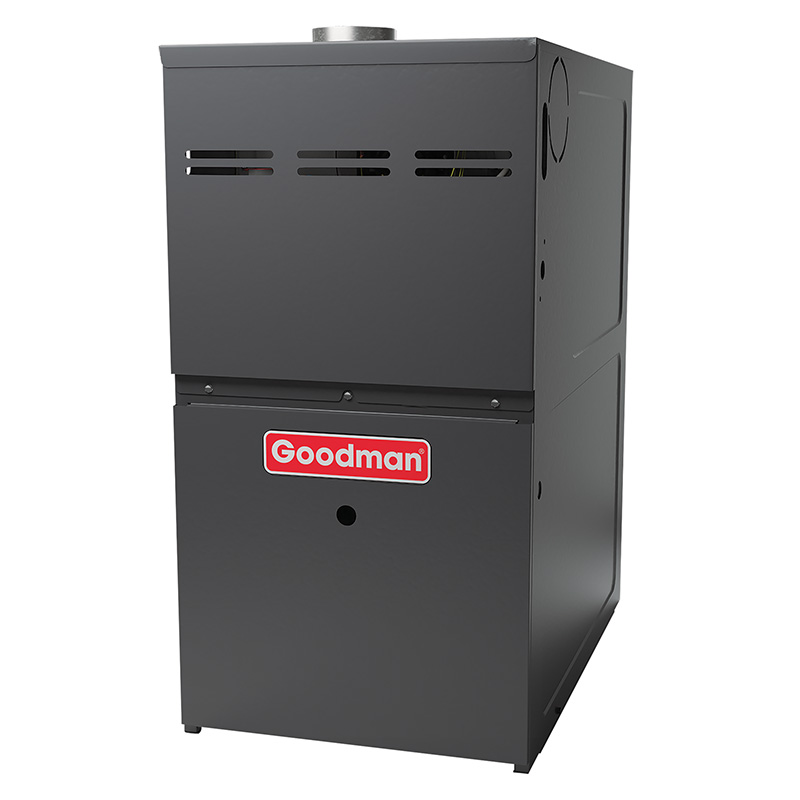
The furnace side runs at 80% AFUE, meaning 20 cents of every heating dollar exits through the flue. That is the entry-level efficiency tier for gas furnaces; homeowners in cold climates who run the heat heavily may find a 96% AFUE unit pays back the price difference in five to eight years. The multi-speed ECM blower motor is a genuine upgrade over a single-speed PSC motor: it ramps airflow up and down to match demand, which cuts blower electricity use by 60 to 75 percent compared to a fixed-speed unit and noticeably improves dehumidification on mild days. Upflow configuration means the unit draws return air from below and discharges conditioned air upward, which suits the majority of residential applications where the furnace sits in a basement or first-floor mechanical room with ductwork running overhead.
This Goodman system delivers a workable combination of modern refrigerant technology and a <a href="https://hvac.best/glossary/variable-speed/">variable-speed</a> blower at a price point that undercuts comparable Carrier, Trane, and Lennox equipment by 15 to 25 percent. The 80% AFUE furnace and 15.2 SEER2 rating hit the regulatory floor rather than exceeding it, which makes it a practical but not exceptional performer. Long-term costs depend heavily on installer quality and a willingness to budget for likely component replacements after year seven.
Overall score is the average of the five ratings above.
What we like
- Price sits 15 to 25 percent below comparable Trane, Lennox, and Carrier systems, lowering the upfront barrier
- Multi-speed ECM motor meaningfully reduces blower electricity costs and improves comfort on part-load days
- R-32 refrigerant is a future-forward choice with lower environmental impact than R-410A
- Factory-matched indoor and outdoor components simplify equipment selection and warranty alignment
- 15.2 SEER2 satisfies current federal efficiency requirements across most U.S. climate zones
Trade-offs
- 80% AFUE is the lowest efficiency tier for gas furnaces; high-use households in cold climates will pay more in fuel than with a 95-96% unit
- Dual-run capacitors are the most documented failure point, typically failing after several years and costing $300 to $600 to replace
- Compressor lifespan averages 10 to 14 years versus 15 to 20 years reported for premium-brand compressors
- ConsumerAffairs reviews average around 2.5 out of 5, with repair cost escalation after roughly year seven cited repeatedly
What homeowners and pros say about Goodman
Homeowners who mention Goodman online tend to split into two camps: those who got a clean install and a functioning system and those who encountered repair bills that eroded the upfront savings faster than expected. On Google dealer reviews, Goodman equipment averages around 3.8 out of 5 across hundreds of location-level reviews, with affordability showing up as the most consistent reason for satisfaction. ConsumerAffairs tells a harsher story, with Goodman averaging roughly 2.5 out of 5 on a platform where dissatisfied owners are overrepresented. The recurring complaint there is not immediate failure but a pattern of repair costs accumulating after about year seven, which lines up with the documented compressor lifespan of 10 to 14 years, shorter than the 15 to 20 years more commonly associated with premium brands.
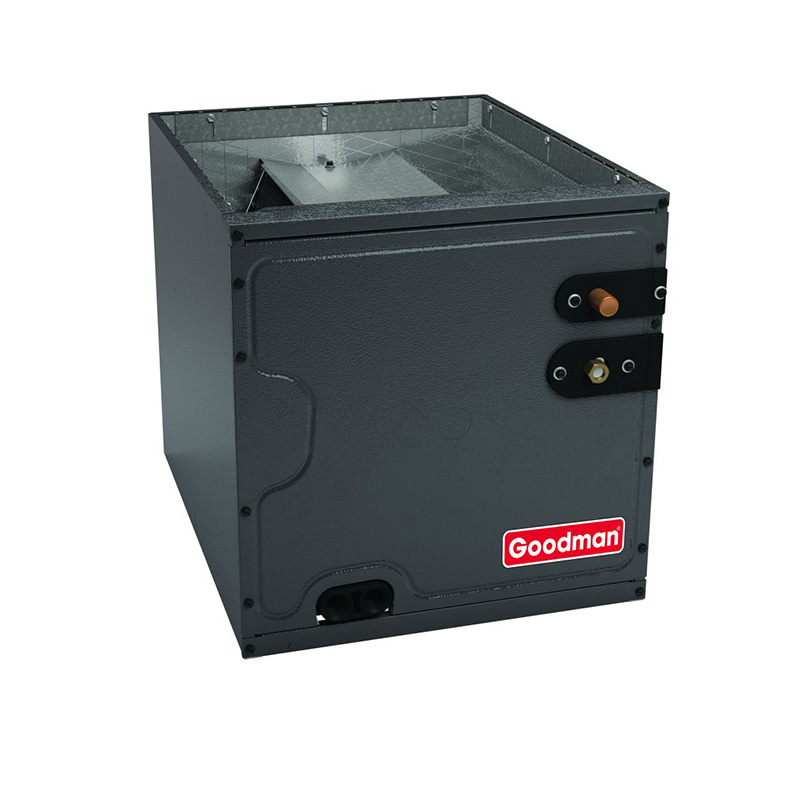
HVAC technicians who service Goodman equipment regularly point to dual-run capacitor failures as the most predictable maintenance item: a low-cost fix in the $300 to $600 range but one that comes up often enough to budget for. Evaporator coil leaks surface in a meaningful portion of owner accounts, and a smaller share of new owners report refrigerant issues within the first year, a pattern technicians consistently attribute to improper charging or installation rather than a factory defect. The professional consensus is that Goodman equipment performs close to its rated specs when installed correctly, and that install quality is the single largest variable separating a trouble-free 12-year run from an expensive disappointment. For this 3.5-ton R-32 system specifically, finding a contractor with documented R-32 experience is not optional.
Sources: ConsumerAffairs Goodman owner reviews, AHRI Directory of Certified Product Performance, U.S. DOE appliance and equipment efficiency standards, Goodman product specification sheets.
What it costs to run
At 15.2 SEER2, cooling this 3.5-ton system for a typical 1200-hour cooling season at the U.S. average electricity rate of $0.17/kWh works out to roughly $564 per year in cooling, about $75 less per year than a minimum-efficiency 13.4 SEER2 unit of the same size. Your real cost depends on your climate and local rate.
Method: (42,000 BTU/hr ÷ 15.2 SEER2) × 1200 hours ÷ 1000 × $0.17/kWh. Rate source: U.S. EIA average; cooling hours: moderate-climate estimate.
How it compares
| Brand | Comparable model | SEER2 | Stage | Price position |
|---|---|---|---|---|
| Goodman | 3.5T 15.2 SEER2 / 80K BTU 80% AFUE Multi-Speed ECM Upflow | 15.2 | Single-stage / Multi-speed ECM blower | Value pick |
| Carrier | Comfort 24ACC636 with 80% AFUE 58SB series furnace | ~15-16 | Single-stage | Typically 15 to 25 percent more than this Goodman system |
| Trane | XR15 with S8X1 80% AFUE furnace | ~15-15.2 | Single-stage | Typically 15 to 25 percent more than this Goodman system |
| Lennox | Merit ML15XC1 with 80% AFUE ML195 furnace | ~15-15.5 | Single-stage | Typically 15 to 25 percent more than this Goodman system |
Competitor rows are comparable single-stage units at similar efficiency; price is relative position, not a quote.
Questions about this system
Is 3.5 tons the right size for my house, or should I go up to 4 tons?
Tonnage should be determined by a Manual J load calculation, not square footage rules of thumb. A 3.5-ton unit is commonly appropriate for 1,600 to 2,200 square feet in average construction, but an oversized system short-cycles, raises humidity, and shortens equipment life. Ask your installer to run the calculation before ordering.
Will my existing technician be able to service an R-32 system?
R-32 requires technicians to hold a Section 608 certification, which most licensed HVAC contractors already have. However, R-32 is mildly flammable (A2L classification), so technicians need specific training and tools for safe handling. Confirm your installer has R-32 experience before scheduling the job.
How often do Goodman capacitors actually fail, and what does it cost?
Dual-run capacitor failure is the most commonly reported repair issue across Goodman owner reviews. It is generally a straightforward fix costing $300 to $600 in parts and labor, and most failures occur after several years of operation. Keeping a service agreement or scheduling annual tune-ups can catch a weakening capacitor before it causes a full breakdown.
Should I upgrade to a 96% AFUE furnace instead of this 80% unit?
If your home is in a climate with more than roughly 5,000 heating degree-days per year, the fuel savings from a 96% AFUE furnace can offset the higher purchase price within five to eight years. In mild climates or for buyers who prioritize upfront cost, the 80% unit is adequate. A 96% unit also requires a PVC condensate drain line, which adds install complexity.
What does the Goodman warranty actually cover on this system, and are there conditions?
Goodman typically offers a 10-year parts warranty on registered systems, which requires online registration within a set window after installation (usually 60 days). The warranty covers parts but not labor, so a repair in year eight still means paying a technician's time. Some dealers offer extended labor warranties separately, which is worth pricing out at the time of purchase.
Specifications
| Cooling capacity | 3.5 Ton |
| Efficiency | 15.2 SEER2 |
| Furnace output | 80000 BTU |
| Furnace efficiency | 80% AFUE |
| Configuration | Upflow |
| Refrigerant | R-32 |