Goodman 3.5 Ton 15.2 SEER2 80000 BTU 80% AFUE Two Stage Multi-Speed ECM Gas Furnace System – Upflow | R32
View on AC Direct see your lowest price →Check current price on AC Direct →
Key features
- 3.5-ton cooling capacity matched to an 80,000 BTU two-stage furnace
- 15.2 SEER2 rated efficiency, meeting federal minimum standards for most regions
- 80% AFUE gas furnace converts 80 cents of every fuel dollar to usable heat
- ECM multi-speed blower motor reduces fan electricity consumption versus PSC motors
- R-32 refrigerant with lower global-warming potential than R-410A
- Upflow configuration designed for basement or ground-level closet installations
About this system
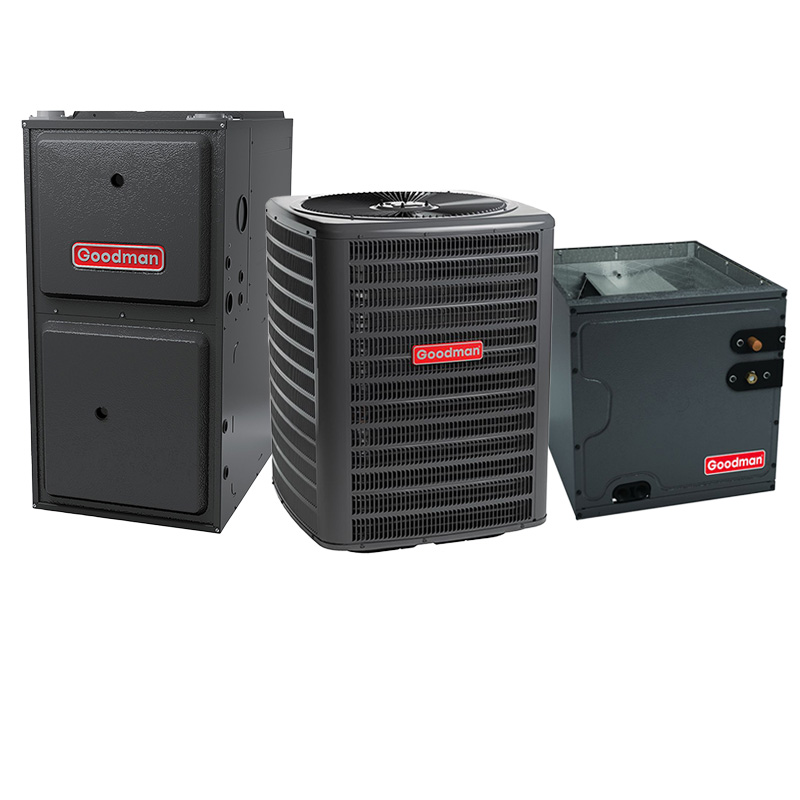
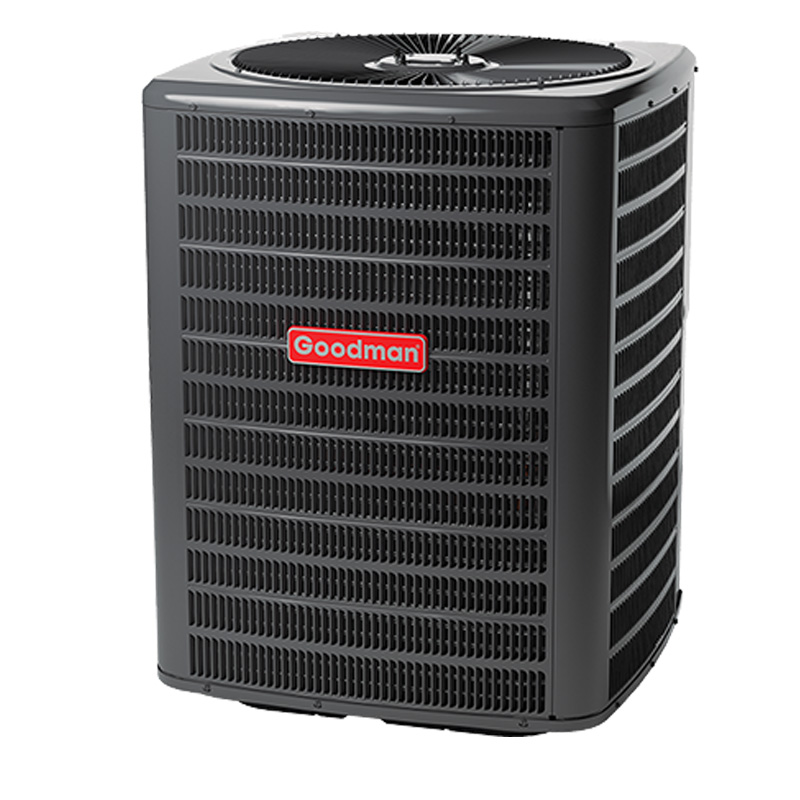
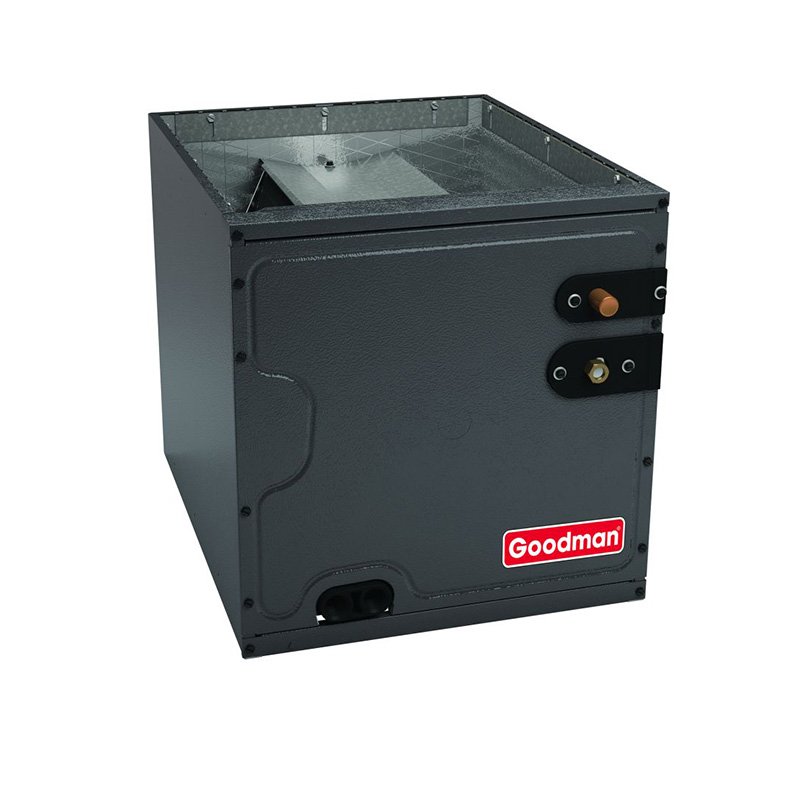
The Goodman GLXS4BA4210 pairs a 3.5-ton, 15.2 SEER2 R-32 air conditioner with an 80,000 BTU, 80% AFUE two-stage gas furnace in an upflow configuration. That combination covers homes roughly in the 1,800 to 2,400 square foot range in moderate climates, though the right sizing always depends on a Manual J load calculation specific to your house. The two-stage furnace fires at a lower capacity most of the time and steps up only on the coldest days, which smooths temperature swings and reduces the short-cycling common with single-stage equipment. The ECM (electronically commutated motor) blower further trims electricity use during fan-only and blower operation compared to a standard PSC motor.
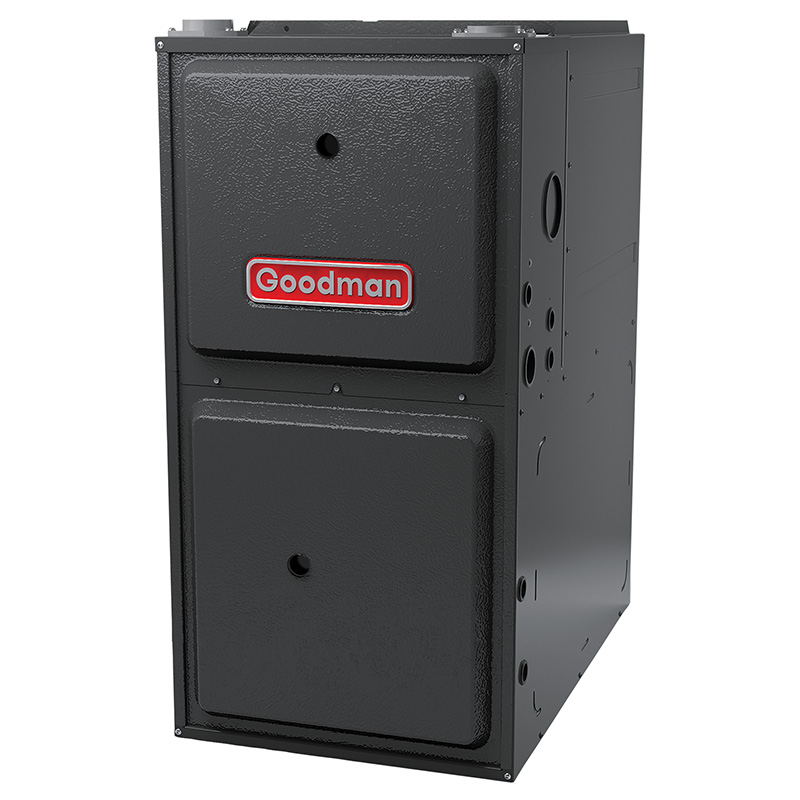
At 15.2 SEER2, this system clears the federal minimum for most U.S. regions and sits in the baseline-to-mid tier of efficiency. It is not the system to choose if you are chasing the lowest possible utility bills over a long horizon, but it represents a meaningful step above older 13 SEER equipment. R-32 refrigerant has a lower global-warming potential than R-410A and is becoming the industry standard, so parts availability should remain strong through this equipment’s service life. The upflow configuration means the furnace sits with supply air leaving from the top, which suits the most common basement or closet installations where ductwork runs through a first-floor ceiling.
The GLXS4BA4210 is a functional, budget-accessible two-stage system that delivers meaningful comfort improvements over single-stage equipment without the price tag of premium brands. Its weaknesses are Goodman's documented durability concerns past the seven-year mark and an efficiency rating that is entry-level rather than leading-edge. Buyers who prioritize lower upfront cost and are comfortable budgeting for possible mid-life repairs will find it a reasonable fit; those expecting premium longevity with minimal maintenance costs should look at a higher-tier brand.
Overall score is the average of the five ratings above.
What we like
- Priced roughly 15 to 25 percent below comparable Carrier, Trane, and Lennox systems
- Two-stage furnace operation reduces temperature swings and short-cycling
- ECM blower motor lowers ongoing fan electricity costs compared to standard motors
- R-32 refrigerant positions the system well for long-term parts and refrigerant availability
- Upflow design fits the most common residential duct configurations without modification
Trade-offs
- 80% AFUE is the minimum efficiency tier; high-efficiency 96-plus percent furnaces save meaningfully more on gas bills in cold climates
- 15.2 SEER2 is baseline, not mid or high efficiency; owners in hot climates will see higher cooling costs than with a 17-plus SEER2 system
- Compressor lifespan averages 10 to 14 years versus 15 to 20 years reported for premium brands, and evaporator coil leaks appear in a meaningful share of owner reports
- Dual-run capacitor failures are the most commonly reported repair, and overall satisfaction on ConsumerAffairs sits around 2.5 out of 5, driven largely by repair cost complaints after year seven
What homeowners and pros say about Goodman
Homeowners who chose Goodman equipment most often point to the lower purchase price as the deciding factor, and dealer Google reviews averaging around 3.8 out of 5 reflect that the systems generally do what they promise out of the gate. The frustration tends to surface later. ConsumerAffairs scores hover around 2.5 out of 5, and the pattern in those complaints is consistent: the system runs without issue for the first several years, then repair costs start climbing around year seven or eight. The most frequently cited culprit is the dual-run capacitor on the outdoor unit, a component that typically runs 300 to 600 dollars to replace and is widely available. More serious reports involve evaporator coil leaks and refrigerant loss, the latter sometimes appearing within the first year and usually traced back to installation workmanship rather than a manufacturing defect.
HVAC technicians who service Goodman equipment regularly tend to hold a pragmatic view. They note that a well-installed Goodman system in a home with clean filters and annual maintenance can perform reliably for a decade or more, but that the margin for a sloppy install or deferred service is thinner than with premium brands. The compressor lifespan question is the one professionals raise most often: Goodman compressors average roughly 10 to 14 years in documented service records, compared to 15 to 20 years more commonly associated with Trane, Carrier, and Lennox equipment. For this two-stage system specifically, the ECM motor and staged furnace operation add mechanical complexity that rewards choosing an experienced installer, not the lowest bidder on the job.
Sources: ConsumerAffairs Goodman owner reviews, AHRI Directory of Certified Product Performance, U.S. DOE appliance and equipment efficiency standards, Goodman product specification sheets.
What it costs to run
At 15.2 SEER2, cooling this 3.5-ton system for a typical 1200-hour cooling season at the U.S. average electricity rate of $0.17/kWh works out to roughly $564 per year in cooling, about $75 less per year than a minimum-efficiency 13.4 SEER2 unit of the same size. Your real cost depends on your climate and local rate.
Method: (42,000 BTU/hr ÷ 15.2 SEER2) × 1200 hours ÷ 1000 × $0.17/kWh. Rate source: U.S. EIA average; cooling hours: moderate-climate estimate.
How it compares
| Brand | Comparable model | SEER2 | Stage | Price position |
|---|---|---|---|---|
| Goodman | GLXS4BA4210 (this system) | 15.2 | two-stage | Value pick |
| Carrier | Comfort 15 Series (24ACC6) | 15.2 | single-stage | Typically 15 to 25 percent more than this Goodman system |
| Trane | XR15 Series (4TTR5) | 15.2 | single-stage | Typically 15 to 25 percent more than this Goodman system |
| Lennox | Merit 14ACX Series | 15.0 | single-stage | Typically 15 to 25 percent more than this Goodman system |
Competitor rows are comparable single-stage units at similar efficiency; price is relative position, not a quote.
Questions about this system
Is 15.2 SEER2 good enough, or should I spend more for a higher-efficiency unit?
15.2 SEER2 meets current federal minimums and will be noticeably more efficient than equipment made before 2015, but it is the entry level of today's market. In climates with long, hot summers, stepping up to 17 or 18 SEER2 typically pays back the price difference in five to eight years through lower electric bills. In moderate climates with shorter cooling seasons, the payback window stretches considerably and the lower-efficiency unit often makes more financial sense.
What does 80% AFUE mean in practice, and should I upgrade to a higher-efficiency furnace?
80% AFUE means 20 cents of every gas dollar escapes up the flue as exhaust heat. A 96% AFUE furnace cuts that waste to 4 cents per dollar, which translates to meaningful savings in cold climates where the furnace runs heavily from November through March. In milder southern climates where heating loads are low, the upgrade cost rarely pays back quickly enough to justify it.
The specs mention R-32 refrigerant. Will that cause problems finding service technicians?
R-32 requires technicians to have specific equipment and training, and it is still less familiar to some smaller local HVAC shops than R-410A. Adoption is accelerating across major manufacturers, so availability is improving, but it is worth confirming that your servicing contractor is already set up to handle R-32 before you commit to the system.
What are the most likely repairs I should budget for over the life of this system?
Dual-run capacitor failure is the most commonly reported issue on Goodman outdoor units and typically costs between 300 and 600 dollars including labor. Evaporator coil leaks show up in a meaningful share of longer-term owner reports, and the compressor averages 10 to 14 years of service life. Setting aside a small annual maintenance fund starting around year five is a practical approach.
Does the upflow configuration mean I cannot install this in an attic or horizontal application?
Correct. This specific furnace is built for upflow installations where the blower pulls air in from the bottom and delivers conditioned air upward into overhead ductwork. Attic installations and crawlspace applications typically require a downflow or horizontal furnace. Using the wrong configuration can damage the heat exchanger and void the warranty, so confirm your duct layout with your installer before ordering.
Specifications
| Cooling capacity | 3.5 Ton |
| Efficiency | 15.2 SEER2 |
| Furnace output | 80000 BTU |
| Furnace efficiency | 80% AFUE |
| Configuration | Upflow |
| Refrigerant | R-32 |
| Model | GLXS4BA4210 |