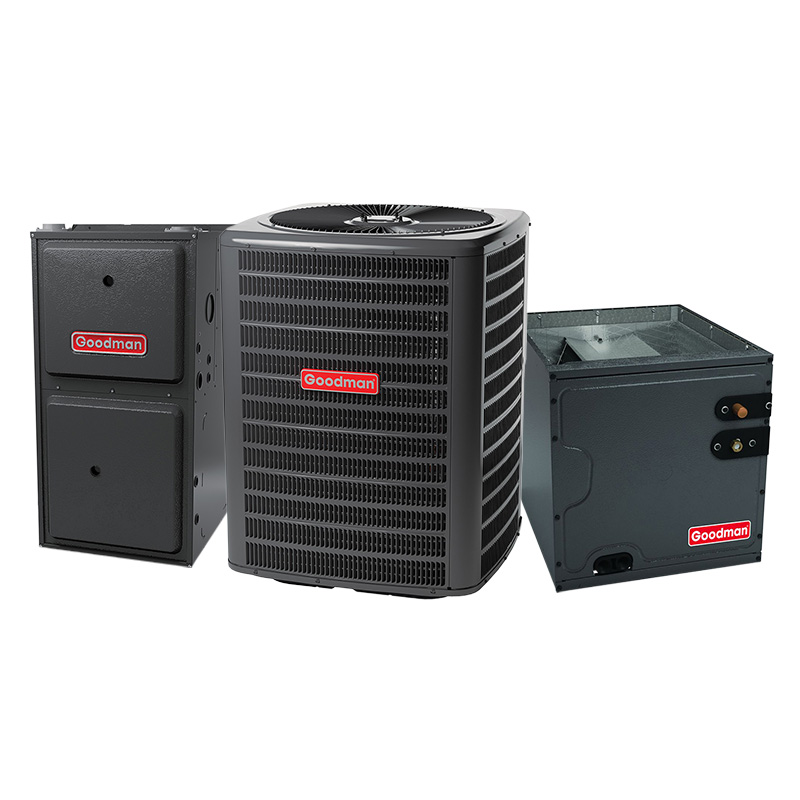
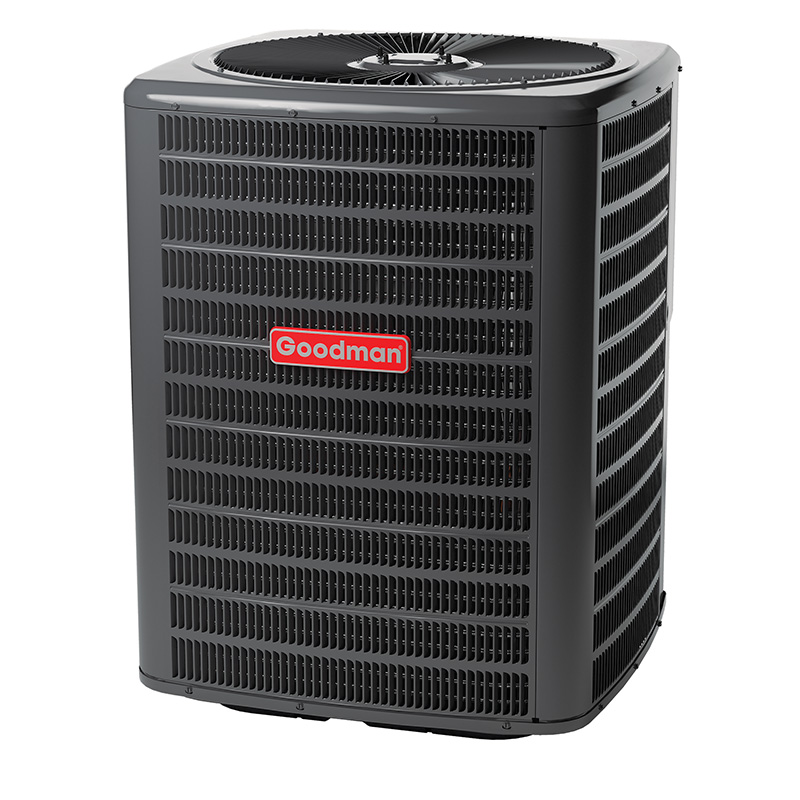
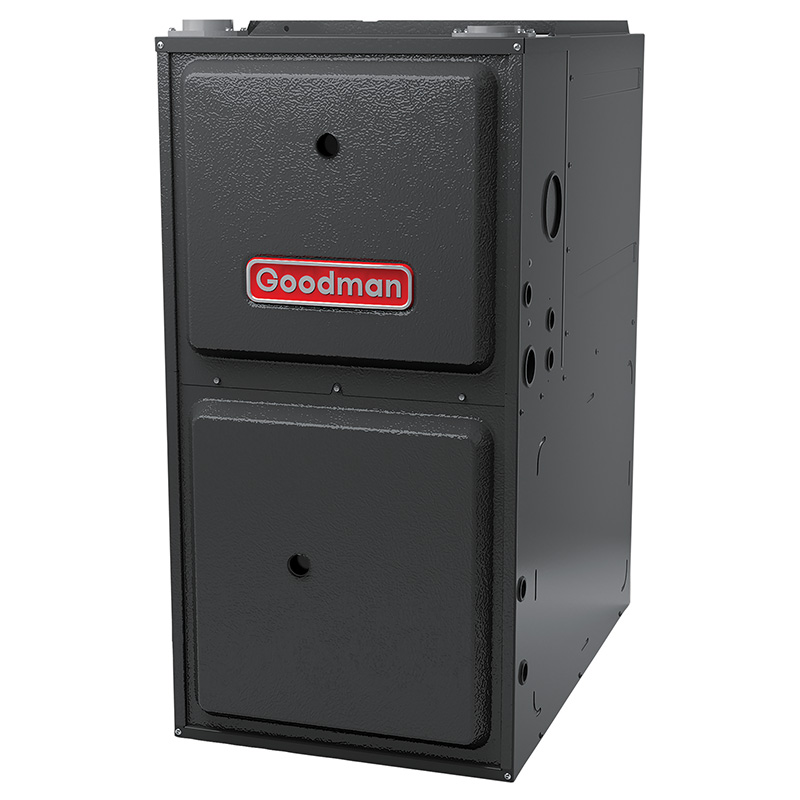
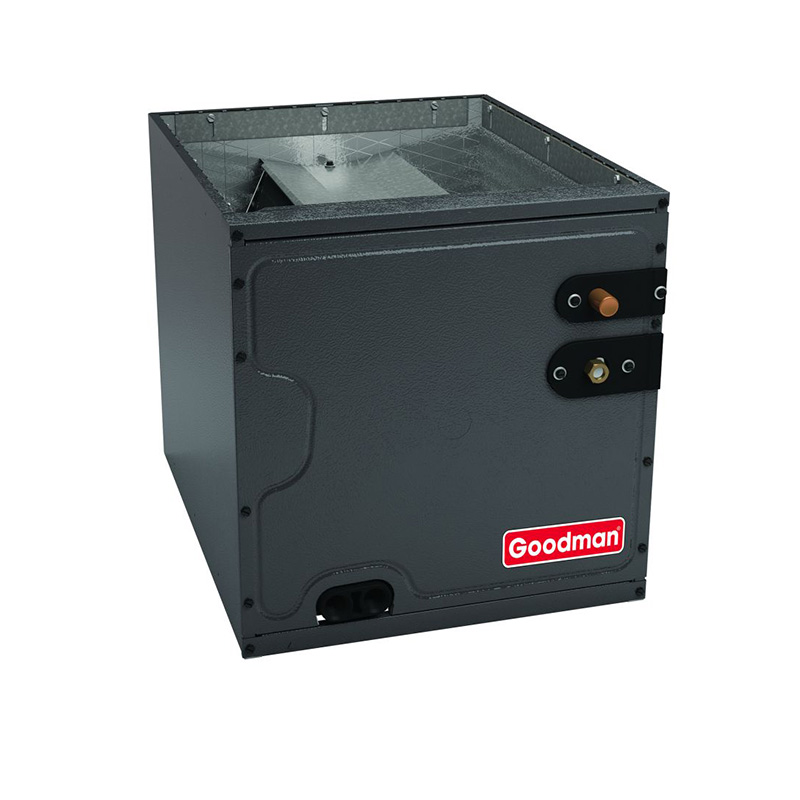
Goodman 3.5 Ton 15.2 SEER2 AC & Gas Furnace System – Modulating Variable-Speed, 100000 BTU Gas Furnace, 97% AFUE, Upflow, R32
View on AC Direct see your lowest price →Check current price on AC Direct →
Key features
- 97% AFUE modulating gas furnace with 100,000 BTU capacity
- 15.2 SEER2 variable-speed cooling rated for 3.5 tons
- Upflow air handler orientation for below-grade or closet installs
- R-32 refrigerant with lower global warming potential than R-410A
- Modulating burner adjusts output for steadier temperatures and quieter cycling
- Variable-speed blower improves humidity control and reduces energy use at partial load
About this system
The Goodman GLXS5BA4210D pairs a 3.5-ton, 15.2 SEER2 variable-speed air conditioner with a 100,000 BTU, 97% AFUE modulating gas furnace in an upflow configuration. That AFUE rating sits at the top of the residential gas furnace market, meaning roughly 97 cents of every dollar spent on gas goes toward heating your home rather than escaping through the flue. The modulating burner and variable-speed air handler adjust output in small increments rather than cycling fully on and off, which typically means steadier indoor temperatures, quieter operation, and more consistent humidity control than single-stage or two-stage equipment.
This system is well suited to mid-size homes in mixed climates where both heating efficiency and cooling capacity matter year-round. At 3.5 tons it handles roughly 1,500 to 2,100 square feet depending on insulation, ceiling height, and local climate, though a proper Manual J load calculation should always confirm sizing before purchase. The system uses R-32 refrigerant, which has a lower global warming potential than the R-410A it replaces and is becoming the industry standard as manufacturers phase out older refrigerants. R-32 does require technicians with updated certifications, so confirming your installer is qualified before scheduling is worth the extra call. Upflow configuration means conditioned air exits the top of the air handler, making this unit the right fit for basements, utility closets, or mechanical rooms where ductwork runs above the unit.
This Goodman bundle delivers genuine top-tier heating efficiency and capable variable-speed comfort at a price point that undercuts comparable Trane, Carrier, and Lennox systems by a meaningful margin. The trade-off is a brand track record that shows above-average rates of capacitor failures and coil issues past the mid-warranty years, and compressor longevity that typically trails premium brands. Buyers who prioritize upfront cost and lock in a reputable installer stand to get strong value; those who want the longest possible service life with fewer surprises may prefer to spend more on a premium nameplate.
Overall score is the average of the five ratings above.
What we like
- 97% AFUE is among the highest available for residential gas furnaces, cutting fuel waste to a minimum
- Modulating and variable-speed operation delivers more even temperatures and quieter running than staged systems
- R-32 refrigerant is a future-oriented choice as R-410A faces phase-out regulations
- Priced roughly 15 to 25 percent below comparable Carrier, Trane, and Lennox configurations
- Upflow design fits common basement and closet installations without major duct modifications
Trade-offs
- Dual-run capacitor failures are the most documented weak point, typically occurring within the first decade and costing $300 to $600 per repair
- Evaporator coil leaks appear in a meaningful share of owner reviews, a more expensive fix than a capacitor swap
- Compressor lifespan averages 10 to 14 years versus the 15 to 20 years more commonly reported with premium brands
- A minority of first-year owners report refrigerant leaks, usually tied to install quality rather than the equipment itself, which makes installer selection especially important with this brand
What homeowners and pros say about Goodman
Homeowners who rate Goodman equipment tend to split sharply by experience. On Google dealer reviews, where the audience includes people who just had a system installed and are happy with the price, the brand averages around 3.8 out of 5 stars, with affordability coming up again and again as the reason buyers chose it. On ConsumerAffairs, a channel that draws a higher share of frustrated owners, the rating drops to roughly 2.5 out of 5, and the recurring story is repair bills that start accumulating somewhere after year 7. That gap tells you something useful: Goodman tends to perform adequately in the early years, but its track record gets more complicated as systems age.
HVAC technicians who service Goodman equipment regularly point to dual-run capacitor failures as the single most predictable issue, a repair that typically runs $300 to $600 and is usually not a major ordeal. More consequential are the evaporator coil leaks that appear in a meaningful portion of owner accounts and the compressor lifespan data, which puts average Goodman compressor life at 10 to 14 years versus the 15 to 20 years more typical of premium brands. Pros also flag that a minority of first-year refrigerant leak reports trace back to install quality rather than a defective unit, which is why technicians consistently say installer skill is the single largest variable in how long a Goodman system lasts. For this modulating, variable-speed system specifically, that install quality point is even more relevant given the additional complexity of R-32 refrigerant handling and variable-speed controls.
Sources: ConsumerAffairs Goodman owner reviews, AHRI Directory of Certified Product Performance, U.S. DOE appliance and equipment efficiency standards, Goodman product specification sheets.
What it costs to run
At 15.2 SEER2, cooling this 3.5-ton system for a typical 1200-hour cooling season at the U.S. average electricity rate of $0.17/kWh works out to roughly $564 per year in cooling, about $75 less per year than a minimum-efficiency 13.4 SEER2 unit of the same size. Your real cost depends on your climate and local rate.
Method: (42,000 BTU/hr ÷ 15.2 SEER2) × 1200 hours ÷ 1000 × $0.17/kWh. Rate source: U.S. EIA average; cooling hours: moderate-climate estimate.
How it compares
| Brand | Comparable model | SEER2 | Stage | Price position |
|---|---|---|---|---|
| Goodman | GLXS5BA4210D | 15.2 | Variable | Value pick |
| Carrier | Comfort 15 Series (24ACC6) | 15.2 | Single-stage | Typically 15 to 25 percent more than the Goodman |
| Trane | XR15 Series | 15.0 | Single-stage | Typically 15 to 25 percent more than the Goodman |
| Lennox | Merit ML15XC1 Series | 15.0 | Single-stage | Typically 15 to 25 percent more than the Goodman |
Competitor rows are comparable single-stage units at similar efficiency; price is relative position, not a quote.
Questions about this system
Does my installer need any special certification to work with R-32 refrigerant?
Yes. R-32 is classified as mildly flammable (A2L), and most jurisdictions require technicians to hold updated EPA 608 certification and complete R-32-specific training before handling it. Confirm your installer has this credential before booking, since mishandling R-32 creates both a safety risk and the potential for a first-year refrigerant leak, the most common early failure mode reported with this system.
What size home does a 3.5-ton system typically cover?
As a rough rule, 3.5 tons targets roughly 1,500 to 2,100 square feet, but that range shifts based on insulation quality, ceiling height, window area, local climate, and duct condition. A Manual J load calculation performed by your HVAC contractor is the only reliable way to confirm whether 3.5 tons is the right size for your specific home before you buy.
How long should I realistically expect the compressor to last?
Based on documented owner experience, Goodman compressors typically average 10 to 14 years, which is shorter than the 15 to 20 years more commonly associated with premium brands like Trane or Carrier. Proper install, correct refrigerant charge, and annual maintenance are the biggest factors in pushing toward the higher end of that range.
What is the warranty on this system, and what does it actually cover?
Goodman typically offers a 10-year parts limited warranty on registered systems, which covers components including the compressor and heat exchanger. Registration must be completed within a set window after install, usually 60 days, or the warranty defaults to a shorter period. The warranty covers parts only, not labor, so repair costs can still add up significantly even within the coverage window.
The modulating furnace and variable-speed blower sound complicated. Are they harder to service than simpler systems?
Variable-speed and modulating systems have more electronic controls than single-stage equipment, which means diagnostics require a technician comfortable with those components. The most common Goodman repair, a dual-run capacitor replacement, is still a straightforward fix regardless of system sophistication. The added complexity mainly matters if something in the variable-speed motor or modulating valve requires attention, which is less frequent but carries higher parts costs.
Specifications
| Cooling capacity | 3.5 Ton |
| Efficiency | 15.2 SEER2 |
| Furnace output | 100000 BTU |
| Furnace efficiency | 97% AFUE |
| Configuration | Upflow |
| Refrigerant | R-32 |
| Model | GLXS5BA4210D |