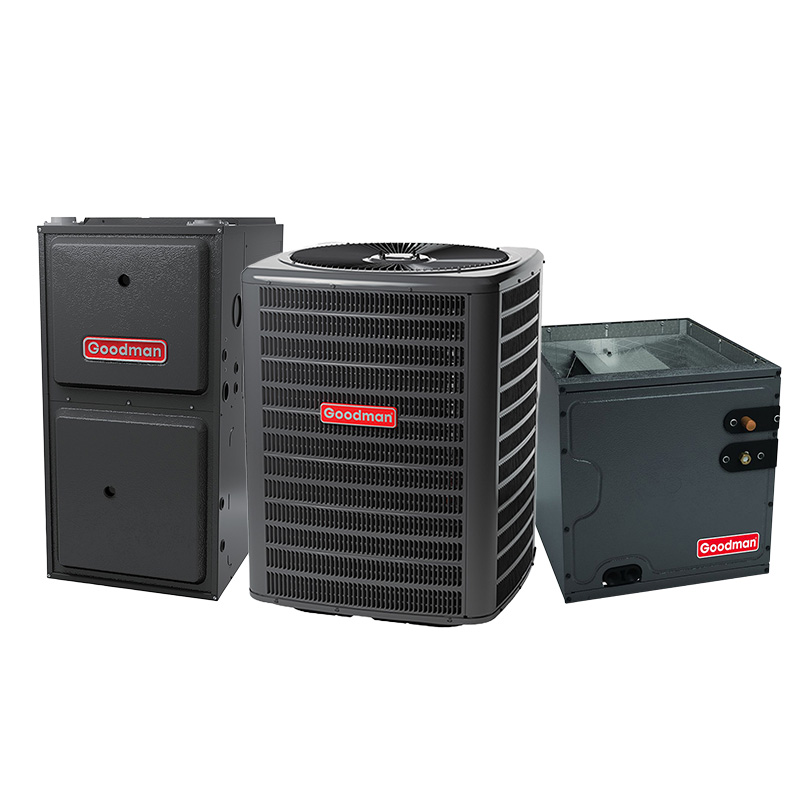
Goodman 3.5 Ton 15.2 SEER2 AC & Gas Furnace System – Modulating Variable-Speed, 120000 BTU Gas Furnace, 97% AFUE, Upflow, R32
View on AC Direct see your lowest price →Check current price on AC Direct →
Key features
- 15.2 SEER2 variable-speed cooling for top-tier seasonal efficiency
- 97% AFUE modulating gas furnace minimizes heating fuel waste
- R-32 refrigerant with lower global warming potential than R-410A
- Modulating burner adjusts output incrementally for steadier temperatures
- Upflow configuration suits standard basement or closet installations
- 3.5-ton / 120,000 BTU capacity for larger residential applications
About this system
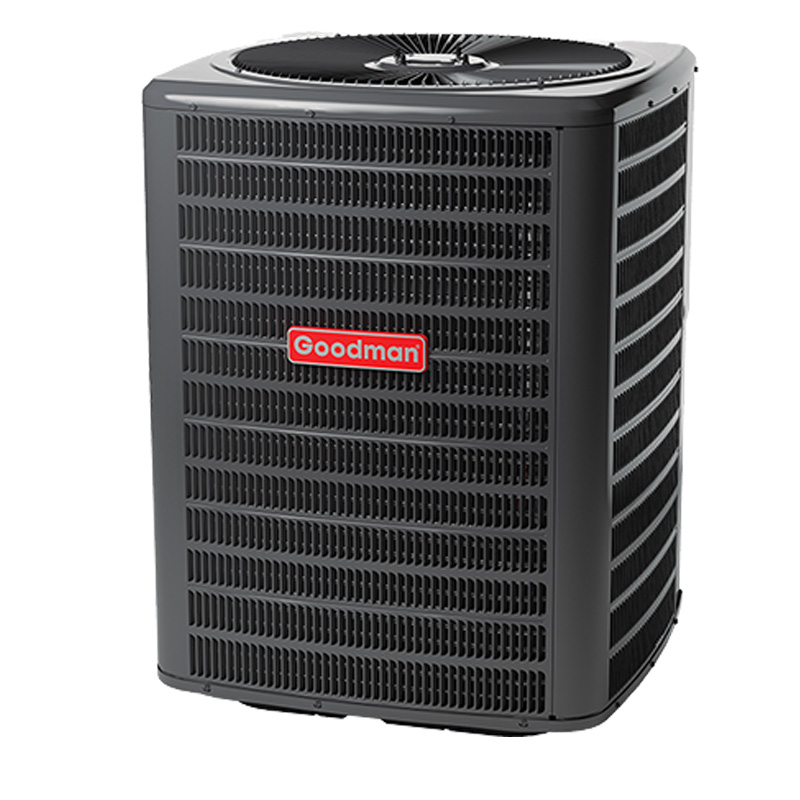
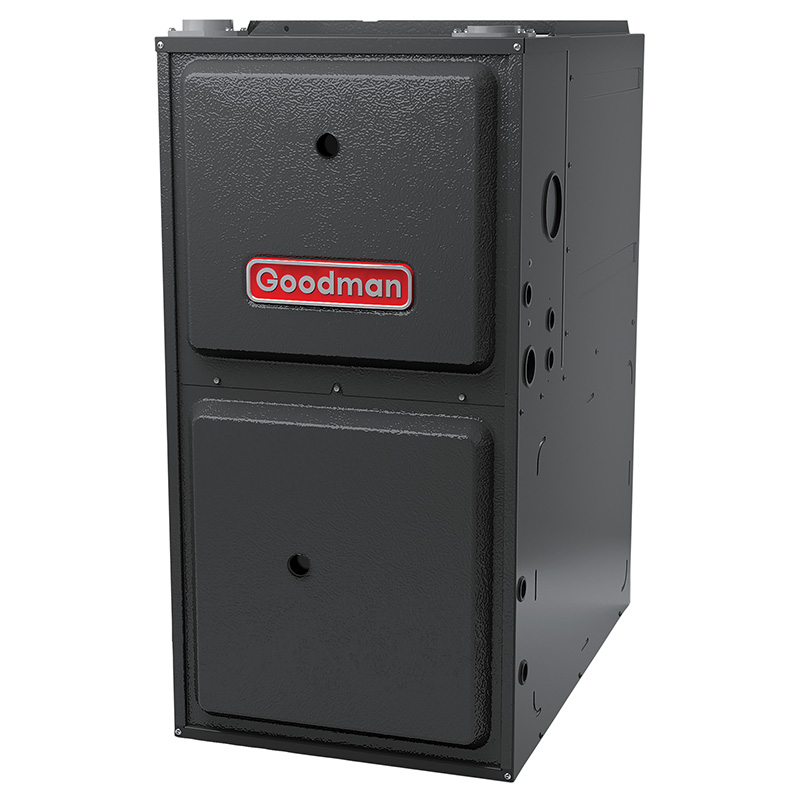
The Goodman GLXS5BA4210D pairs a 3.5-ton, 15.2 SEER2 variable-speed air conditioner with a 120,000 BTU, 97% AFUE modulating gas furnace in an upflow configuration. That AFUE rating sits at the top tier of residential gas heating efficiency, meaning roughly 97 cents of every dollar spent on gas goes toward heat rather than flue losses. The modulating burner adjusts output in small increments rather than cycling fully on and off, which helps maintain steadier indoor temperatures and reduces the temperature swings common with single-stage equipment. R-32 refrigerant carries a lower global warming potential than the R-410A it replaces and is increasingly the industry standard going forward.
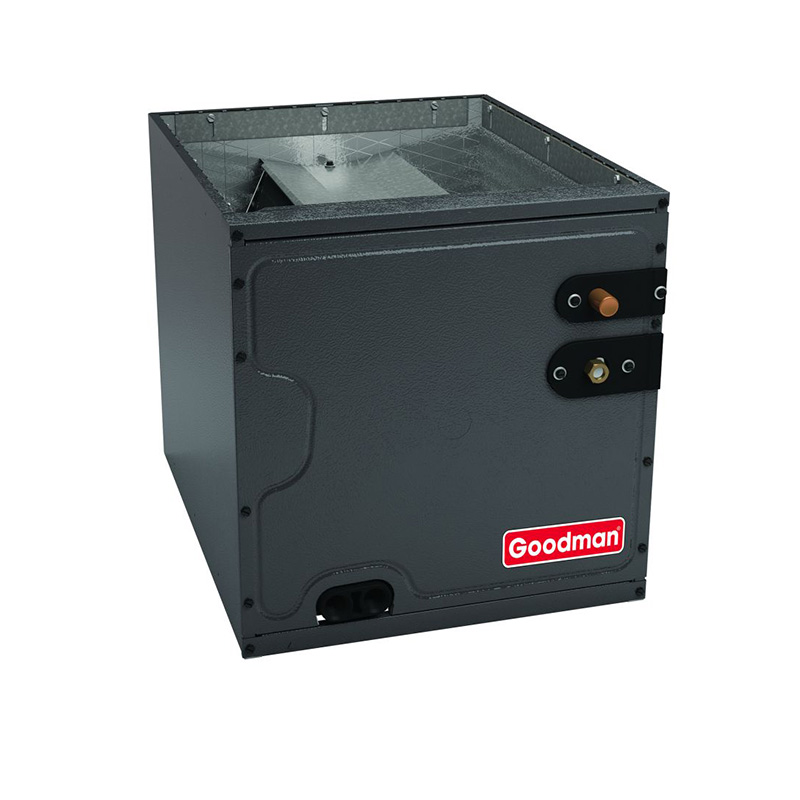
At 3.5 tons and 120,000 BTU, this is a system sized for larger homes, typically in the 2,000 to 2,800 square foot range depending on climate, insulation, and load calculations. The variable-speed air handler and modulating furnace combination is genuinely the better technology for comfort and humidity control compared to single- or two-stage systems, but it also introduces more electronic components that require a skilled installation. Goodman positions this as a full-featured system at a price point roughly 15 to 25 percent below comparable Trane, Lennox, or Carrier equipment, which is its primary selling proposition for budget-conscious buyers who still want premium-tier efficiency numbers.
This Goodman system delivers genuinely high-efficiency specs at a price that undercuts major premium brands by a meaningful margin, making it worth serious consideration for budget-focused buyers who can secure a skilled installer. The modulating and variable-speed technology is real and works, but Goodman's documented reliability track record is shorter and spottier than Trane or Lennox at the same tier, and the value proposition depends entirely on installation quality. Buyers should budget for potential capacitor and coil service calls in the 7-to-14-year window.
Overall score is the average of the five ratings above.
What we like
- 97% AFUE is among the highest efficiency ratings available for residential gas furnaces
- 15.2 SEER2 qualifies for federal tax credits and many utility rebates
- Modulating furnace and variable-speed blower provide noticeably better comfort and humidity control than single-stage systems
- Purchase price runs roughly 15 to 25 percent below comparable Carrier, Trane, and Lennox configurations
- R-32 refrigerant is forward-compatible with evolving environmental regulations
Trade-offs
- Dual-run capacitors are the most commonly reported failure point and, while relatively inexpensive to fix, can mean 300 to 600 dollars in service costs
- Evaporator coil leaks appear in a meaningful share of owner reports, which can be a costly mid-life repair
- Compressor lifespan averages 10 to 14 years versus 15 to 20 years seen on premium brands, a real long-term cost consideration
- Variable-speed and modulating components increase wiring and commissioning complexity, making install quality even more critical than on simpler Goodman systems
What homeowners and pros say about Goodman
Homeowners who review Goodman equipment tend to cluster at the extremes. On Google dealer reviews, where the brand averages around 3.8 out of 5 across hundreds of location-based reviews, the most common praise centers on affordability and the accessibility of service parts. On ConsumerAffairs, where the brand scores roughly 2.5 out of 5 on a channel that skews toward complaints, the recurring theme is repair costs that begin climbing after roughly year seven. For this specific modulating, variable-speed system, that split matters because the added electronic complexity of a modulating furnace and variable-speed air handler gives more components a chance to require service over time. The documented failure modes for Goodman broadly are worth knowing before you buy: dual-run capacitors fail most frequently and are a relatively low-cost fix in the 300 to 600 dollar range; evaporator coil leaks appear in a meaningful share of owner reports and can be more expensive; and compressors tend to average 10 to 14 years of service life versus the 15 to 20 years seen more commonly on premium brands. A small minority of owners also report refrigerant leaks in the first year, which typically traces back to installation or initial charge rather than a defective component.
HVAC technicians who work on Goodman equipment regularly tend to take a pragmatic view. Many will say the equipment works adequately when installed correctly and that the parts are easy to source, but they are consistent in noting that Goodman leans harder on install quality than premium brands do. A modulating system introduces commissioning steps, including verifying variable-speed blower parameters and ensuring the modulating gas valve is calibrated correctly, that require genuine expertise beyond a basic swap-and-go installation. Pros who specialize in high-efficiency systems and take the time to set the equipment up properly report solid results. Those who rush the startup or skip the load calculation are the ones whose customers end up on review boards. For a buyer considering this particular Goodman configuration, the honest guidance from both camps is the same: the price advantage is real, but only fully realized when the installation is treated with the same care you would give a Trane or Lennox at twice the labor investment.
Sources: ConsumerAffairs Goodman owner reviews, AHRI Directory of Certified Product Performance, U.S. DOE appliance and equipment efficiency standards, Goodman product specification sheets.
What it costs to run
At 15.2 SEER2, cooling this 3.5-ton system for a typical 1200-hour cooling season at the U.S. average electricity rate of $0.17/kWh works out to roughly $564 per year in cooling, about $75 less per year than a minimum-efficiency 13.4 SEER2 unit of the same size. Your real cost depends on your climate and local rate.
Method: (42,000 BTU/hr ÷ 15.2 SEER2) × 1200 hours ÷ 1000 × $0.17/kWh. Rate source: U.S. EIA average; cooling hours: moderate-climate estimate.
How it compares
| Brand | Comparable model | SEER2 | Stage | Price position |
|---|---|---|---|---|
| Goodman | GLXS5BA4210D | 15.2 | Variable-speed / Modulating | Value pick |
| Carrier | Infinity 26 / 59MN7 series | 16+ | Variable-speed / Modulating | Typically 15 to 25 percent more than Goodman |
| Trane | XV18 / S9V2 series | 15–18 | Variable-speed / Modulating | Typically 15 to 25 percent more than Goodman |
| Lennox | XC21 / SLP99V series | 16+ | Variable-speed / Modulating | Typically 15 to 25 percent more than Goodman |
Competitor rows are comparable single-stage units at similar efficiency; price is relative position, not a quote.
Questions about this system
Is 3.5 tons and 120,000 BTU the right size for my home?
Sizing depends on your climate zone, insulation, window area, and ceiling height, not square footage alone. A proper Manual J load calculation is the only reliable way to confirm this combination is correct for your specific house. Oversizing a modulating system wastes money upfront and can cause humidity problems even if the efficiency numbers look good on paper.
What does the modulating furnace actually do differently, and will I notice it?
A modulating burner ramps gas flow up and down in small steps rather than switching fully on or off, so the furnace can run at low fire for extended periods when the heat demand is modest. Most homeowners who upgrade from a single-stage furnace notice fewer cold blasts of air at startup and more even temperatures room to room. The variable-speed blower complements this by running continuously at low speed to circulate air rather than cycling on and off.
What are the most common repairs I should budget for over the life of this system?
Based on documented Goodman failure patterns, dual-run capacitors are the most frequent service call, typically running 300 to 600 dollars including labor. Evaporator coil leaks are reported by a meaningful number of owners and can be a more significant expense depending on the extent of the leak. Compressor replacement or system replacement becomes a real conversation after roughly 10 to 14 years, earlier than on premium brands.
Does this system qualify for the federal energy efficiency tax credit?
At 15.2 SEER2 and 97% AFUE, this system meets the thresholds for the federal 25C tax credit, which covers up to 30 percent of equipment and installation costs with a cap of 2,000 dollars for qualified furnaces and heat pumps in a single tax year. Confirm current IRS guidance and your specific filing situation with a tax professional before purchasing.
How important is the installer, and what should I look for?
Goodman's own track record indicates that install quality is the single biggest factor in how long one of its systems lasts. For a modulating, variable-speed system specifically, you want an installer with documented experience commissioning variable-speed equipment, not just someone who swaps boxes. Ask whether they perform a Manual J calculation, verify refrigerant charge with gauges, and set up the communicating controls correctly. A poor installation on high-efficiency equipment can produce worse real-world performance than a well-installed simpler system.
Specifications
| Cooling capacity | 3.5 Ton |
| Efficiency | 15.2 SEER2 |
| Furnace output | 120000 BTU |
| Furnace efficiency | 97% AFUE |
| Configuration | Upflow |
| Refrigerant | R-32 |
| Model | GLXS5BA4210D |