Goodman 3.5 Ton 15.2 SEER2 AC & Gas Furnace System – Multi-Speed, 100000 BTU Gas Furnace, 92% AFUE, Upflow, R32
View on AC Direct see your lowest price →Check current price on AC Direct →
Key features
- 3.5-ton cooling capacity suited to mid-size homes in the 1,800 to 2,400 sq ft range
- 15.2 SEER2 efficiency rating meets 2023 federal minimums across all U.S. climate regions
- 92% AFUE gas furnace delivers mid-tier heating efficiency with standard flue venting
- 100,000 BTU furnace output handles colder climates and larger heating loads
- R-32 refrigerant with lower global warming potential than legacy R-410A systems
- Upflow air handler orientation designed for basement or utility closet installations
About this system
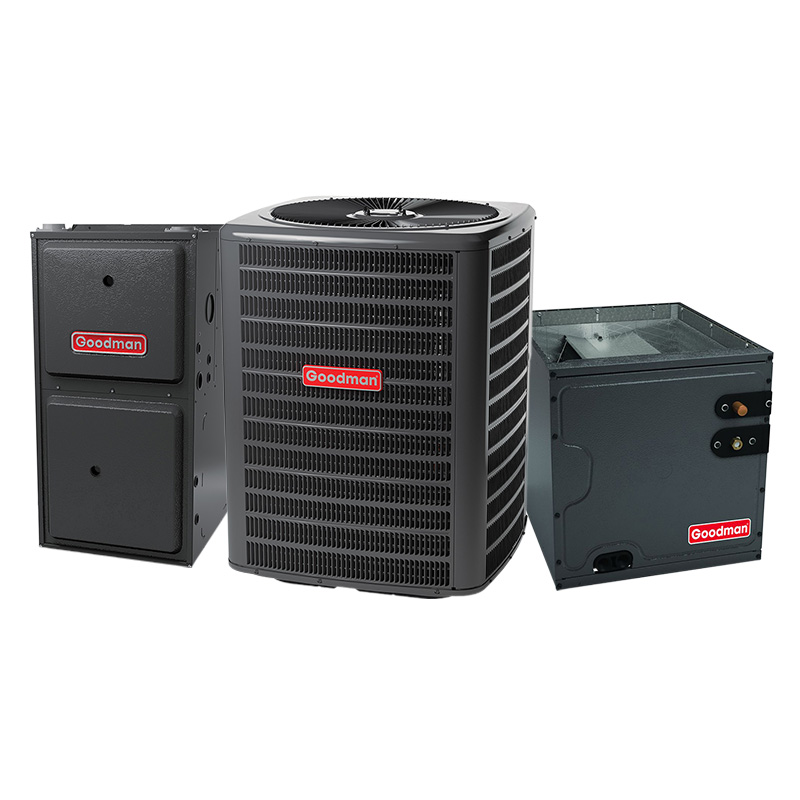
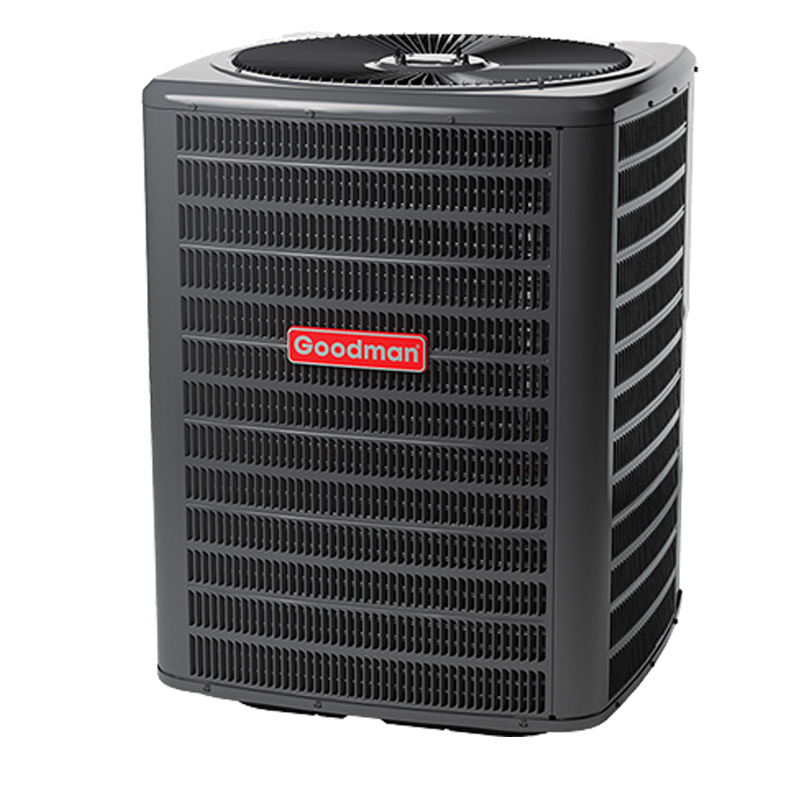
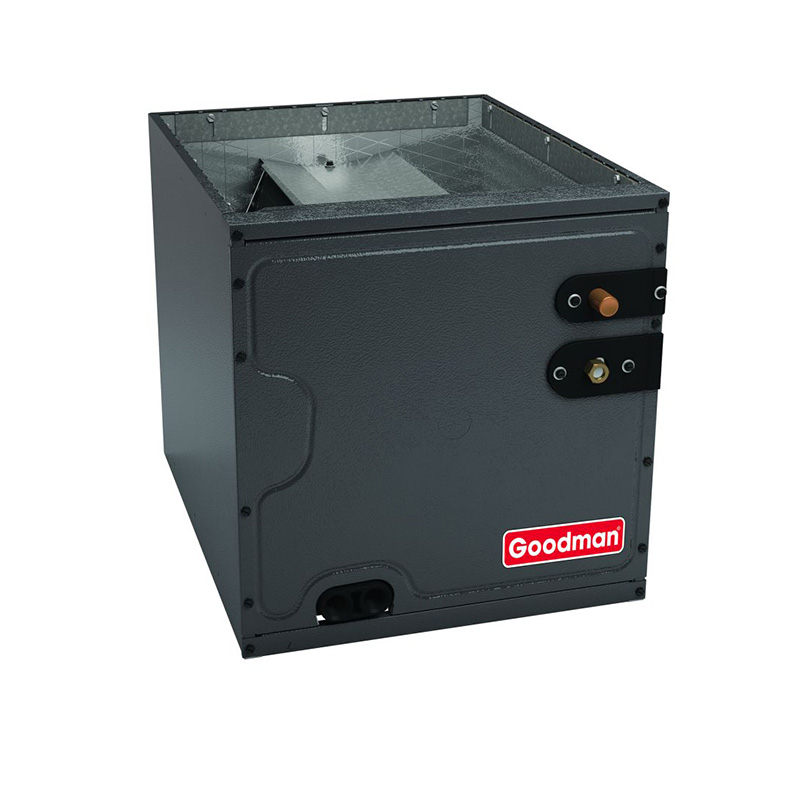
The Goodman GLXS4BA4210 pairs a 3.5-ton, 15.2 SEER2 air conditioner with a 100,000 BTU, 92% AFUE upflow gas furnace in a single-refrigerant R-32 system. At 3.5 tons, this bundle targets homes in the roughly 1,800 to 2,400 square foot range, though actual sizing depends on insulation, climate zone, and Manual J load calculations. The 15.2 SEER2 rating sits just above the federal minimums that took effect in 2023, meaning it is efficient enough to satisfy current code in all U.S. regions without crossing into the premium efficiency tier that pushes costs significantly higher.
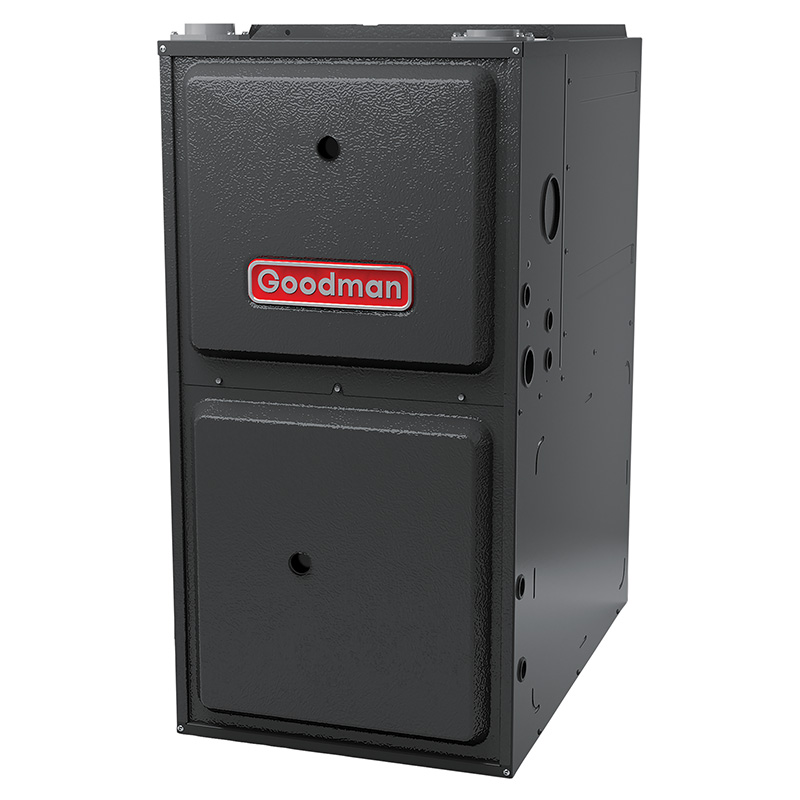
The 92% AFUE furnace converts 92 cents of every dollar of gas into usable heat, which is solidly mid-efficiency. It is not the 96% or 98% condensing tier, so you will still vent some heat through the flue, but it avoids the PVC venting and condensate drain complexity that higher-efficiency units require. The upflow configuration directs conditioned air upward, making it the correct choice for basement or closet installations with ductwork in the ceiling or floor above. R-32 refrigerant carries a lower global warming potential than the R-410A it replaces and is increasingly the industry standard, though it does require certified technicians familiar with its mildly flammable classification during service.
The GLXS4BA4210 is a competent, code-compliant HVAC bundle that gets you into a properly sized system for meaningfully less than Carrier, Trane, or Lennox alternatives at similar efficiency. The trade-off is a shorter expected compressor lifespan and a brand track record that rewards attentive maintenance and a good installer more than most. Buyers who prioritize upfront cost and can budget for likely capacitor and coil service after year seven will find this a reasonable choice; buyers who want to set and forget for 18-plus years should look at a premium brand.
Overall score is the average of the five ratings above.
What we like
- Priced 15 to 25 percent below comparable Carrier, Trane, and Lennox systems at the same efficiency tier
- 15.2 SEER2 satisfies current federal efficiency standards in every U.S. region
- 92% AFUE avoids the added installation complexity of high-efficiency condensing furnaces
- R-32 refrigerant is the emerging industry standard with better environmental profile than R-410A
- Multi-speed furnace blower improves comfort and airflow compared to single-speed-only alternatives
Trade-offs
- Compressor lifespan typically averages 10 to 14 years, versus 15 to 20 years for premium-brand compressors
- Dual-run capacitor failures are the most commonly reported repair, usually appearing after the first few years of use
- Evaporator coil leaks appear in a meaningful share of owner reviews and can be costly to address
- A minority of owners report refrigerant leaks within the first year, most often traced back to install or initial charge quality
What homeowners and pros say about Goodman
Homeowners who go with Goodman equipment frequently point to the lower purchase price as the deciding factor, and that sentiment is reflected in Google dealer review scores that average around 3.8 out of 5, where affordability is the most consistently cited reason for satisfaction. The picture on ConsumerAffairs is less flattering, averaging about 2.5 out of 5, though that platform skews toward owners who experienced problems. The recurring complaint theme there is repair costs rising after roughly year seven, which lines up with documented failure patterns: dual-run capacitor failures are the most commonly reported issue across Goodman systems and typically run $300 to $600 to fix. Evaporator coil leaks also appear in a meaningful share of owner accounts and can be more expensive to address depending on refrigerant recovery requirements.
HVAC technicians who work on Goodman equipment regularly tend to hold a nuanced view of this specific bundle. Many note that the equipment performs predictably when it is installed correctly and maintained annually, but that install quality is the single biggest variable in how long a Goodman system lasts. The compressor lifespan concern is real: Goodman compressors tend to average 10 to 14 years in field experience, shorter than the 15 to 20 years more commonly seen in Trane, Carrier, and Lennox equipment. A small number of owners also report refrigerant leaks in the first year, a pattern that most technicians attribute to improper charging or connection issues at installation rather than a factory defect. Choosing an experienced installer and registering the warranty promptly are the two steps most often cited as protecting the long-term value of this system.
Sources: ConsumerAffairs Goodman owner reviews, AHRI Directory of Certified Product Performance, U.S. DOE appliance and equipment efficiency standards, Goodman product specification sheets.
What it costs to run
At 15.2 SEER2, cooling this 3.5-ton system for a typical 1200-hour cooling season at the U.S. average electricity rate of $0.17/kWh works out to roughly $564 per year in cooling, about $75 less per year than a minimum-efficiency 13.4 SEER2 unit of the same size. Your real cost depends on your climate and local rate.
Method: (42,000 BTU/hr ÷ 15.2 SEER2) × 1200 hours ÷ 1000 × $0.17/kWh. Rate source: U.S. EIA average; cooling hours: moderate-climate estimate.
How it compares
| Brand | Comparable model | SEER2 | Stage | Price position |
|---|---|---|---|---|
| Goodman | GLXS4BA4210 | 15.2 | Single-stage | Value pick |
| Carrier | Comfort 14 Series (24ACC6) | 15.2 | Single-stage | Typically 15 to 25 percent more than Goodman |
| Trane | XR15 Series | 15.0 to 15.6 | Single-stage | Typically 15 to 25 percent more than Goodman |
| Lennox | Merit 14ACX Series | 15.2 | Single-stage | Typically 15 to 25 percent more than Goodman |
Competitor rows are comparable single-stage units at similar efficiency; price is relative position, not a quote.
Questions about this system
Is 3.5 tons the right size for my house, or do I need a Manual J calculation?
3.5 tons is commonly used for homes in the 1,800 to 2,400 square foot range, but square footage alone is not a reliable sizing method. Insulation levels, window area, ceiling height, climate zone, and duct layout all affect the correct load calculation. A licensed HVAC contractor should run a Manual J before installation to confirm 3.5 tons is appropriate for your specific home.
What does the R-32 refrigerant mean for future service and maintenance?
R-32 is mildly flammable (A2L classification), so service and refrigerant handling must be performed by a technician certified to work with A2L refrigerants. Most HVAC companies are already equipped for this, but it is worth confirming with your contractor before signing a service agreement. On the positive side, R-32 has a significantly lower global warming potential than the R-410A it replaces.
How likely are capacitor repairs, and what do they cost?
Dual-run capacitor failure is the most frequently documented repair issue across Goodman equipment. It typically runs between $300 and $600 parts and labor, and the repair itself is straightforward for any qualified technician. Keeping a service contract or scheduling annual tune-ups helps catch a weakening capacitor before it causes a no-cooling call on the hottest day of summer.
Does the 92% AFUE furnace require PVC venting or can it use existing metal flue pipe?
At 92% AFUE, this furnace is a non-condensing design and can typically vent through existing Category III or Category IV metal flue systems rather than requiring PVC pipe. This simplifies retrofits considerably compared to 96% and higher-efficiency condensing furnaces. Your installer should inspect the existing flue size and condition to confirm compatibility before installation.
How does Goodman's warranty compare to premium brands on this type of system?
Goodman typically offers a 10-year parts limited warranty when the unit is registered within a set window after installation, which is competitive with most of the industry at this price point. The coverage is parts only, not labor, so repair bills after the first year still include technician time. Premium brands like Lennox and Trane sometimes offer more comprehensive or longer compressor warranties on higher-tier product lines, which is worth comparing if long-term cost predictability matters to you.
Specifications
| Cooling capacity | 3.5 Ton |
| Efficiency | 15.2 SEER2 |
| Furnace output | 100000 BTU |
| Furnace efficiency | 92% AFUE |
| Configuration | Upflow |
| Refrigerant | R-32 |
| Model | GLXS4BA4210 |